Health & WellnessS


Donut

New study shows the sugar industry knew of its link to heart disease 50 years ago

table sugar
© Nick White/Global Look Press
A newly discovered cache of documents has revealed an alleged decades-long effort by the sugar industry to conceal the detrimental effects of the commodity on consumers' health.

In a study published Tuesday in the journal PLOS Biology, scientists from the University of California San Francisco (UCSF) claim the industry manipulated science, influenced regulations and even shut down its own research when it indicated a link between sugar and heart disease almost 50 years ago.

"The Sugar Association proved to itself that calories from sugar had different metabolic effects than calories from starch," lead author Cristin E. Kearns, who discovered the industry documents, told UCSF. "This is in stark contrast to its public position, then and now, that all calories are created equal."

The study claims that a Sugar Research Foundation (SRF) scheme, entitled Project 259, which had been set up to investigate the effects of sugar in animals in 1969, deliberately withheld evidence that sugar consumption creates high levels of triglyceride, a type of fat that travels through the blood - an issue that can lead to poor bladder and cardiovascular health.

Stanton Glantz, a Professor at the UCSF School of Medicine said the study was stopped in 1972 despite scientists asking for time to collect more data. "This case is one more illustration that, like the tobacco industry, the sugar industry has a long history of suppressing scientific results that do not support its economic interests," said Glantz, a senior author on the project.


Comment: Stanton Glantz is the high priest of the anti-smoking movement. He is famous for advocating that anti-smoking data be made up until science has "the opportunity to catch up", and then regularly practising that technique. Unfortunately the man is not credible.

Here is an example of Glantz in action:

http://www.thelancet.com/journals/lanres/article/PIIS2213-2600(16)30024-8/fulltext


Comment: More on the deleterious effects of sugar:


Alarm Clock

Time-restricted eating may yield moderate weight loss in obesity

Fasting
Eating only during an 8-hour window for 3 months resulted in a 2.6% weight loss in adults with obesity; however, no effects were found for metabolic disease risk, according to findings from a pilot study presented here.

"Time-restricted feeding is really about confining the period in which you eat into some type of window," Krista A. Varady, PhD, associate professor of nutrition at the University of Illinois in Chicago, said during her presentation. "What I've seen with human time-restricted feeding trials - I believe there are about five to date, and the longest one I think has been 4 months long - there is not much out there. But I believe there are a lot of studies on their way."

One previous study examining a 10-hour time-restricted feeding window for people with overweight for 16 weeks, resulted in participants naturally decreasing their caloric intake by about 20% and losing approximately 6 to 7 lb, according to Varady.

"A really interesting thing here is that these people were not told to calorie restrict, this was all natural calorie restriction that really happened by just shortening that period of eating," Varady said.

Comment: More helpful information:


Life Preserver

Brown adipose tissue is able to secrete factors that activate fat and carbohydrate metabolism

brown adipose tissue cell
© University of BarcelonaAccording to the new study, based on laboratory animal models and in vitro cell culture, this type of fat could be a future therapeutic target to treat pathologies like obesity.
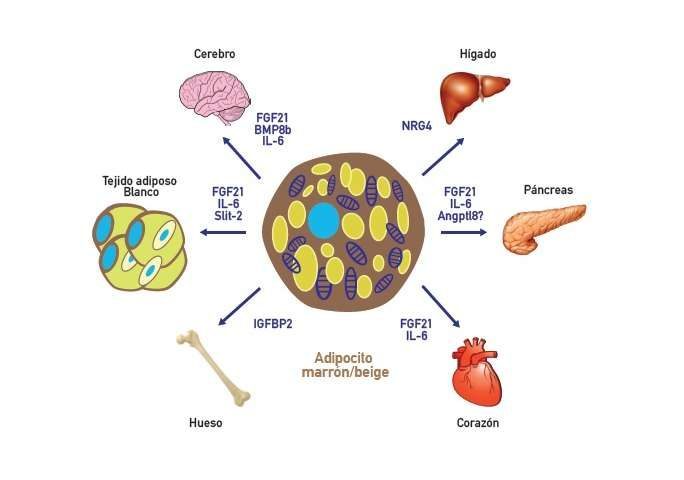
Brown adipose tissue, the main organ generating heat in the body, is also an endocrine organ that secretes signaling factors that activate the fat and carbohydrates metabolism.

This is the main conclusion of an article published in Nature Reviews Endocrinology by the professors Francesc Villarroya, Rubén Cereijo, Joan Villarroya and Marta Giralt, from the Department of Biochemistry and Molecular Biology of the University of Barcelona and CIBER of Physiopathology in Obesity and Nutrition (CIBERobn) of the Institute of Health Carlos III.

Brown adipose tissue: More than burning calories in the body

Brown adipose tissue (BAT) burns calories and makes body heat out of fat. According to the new study, this special kind of fat, the motor of thermogenesis, has an endocrine function that activates lipid and glucidic metabolism in the body, which is a potential therapeutic target to treat pathologies like obesity.

"Traditionally, brown adipose tissue was just seen as an organ to burn calories, but we have learned it has an endocrine biological role," said Professor Francesc Villarroya, member of the Institute of Biomedicine of the University of Barcelona (IBUB) and head of the Research Group in Genetics and Molecular Biology of Mitochondrial Proteins and Associated Diseases.

Comment: See also:


Book

Excerpts from RFK Jr.'s explosive book on thimerosal in vaccines.

smallpox vaccine
Robert F. Kennedy Jr. has just been selected by President-elect Trump to head a commission that will investigate the issue of "vaccine safety." What this really means is that the era of mercury in vaccines may soon come to an end in America.


Comment: So far, nothing has come of this commission. As of February of this year RFK Jr. claimed it was still in the works.


Donald Trump, as you may already know, is very well informed on the dangers of vaccines. In fact, during the very first presidential debate, the liberal media tried to destroy Donald Trump by claiming he was "anti-vaccine" (thereby implying that vaccines are always good and never cause harm).

Not only did Donald Trump respond by saying he personally knows people whose children were damaged by vaccines, but then Sen. Rand Paul and Ben Carson also chimed in and both agree that vaccines, as currently pushed by government, are far too dangerous.

What makes vaccines so dangerous? A toxic heavy metal known as mercury, for one thing. Astonishingly, it's still used in flu shots given to pregnant women and young children.

Health

Dangerous, expensive and no better than placebo: Are stents a scam?

stent, angioplasty
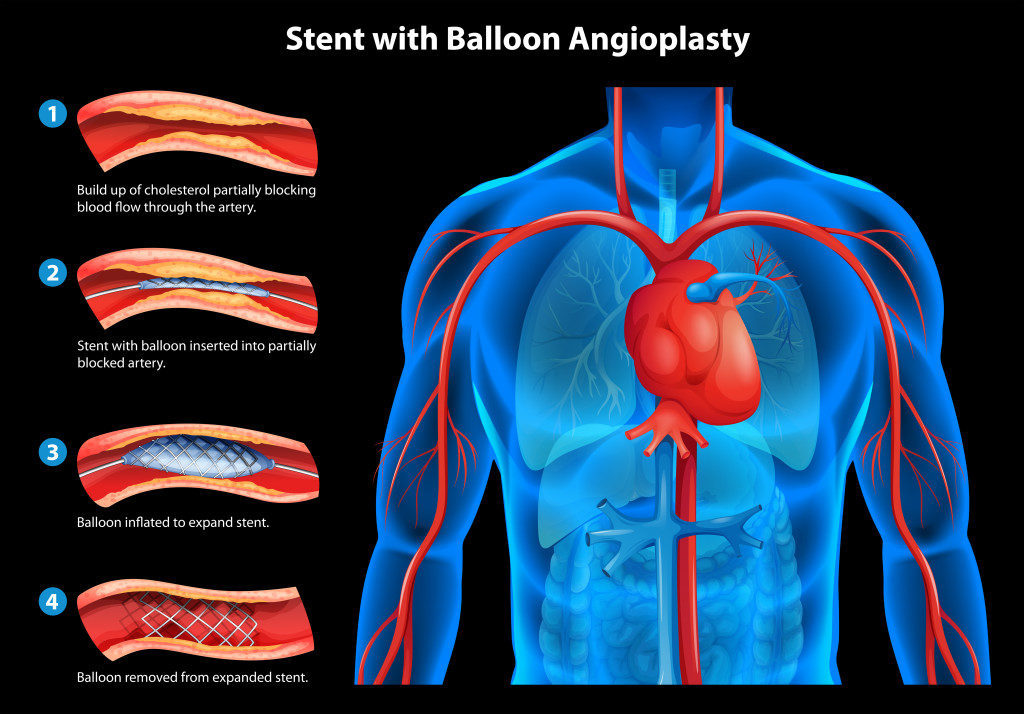
Angioplasty is a surgical procedure often recommended after an arterial blockage has been found in the heart muscle. Your heart requires a strong oxygen and nutrient supply, like other muscles in your body. There are two major coronary arteries that supply the left and right sides of your heart. By branching into smaller arteries they are able to supply the entire muscle with blood.

The goal of coronary artery angioplasty is to repair or unblock the blocked artery. During the procedure the surgeon inserts a thin expandable balloon that is inflated to flatten the blockage against the arterial wall.1 After the balloon is removed, the surgeon often places a stent with the intention of keeping the artery open and blood flowing freely.

There are currently five types of coronary artery stents available, each with different advantages and disadvantages to placement.2 However, while the different types of stents offer options for those for whom a stent is absolutely necessary, research shows those with stable coronary artery disease, stable angina, do not require stents.


Comment: See also:


Arrow Down

Kidney damage, poor mental health and risky behavior: The dark side of energy drinks

Energy Drinks
There is emerging evidence that energy drinks can be linked to kidney damage, poor mental health and risk-seeking behaviour, including substance abuse, a according to a new report.

While they cause tooth decay, poor sleep and weight gain, the study published in Frontiers in Public Health said too much research had in the past focused on the effect of caffeine and sugar, instead of the possible harmful effects of other ingredients often found in energy drinks.

The researchers are now calling for governments to bring in laws tackling energy drinks specifically.

"The excess caffeine may contribute to cardiovascular outcomes, such as increased blood pressure," the study's co-author Josiemer Mattei, told Yahoo Lifestyle.

Comment: See also:


Pi

How dad's stress changes his sperm

RNA-packed vesicles that glom on to the germ cells can be altered by a stress hormone, a mouse study suggests
Sperm
© DENNIS KUNKEL MICROSCOPY/SCIENCE SOURCENOT BUNDLES OF JOY Stress may change the genetic contents of sperm by tweaking small packets of RNA in seminal fluid, a study in mice suggests.
Sperm from stressed-out dads can carry that stress from one generation to another. "But one question that really hasn't been addressed is, 'How do dad's experiences actually change his germ cell?'" Jennifer Chan, a neuroendocrinologist at the University of Pennsylvania, said November 13 in Washington, D.C., at the annual meeting of the Society for Neuroscience.

Now, from a study in mice, Chan and her colleagues have some answers, and even hints at ways to stop this stress inheritance.

The researchers focused on the part of the male reproductive tract called the caput epididymis, a place where sperm cells mature. Getting rid of a stress-hormone sensor there called the glucocorticoid receptor stopped the transmission of stress, the researchers found. When faced with an alarming predator odor, offspring of chronically stressed mice dads overproduce the stress hormone corticosterone. But mice dads that lacked this receptor in the epididymis had offspring with normal hormonal responses.

Health

Don't let new blood pressure guidelines raise yours

high blood pressure guidelines
© Kelly Blair
"Under New Guidelines, Millions More Americans Will Need to Lower Blood Pressure." This is the type of headline that raises my blood pressure to dangerously high levels.

For years, doctors were told to aim for a systolic blood pressure of less than 140. (The first of the two blood pressure numbers.) Then, in 2013, recommendations were relaxed to less than 150 for patients age 60 and older. Now they have been tightened, to less than 130 for anyone with at least a 10 percent risk of heart attack or stroke in the next decade. That means that nearly half of all adults in the United States are now considered to have high blood pressure.

I bet I'm not the only doctor whose blood pressure jumped upon hearing this news. Disclosure: I'm an advocate of less medicine and living a more healthy life, and I worry we get too focused on numbers. But to make that case I'll need to use some numbers.

The new recommendation is principally in response to the results of a large, federally funded study called Sprint that was published in 2015 in The New England Journal of Medicine. Sprint was a high-quality, well-done study. It randomly assigned high blood pressure patients age 50 and older to one of two treatment targets: systolic blood pressure of less than 140 or one of less than 120. The primary finding was that the lower target led to a 25 percent reduction in cardiovascular events - the combined rate of heart attacks, strokes, heart failures and cardiovascular deaths.

Comment: More food for thought:


Chart Pie

Cost of diabetes epidemic reaches $850 billion a year

diabetes
The number of people living with diabetes has tripled since 2000, pushing the global cost of the disease to $850 billion a year, medical experts said on Tuesday.

The vast majority of those affected have type 2 diabetes, which is linked to obesity and lack of exercise, and the epidemic is spreading particularly fast in poorer countries as people adopt Western diets and urban lifestyles.

The latest estimates from the International Diabetes Federation mean that one in 11 adults worldwide have the condition, which occurs when the amount of sugar in the blood is too high.

The total number of diabetics is now 451 million and is expected to reach 693 million by 2045 if current trends continue.

Comment: And the current trend will get worse as long as the official dietary guidelines will continue to advocate for a high carbohydrate diet for diabetics and the population at large. If diabetics have a carbohydrate intolerance, it stands to reason that they need to reduce the amount of carbs and increase their consumption of healthy fats.


Wine

Destroying your brain one drink at a time: Mouse study finds alcohol kills brain stem cells

alcohol brain stem cells
The study found that repeated alcohol consumption damages many parts of the brain and the areas most susceptible are in two regions that are responsible for the production of new brain cells.
Without stem cells, new brain cells cannot be produced.

Alcohol kills stem cells in the brain, new research finds.

Stem cells are responsible for making new cells - known as neurogenesis - and are key to maintaining normal cognitive function.

Females are particularly vulnerable to the effects of alcohol, the study on mice found.

Comment: