Health & WellnessS


Health

Worse than sugar: Artificial sweeteners alter metabolic processes at the cellular level making you fat and sick

artificial sweeteners
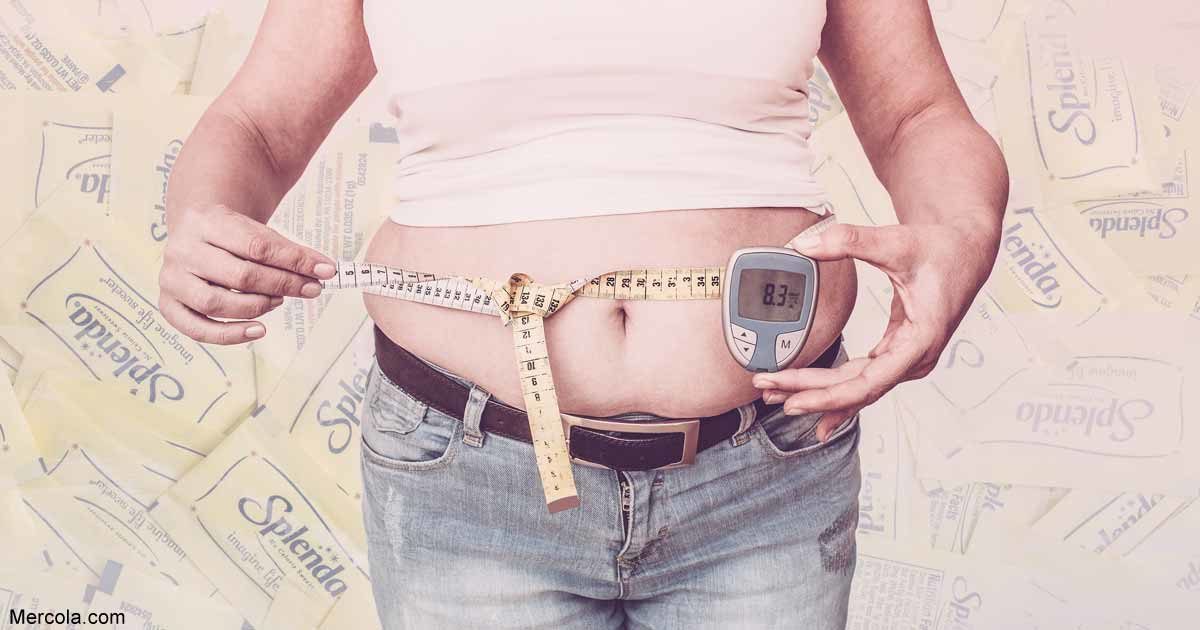
If you're still holding out hope that science will eventually prove artificial sweeteners to be beneficial, or at the very least harmless, you're likely to be disappointed. Again and again, research shows no-calorie sweeteners such as aspartame and sucralose cause the same problems as excess sugar, and then some.

According to the latest statistics1 nearly 40 percent of American adults, over 18 percent of teens and nearly 14 percent of young children are now obese, not just overweight, and processed foods and sweetened beverages are clearly driving factors. Unfortunately, many make the mistake of thinking artificially sweetened products are a healthier option as it cuts down your calories, but nothing could be further from the truth.

The international trend of taxing sugary beverages to discourage sugar consumption has also had the unfortunate side effect of causing beverage makers to switch to artificial sweeteners rather than sugar and other calorie-rich sweeteners. However, when it comes to health, artificial sweeteners cause just as many health problems as sugar does.

Comment: See also:


Ambulance

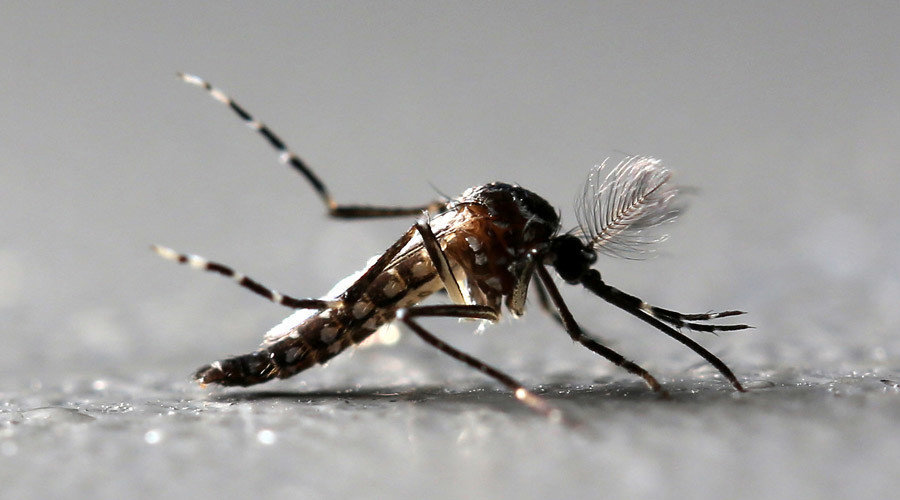
Yellow fever threatens South Florida after Zika scare

mosquito-transmitted Zika virus
© Paulo Whitaker / Reuters
The Zika scare of 2016 could lead to a yellow fever panic this year if South Florida residents let down their guard when it comes to protecting themselves from disease-carrying mosquitoes.

There hasn't been a yellow fever outbreak in the United States in more than 100 years, but state health officials are concerned that a large outbreak in Brazil and others in South and Central America could lead to infected travelers bringing the disease to South Florida, which has the right mosquitoes and climate for it to spread.

The disease is deadlier than the Zika virus. Zika raised alarms because many infected pregnant women gave birth to infants having microcephaly, a condition that causes abnormally small heads and developmental defects. Yellow fever can kill. Brazil reported 1,131 cases and 338 deaths attributable to yellow fever from July to March.

Most people infected with yellow fever will get symptoms so minor they won't realize they have been infected. Even for those who do notice, the symptoms such as fever, chills and headaches don't make it stand out from many other illnesses.

Bad Guys

Federal court rules CBD oil has no medicinal value, proving government loyalty to the pharmaceutical cartel

CBD oil schedule 1 drug
A federal appeals court ruled against the thousands of people who have experienced the life-saving effects of CBD oil by upholding the decision that the substance is a Schedule 1 drug.
The United States hemp industry was dealt a major blow on Monday after the federal U.S. 9th Circuit Court of Appeals upheld a decision by the Drug Enforcement Agency to list cannabidiol, commonly referred to as CBD, which is a non-psychoactive cannabis derivative, as a Schedule 1 controlled substance under the Controlled Substances Act.

The hemp industry brought a lawsuit against the government in 2016, when the DEA issued a "clarifying rule" that claimed CBD was an illicit drug, due to it being a byproduct of cannabis flowers. A report in the Denver Post explained:
Represented by Denver-based cannabis law firm Hoban Law Group, the Hemp Industries Association and other hemp businesses challenged the DEA's rule and alleged the agency overstepped its bounds by essentially scheduling substances - notably cannabinoids - that were not classified as illicit in the Controlled Substances Act. Additionally, they argued, the hemp-derived extracts rich in CBD, or cannabinol, are protected under state laws and Farm Bill provisions.

The rule could be misinterpreted by other federal and local agencies, lead to unlawful product seizures and chill a booming multibillion-dollar hemp products industry, Hoban attorneys had said.

Comment: Those in government aren't likely to bite the hand that feeds them. BigPharma will fight tooth and nail to keep any profits in their own coffers by insuring that only prescription based cannabis products are legal and available, so it's a sure bet that benefits from naturally derived cannabis won't be officially recognized - ever!


Syringe

Out of Sight and Beyond Scrutiny: Big Pharma's stranglehold on Europe's vaccination policy

business
European Union (EU) residents have less confidence in vaccine safety than people in any other region in the world. From the perspective of the powerful pharmaceutical industry and its bought politicians, this growing skepticism about vaccine orthodoxy cannot be permitted to gain further momentum. Ignoring massive protests by citizens and municipal authorities, the governments of France, Italy and other EU nations have begun methodically and paternalistically enacting new vaccine laws that seek to erase any remaining ability for citizens to weigh risk-benefit information and make vaccine decisions for themselves.

And now, the European Parliament (the EU's law-making body) has thrown its considerable weight into the fray to promote EU-wide coordination of vaccination policies and programs. Not content to let vaccination policy remain "a competence of national authorities," the Parliament's committee on the Environment, Public Health and Food Safety adopted a resolution in March 2018 to promote stricter policies both "within and outside the EU." To carry out this aim, the European Commission (the EU's executive arm) will present, in 2018, a Joint Action to increase vaccination coverage and address "vaccine hesitancy."

Water

Proper hydration is more than drinking water: How to hydrate your body at the cellular level

hydration, water
Dr. Zach Bush is a physician and researcher with a practice in Charlottesville, Virginia. Bush is triple board-certified in internal medicine, endocrinology and metabolism, as well as hospice and palliative care, giving him an unusually broad range of expertise. Before he switched his focus to nutrition and natural medicine, he was a cancer researcher.

In our last interview, we discussed intracellular communication and the importance of soil microbes in the growing of food. Here, our focus is on hydration.
"A lot of our discussion last time was around the gut. There's rising awareness in the medical industry, as well as in the lay public, of the importance of gut health for human health.

However, even though this general correlation has now been largely assumed, if not proven, there remains a disconnect between understanding why gut health is so important and how it impacts so many phases of health and disease. Hydration, this topic we're covering today, is a huge piece of that puzzle," Bush says.
Redefining Hydration

Your gut is an important part of the hydration cycle. The question is, how do you move water from the intestinal lining into your bloodstream and, more importantly, into your cells? As noted by Bush, when we talk about hydration, we're not simply talking about drinking enough water throughout the day but, more specifically, getting water inside your cells.

"That's two vastly different things," he says. A common recommendation to ensure hydration is to drink water until your urine runs clear. Unfortunately, even most medical professionals are stuck in this simplified mindset. "It's not unusual to put 5 liters of water into somebody's vein in a matter of hours in the operating room or the emergency room,"

Bush says, "And so, we have this huge infusion into the bloodstream, but unfortunately, that does not necessarily translate into water inside the cell. That, as it turns out, is really a crux of what we call the aging process."

About two-thirds of your body is composed of water, and a majority of that water - about 66 to 70 percent - is within your cells and lymph system. With age, your body tends to lose its ability to get water from the vasculature, the extracellular environment, to the inside of your cells. "If we could stay perfectly hydrated in the intracellular environment, our aging would slow down if not reverse," Bush says. The reason is because water is an important mechanism by which you remove toxins and naturally-produced oxidants from your body.

Life Preserver

Low-carb diet helps people with type 1 diabetes

keto diet
Like many children, Andrew Hightower, 13, likes pizza, sandwiches and dessert.

But Andrew has Type 1 diabetes, and six years ago, in order to control his blood sugar levels, his parents put him on a low-carbohydrate, high-protein diet. His mother makes him recipes with diabetic-friendly ingredients that won't spike his blood sugar, like pizza with a low-carb, almond-flour crust; homemade bread with walnut flour instead of white flour; and yogurt topped with blueberries, raspberries and nuts.

Andrew's diet requires careful planning - he often takes his own meals with him to school. But he and his parents say it makes it easier to manage his condition and, since starting the diet, his blood sugar control has markedly improved and he has not had any diabetes complications requiring trips to the hospital.

"I do this so that I can be healthy," Andrew, who lives with his parents in Jacksonville, Fla., said of his diet. "When I eventually move out and go to college, I'm going to keep up what I'm doing because I'm on the right path."

Most diabetes experts do not recommend low-carb diets for people with Type 1 diabetes, especially children. Some worry that restricting carbs can lead to dangerously low blood sugar levels, a condition known as hypoglycemia, and potentially stunt a child's growth. But a new study published in the journal Pediatrics on Monday suggests otherwise.

Comment: See also:


Health

Fasting boosts stem cells' regenerative capacity

intestinal stem cells
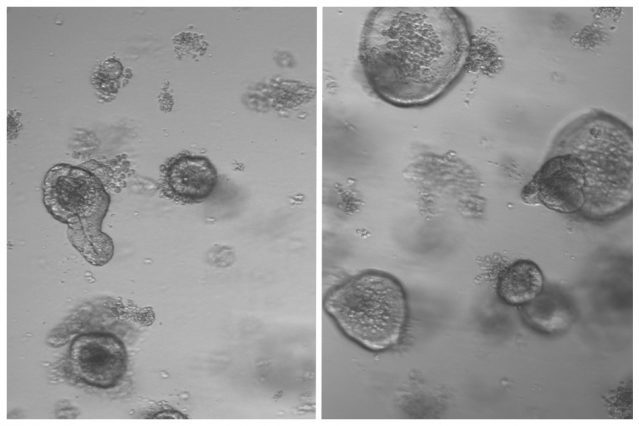
© Maria Mihaylova and Chia-Wei ChengIntestinal stem cells from mice that fasted for 24 hours, at right, produced much more substantial intestinal organoids than stem cells from mice that did not fast, at left.
As people age, their intestinal stem cells begin to lose their ability to regenerate. These stem cells are the source for all new intestinal cells, so this decline can make it more difficult to recover from gastrointestinal infections or other conditions that affect the intestine.

This age-related loss of stem cell function can be reversed by a 24-hour fast, according to a new study from MIT biologists. The researchers found that fasting dramatically improves stem cells' ability to regenerate, in both aged and young mice.

In fasting mice, cells begin breaking down fatty acids instead of glucose, a change that stimulates the stem cells to become more regenerative. The researchers found that they could also boost regeneration with a molecule that activates the same metabolic switch. Such an intervention could potentially help older people recovering from GI infections or cancer patients undergoing chemotherapy, the researchers say.

"Fasting has many effects in the intestine, which include boosting regeneration as well as potential uses in any type of ailment that impinges on the intestine, such as infections or cancers," says Omer Yilmaz, an MIT assistant professor of biology, a member of the Koch Institute for Integrative Cancer Research, and one of the senior authors of the study. "Understanding how fasting improves overall health, including the role of adult stem cells in intestinal regeneration, in repair, and in aging, is a fundamental interest of my laboratory."

Comment: See also The Health & Wellness Show: Fast-inating Information About Fasting


Arrow Up

Getting fit in six minutes per week

weight training deadlift
You've probably heard that high-intensity interval training (HIIT) can significantly cut the time needed in the gym, but just how little can you get away with? Could you actually get fit in as little as six minutes per week? The featured ABC Catalyst program investigates this claim.

A significant piece of the puzzle relates to how HIIT affects your mitochondria, tiny organelles found in most of your cells, responsible for production of energy in the form of adenosine triphosphate (ATP).

Your mitochondria have a series of proteins in the electron transport chain, in which they pass electrons from the reduced form of a metabolized portion of the food you eat to combine it with oxygen from the air you breathe and ultimately form water. As noted in the featured program, the more mitochondria you have and the healthier they are, the more energy your body can generate and the lower your risk of chronic disease.

Comment: 6 minutes per week is something literally everyone has time for. There's no longer any excuse not to get fit!

See also:


Bulb

Prescription to slow worsening myopia in Canadian kids? Head outdoors and limit screen time

Nearly 30% of children 11 to 13 are nearsighted, study finds
kid with iphone
© Craig Chivers/CBCJaclyn's iPhone is reflected in her new glasses, which she wears because of her myopia. She likes to use the device to send texts and emails to her friends.
Seven-year-old Jaclyn recently chose bright blue-framed glasses with red dots "because they're a splash of colour."

Jaclyn was diagnosed with myopia, or nearsightedness, at the age of four. "I was surprised to learn that she needed glasses," recalled her mother, Ellen Rosenberg, in Toronto.

Comment: Information on screen time:


Attention

Are any of America's commonly consumed foods glyphosate-free?

corn
© Marvin Dembinsky Photo Associate/AlamyMore than 200m pounds of weedkiller are used annually by US farmers on their fields. It is sprayed directly over some crops, including corn, soybeans, wheat and oats.
The FDA has been testing food samples for traces of glyphosate for two years, but the agency has not yet released any official results

US government scientists have detected a weedkiller linked to cancer in an array of commonly consumed foods, emails obtained through a freedom of information request show.

The Food and Drug Administration (FDA) has been testing food samples for residues of glyphosate, the active ingredient in hundreds of widely used herbicide products, for two years, but has not yet released any official results.

But the internal documents obtained by the Guardian show the FDA has had trouble finding any food that does not carry traces of the pesticide.

Comment: Glyphosate? It's in everything!