Health & WellnessS


Cell Phone

New study raises concerns over mobile phones as evidence reveals malignant brain tumors have doubled in last two decades

cell phone
© Illustration by Don Carroll
Fresh fears have been raised over the role of mobile phones in brain cancer after new evidence revealed rates of a malignant type of tumour have doubled in the last two decades.

Charities and scientists have called on the Government to heed longstanding warnings about the dangers of radiation after a fresh analysis revealed a more "alarming" trend in cancers than previously thought.

However, the new study, published in the Journal of Public Health and Environment, has stoked controversy among scientists, with some experts saying the disease could be caused by other factors.

The research team set out to investigate the rise of an aggressive and often fatal type of brain tumour known as Glioblastoma Multiforme (GBM).

They analysed 79,241 malignant brain tumours over 21 years, finding that cases of GBM in England have increased from around 1,250 a year in 1995 to just under 3,000.


Comment: Numerous studies have shown links between mobile phone use and brain cancers, but as with this study the controversy exists chiefly because the cell phone industry has consistently worked to dismiss or obstruct any facts that would endanger their business.


Life Preserver

Finnish study suggests taking frequent saunas could significantly reduce risk of stroke

saunas
People in Finland who regularly take saunas may face a far lower stroke risk than those who go less often, said a study Wednesday.

The report in the journal Neurology is the first to assess the relationship between saunas and strokes, and was based on more than 1,600 people who were followed for an average of 15 years.

Those who spent time in the sauna four to seven days a week showed a 61 percent lower risk of having a stroke than people who went just once a week, it said.

A benefit was also apparent for those who took saunas two or three times a week, with a 14 percent lower stroke risk than those who took saunas once per week.

Researchers found the benefits persisted even after adjusting for other factors that could affect stroke risk, including exercise, high cholesterol, smoking and diabetes.

Comment: Saunas are also an excellent method of detoxification and have been shown to reduce stress, improve the immune system and assist in weight loss among many other benefits. Infrared saunas which use infrared light instead of conventional heat to bring up the body temperature can improve the health results achieved as they heat tissues several inches deep enhancing natural metabolic processes, circulation and oxygenation of tissues.


Yoda

Now the good news: Dark chocolate consumption reduces stress and inflammation while boosting mood, memory and immunity

dark chocolate
© LLU HealthResearch shows there might be health benefits to eating certain types of dark chocolate.
New research shows there might be health benefits to eating certain types of dark chocolate. Findings from two studies being presented today at the Experimental Biology 2018 annual meeting in San Diego show that consuming dark chocolate that has a high concentration of cacao (minimally 70% cacao, 30% organic cane sugar) has positive effects on stress levels, inflammation, mood, memory and immunity. While it is well known that cacao is a major source of flavonoids, this is the first time the effect has been studied in human subjects to determine how it can support cognitive, endocrine and cardiovascular health.

Lee S. Berk, DrPH, associate dean of research affairs, School of Allied Health Professions and a researcher in psychoneuroimmunology and food science from Loma Linda University, served as principal investigator on both studies.

"For years, we have looked at the influence of dark chocolate on neurological functions from the standpoint of sugar content -- the more sugar, the happier we are," Berk said. "This is the first time that we have looked at the impact of large amounts of cacao in doses as small as a regular-sized chocolate bar in humans over short or long periods of time, and are encouraged by the findings. These studies show us that the higher the concentration of cacao, the more positive the impact on cognition, memory, mood, immunity and other beneficial effects."

Comment: Well that is good news! Who doesn't feel better after having some dark chocolate? The effect is real - it's science!

See also:


Health

France on alert as disease-carrying tiger mosquito dangerously spreading across country

tiger mosquito
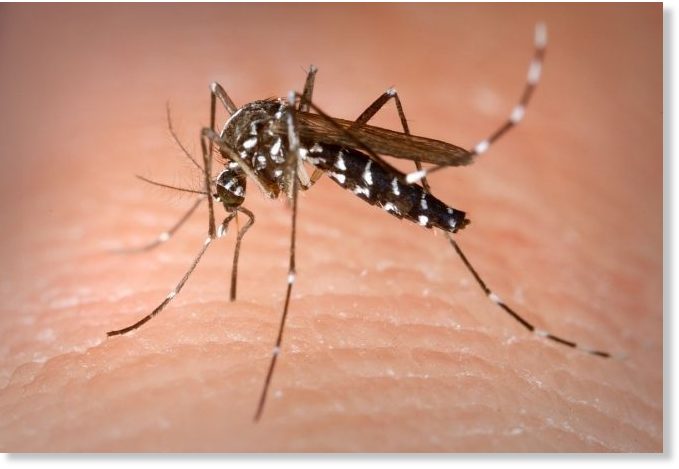
The tiger mosquito can be identified by its distinctive black-and-white stripes
The tiger mosquito has now been confirmed in 42 departments across the country, with an alert issued to warn of its danger as a carrier of disease, along with advice to prevent its spread.

The species has been described as particularly invasive, and a vector for serious diseases, including dengue fever and viral infections chikungunya, and zika.

This has made the insect a priority for authorities to monitor, especially during its imminent usual "active period" of May 1 to November 30.

Currently most of the south and middle of the country is affected, as well as southern Ile-de-France, and Corsica. Just six departments were recorded as affected in 2010.

Snowflake Cold

The (maybe not so) definitive guide to cold therapy

cold adaptation
Cold is really catching these days. Aubrey Marcus, whom I recently filmed a nice podcast with, was asked about his winning daily behaviors on another show. The very first thing he mentioned was "exposure to cold." His practice is finishing his morning shower with a three-minute stint at full cold setting. He mentioned the hormonal benefits but also the mental edge he gets from psyching up and accepting the challenge instead of wimping out. He also cited research that people who engage in therapeutic cold exposure catch fewer upper respiratory infections. Hence, like many other elements of conventional wisdom, the old wives tale is backwards. Of course, we are talking about acute and optimal duration cold exposure, not prolonged exposure to elements that weaken your resistance and contribute to immune disturbances.

As with keto, there's much more to be learned in this burgeoning field before we can operate in definitive (hence today's title). Today, however, I'll expose you (the first of more double entendrés to be on the lookout for) to important concepts and best practices so that you may enjoy the vaunted benefits and avoid some of the negative effects of going about cold exposure wrong.

Cold therapy has been around forever as in the athletic world-a central element of injury treatment and post-workout recovery. Ice packs wrapped on aching joints are a staple of every high school, college and professional team locker room. The iconic stainless steel cold whirlpool has been a post-workout destination of professional ballers for decades, and Olympic distance runners have inspired millions of recreational runners to dutifully wade into a cold stream, lake or pool after long runs to soothe and revitalize inflamed muscles. In recent years, whole body cryotherapy clinics have exploded in popularity, making grand promises in return for $45-$90 (the latter in NYC) for a three-minute session in a chamber blowing air at 190-255 degrees below zero Fahrenheit. I haven't tried cryo, but let's just say I've heard it stings.

Syringe

Big Pharma's Stranglehold on Vaccination Policy in Europe: "Parliamentarians incapable of impartiality"

Handshake
European Union (EU) residents have less confidence in vaccine safety than people in any other region in the world. From the perspective of the powerful pharmaceutical industry and its bought politicians, this growing skepticism about vaccine orthodoxy cannot be permitted to gain further momentum. Ignoring massive protests by citizens and municipal authorities, the governments of France, Italy and other EU nations have begun methodically and paternalistically enacting new vaccine laws that seek to erase any remaining ability for citizens to weigh risk-benefit information and make vaccine decisions for themselves.

Bug

CDC warns infections from mosquitoes, ticks and fleas surging in US

infections ticks mosquitoes
The U.S. CDC said that some 96,075 diseases caused by bites by mosquitoes, ticks and fleas were reported in 2016, up from 27,388 in 2004.
The number of Americans sickened each year by bites from infected mosquitoes, ticks or fleas tripled from 2004 through 2016, with infection rates spiking sharply in 2016 as a result of a Zika outbreak, U.S. health officials said on Tuesday.

The U.S. Centers for Disease Control and Prevention said that some 96,075 diseases caused by bites by mosquitoes, ticks and fleas were reported in 2016, up from 27,388 in 2004, in an analysis of data from the CDC's National Notifiable Diseases Surveillance System.

Infections in 2016 went up 73 percent from 2015, reflecting the emergence of Zika, which is transmitted by mosquitoes and can cause severe birth defects. Zika was the most common disease borne by ticks, mosquitoes and fleas reported in 2016, with 41,680 cases reported, followed by Lyme disease, with 36,429 cases, almost double the number in 2004.


Comment: More panic inducing hysteria - Zika does not cause birth defects as it is by and large harmless, but the pesticides used to fight it probably do.


Comment: Sounds like the 'health authorities' are planning to roll out some new vaccines or are planning a release of GM mosquitoes and need to prime the populace.

What is the Zika Virus epidemic really covering up? GM Mosquitoes, herbicide, pesticide & vaccine harm


Dollars

Big Pharma pays universities for most medical research in the U.S.

drugs medicine
© NPR
In the past, collaboration between scientists in academia and pharmaceutical companies was relatively uncommon. However, lately there has been a growing interest in developing financial partnerships between these two sectors. The drug industry's funding patterns for academic research has shifted from handpicked projects on investigation of the biology of disease to large integrated programs, with an emphasis on the development of therapeutic drugs and vaccines. In the last few years, pharmaceutical companies have also formed "science hubs" in bigger academic institutions to promote biomedical innovation.1

Some of these partnerships include GlaxoSmithKline at Harvard University, Pfizer at University of California, and AstraZeneca at University of Washington, etc.1 In fact, with the increasing financial ties between academia and the pharmaceutical industry, many drug companies have formed specialized divisions that are solely responsible for seeking research and development relationships with academic institutions.2

Bullseye

New study calls into question the 'high cholesterol myth' and the need for Statin drugs

Blood
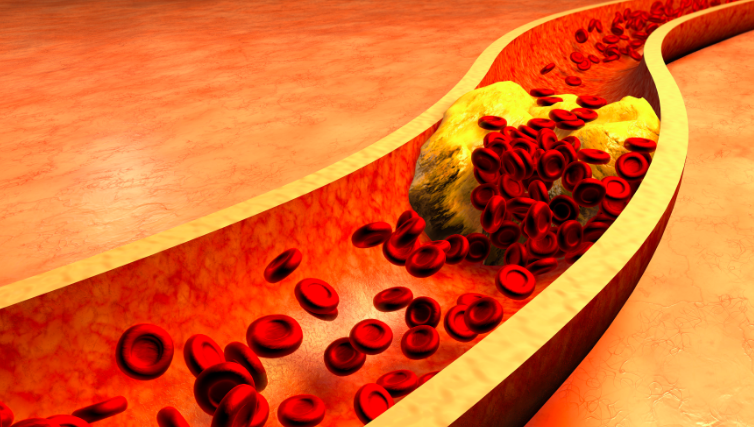
A recent study in the BMJ Open Journal may be the final nail in the coffin for industry-recommended treatment of high cholesterol-indeed, with the very contention that high cholesterol is a health problem at all. The study concluded the following about LDL-C (the supposed 'bad' cholesterol):
High LDL-C is inversely associated with mortality in most people over 60 years. This finding is inconsistent with the cholesterol hypothesis (ie, that cholesterol, particularly LDL-C, is inherently atherogenic). Since elderly people with high LDL-C live as long or longer than those with low LDL-C, our analysis provides reason to question the validity of the cholesterol hypothesis.
As noted, the study refers to claims that 'high cholesterol causes plaque buildup in arteries (atherogenisis) that lead to an increased risk of heart disease' as a hypothesis. One can wonder how often a doctor has told his patient "I recommend that you take Lipitor because there is an unproven hypothesis out there that says high cholesterol is bad for you?"

Comment: Read more about Statin madness:


Info

Journal of the American Osteopathic Association Review: Magnesium-deficient diet makes Vitamin D ineffective

Osteopathic Association
Vitamin D can't be metabolized without sufficient magnesium levels, meaning Vitamin D remains stored and inactive for as many as 50% of Americans, according to a review of previous studies, published in the March 2018 issue of the Journal of the American Osteopathic Association.

"People are taking Vitamin D supplements but don't realize how it gets metabolized. Without magnesium, Vitamin D is not really useful or safe," said Professor Mohammed Razzaque, from Lake Erie College of Osteopathic Medicine in Erie, Pensylvania.

"Consumption of Vitamin D supplements can increase a person's calcium and phosphate levels even if they remain Vitamin D deficient."