Health & WellnessS


Health

New Approach Sheds Light On Ways Circadian Disruption Affects Human Health

Growing evidence indicates that exposure to irregular patterns of light and darkness can cause the human circadian system to fall out of synchrony with the 24-hour solar day, negatively affecting human health - but scientists have been unable to effectively study the relationship between circadian disruptions and human maladies.

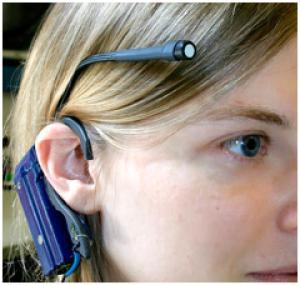
Daysimeter
©Rensselaer/Dennis Guyon
The Daysimeter, shown above, measures an individual's daily rest and activity patterns, as well as exposure to circadian light -- short-wavelength light, particularly natural light from the blue sky, that stimulates the circadian system.

A study by researchers in Rensselaer Polytechnic Institute's Lighting Research Center (LRC) provides a new framework for studying the effects of circadian disruption on breast cancer, obesity, sleep disorders, and other health problems.

Butterfly

Colombia: AIDS in the time of war

The combatants in Columbia's conflict threaten AIDS victims and even facilitate the spread of the disease, but powerful activist groups are fighting for their rights.

A few months before Myrian Cossio's 20th birthday, in San José del Guaviare, a bustling frontier town deep in Colombia's eastern tropical lowlands, armed men forced her into a car. She immediately knew they were from one of the three armed groups fighting in Colombia's decades-long civil war - army, paramilitary, and guerrillas. They took her to the town's outer limits and put a gun to her head. "We know you have AIDS, and we know you work with those whores and faggots," they told her. She had 48 hours to leave town, or they'd kill her.

Display

TV overrides brain, makes kids fat, study suggests

OTTAWA - Watching TV at mealtime can make children overeat, as the distraction overrides signals that normally make a person feel full, Canadian research has found.

Bulb

Scientists find key brain circuits for attention

Scientists have identified the brain circuits that play a key role in helping us pay attention, a finding that may help explain why things go wrong in diseases such as Alzheimer's and attention deficit disorders.

The finding published in the journal Nature could provide a new target for potential drugs to treat some neurodegenerative conditions and attention deficit hyperactivity disorder or ADHD, the researchers said.

Cow

Dutch farmers boycott British cattle after TB outbreak in Holland

Dutch farmers are boycotting cattle from the UK, an export industry worth around £270 million, after calves sent to Holland were found to be infected by bovine tuberculosis.

The calves were traced after tuberculosis (TB) reactors were found on a British farm which exported the animals in May.

Dutch authorities have placed 27 farms in Holland under TB restrictions and 12 cattle have tested positive for the highly infectious disease, which damages the animal's lungs and eventually leads to death.

X

Scotland: Inspectors find filthy conditions at hospital where 18 patients died of superbug C.diff

Hospital inspectors uncovered a catalogue of filth, decay and malpractice five months AFTER a killer superbug outbreak began.

Eighteen people have died from the C.difficile bug at overcrowded Vale of Leven Hospital in six months.

Last night their relatives spoke of their shock at the squalor found on the wards.

Inspectors found the appalling conditions at the hospital - where the first C.diff case came in December - on May 27.

Since then, another patient has died partly as a result of contracting the bug and two more have been infected.

People

US: A new implant to block fat absorption, reduce obesity

A promising new implant to reduce obesity is likely to replace existing bariatric surgeries, which are painful and invasive, according to a study here.

In a six-month open trial involving three medical centres in Australia, Mexico and Norway, 31 obese participants who received the vagal nerve-blocking device, lost nearly 15 percent of their excess weight. A quarter shed more than 25 percent, and three patients lost more than 30 percent.

Michael Camilleri, a Mayo Clinic gastroenterologist, helped design the study and one whose previous work and know-how contributed to development of the device in collaboration with EnteroMedics.

Camilleri said the goal is to find a less drastic alternative to bariatric surgery that will still yield significant weight loss.

Health

US: After hip replacements, a lawsuit

[Second of two articles]

Implant company paid Pennsylvania surgeon consulting fees.

Katrina McKenzie
©BOB WILLIAMS / For The Inquirer
Katrina McKenzie and husband, Woodrow. Hip implants she received at Penn failed.

Fed up with the constant pain in her hips, Katrina McKenzie took her surgeon's advice and had them replaced with experimental implants.

The 31-year-old from Galloway, N.J., who agreed to participate in a clinical study, knew there was a risk that her new hips could fail.

But she didn't know that the manufacturer financing the study, Smith & Nephew, was also paying her surgeon tens of thousands of dollars a year as a consultant.

Health

US: Implant firms pay doctors millions

[First of two articles]

As joint replacements have increased, so have payments to surgeons.

Artificial knee
©CLEM MURRAY / Inquirer Staff Photographer
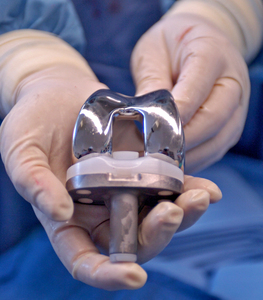
Robert E. Booth Jr. with an artificial knee during surgery at Pennsylvania Hospital. Booth says he performs about 1,200 knee replacements a year.

In the past decade, hip- and knee-replacement surgery has exploded - nearly doubling to about 750,000 operations a year and fueling a multibillion-dollar implant industry with profit margins approaching 20 percent.

With so much money in play, competition among artificial hip and knee manufacturers has fostered a system of five-, six- and seven-figure payments to doctors in royalties, consulting deals and speaking fees.

Evil Rays

US: Neural Implant That Learns With The Brain May Help Paralyzed Patients

Devices known as brain-machine interfaces could someday be used routinely to help paralyzed patients and amputees control prosthetic limbs with just their thoughts. Now, University of Florida researchers have taken the concept a step further, devising a way for computerized devices not only to translate brain signals into movement but also to evolve with the brain as it learns.

Instead of simply interpreting brain signals and routing them to a robotic hand or leg, this type of brain-machine interface would adapt to a person's behavior over time and use the knowledge to help complete a task more efficiently, sort of like an assistant, say UF College of Medicine and College of Engineering researchers who developed a model system and tested it in rats.