Health & WellnessS


Syringe

Flu Shots Contain More than 250 Times the EPA's Safety Limit for Mercury

baby,vaccine
© Sciencephotolibrary

Thimerosal is a widely used vaccine preservative that is present in the majority of flu shots and other vaccines. Thimerosal is 49% mercury by volume, an extremely toxic chemical element that wreaks havoc on the nervous system, neurological function, and overall biological function [1]. Each dose of flu vaccine contains around 25 micrograms of thimerosal, over 250 times the Environmental Protection Agency's safety limit of exposure.

Mercury, a neurotoxin, is especially damaging to undeveloped brains. Considering that 25 micrograms of mercury is considered unsafe by the EPA for any human under 550 pounds, the devastating health effects of mercury on a developing fetus are truly concerning.

Though thimerasol is not entirely mercury, the mercury content is still extremely high, making it very toxic to the human body. Despite highly exceeding the EPA safety standards for mercury content by over 250 times, flu shots are still recommended for children over 6 months and pregnant women.


2 + 2 = 4

Study Links Circumcision to Personality Trait Disorder

Image
© Unknown
Researchers find circumcised men have higher alexithymia scores than intact men. Alexithymia is the inability to process emotions.

The International Journal of Men's Health has published the first study of its kind to look at the link between the early trauma of circumcision and the personality trait disorder alexithymia. The study, by Dan Bollinger and Robert S. Van Howe, M.D., M.S., FAAP, found that circumcised men are 60% more likely to suffer from alexithymia, the inability to process emotions.

People suffering from alexithymia have difficulty identifying and expressing their emotions. This translates into not being able to empathize with others. Sufferers of severe alexithymia are so removed from their feelings that they view themselves as being robots. If acquired at an early age, such as from infant circumcision, it might limit access to language and impede the socialization process that begins early in life. Moderate to high alexithymia can interfere with personal relationships and hinder psychotherapy. Impulsive behavior is a key symptom of alexithymia, and impulsivity is a precursor to violence.

Comment: For more information concerning circumcision, see this Sott link:

Circumcision Fight: Profit, Pleasure, or Population Control?


Stop

Mercury Mess: Wild Bird Sex Stifled

Image
Methylmercury alters hormone levels in shore birds, increasing male homosexuality and decreasing reproductive success.

Levels of methylmercury commonly measured in the environment disrupt hormone levels in both sexes of white ibis, a bird species that lives in US southeast coastal marshes. Altered courtship and chick rearing behaviors tied to the hormone changes reduced reproduction. This result could impact wild populations.

The experimental study is among the first to show that methylmercury can act as an endocrine disruptor and reduce reproductive success in wildlife. Importantly, effects were seen at low and chronic exposures that would be typical in the wild.

The findings, reported by scientists from the University of Florida, also align with results from previous studies that examined mercury's effects on reproduction in ibis, other wild bird species and fish.

Hormone changes in males were more erratic with some males nesting with other males. The changes in hormone levels were more pronounced in males bonded with other males compared to those bonded with females.

Mercury is a metal naturally found in soil and rocks. It is a common global pollutant that persists in the environment and the body. Coal burning at power plants is one of the primary ways that mercury is released into the atmosphere. From there, mercury enters water bodies and is taken up by aquatic animals, including fish.

Most wildlife and people are exposed through diet to mercury in its organic form - known as methylmercury. Predators and other animals high in the food chain are particularly at risk of exposure, because methylmercury concentrations increase at higher levels of the food chain.

Comment: Mercury is an environmental toxin dangerous to all living things:

Despite decline, mercury contamination remains environmental hazard in US

Exposure To Low Doses Of Mercury Changes The Way The Arteries Work

How to Rid Your Body of Mercury and Other Heavy Metals


Attention

US: Listeria Outbreak from Cantaloupes Kills 15, Infects 84

Image
© Reuters/STR NewFarm workers harvest cantaloupe in Somerton, Arizona, June 7, 2006. Summer is the harvest season for cantaloupes and watermelons.
A listeria outbreak caused by tainted cantaloupes has killed 15 people in the United States and infected 84, U.S. health officials said on Friday.

So far, the U.S. Centers for Disease Control and Prevention said 19 states have reported infections from one of the four strains of listeria involved in the outbreak.

Of the 15 deaths, five were in New Mexico, three were in Colorado, two were in Texas, and there was one each in Kansas, Maryland, Missouri, Nebraska and Oklahoma.

Health

WHO: Over 2 million people die every year from indoor and outdoor air pollution

Image
Toxic world, toxic bodies - time to detoxify on all levels!
Geneva - In many cities air pollution is reaching levels that threaten people's health according to an unprecedented compilation of air quality data released today by WHO. The information includes data from nearly 1100 cities across 91 countries, including capital cities and cities with more than 100 000 residents.

Over 2 million people die from indoor and outdoor air pollution

WHO estimates more than 2 million people die every year from breathing in tiny particles present in indoor and outdoor air pollution. PM10 particles, which are particles of 10 micrometers or less, which can penetrate into the lungs and may enter the bloodstream, can cause heart disease, lung cancer, asthma, and acute lower respiratory infections. The WHO air quality guidelines for PM10 is 20 micrograms per cubic metre (µg/m3) as an annual average, but the data released today shows that average PM10 in some cities has reached up to 300 µg/m3.

Main findings

The main findings contained in the new compilation are:
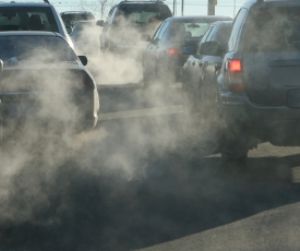
Persistently elevated levels of fine particle pollution are common across many urban areas. Fine particle pollution often originates from combustion sources such as power plants and motor vehicles.

The great majority of urban populations have an average annual exposure to PM10 particles in excess of the WHO Air Quality guideline recommended maximum level of 20 µg/m3. On average, only a few cities currently meet the WHO guideline values.

For 2008, the estimated mortality attributable to outdoor air pollution in cities amounts to 1.34 million premature deaths. If the WHO guidelines had been universally met, an estimated 1.09 million deaths could have been prevented in 2008. The number of deaths attributable to air pollution in cities has increased from the previous estimation of 1.15 million deaths in 2004. The increase in the mortality estimated to be attributable to urban air pollution is linked to recent increases in air pollution concentrations and in urban population size, as well as improved data availability and methods employed.

Magnify

"Alarm Clock" Gene Explains Wake-Up Function of Biological Clock

Image
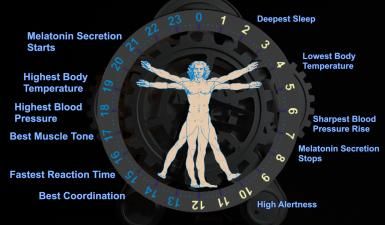
© Salk Institute for Biological StudiesThe circadian clock depicts a person's regular physiological events during certain hours of the day.
Ever wondered why you wake up in the morning -- even when the alarm clock isn't making jarring noises? Wonder no more. Researchers at the Salk Institute for Biological Studies have identified a new component of the biological clock, a gene responsible for starting the clock from its restful state every morning.

The biological clock ramps up our metabolism early each day, initiating important physiological functions that tell our bodies that it's time to rise and shine. Discovery of this new gene and the mechanism by which it starts the clock everyday may help explain the genetic underpinnings of sleeplessness, aging and chronic illnesses, such as cancer and diabetes, and could eventually lead to new therapies for these illnesses.

"The body is essentially a collection of clocks," says Satchindananda Panda, an associate professor in Salk's Regulatory Biology Laboratory, who led the research along with Luciano DiTacchio, a post-doctoral research associate. "We roughly knew what mechanism told the clock to wind down at night, but we didn't know what activated us again in the morning. Now that we've found it, we can explore more deeply how our biological clocks malfunction as we get older and develop chronic illness."

Beaker

Are Flame Retardants Safe? Growing Evidence Says 'No'

Image
© naturepedic.comConcern is often focused on PBDEs, a commonly used toxic flame retardant in children's products.
New studies have underscored the potentially harmful health effects of the most widely used flame retardants, found in everything from baby blankets to carpets. Health experts are now calling for more aggressive action to limit these chemicals, including cutting back on highly flammable, petroleum-based materials used in many consumer products.

Over the past 40 years, a class of chemicals with the tongue-twisting name of halogenated flame retardants has permeated the lives of people throughout the industrialized world. These synthetic chemicals - used in electronics, upholstery, carpets, textiles, insulation, vehicle and airplane parts, children's clothes and strollers, and many other products - have proven very effective at making petroleum-based materials resist fire.

Yet many of these compounds have also turned out to be environmentally mobile and persistent - turning up in food and household dust - and are now so ubiquitous that levels of the chemicals in the blood of North Americans appear to have been doubling every two to five years for the past several decades.

Book

Book Review: Wheat Belly

Image
© amazon.com
Over a half decade ago Professor Jared Diamond, in his Pulitzer Prize-winning book Guns, Germs, and Steel, famously wrote
"The adoption of agriculture, supposedly our most decisive step toward a better life, was in many ways a catastrophe from which we have never recovered."
Dr Diamond was referring, of course, to the devolution of human health that took place as mankind suffered the corporal transformation driven by the mismatch between hunter-gatherer genes and an agricultural diet and lifestyle. Smaller stature, decreased cortical bone thickness, obesity, increased incidence of infectious diseases, dental caries, periodontal disease, vitamin deficiencies, and even famine - all common in agriculturists - were not, for the most part, the lot of pre-agricultural man.

Humanity doubtless gained more than it lost in this hunter to farmer changeover when viewed in a big-picture sort of way. Farming made possible larger communities filled with workers, workers who, for the first time, made specialization of labor a possibility. And fewer people could till the fields and provide food for the many, freeing the others to pursue the arts, business, politics, and warfare.

Comment: But you are accused of being in a cult if you don't eat the food the mainstream tells you is "good for you." God forbid you should be healthy and escape the ministrations of Big Pharma!


Red Flag

Air Pollution 'takes up to eight months off life'

Image
© eta.co.uk
Air pollution is estimated to reduce life expectancy in the UK by an average seven to eight months, according to the Chartered Institute of Environmental Health (CIEH).

Today, the first World Environmental Health Day held by the institute will target the Northern Ireland Executive and the public in a bid to reduce pollution problems here.

Emissions from road traffic will be a particular issue focused on, with children living near busy roads showing an increased risk of respiratory illnesses including asthma, according to a study conducted by the Royal Commission on Environmental Pollution.

Comment: It is obvious according to the following articles listed below that air pollution is shortening the lives of humans and contributes to many different illnesses:

Air Pollution Leads to Breast Cancer
Pollution Linked to High Blood Pressure
Air Pollution Linked to Lung Cancer
Air pollution linked to early form of dementia
Diabetes Risk Tied to Air Pollution
Pollution Can Lead to Brain Damage and Depression Warn Scientists
New research shows associations between exposure to traffic-related air pollution and the onset of allergic diseases in children
Evidence Growing of Air Pollution's Link to Heart Disease, Death
Air Pollution May Increase Risk Of Appendicitis


Health

Mercury in Fish Harms Immune System

Mercury Poison
© Paul-in-London / flickr

Adults exposed to methylmercury through a fish diet have immune system changes similar to those seen in more highly exposed gold mine workers, according to a study of Brazilians living in the Amazon River Basin.

The results from the fish-eating exposures could be relevant to other places, including those in the United States where people regularly eat fish with higher mercury levels.

The results show that immune system effects are not limited to those who are highly exposed through gold mining jobs, but also occur in adults who eat fish contaminated with higher levels of mercury. The nutrient selenium - with its long-debated role in immune function - offered no clear protection against the mercury induced changes.

The findings add more details of how mercury alters the immune system and specific antibodies in those exposed to the pollutant through diet. Whether these changes in the immune system lead to health problems is unknown.