Health & WellnessS


Dollar

Dollars for Docs: How Industry Dollars Reach Your Doctors

Image
© pensionriskmatters.com
Drug companies have long kept secret details of the payments they make to doctors and other health professionals for promoting their drugs. But 12 companies have begun publicizing the information, some because of legal settlements. ProPublica pulled their disclosures into a database so patients can search for their doctor. Accepting payments isn't necessarily wrong, but it can raise ethical issues.

For decades, drug companies kept the names of their speakers - and how much they paid them - secret. But over the past two years, companies have begun posting this information on their websites, some as the result of legal settlements with the federal government.

ProPublica took these disclosures and assembled them into a single, comprehensive database that allows patients to search for their physician.

It was not easy. Some of the firms constructed their sites in a way that made it near impossible to analyze or, in some cases, even download their data. And each firm disclosed its data differently. Some, for example, simply included speaking. Others also detailed consulting. Sometimes, research, business travel costs and meals were listed, too.

ProPublica will update the database from time to time as additional companies release their payment data. Federal law requires that all companies publicly report this data beginning in 2013. That information will be posted on a government web site.


Question

Why Do Most Vegetarians Go Back To Eating Meat?

Image
© Psychology Today
For most people, vegetarianism is temporary phase. Why?

I am interviewing Staci Giani who is forty-one but looks ten years younger. Raised in the Connecticut suburbs, she now lives with her partner Gregory in a self-sustaining eco-community deep in the mountains twenty minutes north of Old Fort, North Carolina. Staci radiates strength, and when she talks about food, she gets excited and seems to glow. She is Italian-American, attractive, and you want to smile when you talk to her. She tells me that she and Gregory built their own house, even cutting the timber and milling the logs. I think to myself, "This woman could kick my ass."

Staci wasn't always so fit. In her early 30's, Staci's health started going downhill. After twelve years of strict vegetarianism, she began to suffer from anemia and chronic fatigue syndrome, and she experienced stomach pains for two hours after every meal. "I was completely debilitated," she tells me. "Then I changed the way I ate."

"Tell me about your diet now. What did you have for breakfast today?" I ask.

"A half pint of raw beef liver," she says.

Comment: To understand more about 'Why Most Vegetarians Go Back To Eating Meat?' read the excellent book The Vegetarian Myth by Lierre Keith. The author explains in great detail why so many former vegetarians revert back to eating animals. As the article above shares most vegetarians choose to return to a carnivorous diet because of issues related to health!

Watch the following 4 part interview with Lierre Keith to learn more:

Lierre Keith on 'The Vegetarian Myth - Food, Justice and Sustainability'


Sun

Autism and Vitamin D

Image
© Psychology Today
The sun is not the enemy

In recent years we have been told to avoid the sun. Anyone reading women's magazines, in fact, will have been advised to put on sunscreen on face and hands "just in case" as those few moments walking from the car to the workplace or grocery store might be enough to cause aging and cancer cells to go nuts in our vulnerable skin.

We slather on sunscreen and sunblock, which for the most part completely blocks the UVB sun rays that increase our cancer protective vitamin D and allows in some cancer causing UVA - to me that sounds like a silly thing to do!

Why not get enough sun to get a little color, obtain a healthy amount of the essential vitamin D and then cover up to avoid sunburn and further problems? It is certainly what our ancestors, absent suncreen, must have done for hundreds of thousands of years.

Magnify

Vaccines and Autism: A New Scientific Review

Image
© CBS/istockphoto.com
For all those who've declared the autism-vaccine debate over - a new scientific review begs to differ. It considers a host of peer-reviewed, published theories that show possible connections between vaccines and autism.

The article in the Journal of Immunotoxicology is entitled "Theoretical aspects of autism: Causes--A review." The author is Helen Ratajczak, surprisingly herself a former senior scientist at a pharmaceutical firm. Ratajczak did what nobody else apparently has bothered to do: she reviewed the body of published science since autism was first described in 1943. Not just one theory suggested by research such as the role of MMR shots, or the mercury preservative thimerosal; but all of them.

Ratajczak's article states, in part, that "Documented causes of autism include genetic mutations and/or deletions, viral infections, and encephalitis [brain damage] following vaccination [emphasis added]. Therefore, autism is the result of genetic defects and/or inflammation of the brain."

Cell Phone

Mobile Phone Users Suffering From 'Text Neck'

Image
© REXKeeping the neck and head stretched forwards for long periods could eventually cause the natural curvature of the neck to reverse, potentially leading to serious health problems.
A new condition dubbed "text neck" is on the rise due to the amount of time people spend hunched over their mobile phone and tablet computer screens, chiropractors have warned.

The affliction, caused by flexing the neck for extended periods of time, can be a forerunner of permanent arthritic damage if it goes without treatment.

Cases of the repetitive strain injury are on the rise as smart phones and tablet computers such as the iPad become increasingly popular, experts said.

In severe cases the muscles can eventually adapt to fit the flexed position, making it painful to straighten the neck out properly.

Bacon

Carbohydrates Trick Your Body into Stacking on Pounds - Fast

Why we get fat and what to do about it is an ongoing topic on Uprising Radio in interviews with researchers at Johns Hopkins University School of Medicine and its Heart and Vascular Institute. In their latest studies, researchers looked at science and decades of obesity rates, and found that some old paradigms on the cause of weight gain could be off-track. They also learned that people wanting to lose weight may have more choices in how to go about it, than they thought.
"Overweight and obese people appear to really have options when choosing a weight-loss program, including a low-carb diet, even if it means eating more fat," says the studies' lead investigator, a professor of medicine and director of clinical and research exercise physiology, Kerry Stewart, Ed.D.

Monkey Wrench

Shame on AMA's Archives of Internal Medicine

Image
© Alliance for Natural Health
Did you hear the breaking news last night - that multivitamins may shorten your life? Here's how junk science from the AMA set off the media frenzy.

Bloomberg phrased it this way:
"Multivitamins and some dietary supplements, used regularly by an estimated 234 million US adults, may do more harm than good, according to a study that tied their use to higher death rates among older women."
The study's authors outrageously concluded,
"We see little justification for the general and widespread use of dietary supplements."

Comment: Outrageous conclusion indeed! The statement that vitamins "may do more harm than good, according to a study that tied their use to higher death rates among older women" is ridiculous! According to the following article: 27 Years: No Deaths from Vitamins, 3 Million from Prescription Drugs it is clear that Big Pharma is the real killer and not dietary supplements!
Over the past 27 years the complete time frame that the data has been available there have been 0 deaths as a result of vitamins and over 3 million deaths related to prescription drug use.

The study, published in the American Medical Association's (AMA's) Archives of Internal Medicine, assessed the use of vitamin and mineral supplements in nearly 39,000 women whose average age was 62. The researchers asked the women to fill out three surveys, the first in 1986, the second in 1997, and the last in 2004, reporting what supplements they took and what foods they ate, and answering a few questions about their health.

Attention

Eat Right, Pay Up: Government Gets It Wrong Again

Image
© Alliance for Natural Health
"Fat taxes" are tariffs on what governments feel are unhealthy foods. If only they had an inkling about which foods are truly unhealthy!

Denmark has just started imposing a tax on all foods containing saturated fats. Other countries have also started taxing food and drink they think are unhealthy, hoping to reduce cardiovascular disease, obesity, and diabetes. In the process, they are totally ignoring the latest scientific research.

The law that went into effect this month specifically targets saturated fats - the fats found most commonly in animal products like butter, cream, and meat, though the legislation makes no distinction between a McDonald's Double Quarter Pounder with Cheese and milk from an organic farm.

Comment: For more important information about the benefits of saturated fats read the following articles:

The Big Lie: "Saturated Fats Are Bad For You"
Get Saturated: Four Reasons Saturated Fat is Healthy
Enjoy Saturated Fats, They're Good for You!
Wrongly Convicted? The Case for Saturated Fat
Coconut Oil Benefits: When Fat Is Good For You


Attention

Seeing RED over PINK: The Dark Side of Breast Cancer Awareness Month

breast cancer pink-washing
© Unknown
If "Buckets for the Cure," and similar cause-marketing campaigns that promote products which contain carcinogenic ingredients are making you nauseous (if not angry!), this article may shed light on the underlying "conflict of interest" behind National Breast Cancer Awareness Month and why we should all "Think Before We Pink."

Zeneca Group plc., a pharmaceutical subsidiary of Imperial Chemical Industries and manufacturer of the blockbuster breast cancer drugs Arimidex and Tamoxifen, founded the National Breast Cancer Awareness Month in 1985 in order to promote the widespread adoption of x-ray mammography (and the sale of their products).1 While the increase in routine screenings has resulted in soaring breast cancer diagnoses, rates of invasive breast cancer have actually increased in certain populations.2

A recent study and editorial published in the New England Journal of Medicine indicated that x-ray mammography screening may "save" only 1 person for every 2,500 screened. Among the 2,500 screened at least 1,000 will have a false alarm, 500 would undergo an unnecessary biopsy and 5 or more would become treated for abnormal finds that would never become fatal, i.e. their lives will be shortened due to medication/surgical/stress-induced adverse effects.

Health

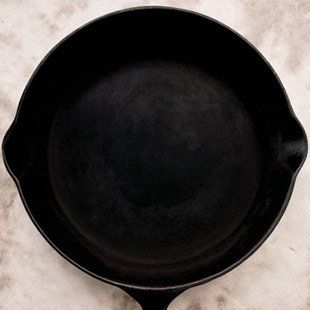
3 Health Reasons to Cook with Cast-iron

Image
© eatingwell.com
Cast-iron skillets may seem like an old-fashioned choice in the kitchen. But this dependable cookware is a must in the modern kitchen. Cast-iron skillets conduct heat beautifully, go from stove top to oven with no problem and last for decades. (In fact, my most highly prized piece of cookware is a canary-yellow, enamel-coated cast-iron paella pan from the 1960s that I scored at a stoop sale for $5.) As a registered dietitian and associate nutrition editor of EatingWell Magazine, I also know that there are some great health reasons to cook with cast iron.

Comment: Don't worry about cooking with less oil, the more good, natural saturated fat you eat, the better!