Health & WellnessS


Health

Chemical Used in Teflon & Non-Stick Cookware Linked to Heart Disease

Cast Iron
© NaturalSociety
Further presenting non-stick cookware dangers, a new study published in this month's Archives of Internal Medicine reveals a relation between PFOA (the chemical in Teflon, used in nonstick pans among other things) and heart disease. While scientists are cautious, as they always are, to say they are definitively linked, some say steering clear of the chemical "just in case" wouldn't be a bad idea.

Cooking up Heart Disease

According to the study published in the journal The Jama Network, researchers looked at PFOA presence and incidence of heart disease, heart attack, or stroke. About 98 percent of Americans have traces of PFOA in them, those with the highest levels of the chemical were found to have double the odds of heart disease when compared with those having the lowest levels.

Also, those with higher PFOA, had a 78 percent higher risk of peripheral heart disease - where arteries narrow and harden.

Researchers say there is no hard evidence that the PFOA causes heart diseases or otherwise increases someone's risk, merely that the conditions "co-exist."
"What we are finding is that high levels of PFOA and cardiovascular disease coexisted for some reason. That is all," said lead author Dr. Anoop Shgankar with the West Virginia University School of Public Health. "It is possible that we are seeing something that is just a bystander and is there because of confounding associations."
But this isn't the first time perfluorooctanoic acid (PFOA) has been associated or found co-existing with other health problems. The Environmental Working Group has it classified as a "likely carcinogen," meaning it could lead to cancer. Even the Environmental Protection Agency (EPA) said it was likely to cause cancer.

Heart

Cholesterol: It's All Good

Butter
© GreenMedInfo
You've heard it repeatedly: there are two kinds of cholesterol: the good high density lipoprotein (HDL) and the "bad" low density lipoprotein (LDL). Now a researcher at Texas A&M University has come to the defense of LDL and says that it may not be so bad after all. In fact, it helps build muscle.

According to Steve Riechman, a researcher in the Department of Health and Kinesiology, the study reveals that "LDL is not the evil Darth Vader of health it has been made out to be in recent years."

In a study published in the Journal of Gerontology, Riechman and colleagues from the University of Pittsburgh, Kent State University, the Johns Hopkins Weight Management Center and the Northern Ontario School of Medicine examined 52 adults from ages 60 to 69. The participants were in generally good health, but not physically active, and none of them were participating in a training program.

To the researchers' surprise, after the subjects completed fairly vigorous workouts, the participants who had the highest levels of LDL cholesterol had gained the most muscle mass.

According to Riechman, the study shows that we need a certain amount of LDL to gain more muscle mass. "There's no doubt you need both - the LDL and the HDL -- and the truth is, it (cholesterol) is all good," said Reichman.

Cholesterol is a type of fat found in all humans and serves many necessary functions in the body. For instance, it's been called the mother of all hormones. Any attempt to remove all the 'bad' cholesterol from your body would cause serious problems. In fact, low levels of cholesterol can be hazardous to your health.

2 + 2 = 4

Infant EczemaTied to Gut Bacteria

A reduced variety of gut bacteria in newborns at high risk of allergies could determine whether those children develop eczema, a study shows.

In the largest study of its kind, Melbourne researchers investigated 98 babies at high risk of allergic disease.

Of those, almost 34 per cent developed eczema in their first year of life while 24 per cent had a least one positive skin prick allergy test to food or other allergens.

Magnify

Researchers Find Our Inner Reptile Hearts

Image
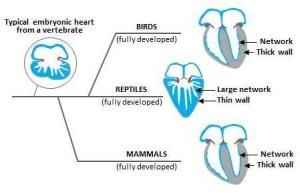
© Bjarke JensenThe reptilian heart has a thin wall surrounding a spongy inner part. In many ways, this resembles the embryonic state in birds, humans and other mammals. The anatomy of their hearts is subsequently completely different from reptiles, but studies of the genetic building blocks now show that all the hearts have a common molecular structure. The reptilian heart can thus provide us with insight into how the heart works in a human.
The genetic building blocks behind the human heart's subtle control system have finally been identified.

An elaborate system of leads spreads across our hearts. These leads -- the heart's electrical system -- control our pulse and coordinate contraction of the heart chambers. While the structure of the human heart has been known for a long time, the evolutionary origin of our conduction system has nevertheless remained a mystery. Researchers have finally succeeded in showing that the spongy tissue in reptile hearts is the forerunner of the complex hearts of both birds and mammals. The new knowledge provides a deeper understanding of the complex conductive tissue of the human heart, which is of key importance in many heart conditions.

Forerunner of conductive tissue

"The heart of a bird or a mammal -- for example a human -- pumps frequently and rapidly. This is only possible because it has electrically conductive tissue that controls the heart. Until now, however, we haven't been able to find conductive tissue in our common reptilian ancestors, which means we haven't been able to understand how this enormously important system emerged," says Bjarke Jensen, Department of Bioscience, Aarhus University. Along with Danish colleagues and colleagues from the University of Amsterdam, he can now reveal that the genetic building blocks for highly developed conductive tissue are actually hidden behind the thin wall in the spongy hearts of reptiles. The new results have just been published in the journal PLoS ONE.

Health

Allopathic medicine reaches new lows: British doctors administering illegal street drugs to patients

Image
© Channel 4Drug test: Lionel Shriver prepares to have an MRI scan after taking MDMA or a placebo.
The patient sits on a hospital gurney. The doctor asks how she feels, takes her blood pressure and gives her a capsule to swallow. She is then led to a brain scanner that resembles a giant washing machine, and she lies in front of it before it sucks her in. Doctors study a series of vivid images of her head and brain, looking for activity before she is allowed to leave the scanner. The patient is asked who she would like to have with her at this moment. She replies: "My husband."

When asked how she feels, she replies: "Light. It's pleasant. There's an airiness and openness to the senses. A slight heightening of sensory perception, which I liked. The visual feeling is vivid. The colours are lush, which I enjoy. I might be a bit more alert to sounds. I feel physically relaxed and that is a pleasure."

The patient is the writer, Lionel Shriver, and she has just taken the drug MDMA as part of an experiment that will be shown on Channel 4 at the end of this month. She is one of six volunteers who also include the actor Keith Allen and a former MP who will be shown taking the drug and undergoing a series of tests, some of which will be done in the scanner in order to see the change in brain activity caused by MDMA.

Comment: Again we see that conventional medicine and Big Pharma have absolutely zero interest in curing people. They prefer to effectively lobotomise people by hooking them on drugs that will only accelerate the decline in their health in the long-run.


Roses

Want Cleaner and Purer Air? Try Air-Cleaning Plants, NASA Says

Daisy
© NaturalSociety
NASA knows a thing or two about keeping air clean, sending astronauts into space with a limited amount of breathable air for months on end. After-all, they can't simply open a window when things get stuffy in space. What NASA researchers have learned about air quality in the home concerning air-cleaning plants, however, is refreshing to say the least.

They've found several common houseplant varieties can essentially clean the air of certain chemicals. They tested a variety of plants to see which was best at removing carcinogens like trichloroethylene, formaldehyde, and benzene. But, these chemicals aren't in my home - you might be thinking. And you would be wrong.

Cleansing the air with Air-Cleaning Plants

According to the NY Times:
"Formaldehyde is commonly found in drapes, glues and coating products. Benzene is a component of paint supplies and tobacco smoke, and trichloroethylene is used in adhesives, spot removers and other household products."
And with asbestos, formaldehyde, and other VOCs leaching off every wall of our home, it's no surprise that indoor pollution may be causing 50% of illnesses worldwide. Those headaches you have on a regular basis, where the cause just can't be pinpointed, may actually be a result of poor air quality in your home. The good news is that you can cleanse the air with air-cleaning plants - what better way to solve a problem than with nature.

Taken from NASA's 'Interior Landscape Plants for Indoor Air Pollutant Abatement' report, it reads:
Another promising approach to further reducing trace levels of air pollutants in side future space habitats is the use of higher plants and their associated soil microorganisms. (28-29) Since man's existence on Earth depends upon a life support system involving an intricate relationship with plants and their associated microorganisms, it should be obvious that when he attempts to isolate himself in tightly sealed buildings away from this ecological system, problems will arise...

In this study the leaves, roots, soil, and associated microorganisms of plants have been evaluated as a possible means of reducing indoor air pollutants. Additionally, a novel approach of using plants ystems for removing high concentrations of indoor air pollutants such as cigarette smoke, organic solvents, and possibly radon has been designed from this work.

Info

Mushroom Extracts May Have Benefits for Cancer Patients

Mushroom
© KGW
Portland - Many cancer patients are now turning to mushrooms to help fight off the deadly disease.

Rob Nesbitt, who was a track star in high school, was affected by an aggressive form of brain cancer three years ago.

At 51, he started getting headaches and was complaining of stress and fatigue. He decided to go in and get checked out.

"They did the second MRI, and they came in and said we're taking you to the emergency room," Nesbitt said. "I had two tumors. One was about the size of a golf ball, the other one a little bit smaller."

While Oncologists used chemotherapy to treat Nesbitt's cancer, he turned to a naturopathic doctor to help keep his immune system strong. That's when he started taking a series of supplements including mushroom extracts.

2 + 2 = 4

Parental Divorce Increases the Risk of Stroke in Men

Image
Parental divorce triggers stroke risk by three times in males, especially if the event takes place before they turn 18, as compared to peers from intact families, says a new study.

Women from divorced families did not have a higher risk of stroke than women from intact families, the study found.

Globally, stroke and other cerebrovascular diseases account for 10 percent of deaths, making stroke the second leading cause of death.

Pills

Antibiotic for plague approved by the FDA

Image
A plague outbreak could be extremely deadly, so much so that officials warn it can be used in a bioterror attack. Now U.S regulators have approved use of a powerful Johnson & Johnson antibiotic to treat and prevent the extremely rare but potentially deadly bacterial infection.

The U.S. Food and Drug Administration also approved Levaquin, known generically as levofloxacin, to reduce risk of people getting plague after exposure to the bacteria that causes it, called Yersinia pestis.


Comment: Yersinia pestis was NOT the cause of the plague that wiped out two thirds of Europe's population in the 14th century:

New Light on the Black Death: The Viral and Cosmic Connection


Plague mainly occurs in animals. People can get it from bites from infected fleas or contact with infected animals or humans. About 1,000 to 2,000 human cases occur worldwide each year.

The bacteria are also considered a potential culprit in a bioterrorism act, according to the Centers for Disease Control and Prevention. The CDC says it can be used in an aerosol attack to cause "pneumonic plague" in those who breath it in within six days of exposure.

Comment: Antibiotics will be pretty useless against something so ferocious as a real plague from comet-borne viruses.
"The bacteria are also considered a potential culprit in a bioterrorism act..."
If and when the real plague reaches us from the upper layers of the atmosphere, watch them link it to al Qaeda and rally their Authoritarian Followers around the need for quarantines, concentration camps, RFID microchips, etc.


Question

7-year-old Colorado girl contracts "black death" plague

Image
© AP/Jack DempseySierra Jane Downing, from Pagosa Springs, Colo., watches while her mother Darcy Downing talks about her recovery from so-called 'Bubonic Plague' at the Rocky Mountain Hospital for Children at Presbyterian/St. Luke's during a news conference Sept. 5, 2012, in Denver.
A 7-year-old girl is recovering in a Colorado hospital after being diagnosed with the Black Death, scientifically known as the bubonic plague.

The parents of 7-year-old Sierra Jane Downing thought she had the flu when she felt sick days after camping in southwest Colorado.

When she had a seizure, her father rushed her to the local hospital in Pagosa Springs. The emergency room doctor who saw Sierra Jane for the seizure and a 107-degree fever late Aug. 24 wasn't sure what was wrong either, and called other hospitals before the girl was flown to Denver.

A pediatric doctor racing to save the girl's life at Rocky Mountain Hospital for Children got the first inkling that she had bubonic plague. Dr. Jennifer Snow first suspected the rare disease after factoring in the girl's symptoms, a history of where she'd been and an online journal's article on a teen with similar symptoms.

Comment: The plague associated with the 'Black Death' in the Middle Ages is NOT "scientifically known as" the bubonic plague. That fleas carried by rats spread the Black death plague is just one theory that has since been discarded in favour of comet-borne viruses:

New Light on the Black Death: The Viral and Cosmic Connection

While little Sierra Jane Downing may have contracted something unusual and similar to the Black Death plague, it's unlikely that she really contracted 'the plague' because otherwise it would be spreading like wildfire and people everywhere would be dropping like flies.