Health & WellnessS


Magic Wand

Epigenetic Changes: A mother's nutrition--before pregnancy--may alter the function of her children's genes

New research in The FASEB Journal shows that diet induces epigenetic changes in female mice before pregnancy that are inherited by her pups.

Everyone knows that what mom eats when pregnant makes a huge difference in the health of her child. Now, new research in mice suggests that what she ate before pregnancy might be important too. According to a new research report published online in The FASEB Journal, what a group of female mice ate - before pregnancy - chemically altered their DNA and these changes were passed to her offspring. These DNA alterations, called "epigenetic" changes, drastically affected the pups' metabolism of many essential fatty acids. These results could have a profound impact on future research for diabetes, obesity, cancer, and immune disorders.

"As parents, we have to understand better that our responsibilities to our children are not only of a social, economical, or educational nature, but that our own biological status can contribute to the fate of our children, and this effect can be long-lasting," said Mihai Niculescu, M.D., Ph.D., study author from Nutrition Research Institute at the University of North Carolina at Chapel Hill, in Chapel Hill, N.C. "My hope is that, along with many other scientists, we will reveal this tight biological relationship between us as parents, and our children, and how we can improve the lives of our children using our own biological machinery."

Info

The Lies You're Told about Genetically Engineered Foods

Image
The Atlantic[i] recently reported on the findings of new research into the claims made for the safety and efficacy of genetically engineered foods.

The authors of the report GMO Myths and Truths[ii] took a science-based approach to evaluating the available research, and came to the conclusion that most of the scientific evidence regarding safety and increase yield potential do not support the claims made at all. In fact, the evidence demonstrates that the claims for genetically engineered foods are not just wildly overblown; they simply aren't true...

The featured article summarizes the evidence presented, which shows that genetically engineered (GE) crops:
  • Are laboratory-made, using technology that is totally different from natural breeding methods, and pose different risks from non-GE crops
  • Can be toxic, allergenic or less nutritious than their natural counterparts
  • Are not adequately regulated to ensure safety
  • Do not increase yield potential
  • Do not reduce pesticide use but increase it
  • Create serious problems for farmers, including herbicide-tolerant "superweeds", compromised soil quality, and increased disease susceptibility in crops
  • Have mixed economic effects
  • Harm soil quality, disrupt ecosystems, and reduce biodiversity
  • Do not offer effective solutions to climate change
  • Are as energy-hungry as any other chemically-farmed crops
  • Cannot solve the problem of world hunger but distract from its real causes - poverty, lack of access to food and, increasingly, lack of access to land to grow it on

Syringe

Washington State Makes It Harder to Opt Out of Immunizations

Vaccinating Children
© Kevin P. Casey for The New York TimesCelina Yarkin, 44, at her farm with her daughter, Madeline, 6. Ms. Yarkin believes in the benefits of vaccinating children, but many in her community do not.
Washington State is home to Bill and Melinda Gates, champions of childhood vaccines across the globe. Its university boasts cutting-edge vaccine research. But when it comes to getting children immunized, until recently, the state was dead last.

"You think we're a cut above the rest," said Dr. Maxine Hayes, state health officer for Washington's Department of Health, "but there's something in this culture out West. It's a sort of defiance. A distrust of the government."

The share of kindergartners whose parents opted out of state immunization requirements more than doubled in the decade that ended in 2008, peaking at 7.6 percent in the 2008-9 school year, according to the state's Health Department, raising alarm among public health experts. But last year, the Legislature adopted a law that makes it harder for parents to avoid getting their children vaccinated, by requiring them to get a doctor's signature if they wish to do so. Since then, the opt-out rate has fallen fast, by a quarter, setting an example for other states with easy policies.

For despite efforts to educate the public on the risks of forgoing immunization, more parents are choosing not to have their children vaccinated, especially in states that make it easy to opt out, according to a study published on Thursday in The New England Journal of Medicine.

And while the rate of children whose parents claimed exemptions remains low - slightly over 2 percent of all kindergarten students in 2011, up from just over 1 percent in 2006 - the national increase is "concerning," said Saad Omer, an assistant professor of global health at Emory University who led the study.

Families of unvaccinated children tend to live in close proximity, increasing the risk of a hole in the immunity for an entire area. That can speed the spread of diseases such as measles, which have come back in recent years.

Health

Alzheimer's Breaks Brain Networks' Coordination

Scientists at Washington University School of Medicine in St. Louis have taken one of the first detailed looks into how Alzheimer's disease disrupts coordination among several of the brain's networks. The results, reported in The Journal of Neuroscience, include some of the earliest assessments of Alzheimer's effects on networks that are active when the brain is at rest.

"Until now, most research into Alzheimer's effects on brain networks has either focused on the networks that become active during a mental task, or the default mode network, the primary network that activates when a person is daydreaming or letting the mind wander," says senior author Beau Ances, MD, assistant professor of neurology. "There are, however, a number of additional networks besides the default mode network that become active when the brain is idling and could tell us important things about Alzheimer's effects."

Ances and his colleagues analyzed brain scans of 559 subjects. Some of these subjects were cognitively normal, while others were in the early stages of very mild to mild Alzheimer's disease. Scientists found that all of the networks they studied eventually became impaired during the initial stages of Alzheimer's.

Health

New Study On Relapse Risk in Alcoholics

Scientists at Charité -- Universitätsmedizin Berlin have succeeded in coming closer to determining the risk of relapse in detoxified alcohol-dependent patients. Using an imaging process (magnetic resonance tomography) it was shown that particular regions in the brain demonstrate structural as well as functional abnormalities in relapsed alcohol-dependent patients. Study findings are published in the journal Archives of General Psychiatry.

In the study conducted under the direction of Prof. Andreas Heinz, director of the Charité Department of Psychiatry and Psychotherapy, scientists examined a group of 46 detoxified alcohol-dependent patients, in addition to a large control group. Structural imaging showed anatomical properties of brain substance, and the examination of functional signals in the brain were measured in reaction to alcohol-associated stimuli. After three months, patients were reexamined for eventual relapses; 30 study participants relapsed and 16 continued to be abstinent.

It was proven that relapse patients had increased loss of grey matter in particular regions of the forebrain. This section of the brain is known to be associated primarily with behavioral regulation and emotional control. Furthermore, measurement of functional brain responses in reaction to alcohol-associated stimuli showed that different brain regions were activated in relapsed patients than in patients who remained abstinent. These measurements show that sections of the brain in relapse patients were active that are associated primarily with directing attention to certain stimuli. In contrast, the abstinent patients demonstrated an activation of brain areas that are (among other functions) associated with processing of stimuli inducing aversion (aversive stimuli) or that are particularly important (salient stimuli).

Attention

New Study Finds GM Corn and Roundup Causes Cancer In Rats

Diseased Rats_1
© GreenMedInfo
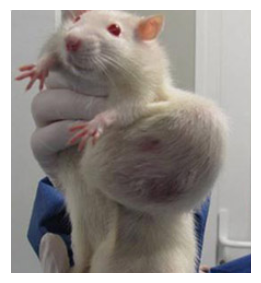
In an alarming new study published in the journal Food and Chemical Toxicology, researchers from The Committee for Research & Independent Information on Genetic Engineering (CRIIGEN) reported on the results of a 2 year feeding study in rats given either NK603 Roundup-tolerant genetically modified maize, cultivated with or without Roundup, and Roundup alone, at levels permitted in drinking water and GM crops in the United States.

The authors of the study pointed out that currently, no regulatory authority requires mandatory chronic animal feeding studies to be performed for edible GMOs and formulated pesticides, and the only 90 day feeding trials were conducted by the biotech industry.

This study, therefore, was performed in light of this need, and the results were an unprecedented confirmation of the cancer-causing effects of GM food and agrichemicals, reported as follows:
In females, all treated groups died 2 - 3 times more than controls, and more rapidly. This difference was visible in 3 male groups fed GMOs. All results were hormone and sex dependent, and the pathological profiles were comparable. Females developed large mammary tumors almost always more often than and before controls, the pituitary was the second most disabled organ; the sex hormonal balance was modified by GMO and Roundup treatments. In treated males, liver congestions and necrosis were 2.5 - 5.5 times higher.

This pathology was confirmed by optic and transmission electron microscopy. Marked and severe kidney nephropathies were also generally 1.3 - 2.3 greater. Males presented 4 times more large palpable tumors than controls which occurred up to 600 days earlier. Biochemistry data confirmed very significant kidney chronic deficiencies; for all treatments and both sexes, 76% of the altered parameters were kidney related. These results can be explained by the non linear endocrine-disrupting effects of Roundup, but also by the overexpression of the transgene in the GMO and its metabolic consequences. [emphasis added]

Health

Learn the truth about Glycation, Cholesterol, Statins and Dietary Fiber from Dr. Ellis


Comment: The following is a compilation of videos by Dr Gregory Ellis CNS, PhD, shining light on the misconceptions and disinformation regarding our cholesterol levels and the prescription of statin drugs; the process of glycation and what it causes to our bodies; plus the much promoted "need" for dietary fiber. More information on Dr Ellis' work can be found at his website, byebyecarbs.com.


Glycation is one of the most important nutritional discoveries in the last century that deals with health. In this video, Dr. Ellis begins to discuss what glycation is and how people suffer from it daily and may not even know it because everyone is undergoing the glycation process:


Comment: Our research and experience shows that most humans thrive on a diet with close to zero carbs, lots of saturated fats and a moderate protein intake.


Light Sabers

Lack of sleep affects bone health and bone marrow activity

Scientists at the Medical College of Wisconsin, in a team led by Carol Everson, Ph.D., professor of neurology, cell biology, neurobiology and anatomy, have discovered abnormalities in bone and bone marrow in rats undergoing chronic lack of sleep. They discovered abnormalities in serum markers of bone metabolism in sleep-deprived rats, which led them to conduct direct measurements of bone parameters; this time in rats experiencing recurrent sleep restriction during a large portion of their young adulthood.

The results show a dramatic imbalance between bone apposition and reabsorption, marked by an arrest in bone formation without reduced absorption. Furthermore, fat in the red marrow is greatly diminished and platelet-generating cells are doubled in number, indicating changes to marrow plasticity. "If the same processes are evoked in humans," said Dr. Everson, "the potential medical implications are far-reaching and may include poor repair of microdamage from activities of daily living, introduction of osteoporotic processes, and changes to progenitor cells that may affect disease predisposition and disease resistance."

Evil Rays

Neurosurgeon Shows How Low Levels of Radiation Such As Wi-Fi, Smart Meters And Cell Phones Cause The Blood Brain Barrier To Leak

Evil Rays
© PreventDisease.com
Neurosurgeon and researcher Dr. Leif Salford has conducted many studies on radio frequency radiation and its effects on the brain. Dr. Salford called the potential implications of some of his research "terrifying." Some of the most concerning conclusions result from the fact that the weakest exposure levels to wireless radiation caused the greatest effect in causing the blood brain barrier to leak.

Since he began his line of research in 1988, Dr. Leif Salford and his colleagues at Lund University Hospital in Sweden has exposed over 1,600 experimental animals to low-level radiation. Their results were consistent and worrisome: radiation, including that from cell phones, caused the blood-brain barrier--the brain's first line of
defense against infections and toxic chemicals--to leak.

Researchers in 13 other laboratories in 6 different countries had reported the same effect, but no one had proven whether it would lead to any damage in the long term. In a study published June 2003 in Environmental Health Perspectives, Salford's team repeated the experiment on 32 additional animals, but this time waited eight weeks before sacrificing them and examining their brains. In those animals that had been exposed to a cell phone, up to two percent of the neurons in all areas of the brain were shrunken and degenerated.

Salford, chairman of the Department of Neurosurgery at his institution, called the potential implications "terrifying." "We have good reason to believe," he said, "that what happens in rats' brains also happens in humans." Referring to today's teenagers, the study's authors wrote that "a whole generation of users may suffer negative effects, perhaps as early as in middle age."

Heart

New Documentary Exposes the Over-Prescription of Statins

An estimated 40 million people take a statin to lower their cholesterol levels. These are one of the most widely prescribed medications in history and, of course, one of the most profitable.

We are led to believe that the benefits associated with statins far outweigh any risks. However, when it comes to primary prevention (accounting for around 75 percent of all the people who take a statin), no clinical trial has been able to conclusively show any net benefit.

This is one of the issues discussed in the documentary film STATIN NATION: The Great Cholesterol Cover Up.


If we look at the history of primary prevention clinical trials involving statins, we find that none of the major trials were able to demonstrate a significant reduction in the number of deaths from all causes. The AFCAPS, ASCOT, CARDS, PROSPER and WOSCOPS clinical trials all failed to show a statistically significant reduction in all cause mortality.

This data for deaths from all causes is, of course, important because it is the only measure we can use to determine if the statin is going to extend life expectancy or not.

Whilst some statin clinical trials have shown a very slight reduction in cardiac events, this has always been counter-acted by deaths from other causes. The net result being that people did not live any longer after taking the statin.