Health & WellnessS


Syringe

CDC lies again: Blames anti-vaxxers for 20-year high in measles cases

BabyMeasles
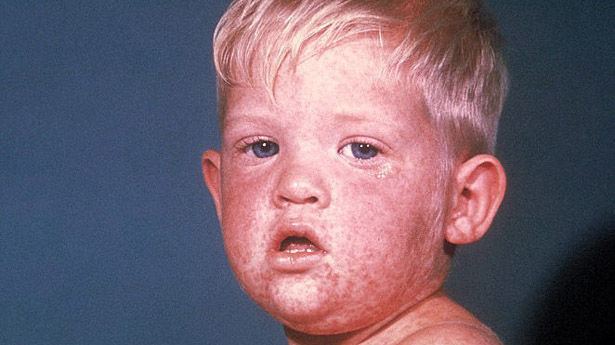
The Centre for Disease Control on Thursday released a report showing reported measles cases have reached a 20-year high, blaming the increase on the failure of Americans to take proper steps and get vaccinated.

According to the CDC, 288 cases of measles have been reported so far this year - the highest total in the first five months of the year since 1994 - with one in seven cases requiring hospitalization, according to Mother Jones.

"The current increase in measles cases is being driven by unvaccinated people, primarily U.S. residents, who got measles in other countries, brought the virus back to the United States and spread to others in communities where many people are not vaccinated," explained assistant surgeon general Dr. Anne Schuchat.

Included in the report is an outbreak of measles within an Ohio Amish community after unvaccinated missionaries returned from the Philippines, bringing the measles virus back to their insular community.

The Philippines is currently undergoing a severe outbreak of measles with over 20,000 reported cases resulting in at least 50 deaths.

Amish religious doctrine doesn't prohibit vaccination, however many families object to immunization.


Comment: The CDC cannot be trusted to have the best interest towards our health - in fact it has always sided with the vaccine and pharmaceutical industry, despite a vast body of scientific evidence to the contrary. In the case of measles it has been well documented for decades, that even a 100% vaccination rate doesn't convey a 100% protection against measles. The problem lies with the very concept of vaccination: Even high antibody titers in people only convey a 68% chance of protecting against or delaying clinically manifest measles. In fact in Africa, vaccination with the MMR-vaccine has reduced the diseases vaccinated against, but has doubled mortality rates in infants!

For more info see:
  • 2013 measles out break: a failing vaccine, not a failure to vaccinate
  • Shock CDC study: flu vaccine ineffective in 91% of seniors
  • CDC caught hiding data showing mercury in vaccines linked to autism


Display

Blue light keeps you more alert

Image
People exposed consistently to a blue light reported having quicker reaction times and suffered fewer lapses of attention compared to those exposed to a green light
* Volunteers were exposed to either a blue or a green light for almost seven hours a day

* Those exposed to a blue light reported quicker reaction times and fewer lapses of attention

* Researchers found that blue light exposure made people feel 'less sleepy'

Feeling blue might take on a whole new meaning after scientists found that blue light actually perks you up.

The light, which has a short wavelength, was found to improve both alertness and performance when people were exposed to it during the day or night.

The research, carried out by the Brigham and Women's Hospital and Thomas Jefferson University in the US, exposed subjects to green and blue light for six and a half hours a day.

The 16 study participants then rated how sleepy they felt, had their reaction times measured and wore electrodes to assess changes in brain activity patterns during the light exposure.

Those exposed to blue light consistently rated themselves as less sleepy, had quicker reaction times and fewer lapses of attention during the performance tests compared to those who were exposed to green light.

They also showed changes in brain activity patterns that indicated a more alert state.

Lead author of the study Dr Shadab Rahman of BWH's Division of Sleep Medicine said: 'Our previous research has shown that blue light is able to improve alertness during the night, but our new data demonstrates that these effects also extend to daytime light exposure.

'These findings demonstrate that prolonged blue light exposure during the day has an an alerting effect.'

Cupcake Pink

Sugar is killing us

A curated list of educational and entertaining videos on the dangers of added sugar consumption, all produced either by friends of the Institute for Responsible Nutrition, including some featuring our own Board President, Dr. Robert Lustig, author of Fat Chance and most recently appearing in the documentary Fed Up.
Image
Sugar is Killing Us is a campaign to spread information about the negative effects of sugar and empower people to make better food choices.


Life Preserver

Sudden heart attack: This may save your life

Image
People who have heart attacks usually ate a meal cooked in vegetable and hydrogenated oils.
The sad news of the passing of Soprano star, James Gandolfini, (better known as Tony Soprano) presents a case of sudden death from heart failure.

The news reported that the 51 year old James Gandolfini had eaten back-to-back orders of fried prawns accompanied with mayonnaise chili sauce during a 7pm meal, just hours before he suffered a fatal heart attack.

Was there a connection to his last meal and his sudden death?

I believe there was.

For decades scientists have known that a single high-fat meal causes short-term enhancement of platelet activity. In other words the high fat meal makes the blood eager to clot.

Now for functional medicine practitioners, we understand that we are NOT talking about good fats like coconut oil, avocados, nuts, etc.

What may in fact be a lethal combination for high risk cardiovascular individuals include fried foods, high consumptions of polyunsaturated foods (corn, cottonseed, safflower oils) and all hydrogenated oils and transfats.

Comment: Keep in mind that saturated fat from animal sources is anti-inflammatory! See The Ketogenic Diet - An Overview.


Pills

Higher potency statins linked with significantly higher risk of diabetes

Image
The statin industry is the utmost medical tragedy of all times.
This week, the BMJ has published a study that adds further to the debate regarding the safety of statins. It is officially recognised that one potential adverse-effect of statins is the development of diabetes. In this study, Canadian researchers pooled the results of several studies to see if the risk of diabetes was higher in individuals (with known cardiovascular disease) taking higher potency statins rather than lower ones. It was: compared to lower potency statins, the taking higher potency ones were associated with a 15 per cent increased risk of diabetes.

Now, I should make clear that evidence assessed in this study was epidemiological in nature. This means it shows that while the review found a link between higher dose statins and increase diabetes risk, this is just an association. However, we do know from other clinical studies known as randomised controlled trials (RCTs) that statins do have a genuine capacity to cause diabetes.

Perhaps in the ideal world we would be able to rely more heavily on RCTs to judge the safety of statins. The problem is, as I wrote this week, there are many reasons why RCT-derived data is utterly unreliable in this respect. The fundamental problem is that RCTs are often designed or reported in a way that can massively downplay any hazards or harms.

Comment: The statin industry is the utmost medical tragedy of all times. Don't miss:


Arrow Down

Blue Cross denies coverage to California man with dozens of tumors requiring hospital emergency

Jeffrey Rusch
Jeffrey Rusch
A northern California man said his insurance carrier refused to pay for treatment of more than a dozen tumors, reported KPIX-TV.

Jeffrey Rusch, of Sonoma County, said an MRI revealed more than 20 tumors in his brain, and a CT scan two days later revealed a large tumor in his lungs and others in his liver and bones.

"My husband was having a lot of difficulty breathing already, and he was getting a lot worse, so we went to the hospital and they admitted him immediately," said his wife, Zoe Keating.

Doctors removed a half-liter of fluid from Rusch's lungs, prescribed steroids to reduce brain swelling, and administered emergency chemotherapy.

But the family's health insurance carrier, Anthem Blue Cross, sent them a letter that arrived Tuesday denying coverage for the hospital stay, saying the treatments did not meet the criteria for medical necessity.

"I would call saving my husband's life medically necessary," Keating said.

Health

Most physicians would forgo aggressive treatment for themselves at the end of life

Image
Most physicians would choose a do-not-resuscitate or "no code" status for themselves when they are terminally ill, yet they tend to pursue aggressive, life-prolonging treatment for patients facing the same prognosis.
Most physicians would choose a do-not-resuscitate or "no code" status for themselves when they are terminally ill, yet they tend to pursue aggressive, life-prolonging treatment for patients facing the same prognosis, according to a study from the Stanford University School of Medicine to be published May 28 in PLOS ONE.

It's a disconnect that needs to be better understood, said VJ Periyakoil, MD, clinical associate professor of medicine and lead author of the study.

"Why do we physicians choose to pursue such aggressive treatment for our patients when we wouldn't choose it for ourselves?" said Periyakoil, director of the Stanford Palliative Care Education and Training Program. "The reasons likely are multifaceted and complex."

In the study, Periyakoil and her colleagues set out to determine how physicians' attitudes have changed toward advance directives since passage of the Self-Determination Act in 1990, a law designed to give patients more control over determining end-of-life-care decisions.

Advance directives are documents that patients can use to indicate end-of-life care preferences.

The study involved two sets of subjects: One comprised 1,081 physicians who in 2013 completed a web-based advanced directive form and a 14-item advance directive attitude survey at Stanford Hospital & Clinics and the Veterans Affairs Palo Alto Health Care System; the other comprised 790 physicians from Arkansas who were asked the same 14 survey questions -- but did not complete an advance directive form -- in a 1989 study published in the Journal of the American Medical Association.

Whistle

Moms across America confront EPA about the safety of the Roundup herbicide

Image
Roundup is Monsanto's best-selling herbicide product, and it contains a toxic ingredient known as glyphosate.

It is widely known that glyphosate is profoundly damaging to human health. Two major peer-reviewed studies showed links to breast cancer cell proliferation and intestinal and gut damage, which can lead to diseases such as diabetes, gastrointestinal disorders, heart disease, obesity, autism, Parkinson's and Alzheimer's.

Research conducted in 2010 suggests that glyphosate may be linked to birth defects.

Regulators - and of course, Monsanto - claim glyphosate is excreted from the body. But studies disproved that: the chemical has been detected in urine samples, blood samples, and even breast milk.

Clipboard

Healthy reasons to enjoy real butter

Image
Butter has gotten a bad rap for many years, starting in the last century with the rise of margarine, which we now recognize as a deadly trans fat. More recently, butter has been shunned in favor of olive oil and canola oil. But here's why we should reserve a place at the table for good old-fashioned butter.

A study from Lund University in Sweden shows that butter leads to considerably less elevation of fats in the blood after a meal compared with olive oil, flaxseed oil or a new type of canola oil. High blood fat normally raises cholesterol levels in the blood, which according to the discredited "lipid hypothesis," elevates the risk of atherosclerosis and heart attack.

Comment: Additional benefits of butter:


Video

Flu shots are made from what? - Video

You won't believe the ingredients in your flu shot.
Tenpenny

Dr. Sherri J. Tenpenny is an osteopathic medical doctor, board certified in three medical specialties.

Transcript

Interviewer
: Doctor I wish I could've been around you a couple of years ago when H1N1, that was coming out. That got to the point where we would watch the local news and find out where we could finally get our shot. There were not shots available here, let's wait next week and go at the local college and people would line up for hours on end to get these shots.
No doubt something else was going to pop up in the next couple of years that is going to lead to the same thing. But that was going to be a pandemic and nothing ever really came of all of that.

Sherri J. Tenpenny, D.O., AOBNMM: Oh gosh. You know, we had SARS, we had bird flu, then we had another round of swine flu. You know, bunny flu next. I mean who knows? And so it's going to keep recycling.

But what those two big pushes were for in 2005, the bird flu and then swine flu again was the 7.2 billion dollars that George Bush gave to Novartis to develop their new flu shop factories and then swine flu came along it was the rest of the money that the government gave them to build new flu shot factories. That's all it was, really, at the end of the day when you pull back the curtain and see what's back there.

Was because how flu shots are manufactured are in eggs. It's a very labor intensive, time intensive, expensive process. That they take an egg and they literally pick a little top of the shell and they inject some viruses in there and then the virus grows in the egg for 11 days, they centrifuge off the virus and supposedly separate the virus from the egg which doesn't all get separated and then they get viruses that come out of the egg and that ends up in the flu shot. And that's how flu shots are made. Very expensive, time labor intensive.