Health & WellnessS


Donut

Eliminate junk food cravings for good

Image
Americans' reliance on processed foods and snacks is undoubtedly one of the primary factors driving our skyrocketing obesity and disease rates. Even many people who "know better" have trouble keeping their hands out of the Doritos.

In 2005 alone, Americans spent a staggering $60 billion on snack foods!1 Sugar and salt cravings are often blamed for snack attacks, but how can you stop them?

The truth is, processed foods contain carefully orchestrated flavors and other sensory factors designed to be as addictive as possible. This is in stark contrast to whole foods, the taste and consistency of which was created by nature and therefore work with your body to satiate hunger and nutritional cravings.

As discussed in a previous article, junk food manufacturers have taken flavor science to extraordinary levels, and the artificial ingredients used to produce that sought after "bliss point" can seriously confuse and befuddle your body's metabolism.

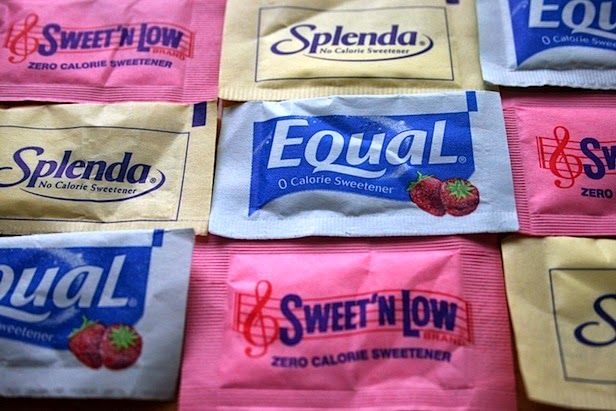
For example, the sweetness from non-caloric artificial sweeteners tends to disrupt your metabolic response to real sugar,2 thereby exacerbating obesity and diabetes. Your body simply isn't fooled by sweet taste without calories, so it keeps signaling your brain to keep eating, as the point of satisfaction has not yet been reached.


Megaphone

Biotechnology industry peddles more propaganda plans to get us to swallow 'synthetic biology'

Image
© etcgroup.orgSynthetic Biology is a burgeoning technological field that builds artificial genetic systems and programmes lifeforms for industrial use.
Two Mondays ago, I sat in a room of some of the most powerful agribusiness, food and synthetic biology companies in the world. The goal of this industry meeting was to discuss how to get the public to accept synthetic biology, a new and unregulated set of genetic engineering methods, as the "foundation for the future of sustainable food." It was meant to be a closed door and off-the-record industry meeting, in contrast to the open public forum on synthetic biology in our food which I helped organize the week before. But after some of the companies caught wind that Friends of the Earth was going to expose the leaked meeting information, we were cordially urged to attend by the meeting organizers.

Although there is no agreed upon definition of synthetic biology, it is a term that encompasses a variety of new, and many would say, "extreme" genetic engineering approaches, including computer generated DNA, directed evolution, and site specific mutagenesis. It's faster and uses more powerful methods to engineer new genetic sequences than "traditional" genetic engineering. Engineers can even create entirely new DNA and organisms that do not exist in nature.

Comment: What exactly is food made from Synthetic Biology?
  • Synthetic Biology: Rebranding extreme genetic engineering
  • Synthetic Biology: The next generation of Genetic Engineering
  • Synthetic Biology: Genetic Engineering on Steroids
In the past 5 years, the science of genetic engineering has made giant strides. Starting from scratch using lifeless chemicals, scientists are now able to create viruses, such as the polio virus. Technically, viruses are not "alive" because they require cells to survive. But soon - perhaps some time this year - scientists expect to create bacteria, which are definitely alive. From there, it will be a short step to manufacturing new forms of life that have never existed on Earth before. This startling new enterprise is called "synthetic biology."


Beaker

Excitotoxin alert: New artificial sweetener approved by FDA 'Sweetest' yet

Image
© webpronews.com
Just like its five previously approved counterparts, advantame is said by the FDA to be low-calorie and doesn't generally raise blood sugar.

The FDA gave the green light to the new artificial sweetener on Monday.

It is a white crystalline that dissolves in water, and does not break down under heat.

Advantame is 20,000 times sweeter than regular table sugar, gram per gram, according to LA Times.

Whoa - why so intense? According to the FDA, advantame can serve as a replacement for aspartame. Also, it looks like it circumvents a phenylalanine warning (for those with phenylketonuria [PKU]) since so little is needed. It does, however, contain phenylalanine. Although not meant for meat and poultry it does look like it was intended to sweeten many things based on the FDA statement.

Health

Curing cavities naturally

Weston A. Price
© unknownWeston A. Price
While traveling to some of the most remote regions and cultures of the world, Dr. Weston A. Price discovered that some groups which had no access to traditional medicine had extremely low incidences of cavities. He discovered that the cultures which consumed foods that were high in fats and minerals had the best dental health. Some of those groups did not even brush their teeth.

When people are malnourished, dental problems are often the first indicator. Most people from the Western world believe that teeth naturally decay with age, so everyone will inevitably get cavities. Popular consensus is that teeth self-destruct. However, a person's diet primarily determines his dental health. The myth that people have no control over the deterioration of the teeth is one of the justifications for the fluoridation of water supplies, because it is tacitly contended that human teeth disintegrate without help from the chemical industry. In truth, cavities and dental malformations occur as a result of malnutrition, which is actually exaggerated by chemicals, such as pharmaceuticals and fluoride. Western foods are not only deficient in vitamins and minerals, but they also contain chemicals which impair the utilization of nutrients in the body. Tooth decay is more common in pregnant and nursing women, because these women have greater nutritional needs.

Health

A chip to capture tumor Cells

Mehmet Toner , Daniel Haber
© National Institutes of HealthMehmet Toner (left) and Daniel Haber
A new system for isolating rare circulating tumor cells - living solid tumor cells found at low levels in the bloodstream - shows significant improvement over previously developed devices and does not require prior identification of tumor-specific target molecules.

Developed at the Massachusetts General Hospital Center for Engineering in Medicine and the Mass General Cancer Center, the device rapidly delivers a population of unlabeled tumor cells that can be analyzed with both standard clinical diagnostic cytopathology and advanced genetic and molecular technology. The Mass General team's report appears in Science Translational Medicine.

"This new technology allows us to follow how cancer cells change through the process of metastasis," said Mehmet Toner, Helen Andrus Benedict Professor of Surgery at Harvard Medical School, director of the BioMicroElectroMechanical Systems Resource Center in the Mass General Center for Engineering in Medicine, and the paper's senior author. "Cancer loses many of its tissue characteristics during metastasis, a process we have not understood well. Now, for the first time, we have the ability to discover how cancer evolves through analysis of single metastatic cells, which is a big step in the war against cancer."

Comment: The body regularly produce cancer cells but know how to handle it under normal conditions. In his book When the Body Says No: Exploring the Stress-Disease Connection, Gabor Mate examine why this mechanism can go wrong.


Info

E. coli detected in Portland, Oregon water supplies: Residents issued city-wide boil water notice

boil water advisory
© khq.com
The Portland Water Bureau issued a city-wide boil notice on Friday morning after water staffers detected E. coli in three separate tests during the past three days.

The Oregon Health Authority required the city-wide notice, which also applies to Portland's whole-sale customers that also receive water from the Bull Run Watershed.

Routine inspections at two of the city's Mt. Tabor reservoirs produced the three positive E. coli tests. City employees performed the tests, according to Jaymee Cuti, bureau spokesperson.

State officials said the tests showed signs of fecal matter.

The boil notice applies to 670,000 customers, according to Cuti. Portland supplies drinking water to 935,000 customers in the metro region.

City officials hosted an emergency press conference at noon.

"While we believe at this time that the potential health risk is relatively small, we take any contamination seriously and are taking every precaution to protect public health," said Portland Water Bureau Administrator David Shaff in the release.

Ambulance

Antibiotic Resistance: 6 diseases that may come back to haunt us as antibiotics lose their power

Image
© Dr. David M. Phillips/Getty Images/Visuals UnlimitedNeisseria gonorrhoeae, the bacteria that causes the sexually transmitted disease gonorrhoea.
Still think of TB, typhoid and gonorrhoea as infections from the past? WHO's terrifying report will make you think again!

Diseases we thought were long gone, nothing to worry about, or easy to treat could come back with a vengeance, according to the recent World Health Organisation report on global antibiotic resistance. Concern at this serious threat to public health has been growing; complacency could result in a crisis with the potential to affect everyone, not just those in poor countries or without access to advanced healthcare. Already diseases that were treatable in the past, such as tuberculosis, are often fatal now, and others are moving in the same direction. And the really terrifying thing is that the problem is already with us: this is not science fiction, but contemporary reality. So what are some of the infections that could come back to haunt us?

Comment: Learn more about the growing concerns over antibiotic resistance:

The abuse of antibiotics and the rise of 'super bugs'
Antibiotics Prove Powerless as Super-Germs Spread
'Devastating' implications of drug-resistant superbugs now a reality
Scientists Fear Antibiotics are Perpetuating Diseases Impossible to Treat
Chief Scientist: Act now or live through deadly post antibiotic resistance era

The following article is a must read: Dr. Brad Spellberg: Antibiotic resistance is "Everyone's Fault"
Dr. Brad Spellberg is an infectious disease specialist and leader in the field of developing ways to combat drug resistant infections. Spellberg, who wrote a book about the problem, Rising Plague, told FRONTLINE that the science of developing new tools in the fight against infection is in trouble, unless the culture around developing drugs changes.


Health

The spice that prevents fluoride from destroying your brain

Image
Fluoride is found everywhere today, from antibiotics to drinking water, no stick pans to toothpaste, making exposure inevitable. All the more reason why new research proving this common spice can prevent fluoride damage is so promising!

Fluoride's neurotoxicity has been the subject of academic debate for decades, and now a matter of increasingly impassioned controversy among the general public, as well. From 'conspiracy theories' about it being first used in drinking water in Russian and Nazi concentration camps to chemically lobotomize captives, to its now well-known IQ lowering properties, to its ability to enhance the calcification of the pineal gland - the traditional 'seat of the soul' - many around the world, and increasingly in the heavily fluoridated regions of the United States, are starting to organize at the local and statewide level to oust this ubiquitous toxicant from municipal drinking water.

Comment: In addition to protecting the brain from fluoride neurotoxicity, turmeric (curcumin), has numerous healing benefits:


Attention

Scientists link autism to these toxic chemicals during fetal development

Image
© Desconocido
The cause of autism is still unknown, but we are definitely closer to figuring it out. A new study published in the journal PLOS Computational Biology, from researchers at the University of Chicago revealed that autism and intellectual disability (ID) rates are linked with exposure to harmful environmental factors during congenital development.
"Essentially what happens is during pregnancy... there are certain sensitive periods where the fetus is very vulnerable to a range of small molecules - from things like plasticisers, prescription drugs, environmental pesticides and other things. Some of these small molecules essentially alter normal development. Autism appears to be strongly correlated with rate of congenital malformations of the genitals in males across the country, this gives an indicator of environmental load and the effect is surprisingly strong. The strongest predictors for autism were associated with the environment; congenital malformations on the reproductive system in males." (1) - Andrey Rzhetsky, professor of genetic medicine and human genetics at the University of Chicago
The team analyzed data that covered more than one third of the U.S. population. Data from individual states and more than 2,100 counties were used. Fetuses, particularly males, are sensitive to multiple toxins such as environmental lead, medications and a wide variety of other synthetic molecules, like pesticides, mercury and more. Exposure to these toxins during critical stages of development is thought to explain a large portion of congenital reproductive malformations.

Display

Computers can impact on children's ability to learn, says union

Image
© Unknown"There's a complete lack of motivation among many of my pupils - these gadgets are really destroying their ability to learn," says teacher Emma Quinn.
A teaching union in Northern Ireland is calling for urgent action over the impact of modern technology on children's ability to learn at school.

The Association of Teacher and Lecturers (ATL) is concerned at how long children spend on computers and digital gadgets outside school.

It said some pupils were unable to concentrate or socialise properly.

The impact of digital technology is the focus of the union's annual regional conference in Belfast on Thursday.

Mark Langhammer of the ATL said: "We're hearing reports of very young children who are arriving into school quite unable to concentrate or to socialise properly because they're spending so much time on digital games or social media.

"We'd like the Department of Education to issue guidance to all parents on the maximum amount of time which young children should spend on these devices, and on how kids can use digital technology safely and sensibly."

Comment: Also see: Infants 'unable to use toy building blocks' due to use of touchscreen technology