Health & WellnessS


Attention

Agriculture industry norm: "Extreme levels" of Roundup in food

Image
© Thomas BøhnCrop spraying, South Africa
Food and feed quality are crucial to human and animal health. Quality can be defined as sufficiency of appropriate minerals, vitamins and fats, etc. but it also includes the absence of toxins, whether man-made or from other sources. Surprisingly, almost no data exist in the scientific literature on herbicide residues in herbicide tolerant genetically modified (GM) plants, even after nearly 20 years on the market.

In research recently published by our laboratory (Bøhn et al. 2014) we collected soybean samples grown under three typical agricultural conditions: organic, GM, and conventional (but non-GM). The GM soybeans were resistant to the herbicide Roundup, whose active ingredient is glyphosate.

We tested these samples for nutrients and other compounds as well as relevant pesticides, including glyphosate and its principal breakdown product, Aminomethylphosponic acid (AMPA). All of the individual samples of GM-soy contained residues of both glyphosate and AMPA, on average 9.0 mg/kg. This amount is greater than is typical for many vitamins. In contrast, no sample from the conventional or the organic soybeans showed residues of these chemicals.

Comment: The authors of the article ask an important question in the conclusion of their study; 'How is the public to trust a risk assessment system that has overlooked the most obvious risk factor for herbicide tolerant GM crops, i.e. high residue levels of herbicides?'

The links below can answer the author's questions. It becomes obvious, based on published data, that the biotech industry KNOWs the obvious risk factor of herbicide tolerant GM crops:


Health

Return of the 'White Plague': Fears over worldwide rise of drug-resistant TB

Image
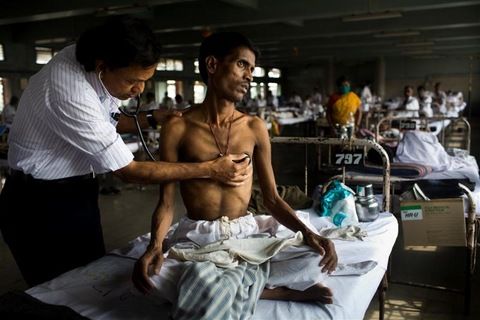
© WHOMan being treated for Tuberculosis in India

"Sometimes I ask myself, why me? Why did this have to happen again?" says 31-year-old Andile from the Khayelitsha township in Cape Town, South Africa. "But the problem is I could have got it anywhere, on the bus, in a taxi, in my work. It's everywhere."

Andile has extensively drug-resistant tuberculosis (XDR-TB), a form of the airborne disease that is resistant to the four main groups of drugs used to treat it, meaning treatment can take years and requires alternative drugs that have more side effects.

He's had tuberculosis for more than two years but it's not the first time he's been infected.

"Where I stay, the environment is not right, it's not clean. I could have got TB there, or on the taxis we use as they never open the windows," he says.

TB has long been known as a disease of poverty. Dense housing, shared living space, poor ventilation, poor nutrition and poor healthcare systems are the prime conditions for the infection to spread, and thrive. This ancient disease was known as the "White Plague" in 18th century Europe and still kills more than one million people a year globally.

Comment: Could natural cures including a ketogenic diet help prevent or ameliorate the ravages of TB? See also:


Life Preserver

Beyond sugar and soda: Nutritional cures for damaged teeth

Image
When you're a teenager, a tad cocky about your flossing-and-brushing prowess, and a proud worshipper at the altar of Colgate, the last thing you want to hear is that you might need dentures by the time you're thirty.

Unfortunately, that's the exact situation I found myself in one fateful November day. I was seventeen. It'd been a full year since I'd become a strict, low-fat, fruit-noshing raw vegan - led there by a cocktail of food allergies and dewy-eyed trust in people from the internet (bad idea is bad). Perhaps too distracted by my constant brain fog, perpetual shivering, and the clumps of hair making a mass exodus from my scalp, I'd failed to notice the prime victim of my lopsided diet: my teeth.

Up until then, I had pleasant associations with the ol' dental chair. My mouth had only ever seen one cavity - a fluke in an otherwise pleasing track record. I'd never missed a day of flossing. I'd never needed braces. For me, dentist visits were an opportunity for people to tell me nice things and make me feel good about myself, even if I'd gotten too old for their goodie drawer of parachute men and Lisa Frank stickers.

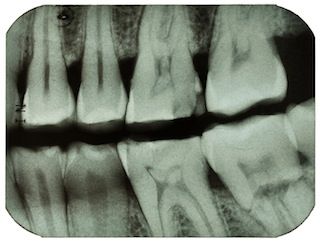
So when that familiar praise didn't come, the blow was all the more devastating. After a series of "hmms" and heavy sighs, my dentist delivered the news: a grand total of sixteen cavities - more of an estimate, really, because the cavities-sprouting-from-cavities nature of the damage made it hard to count. Massive wear capped the surfaces of my back teeth, and my front ones were becoming translucent from enamel loss. Unsightly recession plagued my once-healthy gums.

The dentist didn't mince words when telling me he'd never seen someone so young with such a terrifying mouth - and it'd all happened in the span of one year.

Health

Iran confirms first cases of deadly Mers infection

Image
Officials in Iran say they have confirmed the country's first two cases of Middle East respiratory syndrome.

Two sisters from Kerman province tested positive for the virus that kills around a third of those it infects.

One sister is in critical condition and the other is receiving treatment, the health ministry's centre for disease control and prevention said.

Mers has been spreading throughout Iran's close neighbour Saudi Arabia.

Comment: Also read this SOTT exclusive on the MERS virus:
SOTT EXCLUSIVE: Beware of hype - Second case of MERS virus confirmed in the U.S.


Syringe

Informed choice: Parents right to question need for vaccines and potential dangers

Image
In "Vaccination is a duty we owe to others," The Washington Post's Michael Gerson wrote a convincing piece - that is, if one is unaware of certain facts.

Gerson states "...vaccines have a very small risk of serious side effects..." mostly based on his wholesale dismissal of adverse events reported to VAERS, the Vaccine Adverse Event Reporting System instituted and maintained at a great cost by the CDC and the FDA. As of May 4, 2014, the CDC website had processed 37,433 serious vaccine-related adverse events. Former FDA Commissioner David Kessler once stated that only 1 percent of serious adverse events are reported in a passive reporting system such as VAERS. A vaccine manufacturer testified to an Institute of Medicine Committee that under-reporting of passively followed adverse vaccine events was 50-fold.

It is unknown what percentage the 37,433 reported serious events actually represent, but to assert that the administration of multiple vaccines and vaccine combinations only results in a very small risk of serious side effects is scientifically unfounded.

Comment: Read more about the serious concerns regarding vaccines and the importance health freedom:


Robot

First, GMO human embryos - Now a living GMO organism with artificial DNA!

Image
If that weren't disturbing enough, the FDA is using terms like "manufacturing."

In February 2014, the US Food and Drug Administration held a public meeting outlining the creation of genetically modified human beings. Now, researchers have announced the creation of an organism with completely artificial DNA.

All life on earth stores genetic information the same way, with DNA made up of four chemical bases: adenine (A), guanine (G), cytosine (C), and thymine (T). These bases partner up to form units called base pairs. A always pairs with T, and G always pairs with C.

Until now, that is.

Scientists have successfully created two new bases, which they call X and Y, that pair up with each other. And they've used this unnatural base pair to create a brand new GMO bacterium "based on a genetic structure found nowhere on earth."

Researchers did this by "tricking" E. coli bacteria into assimilating and reproducing the unnatural X-Y base pair - which was automatically passed on from one generation to the next.

Floyd Romesberg, the lead researcher on the project, claims his discovery will usher in a new era of better antibiotics and cancer drugs. To this end, the next phase of his project will be to use artificial genes based on this unnatural DNA to "make proteins that have never been made before," and to turn these proteins into self-producing, "living" drugs.


Comment: As always, this has the potential to backfire more than anything else. It is not a good idea to mess around with Mother Nature!

New Light on the Black Death: The Viral and Cosmic Connection
.


Health

Physical activity helps maintain mobility in older adults

Image
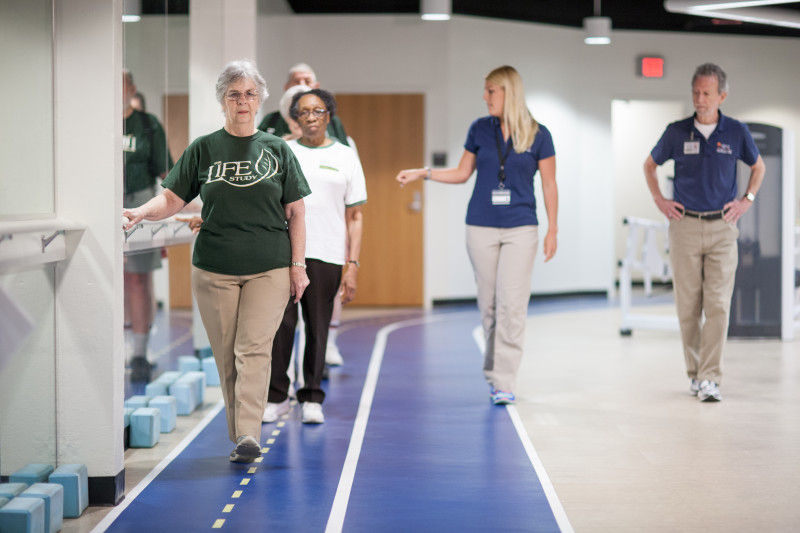
© Jesse Jones, UF HealthOlder adults complete walking exercises at the University of Florida as part of the UF-led LIFE study. The study, released May 27, examined how physical activity affects the mobility of adults aged 70-89.
It's something we've all heard for years: Exercise can help keep older adults healthy. But now a study, the first of its kind to look at frail, older adults, proves that physical activity can help these people maintain their mobility and dodge physical disability.

A new University of Florida study shows daily moderate physical activity may mean the difference between seniors being able to keep up everyday activities or becoming housebound. In fact, moderate physical activity helped aging adults maintain their ability to walk at a rate 18 percent higher than older adults who did not exercise. "The very purpose of the study is to provide definitive evidence that physical activity can truly improve the independence of older adults," said principal investigator Marco Pahor, Ph.D., director of the UF's Institute on Aging.

What's more, moderate physical activity not only helped older adults maintain mobility but also helped prevent the occurrence of long-term mobility loss. Co-principal investigator Jack Guralnik, Ph.D., a professor of epidemiology and public health at the University of Maryland School of Medicine, said there was a 28 percent reduction in people permanently losing the ability to walk easily.

"The fact that we had an even bigger impact on persistent disability is very good," said Guralnik, who also holds a faculty position at UF. "It implies that a greater percentage of the adults who had physical activity intervention recovered when they did develop mobility disability."

The results will be published in the May issue of the Journal of the American Medical Association and will be presented on May 27 at the annual meeting of the American College of Sports Medicine in Orlando.

Cloud Grey

China will destroy 5,000,000 cars this year to battle air pollution

Fog, beijing, china, smog
© Reuters/Jason LeeCars drive on the second ring road amid the heavy haze in Beijing
China is going to make air cleaner by taking 5.33 million ageing cars off its roads, according to a government document. The move is part of a broader campaign for battling deep environmental crisis that's gripped world's second-biggest economy.

The vehicles in question are so-called 'yellow label' cars that do not meet Chinese fuel standards and are thus meant to be 'eliminated' this year, the Chinese State Council document published on Monday and cited by Reuters, says.

Chinese authorities, spurred by overwhelming public outcry, have lately boosted efforts for tackling the growing ecological crisis, a byproduct of decades of massive economic growth amid neglect for environmental protection.

The plan for cutting the number of old vehicles is part of a broader action plan to cut emissions over the next two years. Chinese authorities say the country had not been able to catch up with its pollution reduction plan for 2011-2013 period and now had to come up with some tougher measures.

Newspaper

The mainstream media declares: Gluten sensitivity a myth - who cares?

Image
A profound change in worldwide consumer behavior has taken hold around the issue of wheat's status in the human diet (to the tune of a burgeoning multi-billion dollar 'gluten free' products industry), and lately, a battery of mainstream articles have come out claiming that the only population legitimately entitled to identify wheat as a cause of their malaise are those with classically defined and diagnosed celiac disease - albeit, an increasingly expanding population.

With articles titled, "Study: Gluten "sensitivity" may not exist," "Study says non-celiac gluten sensitivity may not be real," "Gluten Sensitivity Probably Not a Real Condition, Study Says," proliferating wildly, what is the truth?

The study referred to in the above articles was published in 2013 in the journal Gastroenterology and was lead by an Australian professor of gastroentology who first identified an expanded category of gluten sensitive disorders labeled 'non-celiac gluten sensitivity' (NCGS). His original study, published in the American Journal of Gastroentology in 2011, found that gluten caused significant gastrointestinal distress in patients without celiac disease (CD), and was lauded as strong evidence that gluten avoidance may benefit a larger population than those suffering with CD.

Beaker

Scientific virus experiments risk decimating mankind

science experiment
Is a viral pandemic capable of emerging from a laboratory? New Harvard and Yale research suggests that a new viral outbreak is inevitable within the next 10 years, and it may accidentally be derived from laboratories. As scientists experiment with viruses to develop new vaccines, it may only be a matter of time before the inevitable occurs.

Scientific communities around the world are racing against the clock to alter and even create virus strains, as they study viral evolution and immunology. Two studies released in 2012 basically published a recipe for mutant bird flu, which can be passed from ferrets to humans. This brings up the possibility that viruses may one day fall into the wrong hands and be intentionally released onto groups of unsuspecting people. Devious scientists may want to see how these new mutant virus strains spread in real time.