Earth ChangesS


Cloud Lightning

Heavy Downpours to Hit Central, South China Again

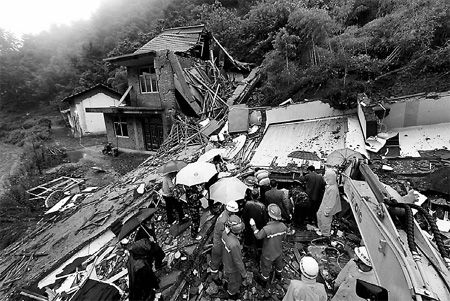
China flood damage Ningguo city
© Li Xiaohong / XinhuaFirefighters carry out rescue work in a village hit by landslides triggered by rainstorms in Ningguo city of Anhui province on Wednesday. Two villagers were killed in the accident.
A new round of downpours is set to batter central and southern China in the next several days, local authorities said on Monday.

According to the flood control and drought relief headquarters of Hunan, torrential rain will sweep the central province from north to south from Monday evening and will last to Friday.

Bizarro Earth

Ghostly Rainbow Floats Over Washington

Rainbow_1
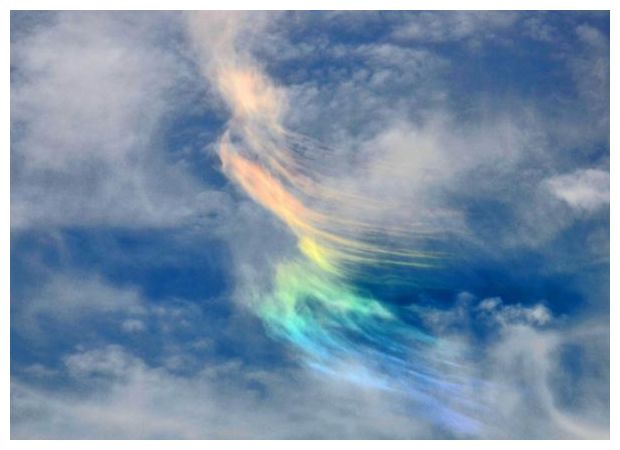
© Del ZaneWhat in the world? A bright display in the clouds.

A colorful apparition materialized over Washington this week; the rarely glimpsed, rainbow-tinted specter appeared and vanished in the space of just minutes.

Fortunately for anyone who didn't look up at precisely the right moment, an enterprising resident of Anacortes, a small town about 80 miles (128 kilometers) north of Seattle, captured the mysterious light show on film.

"My wife said, 'Wow, look at that! Too bad you don't have your camera,'" said Del Zane, a retired software executive and photographer.

The couple was in the car after a morning bike ride and lunch - and just a half-mile from home. "So I just gunned it," Zane said.

A few minutes and a mad dash later, Zane had his camera in hand, pointed it skyward and started snapping pictures.

"It was very colorful and striking, and in just a small portion of the sky," Zane told OurAmazingPlanet. "I hadn't seen anything like it, that's for darn sure."

The colorful phenomenon, known officially as a circumhorizon arc, occurs when sunlight strikes cirrus clouds - the kind that typically look like cotton candy and form very high in the sky - at a certain angle.

Nuke

Electrical Fire Knocks Out Spent Fuel Cooling at Nebraska Nuke Plant

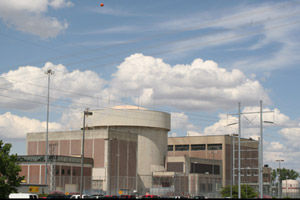
Fort Calhoun Nuclear Power Plant
© OPPD/NuclearFort Calhoun Nuclear Power Plant
A fire in an electrical switch room on Tuesday briefly knocked out cooling for a pool holding spent nuclear fuel at the Fort Calhoun nuclear plant outside Omaha, Neb., plant officials said.

The safety of deep pools used to store used radioactive fuel at nuclear plants has been an issue since the accident at Japan's Fukushima nuclear plant in March. If the cooling water a pool is lost, the used nuclear fuel could catch fire and release radiation.

As ProPublica reported earlier, fire safety is a continuing concern at the country's 104 commercial reactors, as is the volume of spent fuel piling up at plants.

Officials at Fort Calhoun said the situation at their plant came nowhere near to Fukushima's. They said it would have taken 88 hours for the heat produced by the fuel to boil away the cooling water.

Sun

UK: Have You Seen the Mysterious Double Sunset?

Image
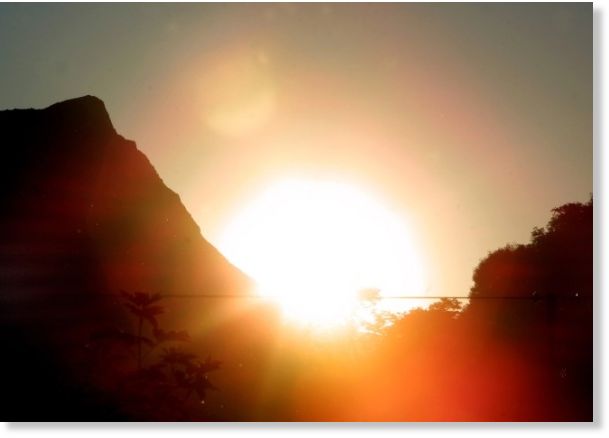
© UnknownThe mysterious 'double sunset' at Crome Hill, Glutton Bridge.
A rare midsummer phenomenon is set to make an appearance next week.

The mysterious double sunset will once again be visible in good weather from several locations in North Staffordshire and West Derbyshire.

Jeff Kent, author of the book The Mysterious Double Sunset, will be leading free guided viewings on three evenings, at two different locations - Glutton Bridge near Longnor and Pickwood Hall at Leek.

Jeff said: "The Mysterious Double Sunset is a 20-minute spectacle, with the whole of the sun reappearing from the steep northeastern slope of Chrome Hill after setting on its summit, followed by a second sunset in the valley below."

Telescope

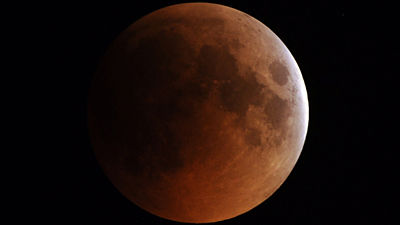
Total Lunar Eclipse Turns Moon Blood Red With Ash From a Chilean Volcano

moon
© UnknownA full moon lunar eclipse seen in Islamabad

A lunar eclipse provided a visual treat for sky watchers across the globe - with ash from a Chilean volcano turning the moon blood red for those in some countries.

Most viewers in UK were left disappointed, with the natural phenomenon not visible in most areas.

Bizarro Earth

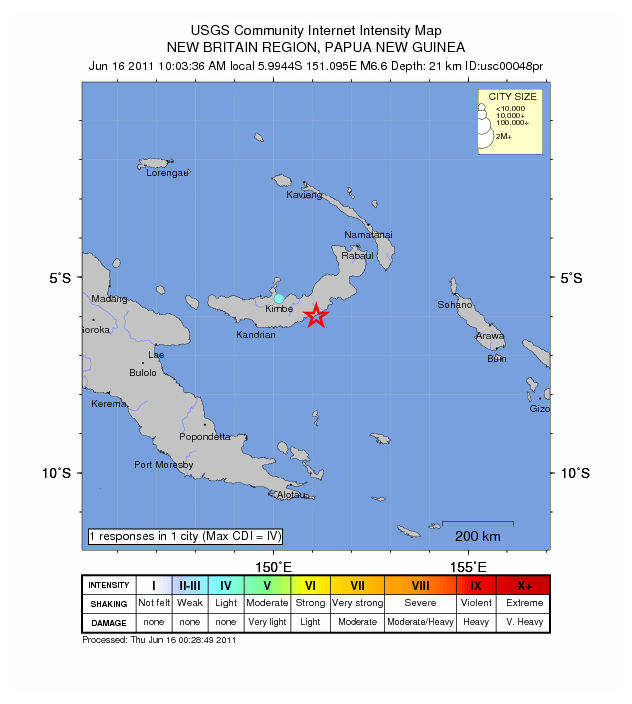
Papua New Guinea - Earthquake Magnitude 6.6

PNG Quake_160611
© USGSEarthquake Location
Date-Time:
Thursday, June 16, 2011 at 00:03:36 UTC

Thursday, June 16, 2011 at 10:03:36 AM at epicenter

Time of Earthquake in other Time Zones

Location:
5.994°S, 151.095°E

Depth:
21.5 km (13.4 miles)

Region:
NEW BRITAIN REGION, PAPUA NEW GUINEA

Distances:
115 km (71 miles) ESE of Kimbe, New Britain, PNG

173 km (107 miles) E of Kandrian, New Britain, PNG

577 km (358 miles) NE of PORT MORESBY, Papua New Guinea

2389 km (1484 miles) N of BRISBANE, Queensland, Australia

Umbrella

China Issues Alert as Yangtze River Braces for More Rain

Image
© Brittanica.com
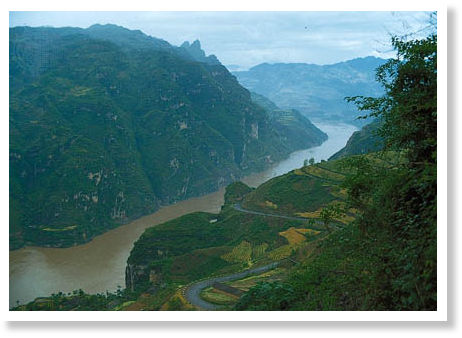
China issued a "level three" alert as the medium-to-lower reaches of the Yangtze River braced for more heavy rain, the China Meteorological Administration said on its website today.

Heavy downpours, including storms and torrential rain in some areas, will affect parts of Jiangsu, Hunan, Zhejiang, Anhui and Hubei provinces as early as tomorrow, the forecaster said. Landslides, floods and mudslides may occur as the soil becomes loose after a recent drought, it said.

Flooding has killed 94 people along the medium-to-lower reaches of the Yangtze River this month, with another 78 people missing, according to a China National Radio report yesterday. The region had previously suffered from a drought.

Authorities in the central province of Hunan said today that the cause of a landslide earlier this week that killed 12 people and left seven others missing was not manmade, the official Xinhua News Agency reported.

Sun

New Maunder Minimum? Scientists Predict Rare "Hibernation" of Sunspots

sunspots maunder minimum
© AFP/Getty Images/Jared C. TiltonUS scientists say the familiar sunspot cycle seems to be entering a hibernation period unseen since the 17th century, a pattern that could have a slight cooling effect on global temperatures.
US scientists say the familiar sunspot cycle seems to be entering a hibernation period unseen since the 17th century, a pattern that could have a slight cooling effect on global temperatures.

For years, scientists have been predicting the Sun would by around 2012 move into solar maximum, a period of intense flares and sunspot activity, but lately a curious calm has suggested quite the opposite.

The signs include a missing jet stream, fading spots and slower activity near the poles, said a trio of studies presented Tuesday at the annual meeting of the American Astronomical Society's Solar Physics Division in Las Cruces, New Mexico.

"This is highly unusual and unexpected," said Frank Hill, associate director of the National Solar Observatory's Solar Synoptic Network.

"But the fact that three completely different views of the Sun point in the same direction is a powerful indicator that the sunspot cycle may be going into hibernation."

Solar activity tends to rise and fall every 11 years or so. The solar maximum and solar minimum each mark about half the interval of the magnetic pole reversal on the Sun, which happens every 22 years.

Experts are now probing whether this period of inactivity could be a second Maunder Minimum, a 70-year period when hardly any sunspots were observed between 1645-1715 known as the "Little Ice Age."

Comment: More on this subject:

Scientists: Sun's Approaching 'Grand Cooling" Assures New Ice Age

Global warming and the sun

Eminent geophysicist rejects global warming theory, says world on verge of 'mini ice age'

What those who pin their hopes on "global warming" to offset the effects of sun cycles seem ignore is that the onset of ice ages have been preceded by a drastic warming phase. Nothing could be further from the truth:

Climate Change Swindlers and the Political Agenda


Cloud Lightning

Canada: Wet Weather Affects Prairie Wheat Seeding

wheat field
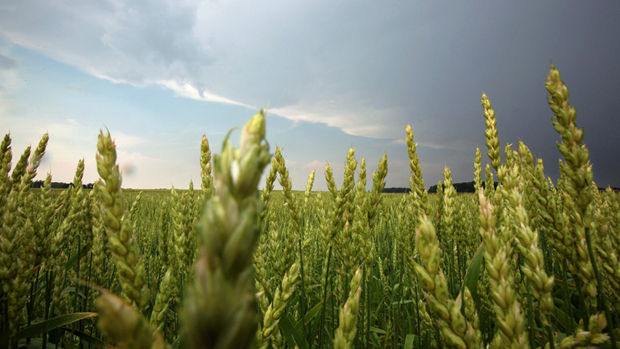
© Chris Bergin/The Star Press/Associated PressThe Wheat Board says seeding is about 86 per cent complete across the Prairies when usually by this time of year, it is entirely done.
The Canadian Wheat Board says this year could be even worse than 2010, sucking an additional $1.5 billion to $2.5 billion out of the Prairie economy.

On Tuesday, the board said between 2.4 and 3.2 million hectares of farmland is still unseeded across the Prairies this year because of wet weather.

"This is occurring at a time when grain prices are extremely high, adding insult to injury," said Bruce Burnett, the board's director of weather and market analysis.

"Many farmers in the wettest areas have planted next to nothing this spring, while others are watching their newly emerged crops drown," Burnett said.

The seeding estimate is only marginally better than last year - another wet planting season - which set a record low that stretched back to 1971.

But Burnett also forecast yields that could be lower than last year due to other factors, such as an even later start to seeding this season.

Cloud Lightning

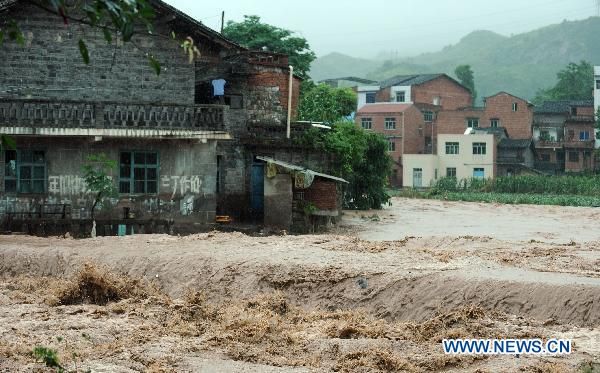
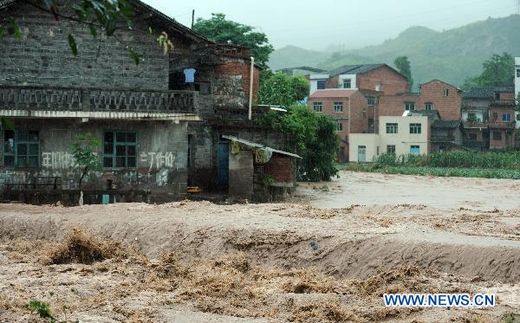
Rain-triggered floods, landslides leave 105 dead, 63 missing in south China

Image
© News.cnReference image from July 10, 2010 flooding in S. China.
Beijing, - Rain-triggered flooding and landslides in south China have left 105 people dead and 63 more missing over the past 10 days, the Ministry of Civil Affairs said Monday.

According to the official count, as of 10 a.m. Monday, the rain-caused disasters that occurred since June 3 have left 39 people dead and 21 more missing in Hunan Province as well as 29 dead and 10 missing in Hubei Province.

While in Guizhou Province 24 people died and 32 were missing and in Jiangxi the death-toll stood at 13, according to the ministry.

Prior to the rain, the provinces of Hubei, Hunan and Jiangxi -- located along the middle and lower parts of the Yangtze River basin -- were stricken by a prolonged drought.

The ministry along with the National Disaster Reduction Commission on Monday launched an emergency response in anticipation of more downpours in central and southern China over the next few days.

Meanwhile, they ordered relief-supply reserve stations in 11 provinces and seven cities in these regions to gear up for the expected downpours.

Local civil affairs departments were told to enhance measures and work closely with other related departments to prevent flooding, geographical disasters and other secondary disasters, which may be triggered by the rainfall.

They were also told to help people by launching safety inspections, setting up temporary shelters, making emergency plans, and evacuating people in the most dangerous areas.