
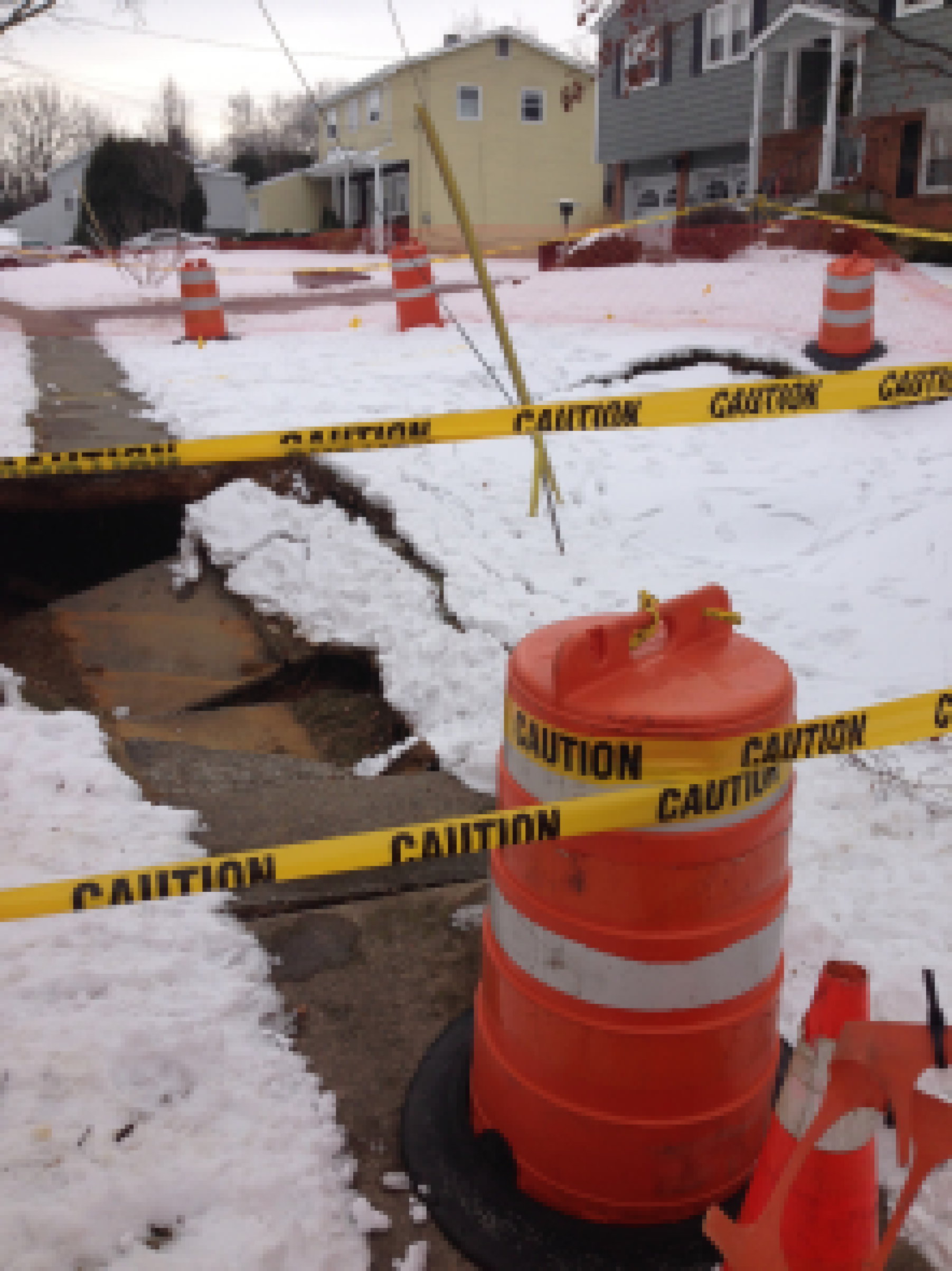
© HackettstownPatch.comThe sinkhole on College View Drive in Hackettstown, New Jersey.
A sinkhole has compromised the ground and safety of residents on College View Drive in Hackettstown Friday afternoon, according to police.
The sinkhole is a result of a water main break that occurred Thursday night. Utility crews were working in the area Friday when the ground began to cave, and has now compromised two properties, Sgt. Darren Tynan said.
Other utility crews were requested to respond immediately to the scene just after 1 p.m. College View Drive is currently closed between Deerfield Drive and Carter Terrace. Water has been restored to residents in the area.











Comment: See also:
Second rare oarfish washes up in Southern California
18-foot oarfish caught by Catalina marine science instructor in California
Something amiss deep down? Bizarre-looking oarfish washes ashore on Cabo San Lucas beach
Appearance of "Earthquake fish" spook Japanese
Rare "King of Herrings" Found off Swedish Coast
England: Monster of deep washes up on beach