Earth ChangesS


Arrow Down

Schoolbus carrying nine disabled students trapped by sinkhole in New York City

Image
Trapped: A deep sinkhole caused by a water main rupture in Washington Heights sunk a city school bus Tuesday as kids were heading to school
* Ruptured water main on W. 164th St. in Washington Heights, New York caused sinkhole

* Bus carrying nine students and four aides trapped about 8am

* No-one was injured

* Residents say it is an ongoing problem


New York Daily News reported the bus was towed from the street between Broadway and St. Nicholas Avenue, and the passengers were taken to school on another bus. No-one was injured.

A city Department of Environmental Protection spokeswoman said crews repaired the 12-inch water main and made temporary fixes to the street, but planned to return tonight to make permanent repairs.

Cloud Lightning

Wildlife casualties of floods grow amid fears over 'polluted' wetlands in UK

Image
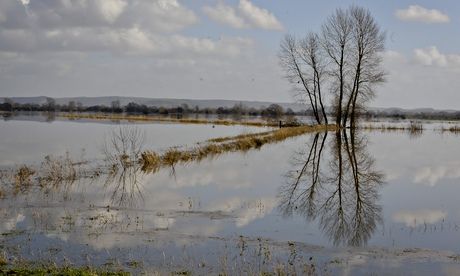
© Ben Birchall/PAThe Somerset Levels at the height of the floods. As communities begin to recover, the cost to wildlife is only now becoming apparent.
The terrible loss of lives and homes has been well documented, but the damage to populations of birds, mammals, fish and insects, and habitats, will also have a long-term impact on the ecosystem

Seals, moles, hedgehogs, badgers, mice, earthworms and a host of insects and seabirds are among the unseen casualties of the floods, storms and torrential rains of the last few weeks, say wildlife groups.

As the waters started to subside across England, conservationists reported that about 600 guillemots, puffins, razorbills, kittiwakes and gulls have been washed up on the south coast and 250 seals drowned in Norfolk, Cornwall and the Channel Islands. A further 11,000 seabirds are reported to have been found dead on the French coast.

"The relentless storms hitting our coast have had a cumulative effect on animals, which can usually cope with bad weather, but are now on really low reserves and are dying in large numbers," said Niki Clear from Cornwall Wildlife Trust, which has reported that dozens of seal pups were washed up on beaches.

Cloud Grey

Government weather and climate forecasts are failures

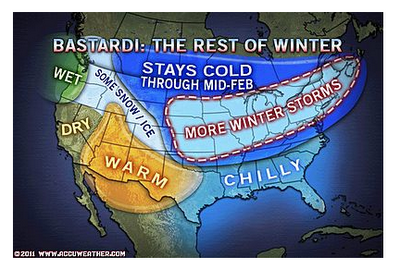
US winter forecast
© Accuweather
In general, we look for a new law by the following process: First we guess it; then we compute the consequences of the guess to see what would be implied if this law that we guessed is right; then we compare the result of the computation to nature, with experiment or experience, compare it directly with observation, to see if it works. If it disagrees with experiment, it is wrong. In that simple statement is the key to science. It does not make any difference how beautiful your guess is, it does not make any difference how smart you are, who made the guess, or what his name is - if it disagrees with experiment, it is wrong. - Richard Feynman
Richard Feynman's comment describes the scientific method but also applies to weather and climate forecasting. Many medium and long-term weather and climate forecasts are wrong and below any level of usability. (for example, the Met office forecast for a dry 2013-2014 winter that ended up with major flooding) Most forecasting agencies swing between determining their own accuracy level or openly detailing the inadequacy of their work. No production of society is as wrong as government weather forecasts and yet continues to operate. Apparently people just lump it in with all government waste and failure. Their real view is reflected in the fact that few activities receive more ridicule and disdain than weather forecasts.

Cloud Lightning

UK: Jersey seabird death toll 'at least 600 and growing'

Image
Cris Sellares said there were a total of 136 birds found on Sunday
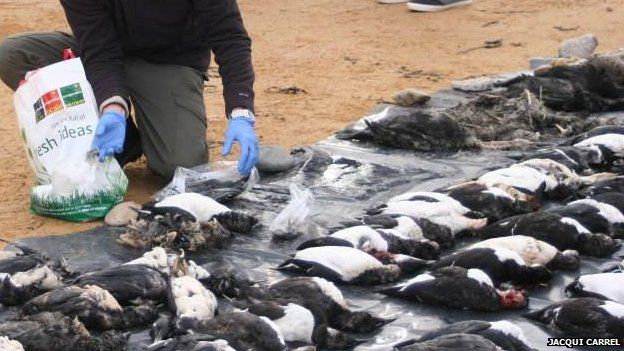
More than 600 dead seabirds have now been found on Jersey's beaches, wildlife experts have confirmed.

The National Trust for Jersey organised a second count on Sunday to track the impact of recent storms.

For the second week about 130 birds were discovered dead. Experts put this down to them struggling for food in heavy wind and rain.

Wildlife experts are calling for the Channel Island governments to work to assess the scale of bird loss.

Dozens of volunteers answered a call to scour the island's coast on Sunday to collect some of the hundreds of dead birds which have washed up during the extreme weather early in February.

Cris Sellares, from the National Trust, said there were a total of 136 birds found and some specimens, such as local shags, an oiled razorbill, a kittiwake and some puffins were saved for post-mortem analysis.

She said: "It is one storm after another, after another, they can't feed in this weather, they get weak.

Megaphone

Warning to Michael Mann: apologise for your lie or risk facing from me what you've done to Steyn

Open and shut case. Michael Mann is a liar:

Image
Normally I do not sue, but this seems to me a special case.

Mann, the climate alarmist who gave the world his dodgy "hockey stick", is now suing sceptic Mark Steyn for mocking him and his lawyers have produced deceptive legal documents in his defence.

Mann has published an outright lie that defames me, and should face the same punishment he wishes to mete out on Steyn for mere mockery.

I do not lie and Murdoch does not pay me to do so. Nor has Mann singled out a single "lie" I'm alleged to have committed.

In fact, Mann is so reckless with the facts that his tweet links to an obvious parody Twitter account run by one of my critics, clearly believing that it's actually mine.

Advice, please?

Comment: For more on the Michael Mann/Mark Steyn feud, see: Michael Mann's legal case caught in a quote fabrication fib


Ice Cube

Six skating children drown after ice on frozen river breaks in China

Image
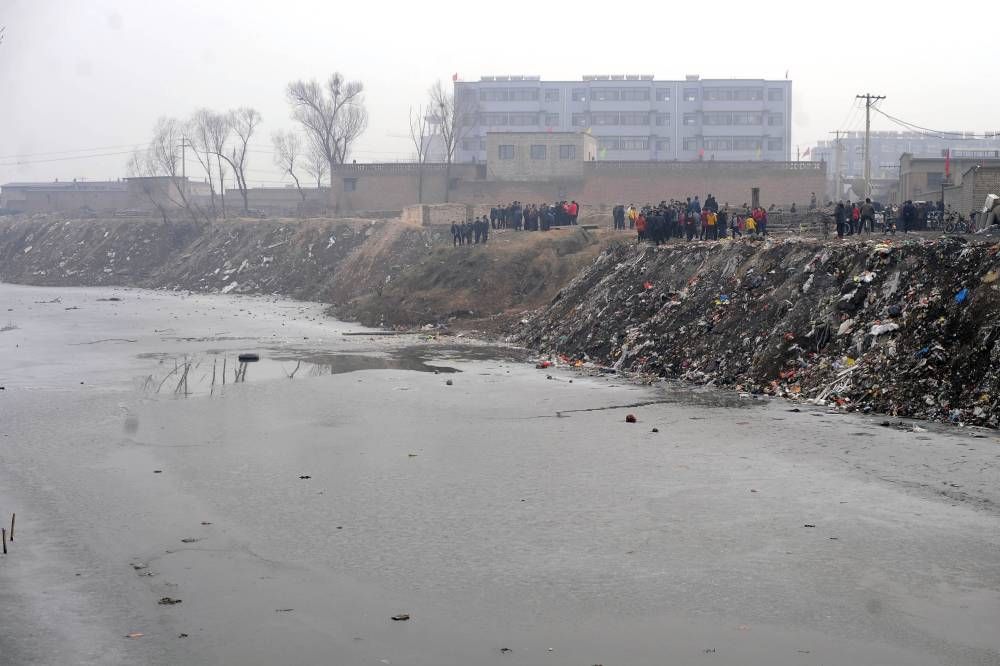
© BarcroftThe site of the accident in China where six children lost their lives
Six children have died in a skating accident after they broke through the ice on a frozen river.

The children, aged between five and 11, fell into the Huiji River in Pingyao county, China, on Saturday afternoon.

They had been skating on a thin section of ice when it collapsed underneath them.

Police were called to the incident at 5pm and an hour later four of the children were found and the remaining two were discovered at roughly 7.30pm.

Five of the children were cousins and the sixth was a neighbour's child, an officer told the South China Morning Post.

All of the children were taken to hospital but none survived.

A video which captured the dramatic operation to recover the children has also emerged, showing a rescue worker diving into the water within a rubber tube.


Black Cat

Leopard on the loose in Indian city sparks terror as it runs wild in a hospital, cinema and apartment block

Image
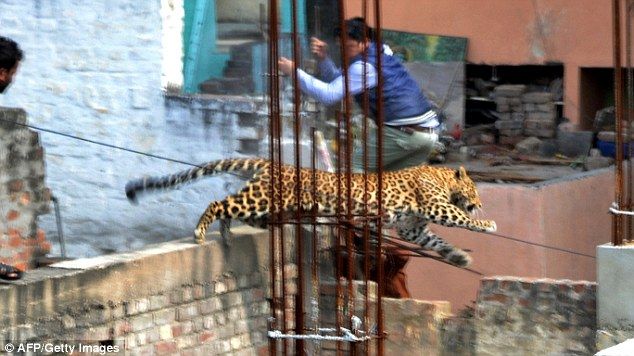
On the loose: A shocked man watches a leopard leap past him in Meerut
A leopard was discovered prowling the streets of Meerut, near Delhi

The animal evaded capture and authorities closed schools and colleges

The efforts of officials to capture it were hampered by crowds of onlookers


A leopard sparked panic in a north Indian city when it strayed inside a hospital, a cinema and an apartment block while evading captors and injured at least two people.

Authorities closed schools and colleges in Meerut, 60 kilometres (37 miles) northeast of the Indian capital, after the leopard was discovered prowling the city's streets on Sunday, a senior city official said.

'Despite our best efforts, we have been unable to track the leopard down. We have launched a massive hunt for the beast,' said additional district magistrate S.K. Dubey.

Cloud Lightning

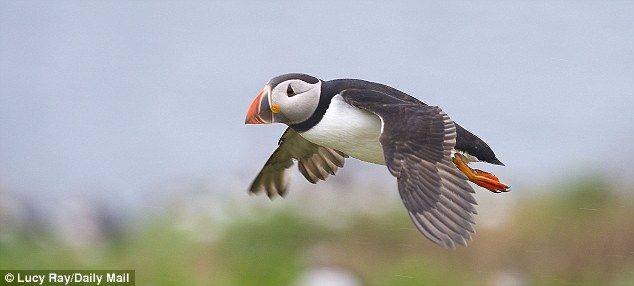
Thousands of puffins wiped out in storms: Record numbers wash up dead on coasts of Spain and France

Image
Normal winters would have brought 3 or 4 puffins to the Bay of Biscay, but this winter saw 35, with countless more thought to have drowned in the ocean
* Record numbers of puffins have been washed up on Bay of Biscay

* A few die each year, but recently many more have died due to storm weather

* Drowning is common cause of death for the puffins

* They are often swept away in strong storms while hunting at sea


Thousands of puffins are feared to have been killed in the recent storms that have hammered the UK for the last month.

The British Trust for Ornithology said today it's received a record number of reports of puffins, wearing uniquely-numbered metal rings showing they are from the UK, being washed up dead on the coasts of France and Spain.

It's feared they have been wiped out in their thousands while hunting far out to sea in the storm-lashed Bay of Biscay for their favourite food, sand eels.

BTO spokesman Paul Stancliffe said: 'Sadly, the sight of a puffin, beak full of sand eels, might be a little harder to come by this summer as they struggle to survive the recent storms that have rocked the Bay of Biscay.'

In a normal winter, the BTO would expect two or three ringed puffins to be found in the Bay, which covers western France and northern Spain, but during the last few weeks, more than 35 have been reported and countless more are feared to have been drowned and lost forever far out at sea.

Cloud Lightning

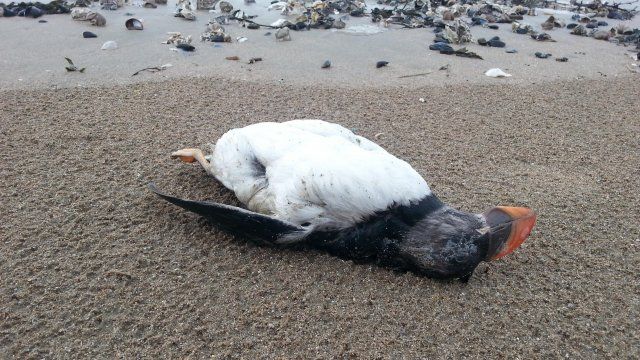
Number of dead seabirds found on the French coast increases to 15,000

Image
© Maxppp A puffin found dead on a beach.
Numerous birds storm victims: the slaughter continues on the beaches of Charente-Maritime

For the third consecutive weekend, the LPO Charente-Maritime asks its volunteers to identify bird flood victims, some may still be saved if they are caught early.

Since the early storms in January, 15,000 dead birds or more were found all along the coast of the Atlantic. They number in the thousands in Charente-Maritime for over a fortnight. They were mostly guillemots and puffins, birds of the high seas who found no food in the sea due to bad weather .

At Charente-Maritime, those who are found alive on the beach are supported, warmed and fed, the Centre for the Protection Departmental Dolus-D'Oléron the only department. Since January 29, 275 birds are often very weak were housed, only a third survived.

Wolf

The urban hyenas that attack rough sleepers in Addis Ababa, Ethiopia

Image
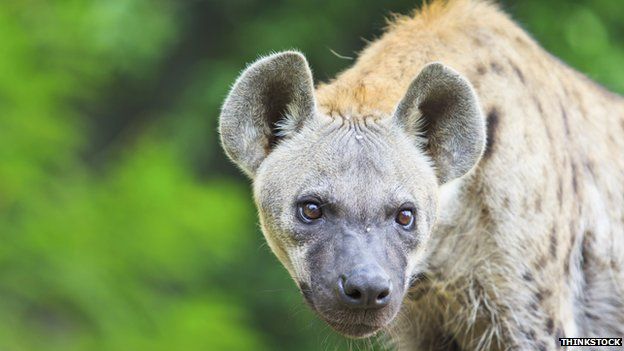
Urban hyenas are becoming a dangerous problem in the Ethiopian capital, where they attack rough sleepers.

It is late evening in Addis Ababa. Stephen Brend, a zoologist with the Born Free Foundation, is driving me to the airport to catch a flight back to London.

"Have you got time for a ten-minute detour?" he asks, as we passed the British embassy. "Of course," I reply.

So he turns off the road and up a dirt track between some rough shacks and a collection of battered old jalopies that passes for a taxi rank in Ethiopia's capital.

"There! Look there!" Stephen exclaims. In the beams of his headlights I see several pairs of eyes glinting in the darkness like tiny mirrors. As we drive closer I begin to make out the shapes of the animals behind those eyes. They are hideous beasts, as large as the largest dogs, with coarse spotted brown fur, elongated necks and front legs much longer than their back ones so their backs taper away from their powerful shoulders.