Earth ChangesS


Snowflake Cold

Record snowfall and cold temperatures in Canada expected to carry into spring months

mmmmm
© littleny / Depositphotos.com
While many consider March 21 the official start of spring, Environment Canada says meteorological spring begins on March 1.

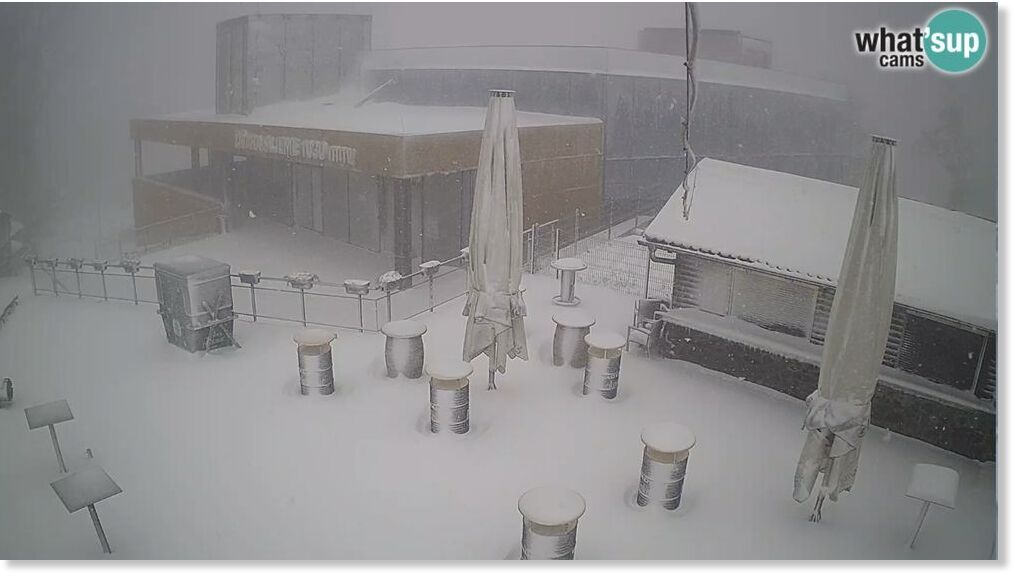
With lingering winter conditions across Fort McMurray Wood Buffalo, including below-seasonal temperatures and record amounts of snow, the agency says a colder-than-normal pattern is expected to continue through the spring months of March, April and May across northern Alberta and the northern Prairies.

In its seasonal outlook, Environment Canada forecasts cooler-than-average temperatures across parts of Yukon, the Northwest Territories and northern Prairie regions, including northeastern Alberta. Warmer-than-normal conditions are more likely in southern parts of the Prairies, as well as British Columbia and parts of eastern Canada.

Snowflake

Juneau, Alaska with more than 200 inches of snow smashes all-time seasonal record

mmmmmmm
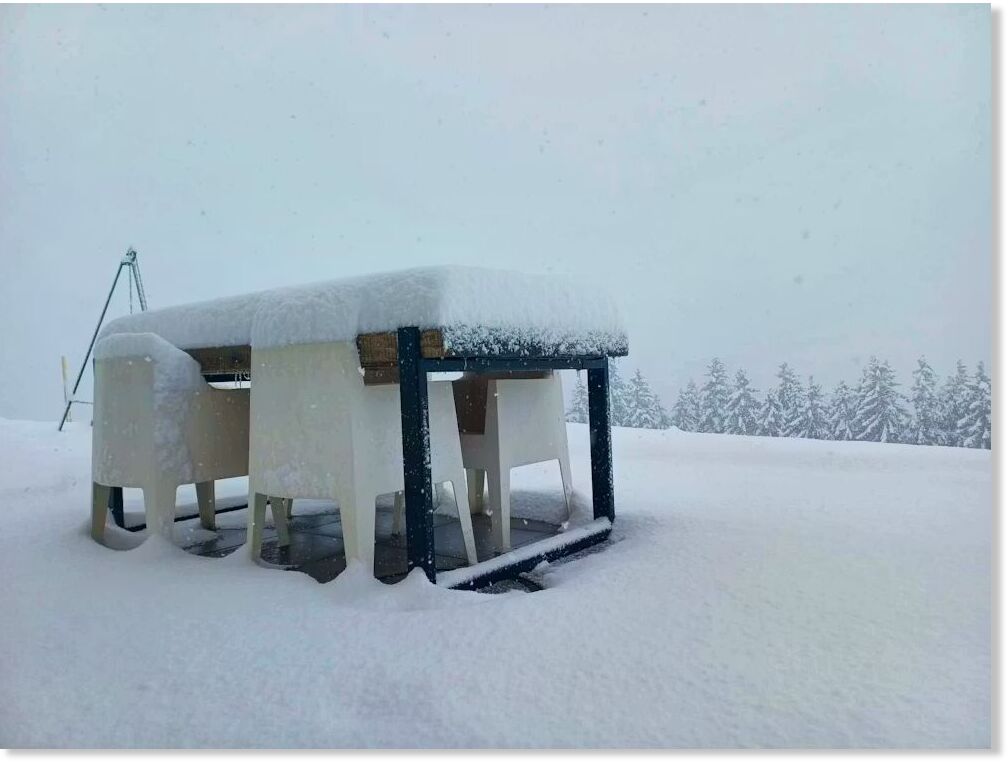
More than 200 inches of snow has fallen in Juneau, Alaska, since the snowfall season began last year, smashing an all-time record for the state capital.

Juneau has now logged an extraordinary 201.2 inches of snowfall so far this season, pushing the city past its all‑time seasonal record and underscoring the severity of this year's winter storms. While the city is no stranger to heavy snow, the total far exceeds what even residents of the reliably wintry capital typically see, following months of intense systems that triggered avalanche dangers, buried roadways and contributed to roof collapses earlier in the season. The accumulation marks one of Juneau's most disruptive winters in recent memory, highlighting how persistent, moisture‑packed storms have overwhelmed the city's usual capacity to manage snow.


Snowflake Cold

Antarctica sets new March cold record at -76.4C (-105.5F)

mmmmmmmm
Antarctica has just reset the bar for March cold.

On March 25, temperatures at Vostok Station fell to -76.4C (-105.5F), establishing a new March record for the continent.

The previous benchmark stood at -75.7C (-104.3F), recorded at Dome Fuji in 2013 (though this is considered unreliable), with other notable lows including -75.5C (-103.9F) at Plateau Station (1967) and Concordia (2025).

At Vostok itself, the prior March low was -75.3C (-103.5F), observed in 1982, 2020, and again yesterday (March 24, 2026).

Tsunami

Thousands evacuated in Canary Islands as storms, floods hit Spanish islands

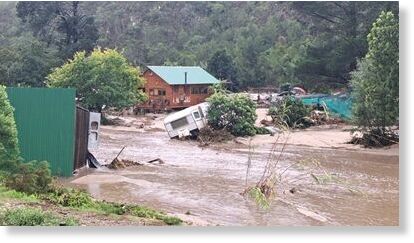
A vehicle is swept away by water into a ravine near El Caidero
© REUTERS/Borja SuarezA vehicle is swept away by water into a ravine near El Caidero
Thousands of people have been evacuated after a storm slammed into a holiday hotspot popular with Brits.

Over 3,000 people had to be evacuated in badly hit parts of Gran Canaria as Storm Therese wrought havoc, causing floods and landslides in a storm that has lasted the best part of a week.

Brits were caught up in what is one of the worst storms to hit the Spanish Canary Islands in decades. Entire communities were cut off due to flooding, with evacuated people taken to makeshift shelters.

Over 40,000 Brits are believed to live in the Canary Islands, while Gran Canaria is popular with tourists, particularly during the looming Easter holidays.

Damage from the storm has been extensive. Heavy runoff in the remote El Cadeiro area of Gran Canaria caused access to be completely cut off for one family. A drone had to be deployed by local police in order to deliver vital medicine to the isolated residents.


Comment: Related: March snowfall on Canary Islands, Spain as Storm Therese makes its way across Europe


Tsunami

Mozambique floods kill 18 as heavy rains continue

mmmmm
A second wave of heavy rains has triggered floods across Mozambique, leaving 18 people dead, thousands displaced, and infrastructure damaged, the National Institute for Disaster Risk Management and Reduction (INGD) said Monday.

In a post on US social media platform Facebook, the agency said most of the deaths were due to drowning, while 31 accommodation centers nationwide are sheltering around 10,000 people, including four centers in the southern province of Inhambane hosting roughly 4,000.

According to INGD, the 2025-2026 rainy and cyclonic season has affected nearly 1 million people nationwide, killed 285, flooded tens of thousands of homes, and damaged schools, roads and agricultural areas.


Binoculars

Wrong place, wrong time: Oriental turtle dove from east Asia turns up in Ireland

Oriental Turtle Dove, Lisburn, Antrim (Richard Caves).
© Richard CavesOriental Turtle Dove, Lisburn, Antrim.
The head of communications and development at Birdwatch Ireland has said the rare oriental turtle dove, discovered in a housing estate in Lisburn, Co Antrim, has probably been there since December.

Niall Hatch said householders locally said they had noticed seeing an unusual species, but no one realised it was a rare bird.

Mr Hatch said the news of the bird's presence broke last week after a local bird watcher shared images.

This in turn caused a huge gathering of twitchers to arrive in Lisburn.

It is the first time the bird has been seen on the island of Ireland, Mr Hatch added, so there is a lot of interest.


Seismograph

Deep magnitude 7.5 earthquake in Pacific Ocean shakes Tonga, triggers brief Tsunami Warning across islands

A magnitude 7.5 earthquake was detected some 148 miles below the surface of the Pacific Ocean roughly 103 miles west of Neiafu, Tonga.
© FOX WeatherA magnitude 7.5 earthquake was detected some 148 miles below the surface of the Pacific Ocean roughly 103 miles west of Neiafu, Tonga.
A magnitude 7.5 earthquake was detected some 148 miles below the surface of the Pacific Ocean roughly 103 miles west of Neiafu, Tonga. According to the USGS, the quake was felt across several of the Tongan islands just after 5:30 p.m. local time (12:30 a.m. EST).

At least three other smaller quakes were recorded shortly after at similar depths.

The country's meteorological service issued a Tsunami Warning across the whole island chain and urged people to evacuate to higher ground.

The warning was lifted about 2 hours after the quake and there's no immediate report of any tsunami waves or any damage.

Comment: In the same area 2 days prior: 3 shallow earthquakes of magnitudes 6.2, 6.3 and 6.2 in 24 hours - South Pacific Ocean off Samoa on March 22


Fire

Best of the Web: Heatwave in most of US brings record-shattering high temperatures for March

An astoundingly strong heat wave is not just setting records across the western U.S. — it's pulverizing them
heatwave usa
© NWS/NOAATemperatures across the western U.S. are soaring to 20 to 30 degrees Fahrenheit above normal.
Editor's note (3/21/26): Four stations (two in Arizona and two in California) recorded temperatures of 112 degrees Fahrenheit (44.4 degrees Celsius) on Friday, March 20, besting the all-time U.S. March record set just the day before. That is 1 degree F (0.56 degree C) below the all-time April U.S. record. Eight states have set all-time high temperature records for March during this heat wave.

On Wednesday in North Shore, Calif., the temperature soared to a stunning 108 degrees Fahrenheit (42 degrees Celsius) — matching the hottest March temperature on record for the state. And then, on Thursday, Phoenix, Ariz., hit 105 degrees F (41 degrees C) — the earliest such recording by more than a month. And that same day, the temperature just outside Martinez Lake, Ariz., reached 110 degrees F (43 degrees C) — the highest March temperature ever recorded in the U.S.

The heat wave that is engulfing much of the western U.S. right now is unprecedented. A high-pressure area — the strongest ever observed over the Southwest in March — ushered in the unseasonably scorching weather. This area, also known as a ridge because of the northward humps in the jet stream that the phenomenon is associated with, covers an enormous swath of the U.S. It will persist for days and is sending temperatures 20 to 30 degrees F (11 to 17 degrees C) above normal. It is "one of the more meteorologically exceptional events that I've seen in recent years in the American West, and that is saying something," said climate scientist Daniel Swain on his YouTube channel.

Comment: Nebraska is already fighting wildfires, including the largest in its history:


The snowpack is already gone in many places, whereas it's usually at its peak this time of year:


Sioux Falls saw a temperature swing of 49C in just 5 days:


This appears to have been driven, at least in part, by a 'marine heatwave off the US west coast - i.e., heating coming from below...


Wild extremes are now the 'new norm'. The 'heat dome' has already given way to a reversal to winter temperatures:


Cassiopaea

Auroras blaze as solar winds pour in

The aurora borealis above Bamburgh Lighthouse in Northumberland. Pic: PA
© PAThe aurora borealis above Bamburgh Lighthouse in Northumberland, UK.
Auroras danced across northern skies overnight as Earth's magnetic field underwent G3 (strong) geomagnetic storming.

The culprit: a potent one-two punch of recent coronal mass ejection (CME) arrivals plus the onset of a fast solar wind stream soaring toward Earth from a large coronal hole.

As charged particles poured into Earth's upper atmosphere, vivid auroral displays became visible from mid-latitude locations as far south as New York, London and northern France.

The storm is now easing, but forecasters still expect periods of G1 - G2 (minor - moderate) storming through today, keeping aurora watchers busy for at least another night.


Tsunami

Two dams breached in Zimbabwe causing flooding

NNNNN
FLOODING experienced over the weekend in Gwanda District, Matabeleland South Province, which caused infrastructure damage and disrupted traffic movement, has been attributed to breaches at Insindi Dam and Mtshabezi High School Dam.

In a statement, the Zimbabwe National Water Authority (Zinwa) dismissed rumours that Mtshabezi Dam had breached and caused the flooding.

"The Zimbabwe National Water Authority (ZINWA) wishes to inform stakeholders and the public that Mtshabezi Dam, which is full and spilling, is structurally safe and has not breached, as has been inferred in some social media posts and audios.

"What has been confirmed to have breached is Mtshabezi High School Dam. Information to the effect that Mtshabezi Dam has breached should thus be disregarded. Members of the public are advised not to circulate such information, as it may cause unnecessary alarm," reads the statement.