Earth ChangesS


Meteor

Falling meteor may have sparked unexplained bush fires in New Zealand

Image
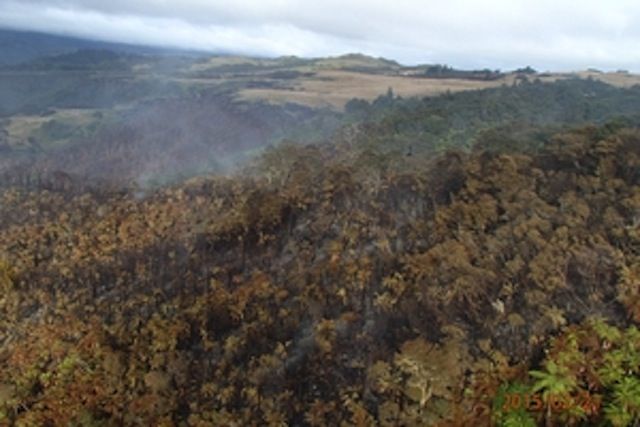
© SuppliedThis bushfire at Tangahoe on the Whanganui River was reported on February 20
A falling meteor may have caused the spate of unexplained fires in Wanganui forest and bush.

Eight fires in sometimes very remote places have Department of Conservation staff investigating whether the meteor which flashed across the New Zealand sky on the evening of February 11 was to blame.

DoC Whanganui services manager George Taylor said in some cases trees were burned right down to stumps, which was unusual.

Fires at Parinui and Tangahoe were among those fought near the Whanganui River last month. The three latest fires, reported on March 3, were even more remote - one was 5km from the river and the other two were west at Matemateaonga.

Kelly O'Neill farms at Pipiriki and DoC have been using his property to land firefighting helicopters.

He talked to DoC staff there who were pretty convinced the falling meteor of February 11 caused at least some of the fires.

Mr O'Neill saw the meteor himself, around 10pm that night.

"It made a massive big flash in the sky - it was there for about a second, and headed over in that direction."

The meteor was a very bright type called a fireball, said David Britten, the astronomy educator at Auckland's Stardome.

It was probably the size of a football or two and travelling south to north across the country. It could have been debris from an asteroid, comet, moon or planet.


Comment:

Meteor: Shooting star plummets from New Zealand nightsky


Attention

Sinkhole causes gridlock in Kuala Lumpur, Malaysia

Image
© Lando Zawawi via Facebook
A sinkhole the size of a wheel caused traffic to slow down in Jalan Maarof, heading to Bangsar. The wheel of a car also got stuck in it.

Kuala Lumpur City Hall's (DBKL) Civil Engineering and Drainage Department director Tan Keng Chok said the hole appeared after Tenaga Nasional Berhad (TNB) employees were dragging an underground high tension cable to supply power for a nearby Mass Rapid Transit Corporation Sdn Bhd construction site.

"The hole appeared after a 33kv cable was pulled to lay supply for the MRT construction in Jalan Damansara," Tan said, when contacted by The Rakyat Post today.


Comment: Yeah, right. It's the cable!


Adding that TNB had admitted its fault, Tan said repairs would be conducted on the road tonight.

An image of the hole was uploaded onto biker group Silaturrahim Brotherhood spokesman Azlan Sani Zawawi @ Lando Zawawi's Facebook page.

Lando, who regularly conducts road repair works on potholes and sinkholes and is part of the Kuala Lumpur City Hall's (DBKL) WhatsApp group, uploaded images of his conversation in the group, calling on the authorities to take swift action.

The image of the sinkhole was also uploaded on to Friends of BN's Twitter page.

Arrow Down

Car crashes into sinkhole in Boston, Massachusetts

Image
© Westboro Fire Department
A car was damaged after it crashed into a sinkhole Saturday night in Westborough.

The car fell a few feet into the sinkhole before it came to rest on a gas main below.

Firefighters were able to lay a ladder across the hole and walk out to the woman to rescue.

Police said the driver was not hurt, but the car was totaled.

Comment: The earth is opening up! There have been 25 sinkholes in the past month.


Igloo

Blizzard conditions close access to Hawaii summits

Ice, snow, and high winds close Mauna Kea Access Road
Image
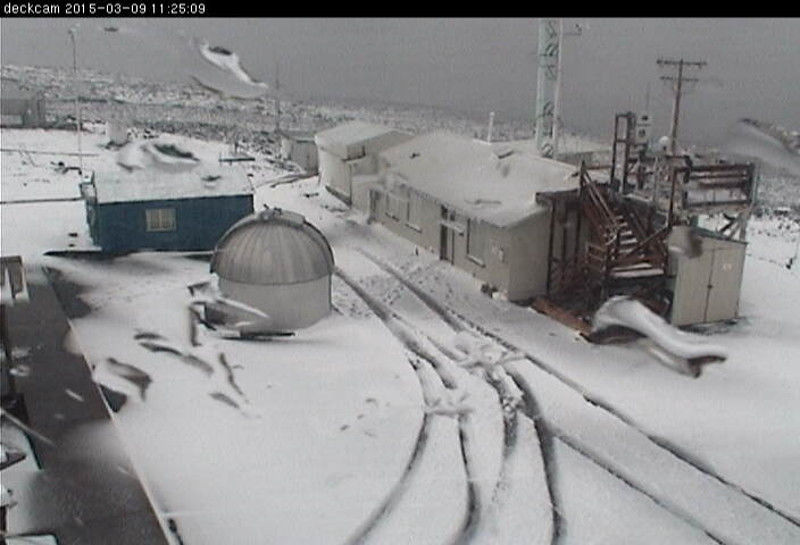
© NOAAThere is some visibility on Mauna Loa.
The wintry weather continues on the summits of Hawaii Island.

Mauna Kea rangers report blizzard conditions have shut down the road to the summit of the mountain. Poor weather is forecast for the next several days. Webcams have been blinded by the white out.

The summit of Mauna Loa is also closed. The Hawaii Volcanoes National Park says the area is off limits for backcountry use due to the continued winter storm conditions.

A high wind warning is in effect for both summits until 6 p.m., reports the National Weather Service. Southwest winds are blowing 45 to 70 mph with localized gusts over 105 mph.

A winter weather advisory is also in effect, with an additional 1 inch of snowfall expected at elevations above 12,500 feet.

There has been constant snow on the summits over the last week. On Saturday, the harsh weather took a break long enough for island residents to drive up to the summit.

Cloud Precipitation

Giant waterspout spotted near the coast of Mauritius

Image
© Delphine HugounencWaterspout
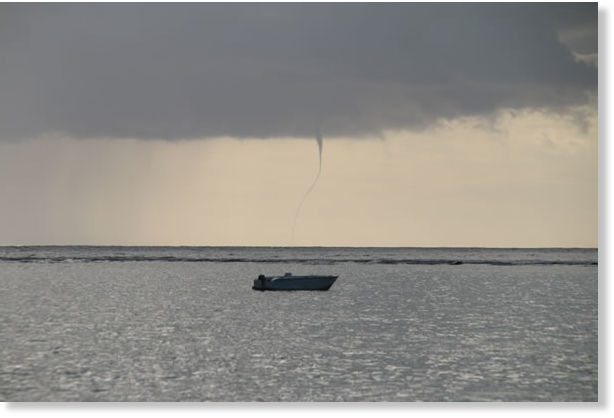
A giant waterspout has allegedly been observed at La Preneuse beach on Friday 6th of March. The sighting of the meteorological phenomenon is attributed to Delphine Hugounenc, a French woman who has settled down in Mauritius for two years now.

Delphine Hugounenc related that she was at the public beach of La Preneuse with her family on the 6th of March. Around 16h00, something bizarre caught her attention. According to her, she saw a waterspout over the sea. When she pointed it out to a friend of hers, they were both shocked at such a sight. Delphine Hugounenc also admitted that on seeing the phenomenon, a feeling of insecurity swept over them.

Blue Planet

M6.2 - 14km N of Aratoca, Colombia

Image
Event Time
  1. 2015-03-10 20:55:43 (UTC)
  2. 2015-03-10 16:55:43 (UTC-04:00)
Nearby Cities
  1. 14km (9mi) N of Aratoca, Colombia
  2. 18km (11mi) SSE of Piedecuesta, Colombia
  3. 27km (17mi) SSE of Floridablanca, Colombia
  4. 31km (19mi) SSE of Giron, Colombia
  5. 272km (169mi) NNE of Bogota, Colombia

Wolf

Brutal winter takes toll on wildlife around New York

Image
© Loraine IzzoA screech owl that lost a lot of body weight because of the harsh winter.
Wildlife rehabilitators say that animals - mainly waterfowl, owls, hawks and some mammals - are under serious stress due to the cold winter.

Two months of snow cover and brutal bouts of arctic air are endangering wildlife.

Wildlife rehabilitators say that animals — mainly waterfowl, owls, hawks and some mammals — are under serious stress. Many have starved because their food sources have been covered with snow and ice and the water they need to survive has been frozen.

"It's been a really hard, long, cold, desperate and brutal winter for wildlife," said Taffy Williams, a wildlife rehabilitator from Yonkers. "A lot of raptors, hawks and owls are being found dead."

Animals have been foraging in places they usually don't — risky places such as urban streets or sun-warmed banks along parkways.

Snowflake

Italian village receives more than 8 feet of snow in just 18 hours

Image
Snow in Capracotta
Italian village has broken records after it received a dump of more than eight feet (2.56 metres) in 18 hours

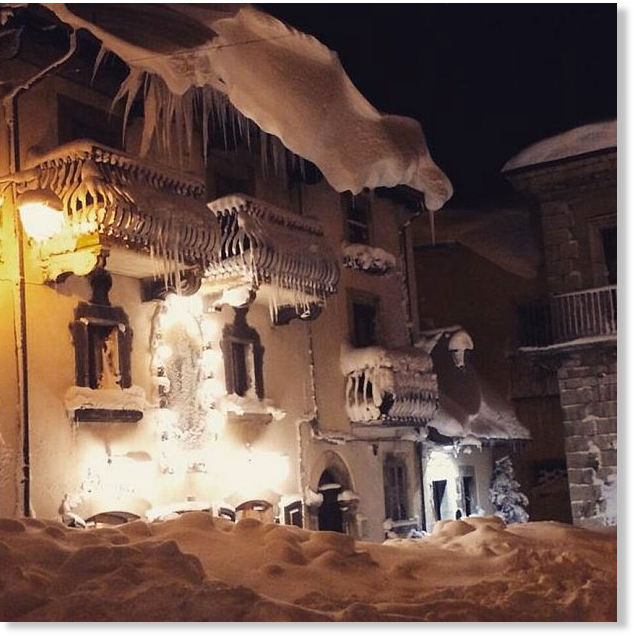
A tiny village in Italy is claiming to be one of the snowiest places in the world after it was smothered under more than eight feet (2.56 metres) of snow in less than 24 hours.

Image
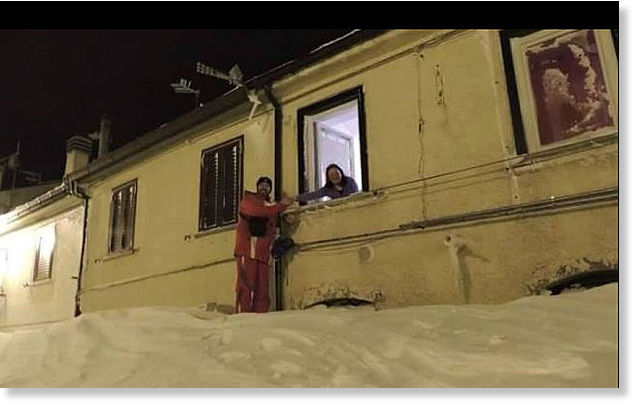
An intense storm left the inhabitants of Capracotta climbing out of first floor windows onto great mounds of snow and having to get around on snowshoes and skis.

Other locals had to dig tunnels from their front doors in order to be able to leave their homes.

Snowflake Cold

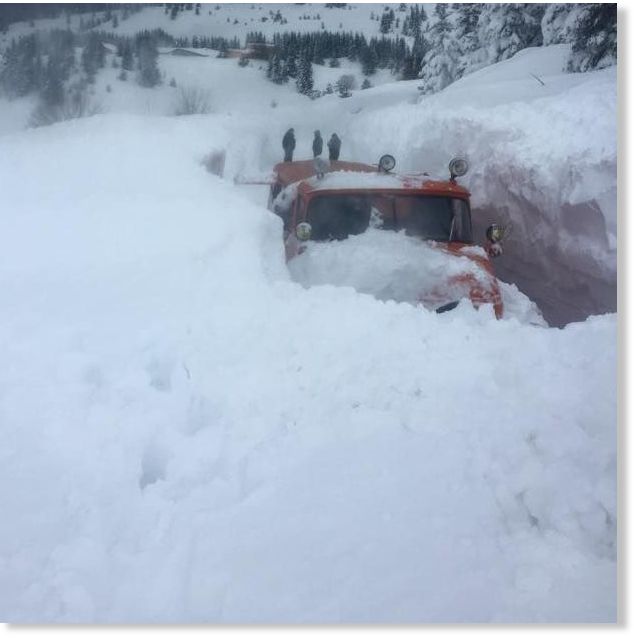
States of emergency declared in many parts of Bulgaria, snowdrifts of five meters (16 feet) reported

Image
Road blocked by snow in Bulgaria
A man froze to death in Kardzhali and 40 people were stranded on Belmeken 3-meter drifts.

Third day continues with disastrous conditions after heavy snowfall.

Rescuers found frozen to a bus stop 65-year-old Sabahattin Azis of Krumovgrad Gorna tower, BNR reported.

The man came out of his home on Friday night, when the abundant snowfall began. After not returning the next day, neighbors organized a search in the area, but because of the deep drifts failed to find him. The man's body was found today in a clearing in the road.


Cassiopaea

Link between cosmic rays and global temp found

cosmic rays graphic
From the paper in PNAS:(h/t to Dr. Leif Svalgaard)
Our results suggest weak to moderate coupling between CR and year-to-year changes of GT," they write. "However, we find that the realized effect is modest at best, and only recoverable when the secular trend in GT is removed." This "secular trend" is the warming widely believed to be caused by excess carbon in the atmosphere, an effect the researchers accounted for by first-differencing. "We show specifically that CR cannot explain secular warming, a trend that the consensus attributes to anthropogenic forcing. Nonetheless, the results verify the presence of a nontraditional forcing in the climate system, an effect that represents another interesting piece of the puzzle in our understanding of factors influencing climate variability,
While they might simply be trading one effect for another with that sort of language, or they might simply be latching on the to Forbush decrease signal, it seems to me that they set out to prove that CR's aren't affecting trend. The fact that they show a link at suggests there's at least some merit to Svenmark's cosmic ray theory.

Comment: Cosmic rays are only one factor. For the low-down on climate change, read Pierre Lescaudron's book, Earth Changes and the Human-Cosmic Connection.