Earth ChangesS


Alarm Clock

'Geyser' erupts in New Zealand street


A bore eruption in the Rotorua city centre is not being linked to a change in the geothermal field, according to the Rotorua Lakes Council.

Water and gravel shot 15m into the air on Sunday from a bore in a service lane between Amohau and Eruera streets. Council geothermal inspector Peter Brownbridge said the bore was drilled in 1974 but it was not known when it was abandoned.

"The focus is on getting a water flow down into the bore it will die down and we can get into it to re-grout and close it off."

A digger was at the scene to clear the area around the bore so workers could see what they were working with.

"We've established we are dealing with a bore, rather than a bore feeder pipe, which will be much easier to fix," Mr Brownbridge said.

Bizarro Earth

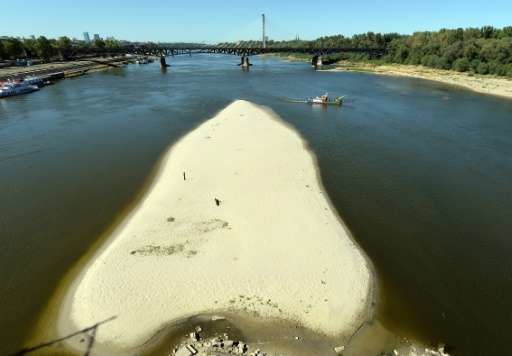
Poland's drought sinks Vistula River to lowest level in more than 200 years

drought poland, vistula river
Poland's largest river the Vistula is pictured at its lowest water level since 1789 because of a recent drought in Warsaw, on August 18, 2015
Poland's longest river, the Vistula, on Tuesday hit its lowest water level in more than 200 years because of a drought ravaging the country, a weather official said.

Its level in Warsaw fell to 50 centimetres (20 inches), the lowest since records began in 1789, according to Grzegorz Walijewski, a hydrologist at Poland's IMGW weather institute.

Question

Are great white sharks developing a taste for sea otters off the coast of California?

Image
California's sea otters (like the one pictured) are endangered and the shark attacks are becoming a worrying trend as more than 50 per cent of dead otters washed up now bear the marks of great white shark bites
Great white sharks are attacking and killing otters off the coast of California, leaving scientists baffled about why they appear to be preying upon the endangered creatures.

The development is a puzzle because sharks do not usually eat the small furry mammals, preferring the much fattier flesh of seals.

Biologists say more than 50 per cent of dead otters that wash up on California's coastline bear the marks of great white shark bites.

The trend is concerning conservation groups as California's sea otters are endangered.


It is thought that the sharks are not even eating the otters, but just biting them, with the otters dying from the wounds inflicted by the fearsome predator.

The reasons why are not clear, but experts suggest they may be 'exploratory bites' as the shark tries to work out what the creature is.

When dead sea otters are washed up, some of the bodies are sent to the State of California's Marine Wildlife Veterinary Care and Research Center in order to establish the cause of death.

Cloud Precipitation

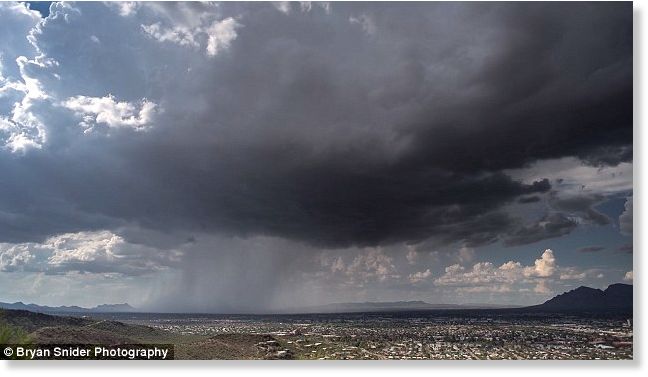
Time-lapse video shows the incredible power of a 'wet microburst' in Arizona

microburst
© Bryan Snider PhotographyWet microbursts are one of nature's most dramatic spectacles. A time-lapse, taken by Bryan Snider, reveals just how much water can be dumped by a microburst in just a few seconds
Wet microbursts are one of nature's most dramatic spectacles.

Like turning on a giant tap in the sky, these extremely localised downdrafts of air and rain can rapidly drench an area.

Now one cameraman has managed to capture this stunning weather phenomenon in action over the weekend in Tuscon, Arizona.

The time-lapse, taken by Bryan Snider, reveals just how much water can be dumped by a microburst in just a few seconds.

'A time lapse of a strong thunderstorm that dropped a couple of wet microbursts,' Mr Snider says in his video description.

'One in particular was captured really well in the time-lapse thanks to the sun peeking out to the west.

'Notice how the ball of rain falls from the sky and starts separating before hitting the ground

'Once it hits the ground you can see the power of microburst as it expands similar to the ripple you would see when you drop a stone in water.'


Red Flag

Bulls 7 Humans 0: Spate of deaths at Spain summer festivals

Image
Four people were killed by bulls over the weekend across the country
Bulls have gored seven people to death during festivals across Spain since the beginning of July - four of them over the past weekend.

The deaths occurred during bull-running in the streets, not in bullrings. It is an unusually high number of fatalities for such a short period.

Among them was a 36-year-old town councillor gored in Penafiel, a town near Valladolid, north of Madrid.

Further north an 18-year-old man gored in the stomach died in Lerin, Navarra.

The other deaths occurred during bull festivals in the regions of Valencia, Murcia, Toledo, Castellon and Alicante.

Last year more than 7,200 bulls and steers (castrated bull calves) were killed by bullfighters across Spain, the news website El Diario reports.

Cloud Precipitation

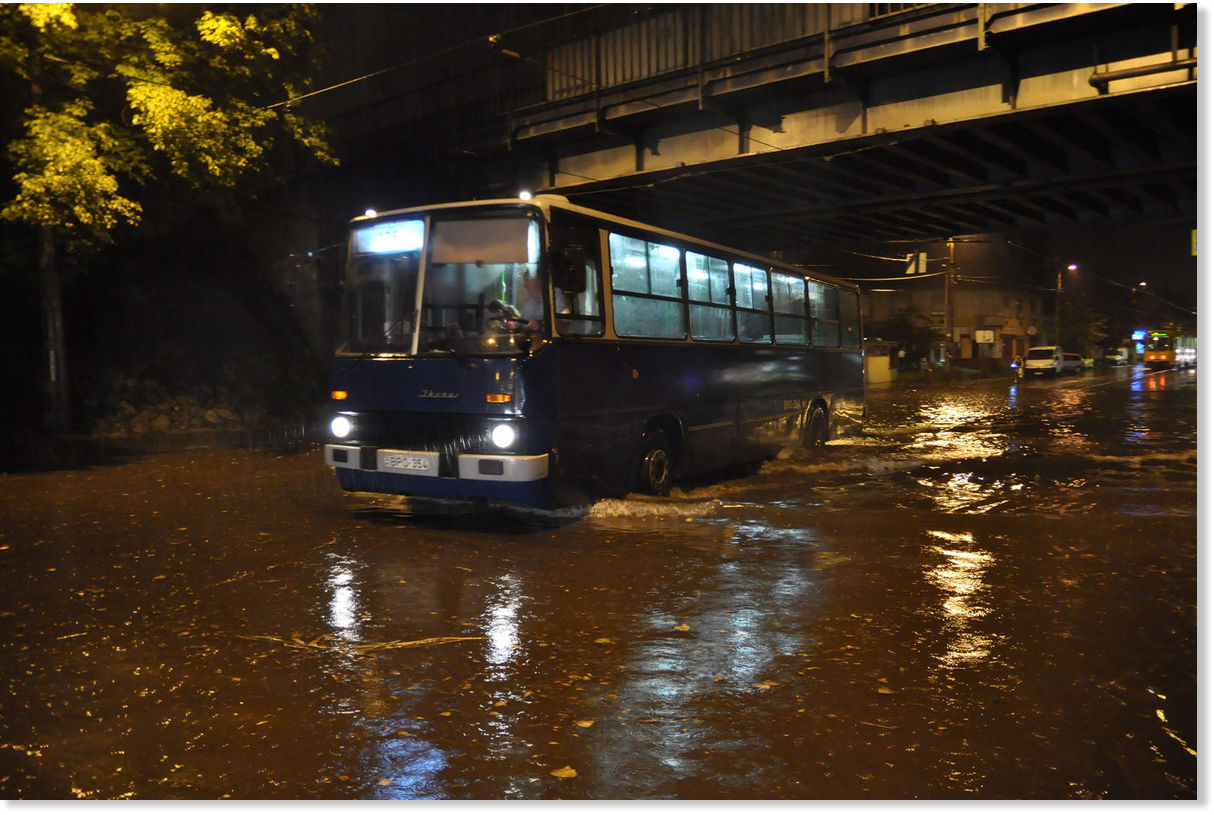
Downpour in Budapest, Hungary triggers flash floods, hits agriculture: 3 inches of rain in an hour

Image
© Zoltan Mihdak/EPAThe flooded Erzsebet Kiralyne road in Budapest, Hungary, on Aug. 17, 2015.

A downpour in Budapest triggered flash floods in the Hungarian capital, triggering power failures, while extreme weather elsewhere further damaged the country's already weakened agricultural industry.

Firefighters rescued stranded passengers from cars and helped pump water from flooded basements and subway stations across the city on Monday evening, the Emergency Services agency said in a statement on its website. No injuries were reported. Some people were evacuated from their homes.

The storm dumped more than 80 millimeters (3 inches) of rain in the span of an hour on Monday evening, more than the monthly average of 55 millimeters to 60 millimeters for August, the National Weather Service said on its website.


Bullseye

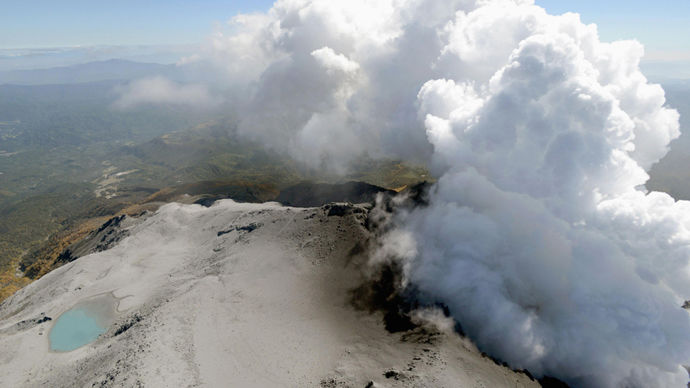
Darwin award? Japan dismisses numerous warnings from scientists regarding re-start of nuclear reactor amid increasing volcanic activity

Mt Ontake
© Reuters/KyodoVolcanic smoke rise from Mt. Ontake, which straddles Nagano and Gifu prefectures, central Japan, September 30, 2014.
We reported last October:

Scientists warned that an earthquake could take out Fukushima. The Japanese ignored the warning ... and even tore down the natural seawall which protected Fukushima from tidal waves.

Fukushima is getting worse. And see this and this.

Have the Japanese learned their lesson? Are they decommissioning nuclear plants which are built in dangerous environments?

Of course not!

Instead, they're re-starting a nuclear plant near a volcano which is about to blow ...

Comment: As predicted, Sendai nuclear plant threatened by active volcano


Umbrella

Waterspout filmed near Muskegon, Michigan

Image
Waterspout near Muskegon
The National Weather Service in Grand Rapids is reporting via Twitter that a waterspout was spotted over Lake Michigan offshore near Muskegon. Several FOX 17 viewers posted video and pictures of the funnel that formed about 8:30 pm to our Facebook page tonight.

The spout was part of a series of storms that is moving on-shore and across West Michigan. According to witnesses, it formed and quickly dissipated.


Cloud Grey

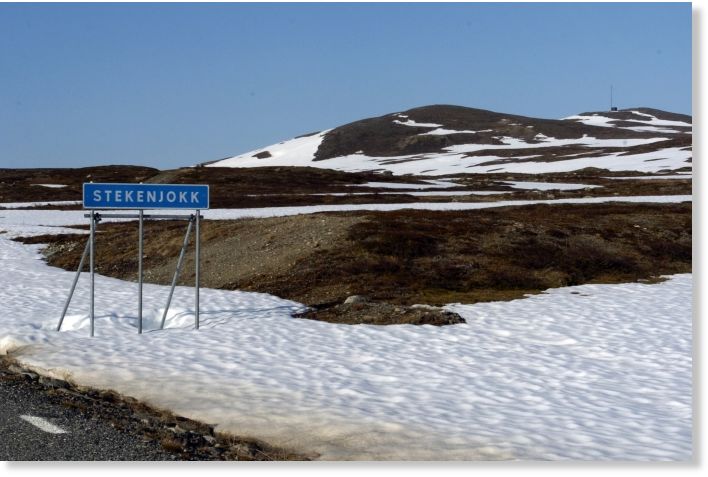
No summer this year in the north of Sweden

Image
"Hösten är här - de fick ingen sommar," reads the headline. "Fall is here - they had no summer."

A few days ago, we jumped from the spring right to autumn, says this story out of Sweden.

In Tarfala in Norrbotten was never any summer this year. Two days ago there was snow on the highest peaks, says Erik Holmlund of Tarfala Research. There is more snow than it has been for a long time.

The meteorological definition of fall is that the average daily temperature should be between zero and ten degrees for five days in a row, as has happened in Tarfala and also in Stekenjokk in Västerbotten.

It is rare to places skip a season in Sweden. When that happens, it is done in the mountains, according to meteorologist Alexandra Ohlsson at SMHI.

Cloud Precipitation

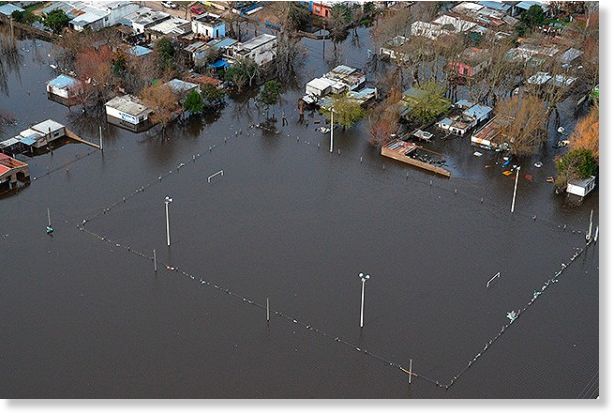
4,000 evacuated following flooding in 4 departments of Uruguay

Image
© Government of DuraznoFloods in Durazno, Uruguay, August 2015.
The national emergency department, Sistema Nacional de Emergencias (SINAE), in Uruguay, report that 4,158 people have been displaced by flooding over the last few days.

Flooding has been reported in the departments of Treinta y Tres, Soriano, Tacuarembó and Durazno, where 3,745 have been displaced. The displaced are being housed in temporary shelters in a sports stadium and the grounds of a local factory.

SINAE also report that flooding has damaged several roads and at least 5 national highways are blocked as a result.

Heavy rainfall over the last few days has increased river levels, in particular those of the Yi River in Durazno. According to SINAE, the Yi River stood at 11.52 metres on 16 August 2015, well above alert levels of 8.60 metres. As of today, river levels appear to be falling slowly.

The Uruguayan Institute of Meteorology (INUMET) issued mid level (yellow) alert for more severe weather today, particularly for the departments of Artigas, Rivera, Cerro Largo and Tacuarembó.