
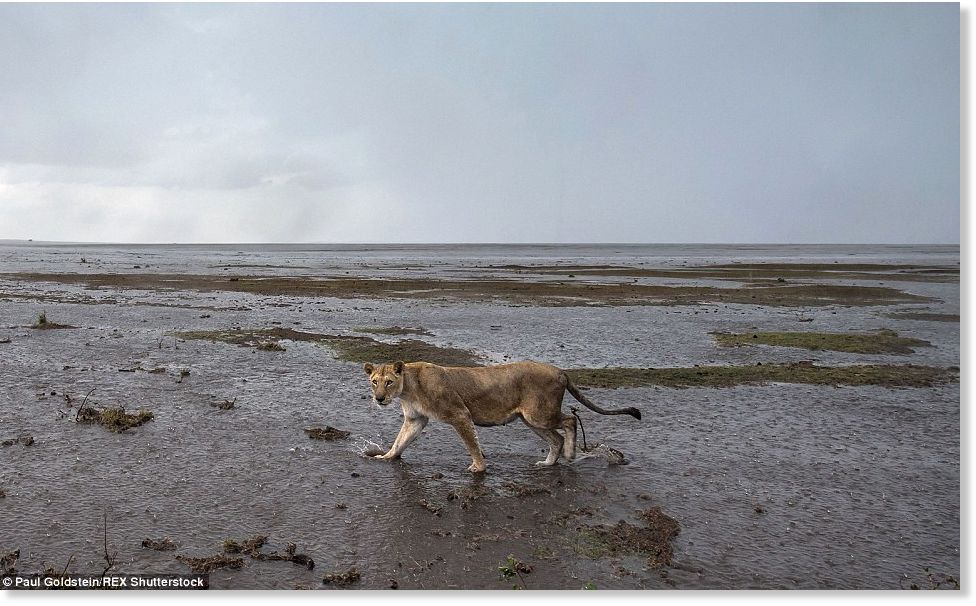
Thunderbolt and lightning: As the heavens open once more, the lioness makes her way across the muddy, watery plains
These stunning images taken last week show drought turned to flood on the national reserve in southern Kenya, and lone animals who did not make it to shelter in time.
They include a lioness teetering on a small mound of earth, before 'island hopping' between small patches of land still visible above the giant puddles. Another image shows a forlorn gazelle hunched and exposed to the heavy rains.
The images were taken by British wildlife photographer and guide Paul Goldstein, from Wimbledon, south London.
'Last week the drought in Kenya's Masai Mara was broken. Violently,' Mr Goldstein explains.

No way of staying dry: The lioness wades through the water which comes up her elbows













Comment: It's becoming very apparent that earth changes are capable of over-whelming different infrastructures, and without a devoted effort to acknowledge and address the problems there will just be more and worsening instances of failures that, while somewhat benign in this instance, will leave the door open to catastrophic consequences down the road.