
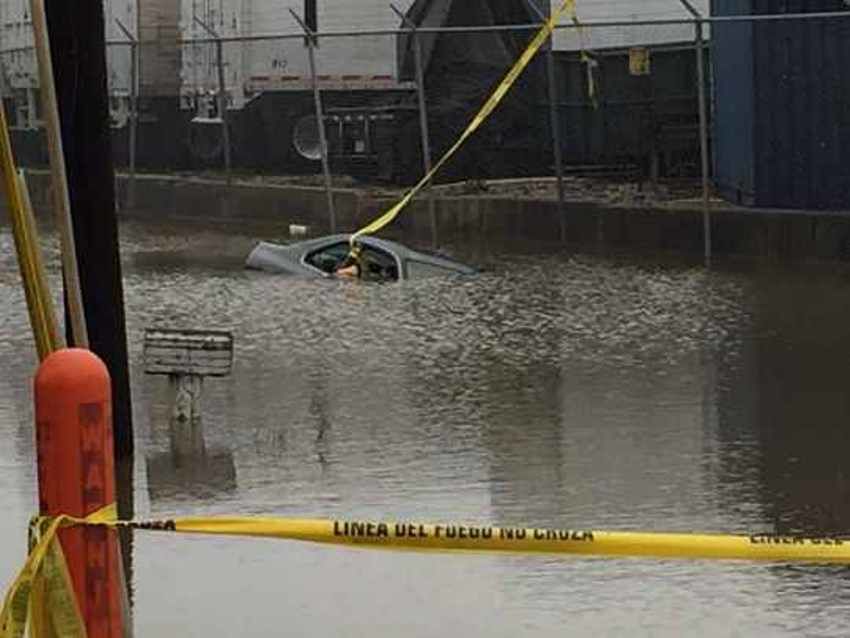
© Chance Horner, WFAAA nearly submerged vehicle in west Dallas. Swift water rescue crews did not find anyone inside.
Heavy rain across the south-central US has resulted in at least two deaths and one person missing in north Texas, with flood watches in effect as far north as St. Louis. Some areas received four inches of rain overnight as the storm moved northeast.
Rising floodwaters claimed the lives of two motorists who attempted to drive through high water in Johnson County, Texas, according to the Star-Telegram in Fort Worth. In Tarrant County, a sheriff's deputy was rescued by Fort Worth firefighters after she tried to assist a 70-year-old motorist whose car was lifted off a bridge by the flooding.
Deputy Krystal Salazar, 26, was found clinging to a tree two hours after she attempted to rescue the stranded senior, who is currently considered missing. Salazar was taken to a nearby hospital for treatment of minor injuries.




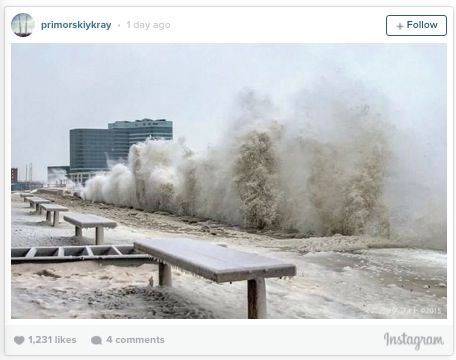


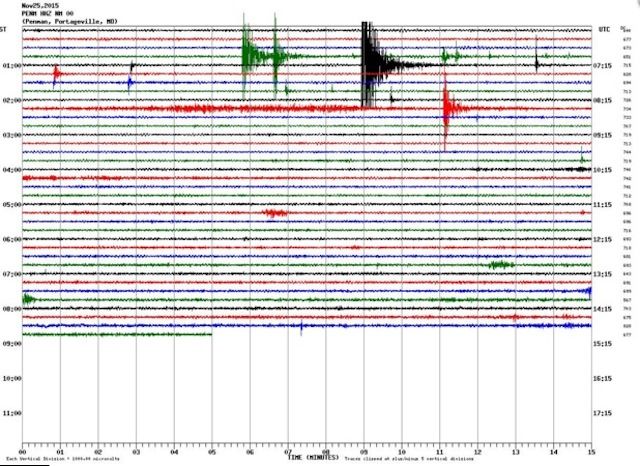
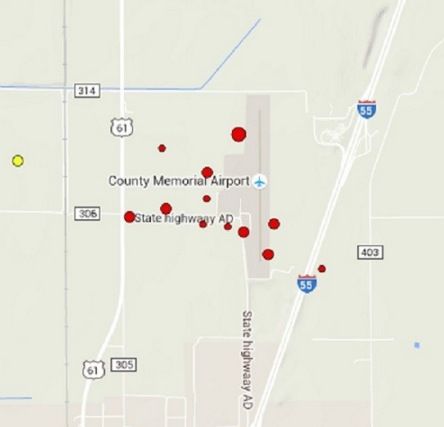










Comment: All over the planet rainfall records are being broken. Within the past few days Addu City in the Maldives experienced the worst floods in 40 years as 9 inches of rain fell in 12 hours; and Qatar and Saudi Arabia, both desert countries, were ravaged by torrential rains causing havoc. Qatar's capital Doha, recorded more than a year's worth of rain in one day.
We are observing increasingly chaotic and extraordinary weather events globally. See SOTT's Earth Changes video summary for October below.
SOTT Earth Changes Summary - October 2015: Extreme Weather, Planetary Upheaval, Meteor Fireballs