Earth ChangesS


Camera

Rare deep-sea squid caught on camera in Pacific Ocean

Rare whiplash squid
© NOAAThe majestic creature, which is around one to two meters long, is called Taningia Danae or whiplash squid. Experts said the sighting in September was a one in a million event as the whiplash squid is rarely seen alive.
This is the magical moment that National Oceanic and Atmospheric Administration scientists captured footage of a rare deep sea squid.

The majestic sea creature, which is around one to two meters long, is called 'Taningia Danae' or 'whiplash squid.'

As it descended to the sea floor of the Pacific Ocean in Hawaii on September 19, 2015 a remotely operated underwater vehicle caught it on camera.

Showing off a bright hue of pink as it swam through the deep blue ocean, scientists said it can emit a bright light. This, they believe, is used to blind prey, measure distance or signal courtship.

Experts said that the sighting in September was a one in a million event as the whiplash squid is rarely seen alive.

Scott France, Co-Science lead points out that the 'funnel on the lower side of the squid which looks like red lips is actually where water is taken in.'

Comment: As the number of volcanoes erupting right now is greater than the 20th century's YEARLY average, a comparable escalation in activity of their underwater counterparts seems logical. There has been a dramatic increase recently in seismic and volcanic activity, particularly around the Pacific Ring of Fire region.

It is estimated there are up to one million submarine volcanoes on our planet. Effects from this volcanic activity, combined with increased methane outgassing, radiation from the Fukushima disaster are probably also causing the ongoing devastation of marine life, mass fish die offs and strange migratory behaviour of rare fish we are currently witnessing.


Ice Cube

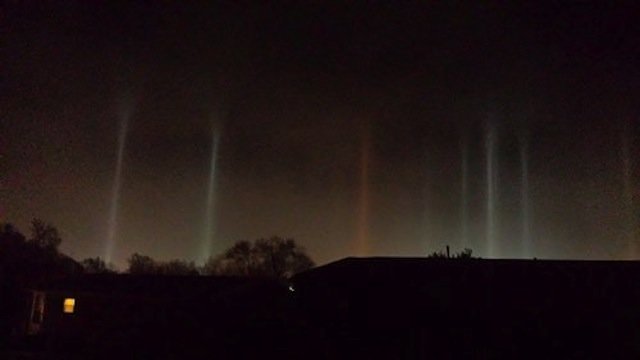
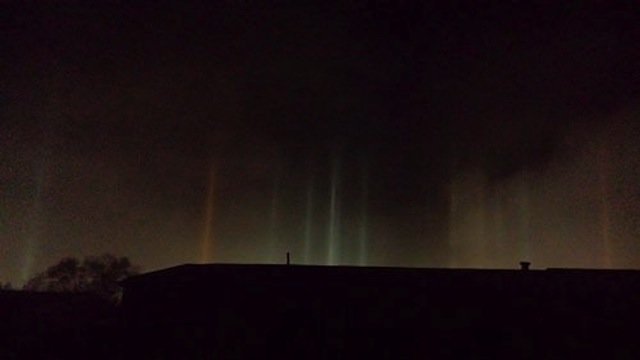
Rare 'light pillars' photographed over North Vernon, Indiana

Light Pillars Indiana
© Travis Branum
Travis Branum from North Vernon shared these beautiful, but eerie photos of giant vertical beams of colored light that appeared over North Vernon Indiana early this morning.

So what is it?

These are called "light pillars" and are pretty rare around these parts.
Light pillars Indiana
© Travis Branum
What caused it?

Light pillars are created through the reflection of light off of numerous tiny ice crystals .

According to Wikipedia:
"The crystals responsible for light pillars usually consist of flat, hexagonal plates, which tend to orient themselves more or less horizontally as they fall through the air. Their collective surfaces act as a giant mirror, which reflects the light source upwards and/or downwards into a virtual image. As the crystals are disturbed by turbulence the angle of their surfaces deviates some degrees from the horizontal orientation, causing the reflection (i.e. the light pillar) to become elongated into a column. The larger the crystals, the more pronounced this effect becomes. More rarely, column-shaped crystals can cause light pillars as well"

Magnify

New genus of plant bug, plus four new species from Australia

Restiophylus lyginiae
© Entomological Society of AmericaThis is Restiophylus lyginiae, one of four new species of plant bugs found in Australia.
A new genus of plant bug and four new species have been discovered in Australia.

The newly discovered insects, which belong to the family Miridae and the subfamily Phylinae, are described in the Annals of the Entomological Society of America.

Stephanie Leon and Christiane Weirauch, two entomologists from the University of California, Riverside, examined 761 specimens from museum collections and determined that some were mislabeled and were actually species that were not yet known to science.

The new genus is called Restiophylus. "Restio" comes from the host-plant association of most of its members with the plant family Restionaceae, and "phylus" indicates that it is classified in the subfamily Phylinae.

Attention

Youth killed by bear in Kashmir, India

Bear print
A youth was killed in South Kashmir's Anantnag district after he was attacked by a wild bear.

A police official said 20 year-old Showkat Ahmad Gorsi of Avil Gujjar Basti in Damhal Hanjipora area of the district was critically injured after a wild bear attacked him.

The official said the youth was rushed to hospital where doctors declared him brought dead.

Camera

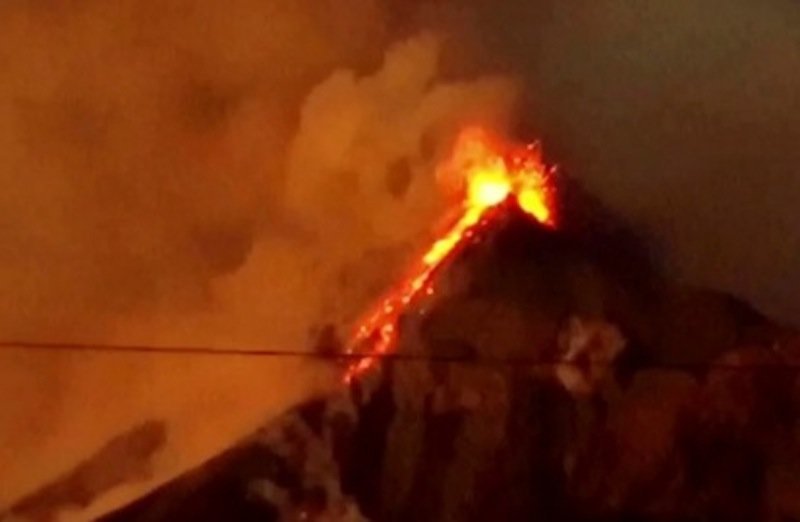
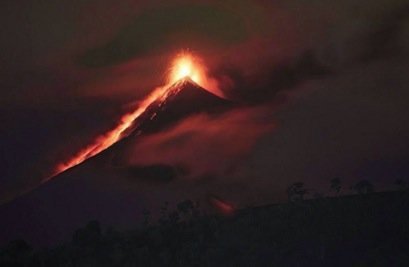
Guatemala's Fuego volcano enters new eruptive phase, increasing activity

Fuego volcano
© Via instagram/marco_ovandoWaking up to this!
An active volcano in Guatemala has entered a new eruptive phase, sending huge lava fountains into the air. With no evacuation measures announced, people living in the area have been able to capture breathtaking images of the volcano and share them with the world.

Volcan de Fuego - which translates as "the volcano of fire" - is located some 50 kilometers (31 miles) from the capital, Guatemala City. The volcano is experiencing a new peak in activity, with lava and smoke erupting from its crater, and ash covering the surrounding areas, AFP reported, citing the Guatemala Institute of Volcanology."The Fuego volcano is in a phase of high activity. Since Sunday morning the largest increase has been observed, [this] being the beginning of a new eruption," the institute said in a special bulletin.

Fuego volcano
© Via instagram/miguelealruiz-6 days ago
Lava fountains reached as high as 250-300 meters (up to almost 1,000 feet) above the crater, sending lava flows to a distance of up to 2,000 meters (6560 feet).The eruption is accompanied by strong explosions, observers added, saying that they are causing shock waves in the area.

The Fuego is also sending volcanic ash high into the air, with ash plumes reaching a height of some 4,800 meters (3 miles) above sea level. The ash is then traveling to the west and southwest from the volcano at a speed of over 13 kilometers (8 miles) per hour.

Comment: Guatemala has seen more recent activity in another one of its volcanoes. From December 1, 2015:


Cloud Precipitation

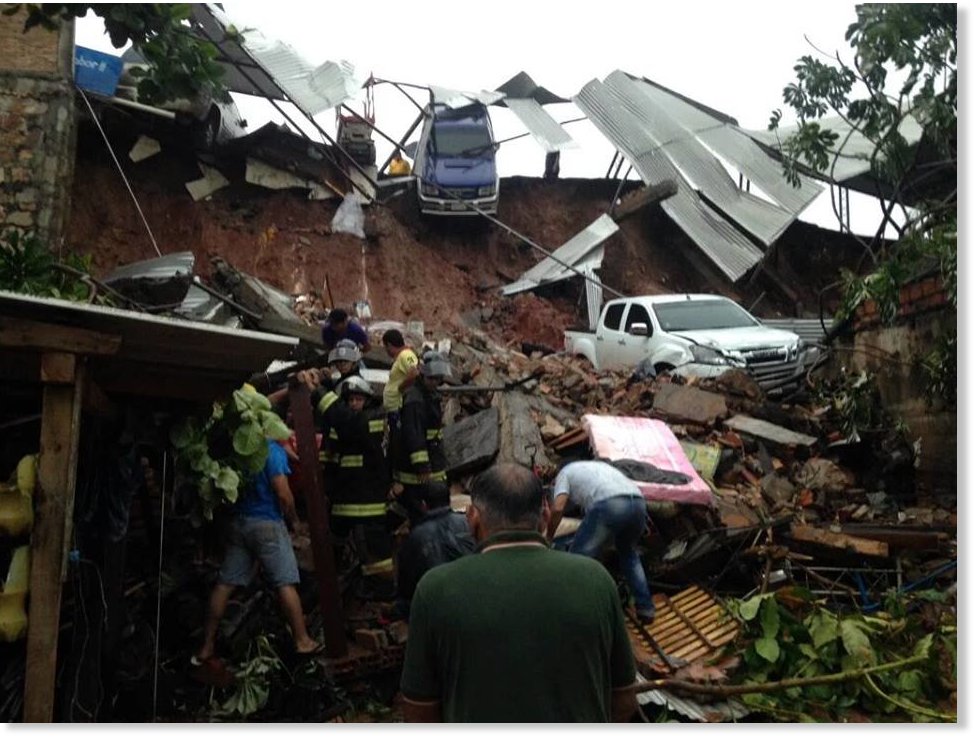
Most powerful storm in 18 years hits Paraguay

Landslide
© TwitterLandslide in Paraguay
That's the most powerful storm in the past 18 years of Paraguay.

The storm hit the capital and surrounding on Friday, December 4, 2015 and killed a boy and a baby. Moreover, drinkable water, electricity were and roads collapsed. The state of Emergency has been declared.

The storm mainly affected the capital city and the metropolitan area is the largest in the last 18 years according to wind and precipitation data.

The storm began at 4.20 am. of rain fell in just two hours and wind speeds reached 100 mph.


Red Flag

Massive natural gas leak in Southern California could take months to plug

leaking well in SoCal
© California Air Resources Board
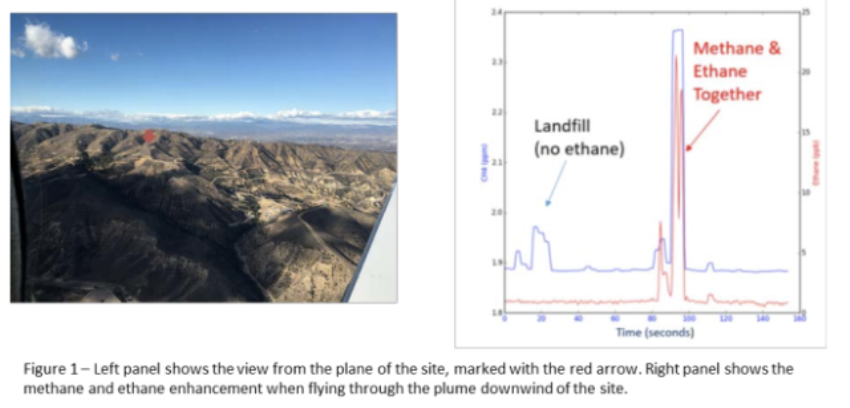
Outside of a San Fernando Valley neighborhood northwest of Los Angeles, Southern California Gas Company sprung a leak in one of its natural gas wells on October 23.

Just last night at a Los Angeles City Council meeting, the CEO of the private utility said that it could be three to four months before SoCal Gas can plug the underground leak, which has sent tens of thousands of kilograms of methane per hour seeping up into the air.

According to Reuters, SoCal Gas is one of the biggest gas utilities in the country. Its natural gas storage field at Aliso Canyon is the second biggest storage area in the country after a location in Montana.

The gas leaking up into the air above the well is primarily composed of methane, "a potent greenhouse gas," the California Air Resources Board (CARB) wrote in a preliminary estimate of emissions published on November 20. "The global warming impact from methane is 25 times and 72 times that of CO2, for equal amounts by weight, over a 100 year and 20 year timespan, respectively," the report added. "Due to methane's powerful impact and short life compared to other gases, it represents an important element in reducing the near-term effects of global warming."

Comment: Incidences of methane outgassing, or suspected outgassing are becoming disturbingly frequent. Another sign of impending earth changes? A small sample includes:


Cloud Precipitation

Northwestern UK floods require emergency measures

flood
© www.magic937.fmFlooded road in Appleby, northwest England, courtesy Storm Desmond, December 5, 2015.
Heavy floods in Britain's northern regions on Sunday forced the country's emergency response committee to call an urgent meeting to study the situation in affected areas. The meeting was called after prolonged heavy rain caused widespread flooding in northwest England and forced emergency services to evacuate residents from their homes.

Environment Secretary Elizabeth Truss said the government committee had been called to "urgently assess the scale of the floods and ensure the response remains coordinated, effective and gets help to those affected as quickly as possible," Reuters reported.

Reports say storms battered the country overnight, killing one man and leaving hundreds of homes flooded and without power. Police declared a major incident and coastguards were called in to rescue stranded residents.

Britain's national weather service, the Met Office, said in one of the worst affected areas 201.8 millimetres (7.94 inches) of rain had fallen on Saturday - only slightly below the 215 mm usually seen during the whole of December. Gusts of wind reached 90 miles per hour, a spokesman said. The worst of the storm responsible for the flooding, named 'Desmond' by the Met office, had passed according to forecasters but more wet weather was expected in coming days.

Arrow Down

Motorcyclist talks about his 'dive' into huge sinkhole in Kempton Park, South Africa

Watery sinkhole
Bystanders help Eugene van der Walt to get his bike out of the hole.
A 46-year-old motorcyclist had a lucky escape on Thursday morning when he drove into a deep hole at the intersection of Monument Road and Commissioner Street.

But as big as his surprise was when he suddenly disappeared underneath the water, so much bigger was a motorist's surprise when a man suddenly appeared from what he believed to be a big pool of water on the road.

Eugene van der Walt (46) spoke to Express on the scene. He said he was on his way to Gavendish Glen on his Scrambler when he drove into the hole.

"I was on my way to draw money and had just polished my bike, as I was going for my driver's licence. When I got to the intersection, the light was green for me.

"I saw a lot of mud and water and thought I would drive through it slowly, because I didn't want to get my bike dirty. Next thing I knew I was underwater, it felt like I was drowning," said Van der Walt.


Cloud Precipitation

One person killed as Storm Desmond causes chaos across UK

storm desmond
© Phil Noble / Reuters
A man has died as Storm Desmond tore through Britain, bringing strong winds and heavy rain which caused Cumbria to declare a major incident.

The 90-year-old man, who died near Finchley Central station, north London, is believed to have been blown into the side of a moving bus by a gust of wind, a Scotland Yard spokesman said.

The Environment Agency declared 130 flood warnings, while residents in parts of Cumbria were evacuated from their homes.

The deluge left streets lined with terraced houses looking more like rivers as rescue teams set off in rubber dinghies to rescue stranded locals.

Bridges collapsed, rivers burst their banks and landslides were triggered as torrential rain swept through large swathes of the north of England and Scotland.

Prime Minister David Cameron said on Twitter: "My thoughts are with all affected by Storm Desmond. Teams are working to ensure swift response and help for those who need it."

Cumbria was the among the worst affected by the onslaught, and British Red Cross teams set up rest centres in Keswick, Appleby and Kendal, while medical groups issued an urgent call to draft in extra doctors amid fears the storm could cause casualties.