
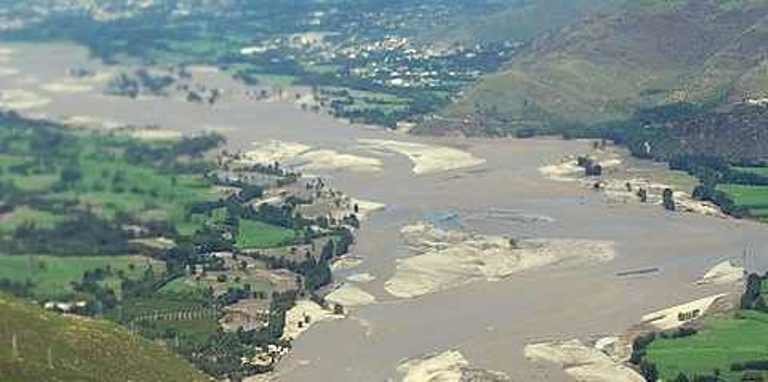
© DVIDSHUB/Public DomainSwat Valley Bridge ruined by flood water in 2010.
Most of the fatalities have been reported from the northwestern Khyber Pakhtunkhawa (KP) and the southwestern Balochistan provinces, where heavy rainfall and flashflooding have isolated entire villages, damaged roads and caused homes to collapse.
At least eight miners were killed and many others were trapped when a coalmine collapsed in northwest Pakistan on Saturday. The coalmine caved in due to heavy rain in Lower Orakzai Agency in country's tribal belt.
The current death toll includes at least eight children, according to local health officials.
Local television channels showed gushing rainwater inundating homes — with residents taking refuge on rooftops — in Quetta, Zhob, Taank, Pishin, Loralai, Chaman, Chagai, Mastung and other districts.
Accompanied by thunder and hailstorms, heavy rainfall caused several homes to collapse in the Mastung, Khyber Agency, Chagai and Zhob districts, killing 12 people and injuring scores of others.













Comment: New Sott Report: Strange Noises in the Sky: Trumpets of the Apocalypse?