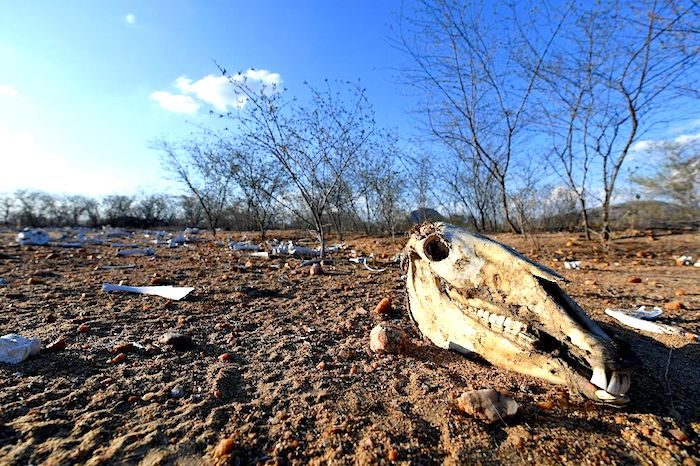
© AFP/Evaristo SARemains of donkeys and cows during the region's worst drought in a century.
A cow's skull lies baking in the sun and nearby another dead cow rots, symbols of the
desolation gripping northeastern Brazil during its worst drought in a century.Farmer Kerginaldo Pereira, 30, walks through the dust and cactuses in dismay. There are in all about 30 skeletons of cattle, donkeys and other farm animals in a sort of open-air cemetery set aside in his settlement of Nova Canaa, in Ceara state, to avoid spread of disease. "Most are animals that died of thirst or hunger. Sadly, that's the reality. So many animals have died in these five years of drought," Pereira told AFP.
The semiarid northeast of Brazil, known as the Sertao, is use to rain shortages
but no one can remember a drought like this. There has been almost no rain since 2012 and the leafless, desiccated landscape has the appearance of having been in a vast fire. Rivers and reservoirs that used to serve rural populations are not coping. The authorities estimate that
reserves are at six percent capacity, with some completely emptied.Experts say that
a cocktail of factors has produced the disaster: a strong El Nino in the Pacific, heating of the north Atlantic and climate change that has seen temperatures in Ceara rise by 1.3 degrees Celsius (2.4 degrees Fahrenheit) in 50 years.








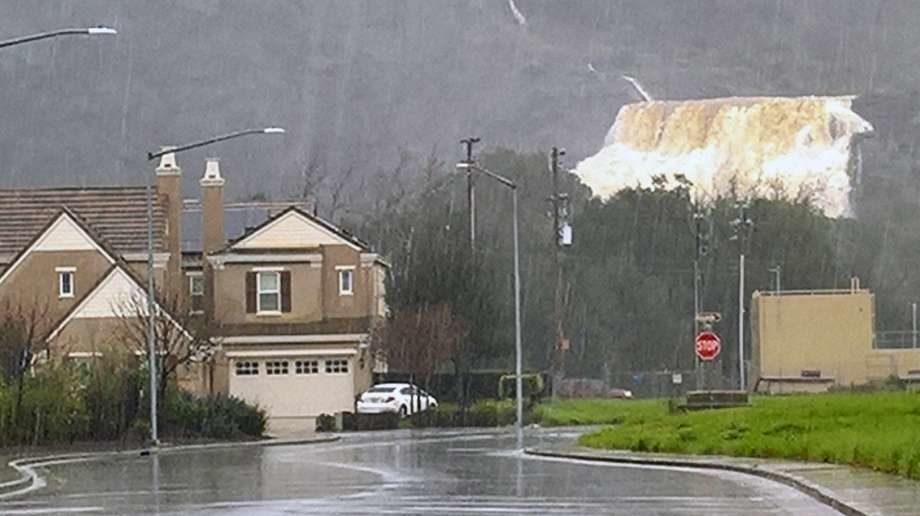



Comment: Record rainfall is straining California's whole flood control network. Yesterday the gates at Shasta Dam were opened for the first time in 19 years to ensure they worked properly. The event has happened only twice in 34 years - in 1998 and 1983. Don Bader, area manager for the U.S. Bureau of Reclamation, which operates the dam said, "If this next series of storms comes through, then we very may well need to use them."