
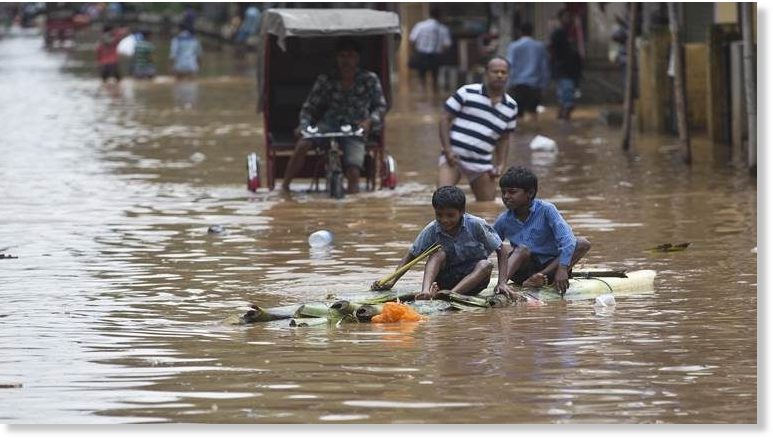
© APChildren on a makeshift raft make their way through a flood waterlogged road in Guwahati.
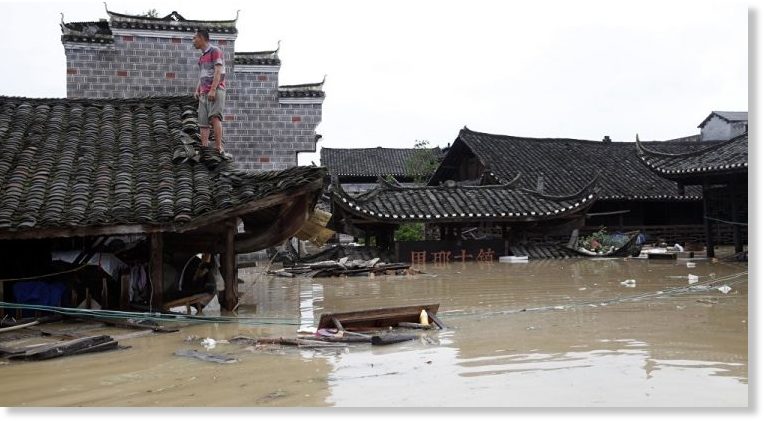
At present, water levels in Imphal river and Nambuk river are dangerously high and are overflowing. Several houses in Kangpokpi district were vacated because of the flood-like situation according to Assam Tribune. The villages in Senapati district also lost connectivity after the roads were washed away in floods.
Water has also flooded some portions of the National Highway that connect Nagaland and Manipur to Assam. Vehicular movement has been stopped on the highway as of now. Rain has also destroyed standing crops in many places. As a result, prices of basic commodities like food and water have seen a surge.















Comment: Plankton growing rapidly in ocean seen as sign of carbon dioxide loading