

A boy stands next to a car crushed under rubble near the port of the Greek island of Kos following a 6.5 magnitude earthquake which struck the region on July 21, 2017
The 6.7-magnitude tremor also left hundreds more injured in the Turkish resort of Bodrum, about 20 kilometres (12 miles) across the sea from Kos.
"Given the amount of people outside at the time, having only two victims is a miracle," deputy Kos mayor David Yerasklis told Kathimerini daily.
The undersea quake struck at 1:31 am Friday (2231 GMT Thursday) between Kos and Bodrum.
At the time, tourists in both places were out enjoying the nightlife.
On Kos, a wall collapsed on people in the courtyard of a nightclub, killing a 22-year-old Swede and a 39-year-old Turk.

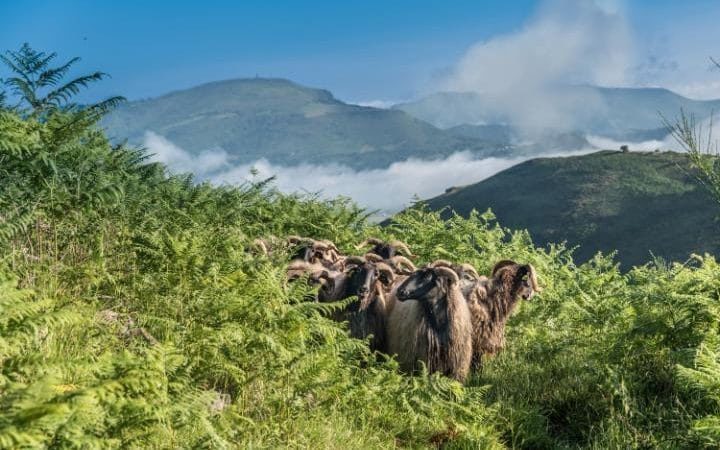











Comment: There's some doubt on the bear attack theory. Any farmer in the Pyrenees with sheep dead from unknown causes, i.e. where they are found dead with no evidence of animal attack, would most likely try to push the "bear said boo!" angle. These kinds of government/EU subsidies and compensation have been exploited by farmers and others across the EU for decades.
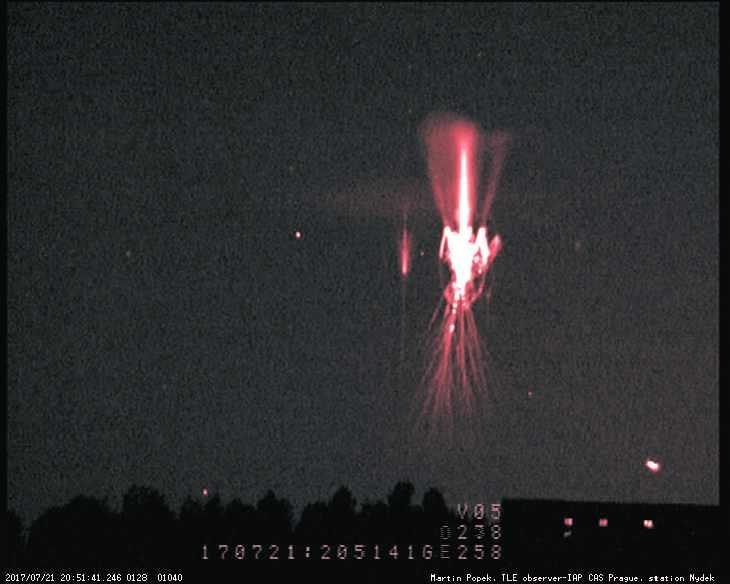
Although a bear attack can't be ruled out, we can suspect that the incident was created by a "weather event" or something that created a high impact explosion, like a sonic boom or lightning strike. Sheep have acute hearing and are prone to "instantly scatter" away from heavy percussion and the source of the vibration. Many of the sheep were found to have dispersed over the mountains. It's dubious that a bear attack would create that type of a reaction.
On the other hand, the Spanish news agency Europa Press said that bear fur had been found on one of the dead sheep. The fur would be analysed to try to establish exactly what had happened. But this is a bit strange that bear fur can be found so opportunely on a sheep. Another possibility is that the bear didn't come along afterwards and the sheep were spooked by something else.