Earth ChangesS


Attention

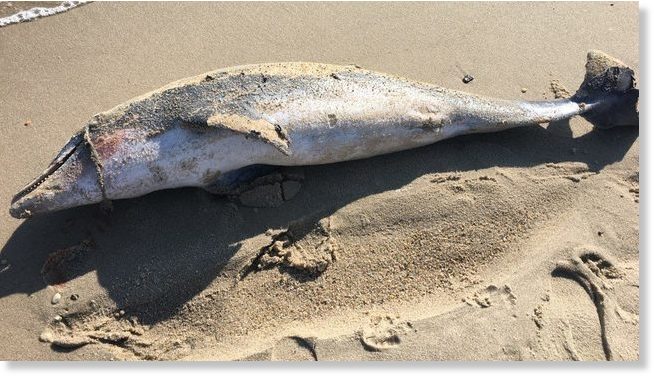
Increase in dead dolphins noted on Delaware beaches with 13 so far in 2018

dead dolphin
With summer just days away, more folks will be heading out to the beach. However, it hasn't been smooth sailing for everyone on the coast.

This year 13 dead dolphins have washed on to Delaware beaches. Marine officials say they usually see an average of 18 dolphins a year come on to the shore, but believe they are seeing a slight uptick this year with the current total.

Officials from the MERR Institute say they are having a hard time pinpointing what is causing their death because of the conditions the carcasses are in when they wash up.

"We need to get to it within 12 hours of death, that is really rare because often they die out at sea and takes time to wash in to shore. Even a moderately decomposed animal can possibly yield good results but most of what we're seeing are animals in advances states of decomposition... and there is very little left for us to sample," says Suzanne Thurman, the Executive Director for the MERR Institue.

Attention

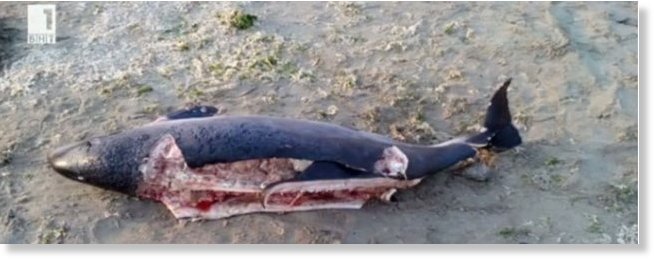
15 reports of dead dolphins in a month at Varna, Bulgaria

Dead dolphin
Dead dolphin
About 15 reports of dead dolphins found on the coast of Varna were received in May alone at the Green Hotline of the Regional Inspectorate of Environment and Water (RIEW), Focus Radio reported. The following on-the-spot checks of environmental inspectors found that four of the tips were unfounded. The most reports referred to dead dolphins washing ashore the Kabakum beach.

One caller reported a dead baby dolphin on the beach in Asparuhovo district. Article 39 of the Biodiversity Act stipulates that dead specimens should be left in the places where they have been found, the RIEW states in its monthly report.

Tornado2

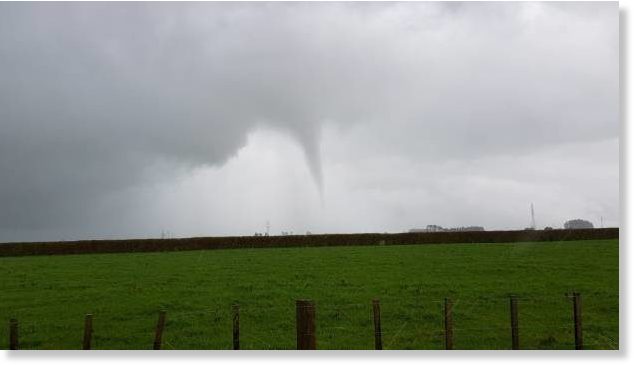
Tornado touches down in North Taranaki, New Zealand while region is hammered by thunderstorms, wind and tablespoon-sized hail

A twister tears through Taranaki in this picture taken by Geoff Christophers.
© Geoff ChristophersA twister tears through Taranaki in this picture taken by Geoff Christophers.
An amateur photographer captured the moment a tornado came tearing through North Taranaki on a day of wild weather that also brought gale-force winds, thunderstorms and hail the size of tablespoons.

Geoff Christophers was driving on State Highway 3, towards New Plymouth, about 2.10pm on Monday when he saw the tornado.

"I was just before the Methanex plant and it appeared to pass somewhere near. It crossed the road in front of me, perhaps half-a-kilometre away," Christophers, an employment placement manager, said.

"I pulled over to the side of the road and it was a few paddocks away to the south.

"It looked pretty cool," he added.

"You don't see twisters every day in New Zealand."


Doberman

Pack of 4 stray dogs maul toddler to death in Chandigarh, India

canine attack
© Angela Antunes / CC by 2.0
A pack of four stray dogs attacked and mauled to death an 18-month-old boy at a park in Sector 18 on Sunday.

The toddler, identified as Aayush, was playing in the park with his three elder siblings while their mother, who is a domestic help, had gone to work at a nearby house, said police. The family lives in Palsora.

The victim's maternal uncle, Popat Lal, said Aayush was at the lower end of a swing when the dogs started barking aggressively at him and then attacked him around 11:30am.

"The whole incident lasted for nearly eight minutes. The dogs dragged the boy into a puddle of water that had accumulated in the park after the overnight rain and mauled him," said the uncle. "The other siblings ran away in fear."

Snowflake Cold

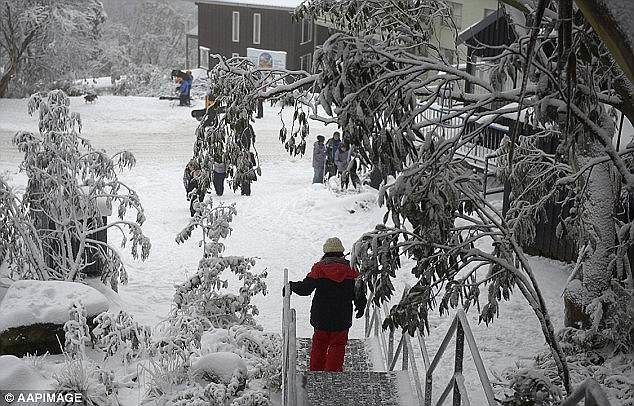
Australia hit with extreme cold front as snow hits and people are warned of dangerous conditions

Australia's south east was swept with feverishly cold temperatures
© AAP IMAGEIn the early hours of Sunday morning Australia's south east was swept with feverishly cold temperatures
PLUMMETING temperatures have caused freezing conditions and snow across the country - and more severe weather is coming.

A FREEZING cold snap has blanketed parts of the country in fluffy white snow.

Australians have packed on the layers as icy chills continue to blow across southeast Australia thanks to the cold front that's been pushing through the Great Australian Bight since Wednesday.

Severe weather warnings have been issued for parts of New South Wales today as strong gusty winds with cold temperatures and showers are forecast.

The Bureau of Meteorology said a complex low over the Tasman Sea was directing a "vigorous westerly airstream" over NSW ahead of a south to south-westerly change which would move along the coast today.

Damaging winds averaging 60 to 65km/h are predicted with peak gusts of more than 90km/h.

A south to south-westerly wind change is forecast to move along the coast, reaching the Hunter coast by late morning.

Showers may bring damaging wind gusts along the coastal fringe in areas including Gosford, Newcastle, Sydney and Wollongong.

Comment: Some other 'global cooling' reports from around the world in the past two weeks include: June 2018 is already showing signs of Grand Solar Minimum intensification.


Seismograph

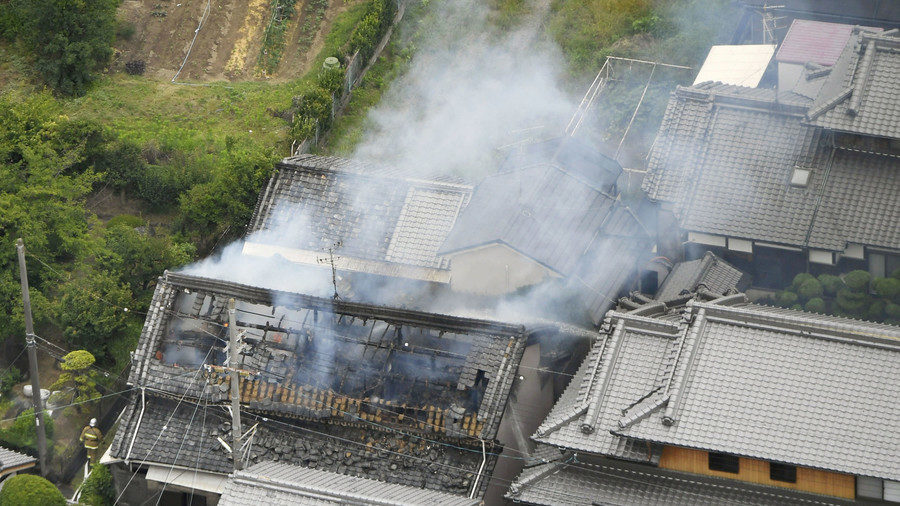
At least 3 killed, 200+ injured after 6.1 magnitude earthquake strikes Osaka, Japan

Osaka earthquake
© Kyodo via Reuters
At least three people have been confirmed killed and more casualties are feared, after a magnitude 6.1 earthquake hit north of Osaka Prefecture in western Japan, local media report.

An 80-year-old man and a young 9yo girl were killed in Japan, crushed by collapsing walls, public broadcaster NHK reported. Several others are reported in a state of "cardiopulmonary arrest," a condition usually used by Japanese authorities until a formal examination has been conducted to confirm death.

At least 217 people were injured, mainly across the northern Osaka and neighboring prefectures, the broadcaster reports, citing data from local police and fire departments

Some 170,000 households remain without power in Osaka, as well as neighboring Hyogo prefecture, according to local electricity operator Kansai.

Life Preserver

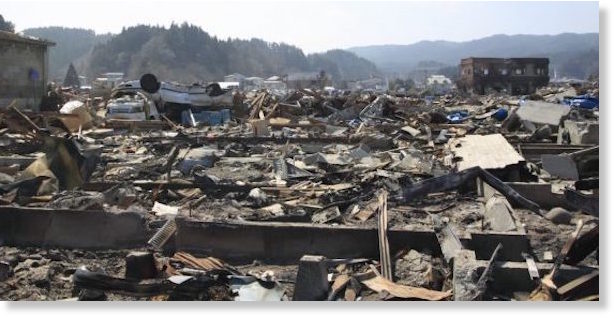
U.S. environmental disaster zones: Are you living in a disaster-prone area?

disaster zone
With constant media bombardment of fears of a nuclear war, many have begun to prepare for a disaster. But government uncertainty isn't the only thing on the minds of the masses. Volcanic activity appears to be increasing and earthquakes seem to be getting more severe. That begs the question: do you live in a disaster zone?

In just the past 16 years, parts of Louisiana have been struck by six hurricanes. Areas near San Diego were devastated by three particularly vicious wildfire seasons. And a town in eastern Kentucky has been pummeled by at least nine storms severe enough to warrant federal assistance. These are obvious red flag areas, but what about the rest of the country?

The New York Times has put together a map showing which areas in the United States were subjected to the most disasters which caused monetary losses by ZIP code between 2002 - 2017.

Ladybug

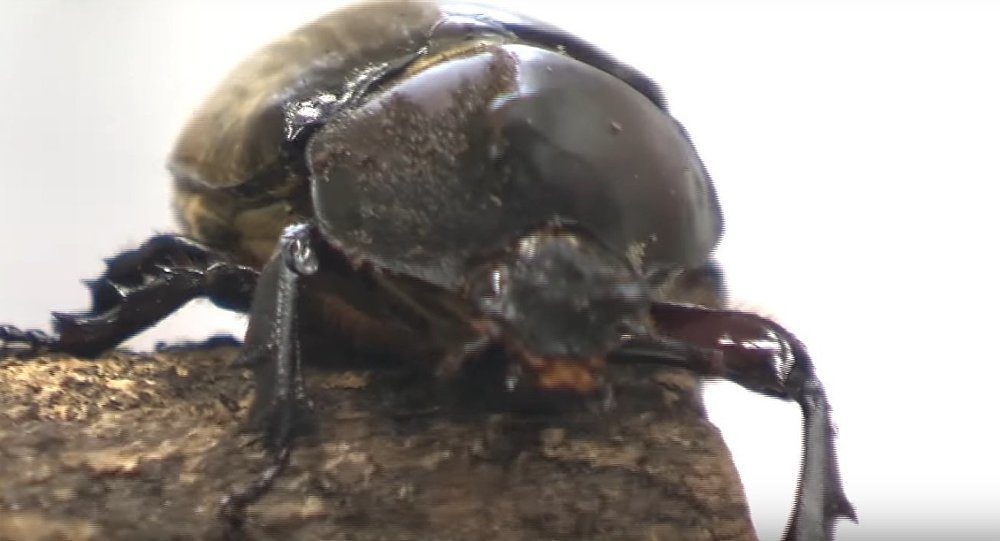
A rare hermaphrodite beetle born in Japan

Hermaphrodite beetle
© YouTube/NHK WORLD-JAPAN
The rhinoceros beetle was found in Okayama Prefecture in June. The left side of its body is male and the right side is female. The females of this species do not have horns and their legs are shorter. This following video was broadcast by the NHK channel.

The insect is half female, half male.

Info

Adapt 2030 Ice Age Report: Gemstones and octopus fall from the sky, glaciers grow in Africa

Green gemstones
Green gemstones
Green olivine gemstones are falling from the sky in Hawaii as the erupting Kilauea vent is now send gemstones up 12,000 feet with the ash and when it comes down, you can find a bowl full if you look for 30 minutes.

A ferocious line of wind and waterspouts in china dropped octopus, shrimp, starfish from the sky miles inland.

Kilimanjaro glacier grows after massive record breaking rain season in Eastern Africa.


Sources

Tornado1

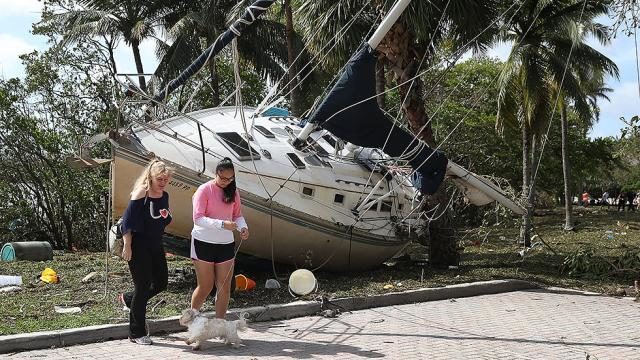
Not Global Warming: Extreme weather in the US rapidly increasing in frequency and severity

boat grounded from storm
© Getty Images
The last year has brought record-breaking natural disasters of all shapes and sizes to the U.S., from massive hurricanes in the Gulf to wildfires and flash-flooding in the Pacific. Though isolated in time and space, it would be an oversight to consider these events entirely unrelated.

For years, climate scientists have been predicting more extreme weather as carbon emissions increase and global temperatures rise. And what we're seeing is exactly that, producing wreckage well beyond your every-few-years event. Let's have a look at the last 12 months.


Comment: The climate is growing stranger and more extreme by the day, but it's not global warming and it's not caused by CO2: Cosmic Climate Change is Underway


Comment: For a more in-depth analysis of what's actually going on, see: Forget About Global Warming: We're One Step From Extinction!