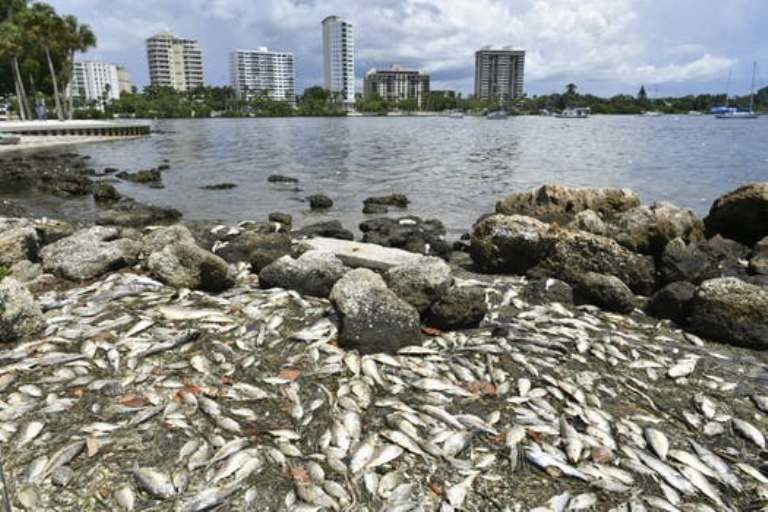
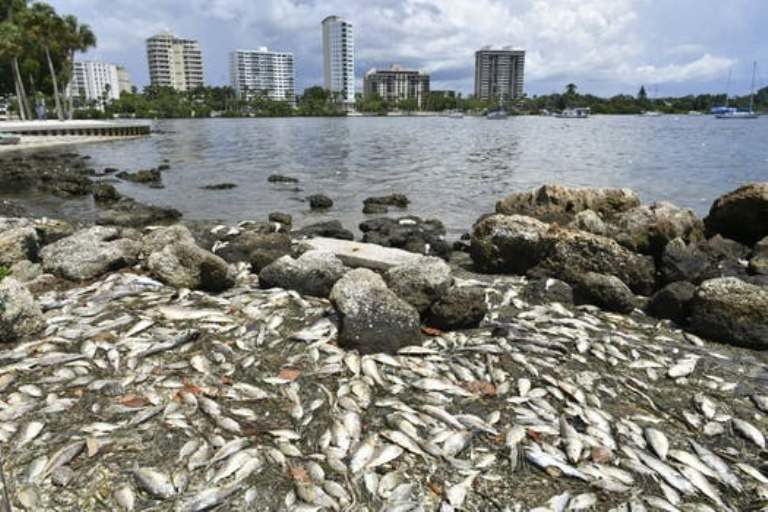
© MIKE LANG – ASSOCIATED PRESSDead fish in Sarasota, Fla., in August. Experts say Hurricane Michael failed to break up a patchy and toxic algae bloom in the Gulf of Mexico off Florida.
Hurricane Michael failed to break up a patchy and toxic algae bloom that has lingered in the Gulf of Mexico off Florida's shoreline for the last year, experts said Monday, meaning the red tide outbreak could continue to cause problems in the weeks ahead.
Hurricanes can break up algae blooms, but they also drop fresh water and increase nutrient-rich runoff from land, which can make them worse, said Robert Weisberg, a professor of physical oceanography at the University of South Florida.
Michael blew red tide at the water's surface into shore, but deep ocean currents that have been feeding the bloom since the summer also have persisted, he said.
"The factors that contributed to red tide outweighed the ones that would reduce it," Weisberg said.
The red tide began last October off southwest Florida after Hurricane Irma swept up the state,
killing massive numbers of fish, along with scores of sea turtles and the state's beloved manatees.
The bloom also causes respiratory irritations in people which, coupled with the stench of rotting marine life, sent many tourists inland away from the beaches, seaside attractions and restaurants with outdoor seating.
The bloom then seemed to spread up the Gulf coast into Florida's Panhandle over the summer, and finally around the Miami area on the east coast earlier this month.








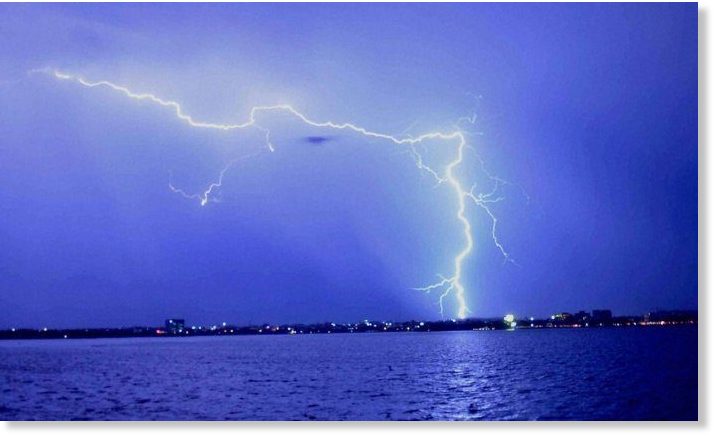





Comment: On the same day 2 women were also killed by lightning in the Indian state of Tamil Nadu.