OF THE
TIMES

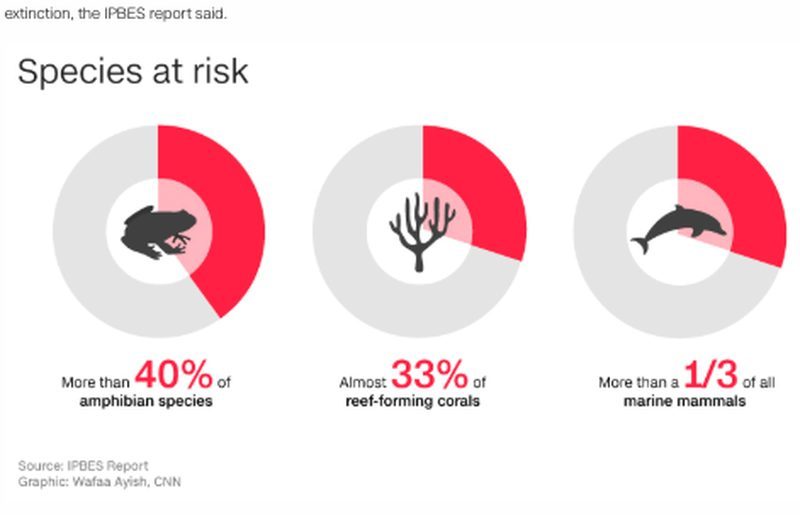
"The overwhelming evidence of the IPBES Global Assessment, from a wide range of different fields of knowledge, presents an ominous picture," said IPBES Chair, Sir Robert Watson. "The health of ecosystems on which we and all other species depend is deteriorating more rapidly than ever. We are eroding the very foundations of our economies, livelihoods, food security, health and quality of life worldwide."Almost 150 researchers from 50 countries with inputs from another 310 contributing authors, worked for three years to assess climate change over the last five decades, constructed a comprehensive understanding of the relationship between industrialization and their impacts on nature.
"The report also tells us that it is not too late to make a difference, but only if we start now at every level from local to global," he said. "Through 'transformative change,' nature can still be conserved, restored and used sustainably - this is also key to meeting most other global goals. By transformative change, we mean a fundamental, system-wide reorganization across technological, economic and social factors, including paradigms, goals and values."
"The member States of IPBES Plenary have now acknowledged that, by its very nature, transformative change can expect opposition from those with interests vested in the status quo, but also that such opposition can be overcome for the broader public good," Watson said.