Earth ChangesS


Cloud Precipitation

'Not ordinary rain': Indonesian capital Jakarta inundated, death toll hits 53, 170,000 people displaced - UPDATES

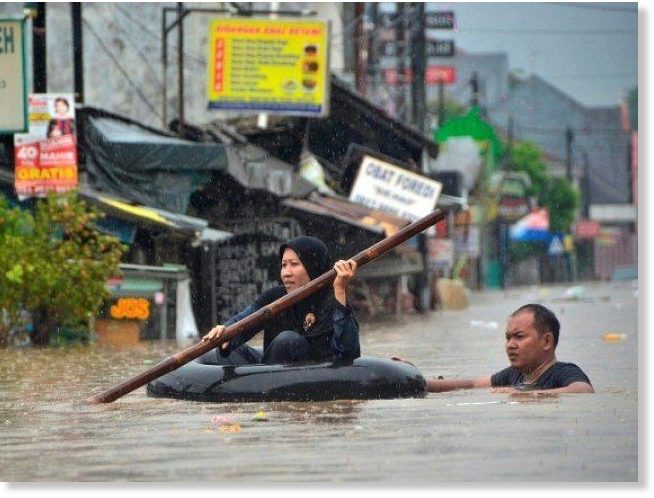
A woman paddles through flood waters on an inner tube in Bekasi, near Jakarta.
© AFPA woman paddles through flood waters on an inner tube in Bekasi, near Jakarta.
Four people died as Indonesia's capital was hit by flooding, a disaster agency official said Wednesday, while local media reported landslides sparked by torrential rain on New Year's Eve had killed several more residents.

Electricity was switched off in hundreds of waterlogged neighbourhoods across Jakarta, home to about 30 million, with some train lines and one of the city's airports also shut.

A 16-year-old was electrocuted by a power line, while three more people died of hypothermia, said Jakarta disaster management agency head Subejo.


Comment: Update 2 Jan

The BBC reports:
At least 21 people have died in flooding in the Indonesian capital, Jakarta, after the city had its most intense rainfall for at least 24 years.

The Meteorology, Climatology and Geophysics Agency (BMKG) measured 377 millimetres of rainfall in a day at an airport in East Jakarta.

That's the most most rain in a single day since at least 1996, when records supplied by the agency began.

"The rain falling on New Year's Eve... is not ordinary rain," said the agency.

The agency said the intensity of the rain was due to several factors including the monsoon season as well as a high amount of water vapour in the air affecting cloud formations over Java island.

The heavy rainfall is expected to continue until the weekend.

Elsewhere in East Jakarta, 335mm was recorded, while in Bekasi, further east, 259mm fell.

Rainfall above 150mm per day is considered extreme by the agency.

Maximum rainfall intensity during major Jakarta floods
jakarta rain
© Meteorology, Climatology and Geophysics Agency (BMKG)
The intense rain began on New Year's Eve and continued through the night leading to parts of the city being submerged and landslides on the outskirts.

The victims ranged in age from 8 to 82. Some died of hypothermia, while others drowned or were killed by landslides. Two of the dead are from Lebak, south-west of the capital.

One 16-year-old boy was electrocuted by a power line.
Update 3 Jan

Floodlist reports:
As many as 47 people have now died as a result of the massive flooding in Jakarta Metropolitan Area in Indonesia on 01 January, 2020. Indonesia's National Disaster Mitigation Agency (BNPB) said that 409,000 people have been affected by the floods, with over 366,000 of them in Bekasi City.

Thousands have been displaced after massive flooding in Jakarta, Indonesia, 01 January 2020.
© BNPBThousands have been displaced after massive flooding in Jakarta, Indonesia, 01 January 2020.
National Disaster Mitigation Agency (BNPB) reported 11 deaths in Bogor City, 11 in Bogor Regency, 7 in East Jakarta, 7 in Lebak Regency, 3 in Depok City and 3 in Bekasi City. Other fatalities occurred in Tengarang, South Tangerang, Bekasi Regency and Central and West Jakarta. One person is still missing in Lebak Regency. BNPB said the deaths were a result of hypothermia, electric shock, landslides and drowning in flood waters.


Dozens of locations across Jakarta Metropolitan Area were flooded. As of 02 January, authorities reported that flooding had started to recede in some areas. The number of displaced has fallen from an estimated 62,000 people to around 22,000. Meanwhile search and rescue teams continue to rescue dozens of people trapped in flooded buildings in affected areas.

BNPB said that Indonesia's Agency for the Assessment and Application of Technology (Badan Pengkajian dan Penerapan Teknologi - BPPT) plans to use weather modification technology in an attempt to reduce the rainfall in the Greater Jakarta area to prevent additional flooding.
Update 4 Jan

The death toll has reached 53, with 170,000 displaced.


Seismograph

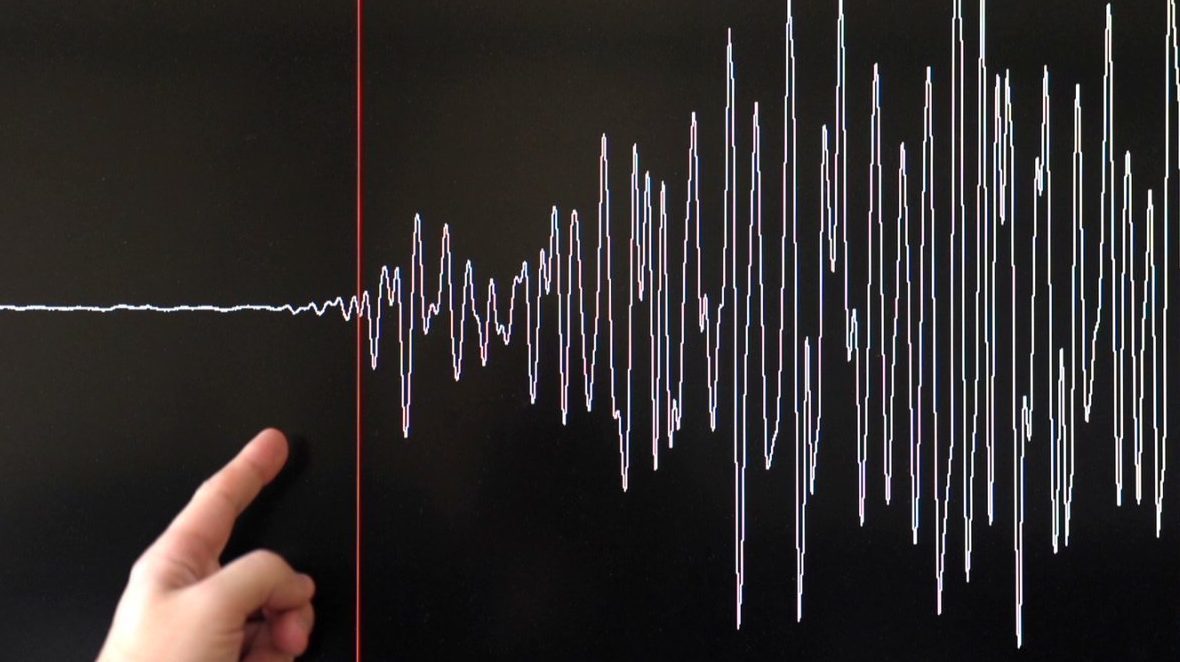
Shallow 4.5-magnitude earthquake hits Puerto Rico amid rare seismic activity

Earthquake seismograph
A 4.5-magnitude earthquake hit Puerto Rico on Thursday in the latest of a rare string of quakes that has frightened many in the U.S. territory. The most recent quake occurred eight miles south of Guayanilla at a shallow depth of four miles and was felt in the capital of San Juan and elsewhere in Puerto Rico, according to the U.S. Geological Survey. No immediate damage was reported.

"We haven't stopped shaking," said Ángel Vázquez, emergency management director for the southern coastal town of Ponce. "It's the first time something like this happens."

The flurry of quakes began the night of December 28, with a 4.7-magnitude quake followed by a 5.1-magnitude one that hit near Puerto Rico's south coast and sent dozens of panicked people into the streets. Goods fell off supermarket shelves, cracks in homes were reported in some coastal towns, and a large rock fell and blocked a road. No injuries were reported.

Since then, more than 1,100 earthquakes have occurred in that region. The majority have not been felt, except for the 4.2-magnitude one that hit December 31 and the one on Thursday.

"I've spent 29 years with Puerto Rico's Seismic Network, and it's the first time I observe this kind of activity," director Víctor Huérfano told The Associated Press. "There's no way to predict when it's going to end, or if it's going to lead to a major event."

Bizarro Earth

'Tumblegeddon': Washington highway closed for hours after piles of tumbleweed trap cars, semi-truck

Washington tumbleweeds
© Trooper Chris Thorson/Washington State Patrol via APIn this image taken Tuesday evening, Dec. 31, 2019, and provided by the Washington State Patrol, Washington State Department of Transportation using snow plows to remove a pile of tumbleweeds along State Route 240 near Richland, Washington
Several drivers in Washington state had to be rescued by snowplows after getting trapped in their vehicles on a highway New Year's Eve, according to officials.

But the rescues had nothing to do with wintry weather.

Tumbleweeds had piled up about 30 feet, blocking State Route 240 and leaving "several vehicles trapped," including a semi-truck, according to Washington State Patrol. The road was closed in both directions around 6:30 p.m. near West Richland, Wash.

Trooper Chris Thorson shared a photo of Department of Transportation workers making their way through the piles of tumbleweeds in the dark as some drivers can still be seen in their vehicles.

Cloud Lightning

Australian wildfires are so massive, they're generating their own weather patterns


Comment: Which causes more lightning, which causes more wildfires... It's a horrible set of circumstances to be caught up in. Stay safe, Aussie readers!


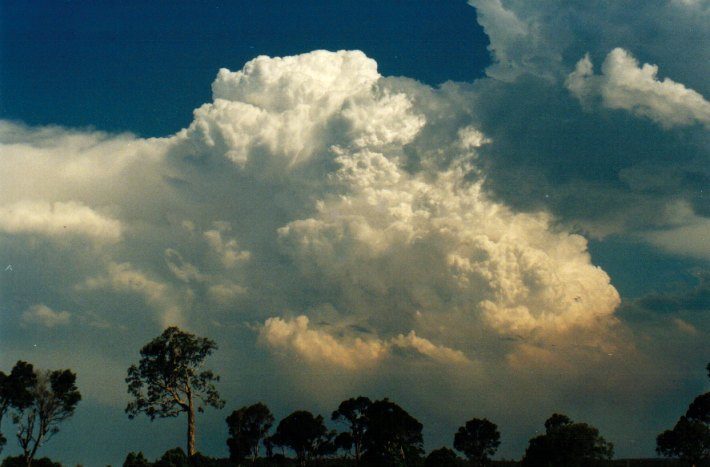
pyrocumulonibus cloud wildfire australia
© Dave Ellem/Michael BathPyrocumulonimbus cloud, Australia 2001
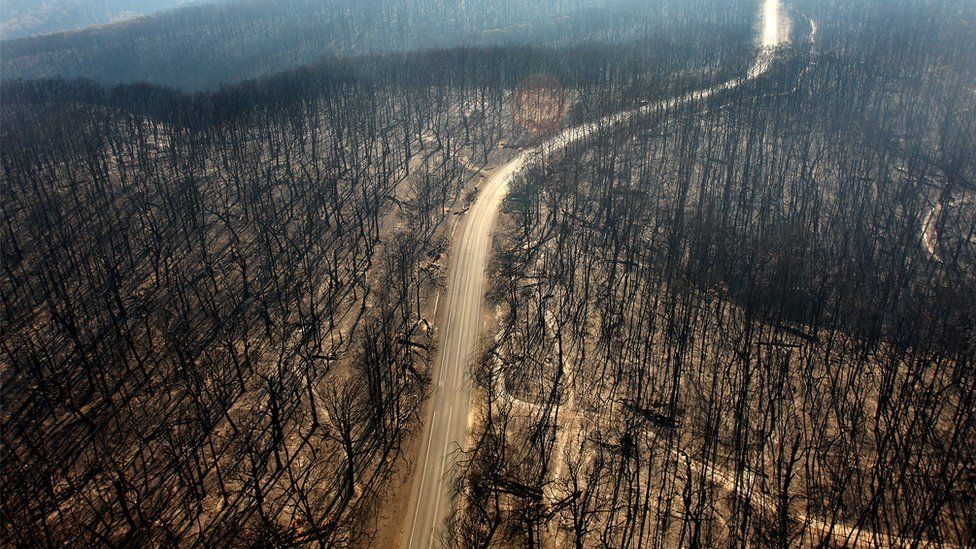
The bushfires in Australia are now so big that they are generating their own weather, in the form of giant thunderstorms that start more fires, according to the Bureau of Meteorology in Victoria.

"Pyro-cumulonimbus clouds have developed to altitudes over 16km in East #Gippsland this afternoon. These fire-induced storms can spread fires through lightning, lofting of embers and generation of severe wind outflows," the bureau tweeted on Monday.

Fire

Australia wildfires: Tens of thousands stranded while attempting to flee

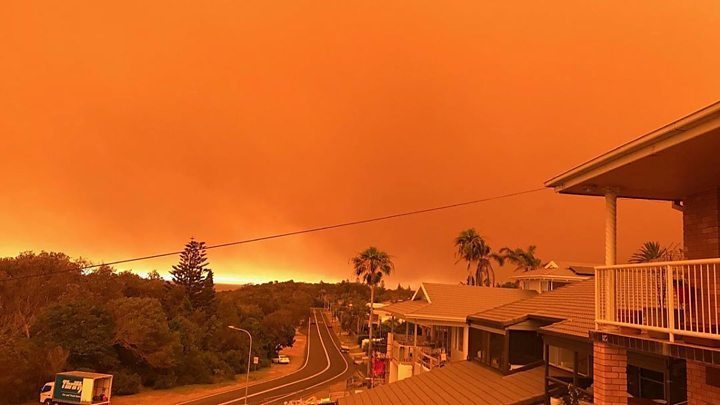
bushfires australia sky red
Visitors who were told to evacuate a vast area along the NSW south coast before even worse fire conditions return stuck for hours in gridlocked traffic

Tens of thousands of people remained stranded on Thursday evening while attempting to flee bushfire-ravaged areas of the south-east Australian coast - having earlier been urged to leave before the return of extreme and dangerous weather conditions.

The mass evacuation of communities in New South Wales and Victoria is among the largest ever emergency movements of people in Australia. The numbers fleeing the bushfire crisis remain unclear, but are expected to compare to the 60,000 people who were flown out of Darwin after Cyclone Tracy in 1974.

Visitors told to flee a vast evacuation area along the NSW south coast reported sitting in gridlock for up to 10 hours after responding to the order to evacuate, as further outbreaks of fire and sheer weight of traffic blocked escape routes north of Ulladulla and near Cooma in the Snowy Mountains.

Comment: RT adds more on Morrison's tone-deaf PR swing through one ravaged area:
The official started his visit to Cobargo walking up to a local woman, casually asking "How are you?" and then forcing her into a handshake - and that was when all the PR stunt flopped.

"I'm only shaking your hand if you give more funding to our RFS [Rural Fire Service]," the visibly reluctant woman told the PM.


Morrison was promptly swarmed by locals afterwards, who asked him a bunch of quite reasonable questions about very low number of fire engines that responded to the fires, lack of relief and so on - that he did not answer, however.


The PM aimlessly roamed the street with a bunch of other officials, including the natural disasters minister David Littleproud - and their silence only angered the locals further. One man urged the official to get out of town, telling him that his electoral prospects now look quite bleak in a profanity-laden rant.

"You're an idiot, mate. You really are. You won't be getting any votes down here buddy... No liberal votes. You're out son. You are out. Goodnight Vienna. Bye. Go on, p**s off."

Pelted with further questions about those who died in the fires and the many who've lost their homes, the officials ultimately retreated to their car - without so much as a goodbye.


Snowflake

Overnight storm dumps 14 inches of snow on Brundage Mountain, Idaho

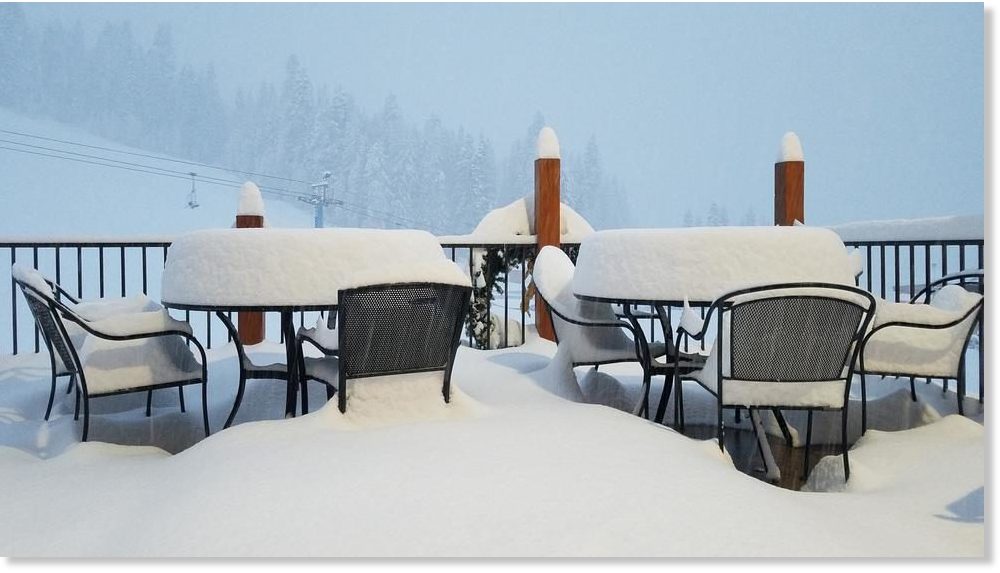
New Year's storm drops over a foot of snow on Brundage
A New Year's storm dropped over a foot of snow Wednesday on Brundage Mountain.

A winter snowstorm delivered a skiers dream to Brundage Mountain after dropping 12-14 inches of fresh snow on the mountain Tuesday evening to Wednesday morning.

Temperatures stayed in the mid to low 20's during this storm surge, so the quality of the snow is on par with the quantity.

"Powderhounds were up early to enjoy the fresh snow and an unexpected sun break before snow showers moved back in," the mountain said.


Snowflake

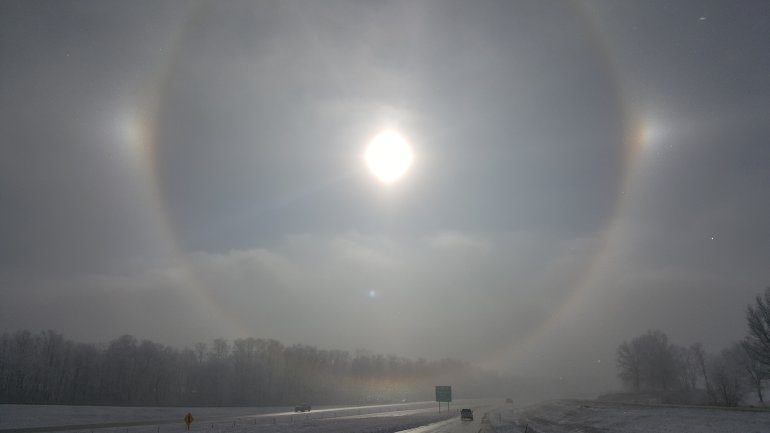
Spectacular 'Sun Dog' observed in Jilin, northeastern China

Halo and sundog in KC, MO
© Teresa and Mark Harvey
Residents in the city of Fuyu, northeast China's Jilin Province were thrilled to see three "suns" in the sky on the last day of 2019.

Around 8 a.m., two glowing spots were seen on the left and right side of the actual sun. The two extra "suns" were relatively bigger while the middle one smaller. The scene lasted for around 20 minutes.

This spectacular view, caused by a natural phenomenon called "sun dog," is also known as mock suns or parhelia.

As a result of light refraction through ice crystals, "sun dogs" become colored spots of light. This is an atmospheric optical phenomenon in nature, said Hu Xiao, the chief analyst of a weather reporting website.


The scenery is relatively rare, requesting strict meteorological conditions. First, the temperature required must be as below as minus 20. Besides temperature, the time of its occurrence is normally after sunshine but before morning, with a somewhat abundant amount of ice crystals.

The phenomenon went viral on Chinese social media, and some netizens referred to it as a rare scene in the story of Hou Yi.

Comment: It's not just the prevalence of 'ice crystals' in the atmosphere that creates conditions for this 'optical illusion' - it's particulates in general, so... volcanic dust, meteor 'smoke', smoke from wildfires...

All of which appear to be on the rise globally, hence the ever more regular appearance of what were once atmospheric 'anomalies'.


Fire

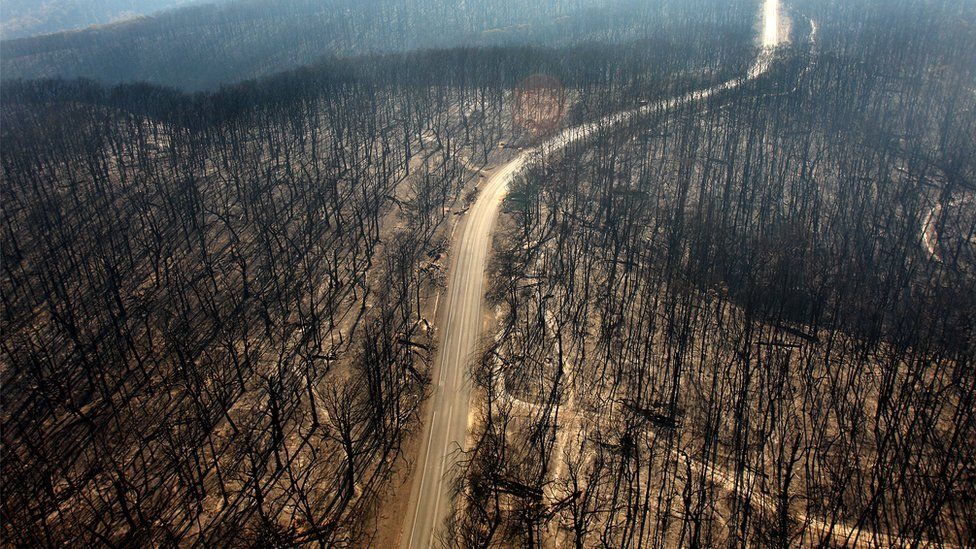
Flashback Black Saturday: The bushfire disaster that shook Victoria, Australia


Comment: H/T to SOTT reader ChapS23, who reminded us on this article about the bushfires currently raging in Victoria and New South Wales that Australia has seen worse, and not long ago...


bushfire australia 2009
© Getty ImagesThe town of Kinglake and surrounding regions were devastated
Ten years ago, Australia experienced its worst-ever bushfire disaster when 173 people died across the state of Victoria. Immediately branded "one of the darkest days in Australia's peacetime history", Black Saturday has left a profound legacy. Sharon Verghis reports.

"It was like the gates of hell. There is no other way to describe it."

For Tony Thomas, 7 February 2009 began as another ordinary day. It had been a summer of record-breaking temperatures, prompting days of safety warnings.

But Mr Thomas wasn't overly concerned; they had had scorching days like this before.

In the lush, peaceful hills on the outskirts of tiny Marysville, about 90km (55 miles) north-east of Melbourne, he and wife Penni had carved out a fruitful life running a bed and breakfast on a 60-acre property.

His in-laws had arrived for a birthday lunch. It was a pleasant gathering, despite the suffocating heat. But in the late afternoon, they spotted smoke in the west. Going for a closer look, they saw fire.

Snowflake

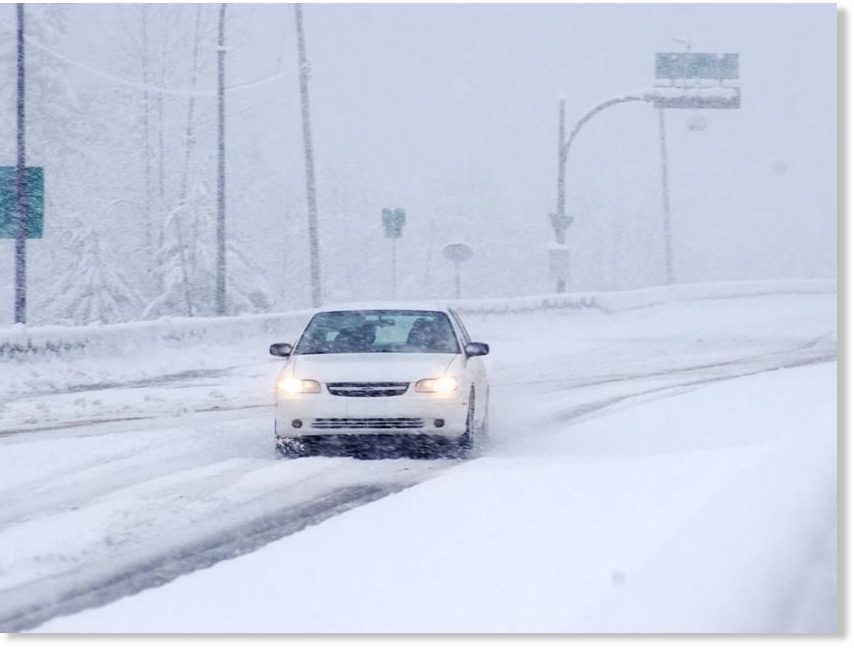
Snowstorm knocks out power to more than 30,000 in southern Interior of British Columbia

A snowstorm in the Southern Interior has caused damage to BC Hydro infrastructure, leading to power outages for customers.
© IAN LINDSAY/VANCOUVER SUNA snowstorm in the Southern Interior has caused damage to BC Hydro infrastructure, leading to power outages for customers.
Snowstorm knocks out power to more than 30,000 in B.C.'s southern Interior

B.C. Hydro says a snowstorm cut power to tens of thousands of customers in the province's southern Interior Tuesday.

The hardest hit areas included Clearwater, Quesnel and rural areas just outside of Kamloops, Vernon and Salmon Arm where heavy snow caused branches and trees to crash into power lines.

On Saturday morning, B.C. Hydro said it had restored power to about 60 per cent of affected customers, but there were still around 34,000 customers without power in the region.


Snowflake Cold

Anchorage, Alaska breaks snow record for New Year's Day following the warmest Dec 31 on record

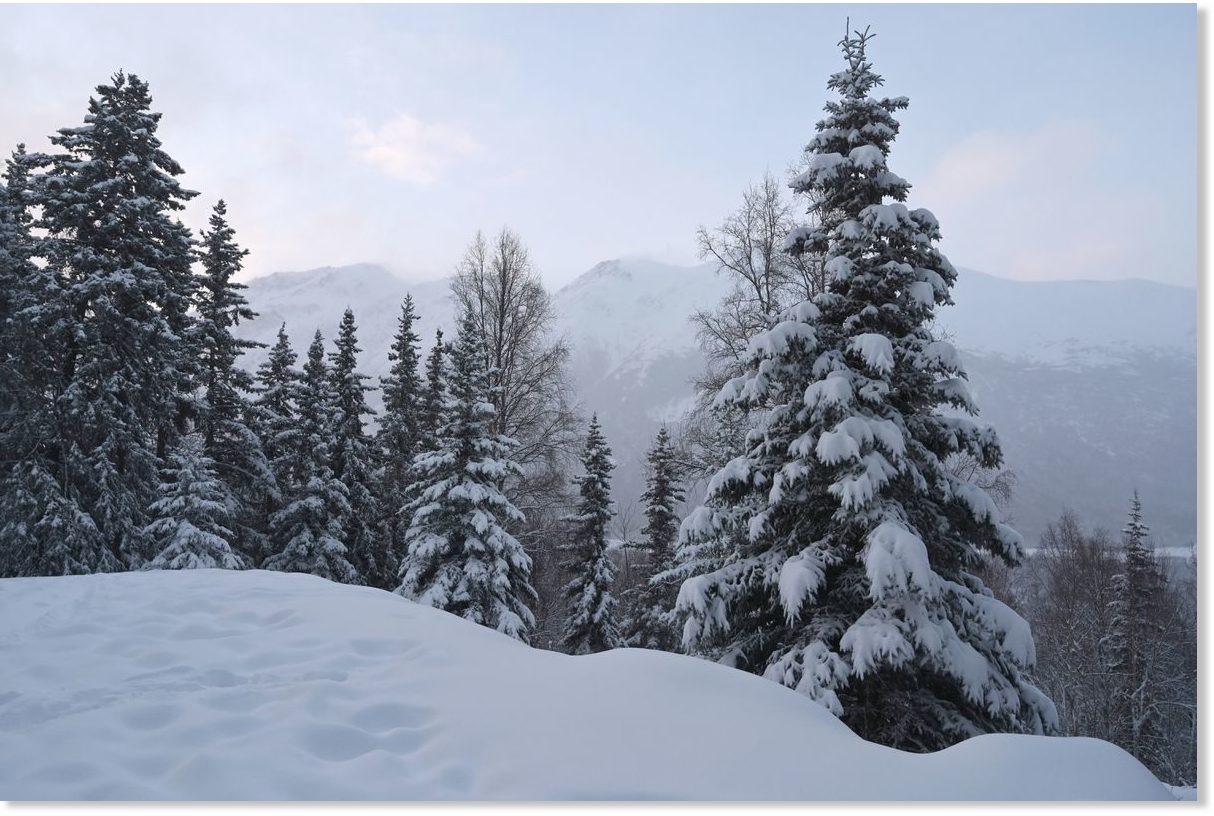
Snowfall overnight transformed Southcentral Alaska from an icy, slushy mess to a snow-laden landscape, Jan 1, 2020. Spruce trees are loaded with snow in Eagle River valley, Wednesday morning.
© Anne Raup/ADNSnowfall overnight transformed Southcentral Alaska from an icy, slushy mess to a snow-laden landscape, Jan 1, 2020. Spruce trees are loaded with snow in Eagle River valley, Wednesday morning.
Anchorage rang in the new year with record-breaking snowfall and warmth, as temperatures tumbled on Tuesday evening and precipitation ticked up throughout the night.

It was the snowiest New Year's Eve and New Year's Day combined on record for Anchorage, with 9.5 inches of snow by Wednesday afternoon, according to meteorologist Michael Vuotto at the National Weather Service in Anchorage. The snow totals broke the previous record set during the 1963-64 New Year's, which measured 7.2 inches of snow.

The snowfall came after Anchorage broke the daily record for warmest Dec. 31, with temperatures at Ted Stevens Anchorage International Airport measuring 46 degrees. That broke a previous record that was set in 2018, at 44 degrees for the final day of the year.