Science of the SpiritS


Info

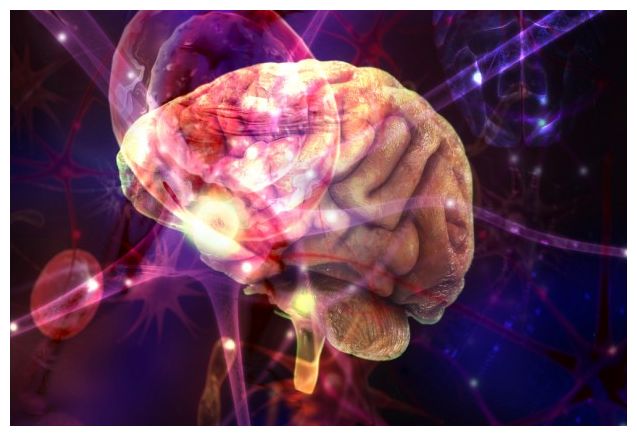
Study reveals brain 'takes out the trash' while we sleep

Sleep
© Parenting with Presence Net
In findings that give fresh meaning to the old adage that a good night's sleep clears the mind, a new study shows that a recently discovered system that flushes waste from the brain is primarily active during sleep. This revelation could transform scientists' understanding of the biological purpose of sleep and point to new ways to treat neurological disorders.

"This study shows that the brain has different functional states when asleep and when awake," said Maiken Nedergaard, M.D., D.M.Sc., co-director of the University of Rochester Medical Center (URMC) Center for Translational Neuromedicine and lead author of the article. "In fact, the restorative nature of sleep appears to be the result of the active clearance of the by-products of neural activity that accumulate during wakefulness."

The study, which was published today in the journal Science, reveals that the brain's unique method of waste removal - dubbed the glymphatic system - is highly active during sleep, clearing away toxins responsible for Alzheimer's disease and other neurological disorders. Furthermore, the researchers found that during sleep the brain's cells reduce in size, allowing waste to be removed more effectively.

The purpose of sleep is a question that has captivated both philosophers and scientists since the time of the ancient Greeks. When considered from a practical standpoint, sleep is a puzzling biological state. Practically every species of animal from the fruit fly to the right whale is known to sleep in some fashion. But this period of dormancy has significant drawbacks, particularly when predators lurk about. This has led to the observation that if sleep does not perform a vital biological function then it is perhaps one of evolution's biggest mistakes.
Info

Schizophrenia tied to abnormal memory network in brain

Brain
© paintings/Shutterstock
Individuals suffering with schizophrenia are subject to a whole host of disturbing, life-changing symptoms. They can range from disorganized thinking and an inability to plan for the future to full-on hallucinations and paranoid delusions. Through treatment with psychiatric therapy and medication can be effective for some, the psychiatric disease has largely remained a medical mystery.

However, researchers at the RIKEN-MIT Center for Neural Circuit Genetics at the Picower Institute for Learning and Memory at MIT have uncovered what they term "a faulty brain mechanism" they believe is crucial in the eventual development of schizophrenia and other psychiatric disorders in humans.

Speaking about the study published in today's issue of Neuron, Susumu Tonegawa, director at RIKEN-MIT said, "Our study provides new insight into what underlies schizophrenia's disordered thinking and zeroes in on a new target for future investigation into the neural basis of a cognitive disorder that affects more than 1 percent of the world's population." Tonegawa is also a senior author of the study.

This study, like many others in the fields of genetics, was an animal study. The team employed the use of genetically engineered mice that displayed symptoms of schizophrenia. One difficulty faced by this study, in particular, was figuring out how to model the complex nature of disorganized thought in the mice.

People

Babies know when you're faking: Infants can detect unjustified emotional reactions as early as 18 months

If you're happy and you know it, clap your hands! That's easy enough for children to figure out because the emotion matches the movement. But when feelings and reactions don't align, can kids tell there's something wrong? New research from Concordia University proves that they can - as early as 18 months.

In a study recently published in Infancy: The Official Journal of the International Society on Infant Studies, psychology researchers Sabrina Chiarella and Diane Poulin-Dubois demonstrate that infants can detect whether a person's emotions are justifiable given a particular context. They prove that babies understand how the meaning of an experience is directly linked to the expressions that follow.


The implications are significant, especially for caregivers. "Our research shows that babies cannot be fooled into believing something that causes pain results in pleasure. Adults often try to shield infants from distress by putting on a happy face following a negative experience. But babies know the truth: as early as 18 months, they can implicitly understand which emotions go with which events," says psychology professor Poulin-Dubois.

People

Keep your friends close, but... Surprising USC study shows that brains process the pain of villains more than the pain of people we like

Surprising USC study shows that brains process the pain of villains more than the pain of people we like.

Counterintuitive findings from a new USC study show that the part of the brain that is associated with empathizing with the pain of others is activated more strongly by watching the suffering of hateful people as opposed to likable people.

While one might assume that we would empathize more with people we like, the study may indicate that the human brain focuses more greatly on the need to monitor enemies closely, especially when they are suffering.

"When you watch an action movie and the bad guy appears to be defeated, the moment of his demise draws our focus intensely," said Lisa Aziz-Zadeh of the Brain and Creativity Institute of the USC Dornsife College of Letters, Arts and Sciences. "We watch him closely to see whether he's really down for the count, because it's critical for predicting his potential for retribution in the future."

Aziz-Zadeh, who has a joint appointment with the USC Division of Occupational Science and Occupational Therapy, collaborated with lead author Glenn Fox, a PhD candidate at USC; and Mona Sobhani, formerly a grad student at USC and who is now a post-doctoral researcher at Vanderbilt University, on a study that appears in Frontiers in Psychology this month.

The study examined activity in the so-called "pain matrix" of the brain, a network that includes the insula cortex, the anterior cingulate, and the somatosensory cortices - regions known to activate when an individual watches another person suffer.

Bulb

Schizophrenia linked to abnormal brain waves

Schizophrenia patients usually suffer from a breakdown of organized thought, often accompanied by delusions or hallucinations. For the first time, MIT neuroscientists have observed the neural activity that appears to produce this disordered thinking.

The researchers found that mice lacking the brain protein calcineurin have hyperactive brain-wave oscillations in the hippocampus while resting, and are unable to mentally replay a route they have just run, as normal mice do.

Mutations in the gene for calcineurin have previously been found in some schizophrenia patients. Ten years ago, MIT researchers led by Susumu Tonegawa, the Picower Professor of Biology and Neuroscience, created mice lacking the gene for calcineurin in the forebrain; these mice displayed several behavioral symptoms of schizophrenia, including impaired short-term memory, attention deficits, and abnormal social behavior.

In the new study, which appears in the Oct. 16 issue of the journal Neuron, Tonegawa and colleagues at the RIKEN-MIT Center for Neural Circuit Genetics at MIT's Picower Institute for Learning and Memory recorded the electrical activity of individual neurons in the hippocampus of these knockout mice as they ran along a track.

Previous studies have shown that in normal mice, "place cells" in the hippocampus, which are linked to specific locations along the track, fire in sequence when the mice take breaks from running the course. This mental replay also occurs when the mice are sleeping. These replays occur in association with very high frequency brain-wave oscillations known as ripple events.

In mice lacking calcineurin, the researchers found that brain activity was normal as the mice ran the course, but when they paused, their ripple events were much stronger and more frequent. Furthermore, the firing of the place cells was abnormally augmented and in no particular order, indicating that the mice were not replaying the route they had just run.

This pattern helps to explain some of the symptoms seen in schizophrenia, the researchers say.

Info

Researchers make first strides toward mind reading

Mind Reading
© Giovanni Cancemi/Shutterstock
According to a new study in the journal Nature Communications, researchers from Stanford University have used brain monitoring in 'real-life' situations to reveal the region of the brain responsible for numerical processing.

The researcher said that unlike previous approaches, their research could lead to "mind-reading" technology that would allow a patient who cannot speak to communicate by simply thinking. They also speculate that their findings have the potential for more dystopian outcomes - technology that spies on or even controls a person's thoughts.

"This is exciting, and a little scary," said Hank Greely, a committee chair at the Stanford Center for Biomedical Ethics, who did not participate in the study but was "very impressed" by the findings. "It demonstrates, first, that we can see when someone's dealing with numbers and, second, that we may conceivably someday be able to manipulate the brain to affect how someone deals with numbers."

The techniques used in previous studies, such as functional magnetic resonance imaging (fMRI), are somewhat limited by their capacity to examine brain activity in real-life settings and to catch the exact timing of nerve cells' firing patterns.

"This is not real life," study author Josef Parvizi said about the method of past studies. "You're not in your room, having a cup of tea and experiencing life's events spontaneously."

Info

Brain develops senses at birth

Newborn
© ShutterstockThe process of being born may activate sensory maps in the brain.
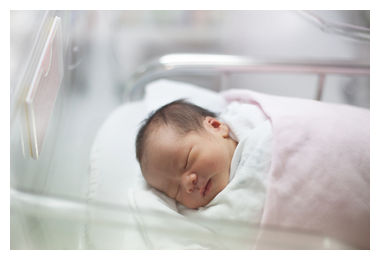
The mere act of being born triggers development of the brain's sensory system, new research shows.

In a mouse study, the birthing process caused levels of a brain chemical called serotonin to drop, triggering the formation of the brain's sensory maps that organize input from vision, touch and other senses. The findings could help scientists understand healthy human brain development and mental illness, the researchers say.

"Our results clearly demonstrate that birth has active roles in brain formation and maturation," study leader Hiroshi Kawasaki of Kanazawa University in Japan said in a statement.

The brains of humans, mice and other mammals are equipped with maps for processing different types of sensory information. For example, the barrel cortex in rodents represents tactile information from the whiskers, and the layout of the neurons in that map mirrors the layout of whiskers on the animal's face.

Previously, researchers found that the brain chemical serotonin, the target of many depression medications, also plays a role in the development of sensory maps. But serotonin's exact involvement was not well understood.

People

Sisters serve as confidants, sources of support and mentors during intimate conversations

Adolescence can be an impressionable time for girls as they begin forming ideas about dating and sexuality. Now, a University of Missouri researcher has found that sisters often take on key roles of confidants, sources of support and mentors during conversations about romantic relationships. Sisters may be helpful in health education efforts to promote safe-sex practices and healthy romantic relationships.

"Our findings indicate that sisters play important roles as adolescent girls form ideas about romantic relationships and sexuality," said Sarah Killoren, an assistant professor of human development and family studies at MU and the study's lead author. "Sisters are important communication partners when it comes to these sensitive topics."

Killoren says that older sisters should be included in family-oriented programs designed to help teens make better choices, such as abstaining from intercourse, practicing safe sex or developing healthy romantic relationships.

Killoren found sisters most frequently played the role of confidant. Sisters displayed this role by giving information about themselves and by asking for more information about their sisters' lives. The disclosures made during their conversations revealed levels of intimacy between sisters, Killoren said. The second role, sources of support, was displayed when sisters encouraged their siblings' ideas about dating and sexuality. The mentor role was displayed when sisters served as role models for one another, most frequently by giving advice.

Bulb

Willpower alone is not enough: Unconscious motivation plays a substantial role in how we respond to challenges

How do we motivate ourselves when studying for an exam or working to a tight deadline? The more unpleasant the task, the more willpower we need to rise to the challenge. Unfortunately, our reserves of willpower are quickly depleted. Which means that other mechanisms are required to motivate people to continually perform at a high level. And now scientists have shown that internal, unconscious motivation can significantly improve performance capabilities.

In an ideal world, employees would totally identify with their company's business objectives, be experts in their field and extremely motivated about their work. But in reality, this is not always the case and this places the spotlight on motivational skills for anyone in a leadership position.

"There are three components to motivation. The first is our conscious objectives and desires - for example, the aspiration for a highly paid role in a company in order to achieve a certain standard of living. We are also driven by unconscious, implicit motives. These are deeply rooted in our emotions and can include the desire to do things well, have an impact on and control over others, and engage in interpersonal relationships," explains Prof. Hugo Kehr from the Chair of Psychology at Technische Universität München (TUM). "The third motivational component builds on the skills and capabilities that we bring to a role."

Bulb

Well-connected hemispheres of Einstein's brain may have sparked his brilliance

The left and right hemispheres of Albert Einstein's brain were unusually well connected to each other and may have contributed to his brilliance, according to a new study conducted in part by Florida State University evolutionary anthropologist Dean Falk.

"This study, more than any other to date, really gets at the 'inside' of Einstein's brain," Falk said. "It provides new information that helps make sense of what is known about the surface of Einstein's brain."

The study, "The Corpus Callosum of Albert Einstein's Brain: Another Clue to His High Intelligence," was published in the journal Brain. Lead author Weiwei Men of East China Normal University's Department of Physics developed a new technique to conduct the study, which is the first to detail Einstein's corpus callosum, the brain's largest bundle of fibers that connects the two cerebral hemispheres and facilitates interhemispheric communication.

"This technique should be of interest to other researchers who study the brain's all-important internal connectivity," Falk said.