Science of the SpiritS


Smiley

How a joke looks to your brain from start to finish

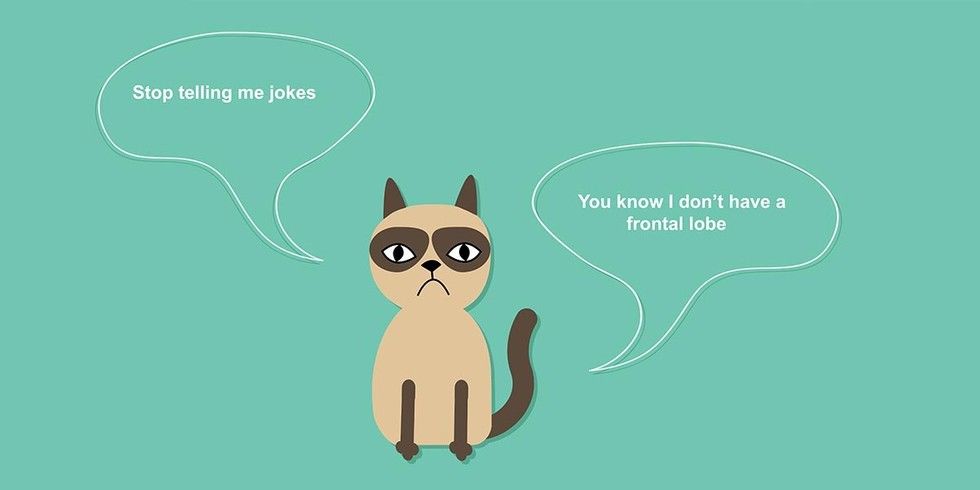
cat humor
© shutterstock
The search for the elusive funny bone has ended; it's located in the brain...and it isn't a bone.

Humor sometimes relies on culture and social mores to generate a laugh, but the foundation for everything funny is the same for all people—it's grounded in an expanded network of brain areas, each working to process one aspect of this multifaceted cognitive experience we call a joke.

How does the brain get it? It all starts when visual signals from a cartoon or auditory signals from a pun hit the brain. But the heart of what's funny in a joke is the mismatch between what we expect to see and what we get, something researchers call incongruity. Once certain brain areas process and flag this mismatch, a flurry of happy emotions and boats of laughter ensue, according to research studies with decidedly un-funny language.

Rainbow

Simple habits proven to make you happier

Image
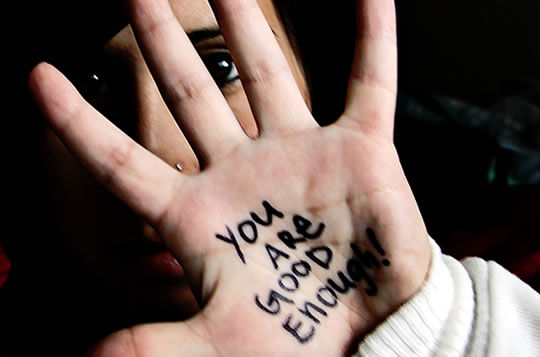
"You are good enough!" Self-acceptance is a key happy habit, yet it's one people practice the least.

A new survey of 5,000 people has found a strong link between self-acceptance and happiness, despite the fact that it's a habit not frequently practiced.

The finding comes from a survey carried out by the charity Action for Happiness, in collaboration with Do Something Different.

For their survey, they identified ten everyday habits which science has shown can make people happier.

Comment: What happens to your cells when you experience happiness?


Oscar

Temple Grandin: Overcoming Autism & achieving greatness

Image
© pages.presencelearning.com
Her mother prayed for good news as she sent 3-year old Temple Grandin to a speech therapist.

Diagnosed with autism, Temple was thought to be incapable of learning how to speak. In the 1950s, that meant institutionalization all of her life. That is, unless she could prove she was capable of learning in school.

Her parents tried everything, and speech therapy was her last hope of a good life.

Somehow, against all odds, young Temple started to make progress. It was slow, but Temple was able to speak well enough to be enrolled in school.

This was a huge win for Temple, but still her future still seemed limited. She struggled throughout her entire school life because she simply did not think the way "normal" children did.

Comment: Read more about Temple Grandin's work: Do Animals Think Like Autistic Savants?


Gear

How modern life destroys problem solving abilities

Image

Our world today would seem magical to our ancestors. Our needs are met almost immediately, we have clean water at the turn of a knob, heat at the push of a button, and light with the flip of a switch. Food is purchased in a box, ready to heat, and a person can prepare a meal in under 6 minutes using the microwave oven that's a fixture in most modern kitchens.

Our world is clean, convenient, and loaded with abundant resources, things that took significant time and effort to produce in days gone by.

But all of this convenience comes at a high price, one we don't even realize exists until a situation arises in which the ready answers aren't there, the food is not available, and the dial on the thermostat no longer has any effect at all.

Modern life destroys survival instinct. Most folks just buy the answers to all of their problems and they have lost the ability to think. Self-reliance is an act of epic rebellion against the status quo.

Green Light

Study: The brain's response to others' good fortune depends on our levels of empathy

Image
The way our brain responds to others' good fortune is linked to how empathetic people report themselves to be, according to new UCL-led research.

The study, published today in the Journal of Neuroscience and funded by the Medical Research Council, shows that a part of the brain called the anterior cingulate cortex (ACC) seems particularly attuned to other people's good news, but how it responds varies substantially depending on our levels of empathy.

For people who rated themselves as highly empathetic, the ACC responded only when another person had good news coming, but for people who gave themselves lower empathy scores, the ACC also responded when bad news was predicted for themselves.

This new insight could prove important in understanding the role of the ACC in disorders of social behaviour and empathy, including psychopathy and autism. Further studies could focus on how the brain responds to our own success compared to others' in people with these disorders.

Researchers scanned the brains of 30 male volunteers aged 19-32 using functional magnetic resonance imaging while they saw symbols that predicted how likely either they or another person was to win money.

Participants also completed a questionnaire that assessed their empathy level in the week before they had the scan.

Comment: See also: Polyvagal theory: The biological fingerprint for compassion and empathy


Butterfly

Ways to get motivated when trapped in a state of inertia

rut, inertia
When we're trapped in a frustrating state of inertia, nothing makes sense and hope of an escape eludes us.

Remember, we are never truly stuck. Even when we are bounded physically, when the mind feels free, our reality changes.

Below are eight ways to break free of a rut:
  1. Exercise.
    We often indulge in vices to get rid of negative emotions and tension. Personally, I find exercise to be the healthiest outlet for releasing stress and anxiety. Whenever I feel pent-up energy within me, I'll go running and only stop when I feel completely exhausted. Negativity seems to disperse with each step forward.
  2. Music.
    Music can quickly change your state of mind. When you feel like running to a mountain and yelling into space, try instead to sing your heart out. While you're at it, dance and jump away!

People

Why breaking up with a friend hurts as much, or worse, than the breakup of a romantic relationship

lucy and ethel
Lucy and Ethel: BFFs
Breaking up with a partner is universally accepted to be an awful experience, no matter how amicable the breakup. Often, it's our closest friends who support us through the healing process. But what happens when we lose that support system? Ending a close friendship is awkward and devastating—and it's so rarely discussed that we don't even have specific language to talk about it.

We asked psychologists and researchers who specialize in relationships to help us understand why it hurts when it ends.

This calls into question the nature of relationships and how people experience connection within them.

Book 2

The story behind your anxiety

Image
I was on my knees, tears surging from my eyes, when my uncle told me I was going to die.

I felt something like despair, even pain, when he explained to me that all people vanish from the Earth.

I can still see the 7 year old me slumped over two bony legs wondering how I could avoid this calamity.

And you know what? I still don't want to die - not now, not ever.

My desire to survive death has always been at the heart of my anxiety. Unfortunately, I didn't know that, and couldn't deal with it, until much later.

That's why it took me so damn long to recover. I was too scared to confront what I feared most.

Comment: You can also check out and try:


Info

Mind hack: Scientists use magnets to change attitudes on immigration, religion

Mind Hack
© Tom Tingle/The Arizona Republic/Pool/Reuters
Researchers from the University of York have used magnetic energy to suppress humans' 'threat-response' functions and dramatically change people's attitudes to immigration.

Psychologists used magnetic force to safely shut down the region of the brain associated with "threat-response functions" and conducted a series of tests where volunteers were asked questions about their beliefs.

Scientists found the people were less likely to have negative views when the magnetic force was applied to the posterior medial frontal cortex, positioned a few inches up from the forehead.

In the study, half of participants were given a low-level placebo-like level of magnetic energy that did not affect their brain, while the other half received enough energy to lower activity in the target area.

Rose

Pathways to Resilience: Former prisoners learn permaculture and a new way of being

Image
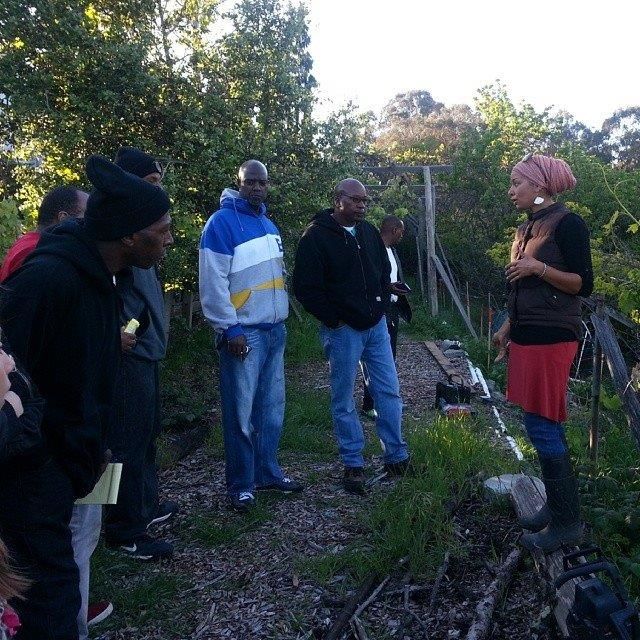
© www.transitionnetwork.org Teaching permaculture design on Pathways to Resilience.
The USA is pioneering schemes that are helping people to re-enter civil society after a prison sentence better equipped to cope in the world and adjust to life after being locked up. One project, Pathways to Resilience, uses a 'permaculture infused value curriculum', teaching permaculture design, how to grow food, peer mentorship that involves talking through issues in a supportive circle, symbolic rites of passage, bushcraft, and social entrepreneurship over five months with former prisoners.

Comment: More info on permaculture:
  • Front yard food gardens - Defying conformity and challenging authority