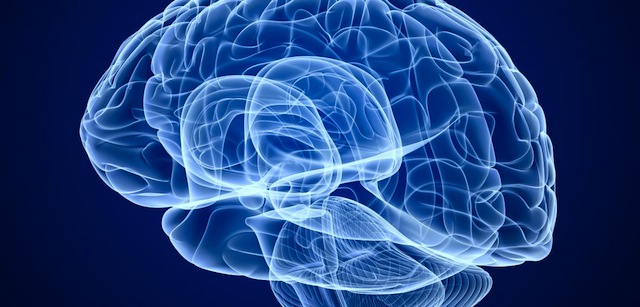
© Oxford University
When brain scientists at Oxford University studied apathy, they didn't expect to see less motivated people making more effort. Their results suggest that for some people traditionally perceived as lazy, it's biology - not attitude - that might be the cause.
A team of neuroscientists at Oxford, funded by The Wellcome Trust, decided to study young people to see if there were any differences in the brains of those who were motivated compared to those who were apathetic.
Masud Husain, Professor of Neurology and Cognitive Neuroscience, explained: 'We know that in some cases people can become pathologically apathetic, for example after a stroke or with Alzheimer's disease. Many such patients can be physically capable. Yet they can become so demotivated they won't be bothered to care for themselves, even though they're not depressed. By studying healthy people, we wanted to find out whether any differences in their brains might shed light on apathy.'
Forty healthy volunteers completed a questionnaire that scored them on how motivated they were. They were then asked to play a game in which they were made offers, each with a different level of reward and physical effort required to win the reward.
Unsurprisingly, offers with high rewards requiring low effort were usually accepted, while low rewards requiring high effort were less popular.When volunteers played the game in an MRI machine, so that researchers could study their brains, a surprising finding emerged.
Although apathetic people were less likely to accept effortful offers, one area of their brains actually showed more activity than in motivated individuals. The pre-motor cortex is a key area involved in taking actions. It becomes active just before those areas of the brain that control our movement. Paradoxically, in more apathetic people it was more active when they chose to take an offer than it was in motivated people.





















Comment: Black Friday 2015: Rampant and violent consumerism