Science of the SpiritS


Info

Researchers can read minds at nearly the speed of thought

Mind Reading
© Kai Miller and Brian Donohue
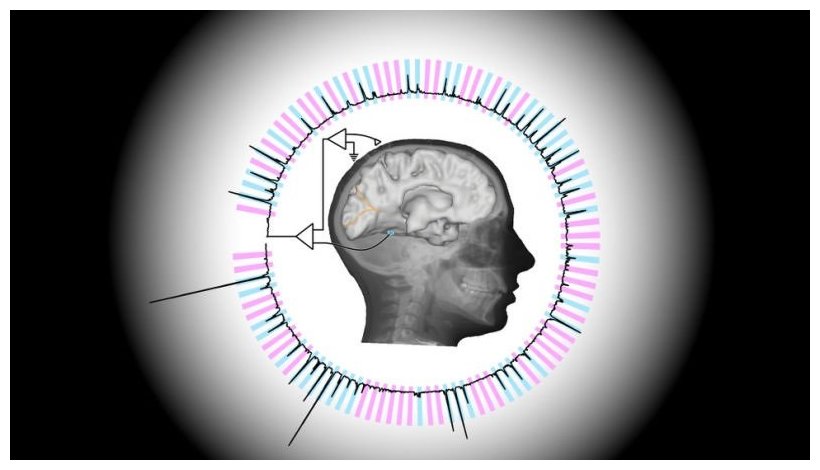
An experiment by University of Washington researchers is setting the stage for advances in mind reading technology. Using brain implants and sophisticated software, researchers can now predict what their subjects are seeing with startling speed and accuracy.

The ability to view a two-dimensional image on a page or computer screen, and then transform that image into something our minds can immediately recognize, is a neurological process that remains mysterious to scientists.

To learn more about how our brains perform this task—and to see if computers can collect and predict what a person is seeing in real time—a research team led by University of Washington neuroscientist Rajesh Rao and neurosurgeon Jeff Ojermann demonstrated that it's possible to decode human brain signals at nearly the speed of perception.

The details of their work can be found in a new paper in PLOS Computational Biology.

The team sought the assistance of seven patients undergoing treatment for epilepsy. Medications weren't helping alleviate their seizures, so these patients were given temporary brain implants, and electrodes were used to pinpoint the focal points of their seizures. The UW researchers saw this as an opportunity to perform their experiment. "They were going to get the electrodes no matter what," noted Ojermann in a UW NewsBeat article. "We were just giving them additional tasks to do during their hospital stay while they are otherwise just waiting around."

The patients were shown a random sequence of pictures—images of human faces, houses, and blank gray screens—on computer monitors in brief 400 millisecond intervals. Their specific task was to watch for an image of an upside-down house.


Magic Wand

Overcome depression using your mind

depression
© sensum.deviantart.com
There are a lot of theories about the cause of depression in existence today, the primary one being biochemical imbalances in the brain, at least according to mainstream medicine. However, mainstream medicine hasn't proven whether these imbalances are the true cause or simply an effect of being depressed. What we do know is that depression appears to result in changes in the brain structure and chemistry; however, these changes are also known to be related to lifestyle, emotions, trauma, activities you do (or don't do), and in general, how fulfilled you are in your life.

What science shows us is that your brain is constantly rewiring itself in response to how you perceive your environment. It's an adaptive function to ensure the brain is effective at performing the task it's most asked to perform. A tennis player's brain will look completely different from the brain of a musician. The depressed person's brain will look much different from that of someone who isn't depressed. So is depression just a malfunction of evolution, or is it possible it's an adaptation to a series of persistent thought processes and actions? And if that is true, isn't it possible that if we change those thought processes and actions, we could then rewire the brain, restore chemical balance, and change the effect of depression?

Comment: Epidemic depression as a wake up call to humanity
The depression that I'm interested in is the kind that drags on and on, the kind that costs the victim much couch time at the therapist's office and puts them on a medical treadmill, often for life. The kind of depression I'm talking about is the type that drives people to suicide, often multiple times over long periods of their lives. It sucks the soul out of you because it convinces you that the world is a completely nihilistic place. There is no purpose, no hope, no future, and no one understands. There is only a cold unfeeling world whose culture is at best superficial, and at worst outright psychopathic. There is a nothingness inside of you that grows and grows and grows.

How and why do relatively well-adjusted people with normal lives come to carry this monster inside of them, this feeling of a shattered soul that refuses to be cured with drugs or the latest counseling theories? I think the answer to that question is that the being of such people has, at some level of awareness, been forced to realize that the world "out there" is not right in some fundamental way; that it has in fact become a playground for nihilistic personalities who have no plan whatsoever other than to gorge on their own thirst for darkness and destruction.


Life Preserver

How to regain energy when life is bleeding you dry

energy
© Unknown
We'd all like to know how to get more energy when life throws curve balls at us.

These ideas from psychology research can help you keep going and overcome a terminal case of I-don't-feel-like-it.

Let's get started...

Comment: Also see:
Given the highly toxic state most people find themselves in, the rapidly changing environment which we live in, and the incredible ability that iodine has to strengthen people's health and improve their lives, I decided to write the following summary about iodine supplementation as an introduction to the subject. The information presented here is based on preliminary research available on this forum discussion thread on iodine and on the books Iodine: Why You Need It, Why You Can't Live Without It (5th Edition) by Dr. Brownstein, andThe Iodine Crisis by Lynne Farrow.

Iodine is an essential micro-nutrient. This means every single cell of every single person needs it. Evolutionary biologists reckon that seafood consumption, and thus iodine absorption, played an important role in human brain development and evolution. Iodine also has excellent antibacterial, anticancer, antiparasitic, antifungal, and antiviral properties.

Iodine - Suppressed knowledge that can change your life


Stop

A thought-provoking experiment: What happens when children don't have the internet for a whole day?

kids tech
© imagemax.com
Child psychologist Yekaterina Murashova describes an unusual experiment in her book showing what happened when a group of teenagers were deprived of access to the internet and modern technology for a single day. We think it's well worth checking out — you can consider the implications for yourself.

Children and teenagers aged between 12 and 18 years voluntarily spent eight hours alone without access to any means of communication (mobile phones; the internet, etc.). They were also forbidden to turn on the computer, any other electronic gadgets, the radio and the TV. But they were allowed to engage in a number of 'classic' activities by themselves: writing, reading, playing musical instruments, painting, needlework, singing, walking, and so on.

Comment: Read more about What screen addiction is doing to your children
So what are innovations like computers, the internet, and cell phones, among others, doing to our children? Well, they could be doing a lot more than we think, and little of it good. There is a widespread consensus in the scientific community that the radiation alone from these devices can be very debilitating to our health in the long term. We are approaching a time where we will potentially begin to see these effects surface, given the fact that the first cell phone/computer/internet/video games generation is approaching the age of thirty...

As we continue to move forward, this type of addiction and behaviour becomes more disturbing. The power that some multinational corporations have, alongside their clever marketing tactics - basically making whatever product or idea they choose to be desirable to the human mind - is worrisome. A few years ago, the American Academy of Paediatrics found that the average 8-10 year old spends almost eight hours a day with a variety of different media, and older children/teenagers spend even more, upwards of up to 11 hours. (source)


Health

How to be successful without sacrificing your well-being

success
© Unknown
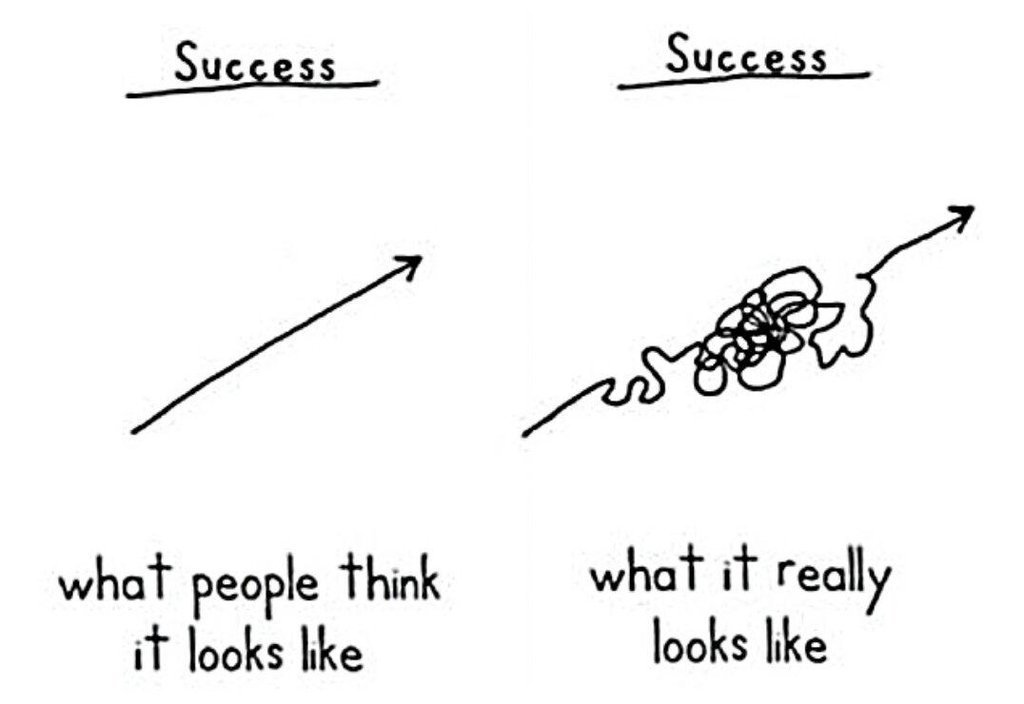
In the last year, have you felt stressed, burnt out, or exhausted? You're not alone. Burnout levels are on the increase across professions, and a Gallup poll shows that more than 70% of the Americans feel disengaged at work. In our pursuit of success, we are wearing ourselves out. But everyone seems to be moving at the same alarming speed. Our health and well-being suffers, but it feels like there simply is no choice and no alternative: We just have to keep going. So we pour ourselves more coffee and keep at it.

However, research shows that we have it all wrong. We have the misconception that, in order to be successful, we have to postpone our happiness and well-being. Here are the six myths of success that we tend to fall for.

Never stop accomplishing. Stay continuously focused on getting things done. To achieve more and stay competitive, you've got to move quickly from one to-do to another, always keeping an eye on what's next.

Comment: Further reading:


Heart - Black

Is love even possible in our narcissistic culture?

Narcissus
© UnknownNarcissus
We seem to be living in a more and more narcissistic culture. And evidence from numerous sources suggest that self-centeredness and narcissism are at an all-time high. Research by Professor Jean Twenge at San Diego State among others have demonstrated that our culture has become more and more interested in themselves and less and less interested in others. Furthermore, our Hollywood celebrities, sports stars, and politicians seem to be putting on an effective and ongoing clinic on how to be completely self focused. The frequent narcissistic comments of so many people in the daily news (including presidential candidates) are really quite breathtaking. Selfie and Facebook culture provides venues for additional reinforcement of self-focus.

One of the unintended consequences of our increasingly narcissistic culture is the lack of interest in others, the common good, and quite possibly romance as well. After all, if you are so self-centered and focused on your own needs and desires to the exclusion of others how can you possibly negotiate the important give and take that goes with any healthy loving relationship? How can a narcissist maintain interest and concern for anyone else and to do so in a sustainable way? We know that traditional dating culture among youth is much less common than it used to be while casual hook-ups are much more commonplace. The widespread use of and rise in online pornography also fits this more self-centered approach to sexual and lack of relationship behavior.

Therefore, as our culture and community gets more narcissistic where egoism rules the day, the ability and interest to engage in collaborative, loving, giving, and sometimes selfless intimate relationships become more and more challenging to negotiate and sustain.

Comment: Further reading:


People 2

Compassion is essential to our evolution as a species

compassion
With the U.S. celebration of Martin Luther King Jr. Day, it felt like a good week to take up the question of compassion. In a week when we commemorate high human virtue (not to mention lend each other support during our biggest community endeavor of the year), what does it mean to offer compassion—and how did this inclination develop?

While compassion is defined a number of ways, the genuine crux of it is the concern we have for others' struggles and suffering coupled with the desire to lend help or support in some regard. Rather than the "vicarious" emotional experience of another's difficulties (sympathy or empathy, depending on who you talk to) or the actions we take in response to our concern for another's situation (altruism), compassion records us more in the role of supportive witness—and perhaps motivated actor on another's behalf. While today we consider compassion one of the most esteemed human traits, what were its origins? Is this really a product of evolutionary forces rather than cultural response? How could it have grown out of the rough and tough, survival-of-the-fittest world of Grok's day?

The answer may be something of both nature and nurture, but make no mistake. The roots of compassion are pure genetic instinct even if modern society extends the context for compassionate exchange. Experts associate the development of compassion with a wide variety of key social dimensions within expanding human social organization. They note that compassion stands as its own emotion, differentiated from easily related feelings like sadness or even love.

Comment:


People 2

That incredible thing we do during conversations

talking
© goodnewsshared.comIt is much more than just stimulus and response!
When we take turns speaking, we chime in after a culturally universal short gap.

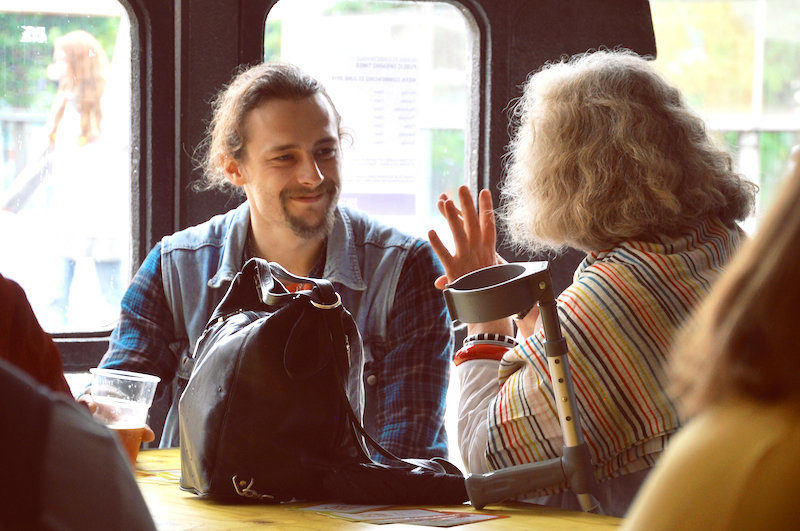
One of the greatest human skills becomes evident during conversations. It's there, not in what we say but in what we don't. It's there in the pauses, the silences, the gaps between the end of my words and the start of yours.

When we talk we take turns, where the "right" to speak flips back and forth between partners. This conversational pitter-patter is so familiar and seemingly unremarkable that we rarely remark on it. But consider the timing: On average, each turn lasts for around 2 seconds, and the typical gap between them is just 200 milliseconds—barely enough time to utter a syllable. That figure is nigh-universal. It exists across cultures, with only slight variations. It's even there in sign-language conversations.

"It's the minimum human response time to anything," says Stephen Levinson from the Max Planck Institute for Psycholinguistics. It's the time that runners take to respond to a starting pistol—and that's just a simple signal. If you gave them a two-way choice—say, run on green but stay on red—they'd take longer to pick the right response. Conversations have a far greater number of possible responses, which ought to saddle us with lengthy gaps between turns. Those don't exist because we build our responses during our partner's turn. We listen to their words while simultaneously crafting our own, so that when our opportunity comes, we seize it as quickly as it's physically possible to.

"When you take into account the complexity of what's going into these short turns, you start to realize that this is an elite behavior," says Levinson. "Dolphins can swim amazingly fast, and eagles can fly as high as a jet, but this is our trick."

Comment: See also: How we think before we speak


Family

Other-focused people experience greater emotional complexity says study

Emotional complexity
© ideachampions.com
Many Western cultures see these feelings as suggesting indecision, but that's not accurate new research finds.

Mixed emotions are a sign of emotional complexity, a new study finds.They are not necessarily a sign of indecision.

People experiencing higher emotional complexity are also better able to control their emotions and have a lower incidence of depression, other studies have found.

The new conclusions come from researchers who looked at 16 different cultures, including the US, Canada and the UK.

Professor Igor Grossmann, who led the study, said:
"People in many western countries see mixed feelings as undesirable — as if to suggest that someone experiencing mixed feelings is wishy-washy.

Actually, we found that both westerners and non-westerners who show mixed feelings are better able to differentiate their emotions and experience their lives in an emotionally rich and balanced fashion."
People living in cultures which are self-oriented — like the US, Canada and the UK — experienced less emotional complexity, on average.

Comment: See also: Psychological well-being and empathy


Light Saber

Focus on the meaningful: Choose to spend your limited time wisely

focusing, meaningful life
There's a meme that started way back in 2007 talking about a professor who fills up a jar full of golf balls, pebbles, and sand to demonstrate that you should fill your life with the important things first (the larger golf balls), so that the little things (the pebbles and sand) don't take up all the room in your life (the jar).

There's a reason memes become popular and get shared online — because there is some kind of universal truth connected to them that people recognize. This clever story of a jar and golf balls is just such a meme.

You have a very short time on this planet — much shorter than you realize when you take into account the tens of thousands of years of civilization before you were born, and the likely tens of thousands of years in the future. How are you going to spend that time? What kind of things will you spend most days focusing on — the little, useless things, or the bigger, meaningful stuff?

Comment: Priorities become crystal clear when people know their days are numbered: The common regrets of the terminally ill