Science of the SpiritS


Evil Rays

Drowning in a sea of thought: Does schizophrenia suggest a filter theory of consciousness?

schizophrenic
© ViralnovaSeries of drawings by a schizophrenic illustrating how his perceptions changed as the episode became more severe. Image borrowed from this Viralnova page (http://www.viralnova.com/schizophrenic-art/), which includes other examples of schizophrenic art.
A new development in the study of schizophrenia could possibly be interpreted as providing support for the filter model of consciousness.

An NPR report tells us,
People with schizophrenia — more than 21 million worldwidetend to have less gray matter and fewer connections in their brain than healthy peers. But scientists aren't sure why. The research, for the first time, suggests that variations in a gene called complement component 4, or C4, for short, could be important. The gene had previously been known to help the immune system target infections.

A mutant form of the gene makes proteins that tag an excess number of brain synapses for destruction. This explanation meshes neatly with the tendency of schizophrenia to arise during adolescence, a period during which even healthy brains are busy pruning lots of connections.
What struck me about this story was the first sentence I quoted — that schizophrenics usually have "less gray matter and fewer connections in their brain" than other people. The new discovery suggests that a genetic malfunction causes the brain to clear away too many synaptic connections (a process called synaptic pruning).

Comment: Further reading: Scientists discover possible biological cause of schizophrenia that could lead to cure


Arrow Up

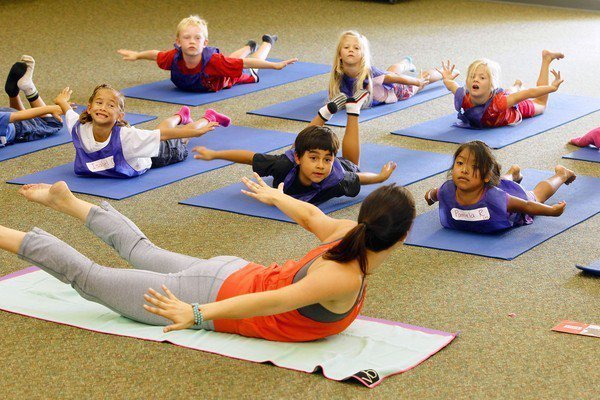
Kids can get big benefits from yoga

kids yoga
Kermit the Frog has a wonderful song - "It's Not Easy Being Green." And kids love this song because they can relate. After all, it's not easy being a kid today either. More and more is asked of them in school; they are hurried from one activity to the next; homework begins at much earlier grade levels now, and then there are all of the digital distractions that top off fully exhausting days and evenings.

It's Beginning to Show in the Classroom

Teachers are frustrated because attention spans seem to be so short and because they have to be entertainers if they want to engage learning in their classrooms. Parents worry that their kids won't pass the standardized state tests that often decide promotion to the next grade. So, they cart their kids to tutoring sessions, among all of the sports practices. Kids just don't have any non-stimulated time, and that is a huge concern. This is where yoga comes in.

Comment: Additional articles about the benefits of yoga for children:


Heart - Black

15 control tactics of difficult people

psychopath
© Unknown
"Some people try to be tall by cutting off the heads of others."

— Paramhansa Yogananda
Most of us come across difficult personalities at some points in our lives. These individuals may exist in our personal or professional environment. Being cognizant of control tactics used by challenging people can make the difference between awareness versus ignorance, and mastery versus victimhood.

Below is a list of fifteen controlling tactics difficult people often use to maneuver others into positions of disadvantage, excerpted from my book: "How to Successfully Handle Aggressive, Intimidating, and Controlling People". Not everyone who acts in the following manners may be deliberately trying to control you. Some people simply have very poor habits. Regardless, it's important to recognize these behaviors in situations where your rights, interests and safety are at stake.

Comment: Further reading:
The need to control others may not make a lot of sense to you. If you're a live-and-let-live person, you'd never want to control someone else. Even if you're a perfectionist, you stay on your own case all day, not necessarily someone else's.

But controllers are out there. They want to micromanage what you say, how you act, even what you think quietly in your own mind. It could be your boss, your spouse, or even your parent. You can't be yourself around them. They insist on being your top priority and want undue influence over your life. They might push your buttons to get an emotional reaction out of you because they want to exploit it as weakness. They have no respect for you or your boundaries.

Understanding controlling people and how to protect yourself


Health

How self-observation and behavioral change drastically improved the lives of chronic pain patients

light controls muscles
© Jose-Luis Olivares/MIT
I have written before about the Alexander technique, an approach to teaching the chronic pain patient how to avoid destructive muscular and mental tension during the course of everyday living. The basis for even considering such an approach is the assumption that most of us are not as completely aware of our Self as we interact with, and attempt to impact, the world beyond our skin. Alexander believed that those of us who use our musculature inappropriately, over time, will lose the fine art of sensory appreciation of the world, which ultimately causes those so afflicted to suffer pain more easily and chronically, and may leave them somewhat emotionally muted when it comes to the most daily communications with our fellow humans.

Forget about the deeper nuances of relationships.

Examples of repeated misuse of musculature include standing with one's weight unevenly distributed, holding one's head at an unnatural angle (as many of us do when showing others that we are listening), or just walking with an inefficient gait. Alexander set out to right these psychophysical wrongs: fixing physical and psychological wounds, by patching up the physical defects first.

Comment: Further reading:
Many years ago I took lessons from an Alexander teacher on the "Alexander Technique". It is a form of posture therapy that is popular among musicians and actors, since it is so important for their craft to maintain good posture.

But have you ever considered that body posture pertains not only to our bodies but also to our psyches — our feelings, our thoughts, even our energy bodies? As I point out in Active Consciousness, the spiritual teacher G.I. Gurdjieff was well aware of the relationship between posture and the Self. As he said, "Every race... every nation, every epoch, every country, every class, every profession, has its own definite number of postures and movements... A man is unable to change the form of his thinking or his feeling until he has changed his repertory of postures and movements."

Want to improve your self awareness? Correct your posture


Bulb

Most creative and innovative teams have prior shared experiences but diverse knowledge and skills

creativity, innovation
What spurs creativity? A Columbia sociologist studied the teams behind 12,422 video games released worldwide from 1979, when the gaming industry started, to 2009, and found the most innovative teams were built around diverse experiences and knowledge. David Stark, the Arthur Lehman Professor of Sociology, found that the most effective teams were comprised of people who had experience working together but different knowledge and skills. His findings, which can be applied to many types of teams -- businesspeople, scientists, economists, musicians, engineers and more -- show that prior social interactions enable groups to avoid intractable conflict while diverse expertise helps them avoid the pitfalls of "groupthink."

In other words, the cognitive distance of diversity creates a friction -- a productive friction in teams in which some members of the group had previously worked together. "It is this uneasy fit, a lack of harmony, which is innovative," said Stark. "It is a mobilization of productive tension to create something exceptional. Misunderstandings and breakdowns in communication can be as important as a smooth exchange of ideas."

Comment:


Hourglass

Regrets of the older and wiser: Time wasted on things that don't matter in the long run

time, wasted time
We spend a lot of energy looking for shortcuts to save time, and sure, those shortcuts add up. But when I look back, my biggest time regrets aren't spending too much time on Twitter or mismanaging my daily tasks. Those are bad habits, but there are bigger, more systematic time wasters that have really gotten in the way. Fixing these will free up a massive amount of time and energy.

Not Asking for Help

My first week on my first job out of college, my boss handed me a huge spreadsheet. He told me to organize it in a way that made zero sense to me. Being a quiet, timid person, I simply nodded, walked back to my desk, and stared at that spreadsheet for like an hour, hoping to make some sense of it (yep, just like George Costanza and the Penske file).

Finally, my coworker came in, and I confessed I had no idea what to do. He broke it down for me, then dropped some advice that's stuck with me ever since: "You might feel dumb asking questions, but you look dumber when you don't get it because you failed to ask."

It was harsh, but true. And not only did I look like an ass, I could've also saved a fair amount of time that day by simply asking my boss what he meant. It made me wonder how much time I'd wasted by not asking for help over the years. As dumb as you might feel asking questions, it's the fastest way to get an answer.

Comment: Top five regrets of the dying


Bulb

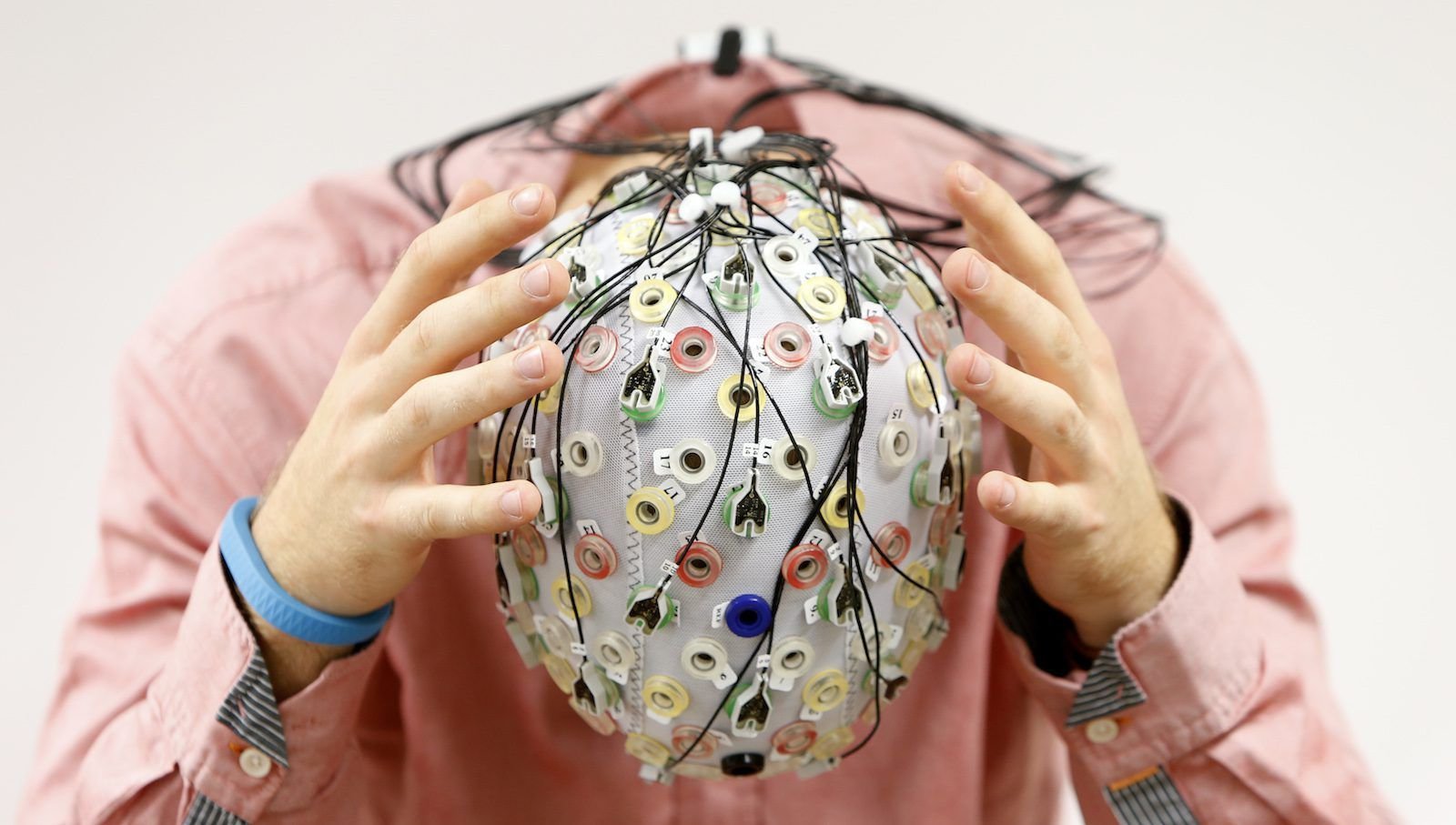
Creative minds are wired differently than the rest of us

creativity, science, brain,
© Reuters/Michaela RehleIt feels different, too.
What makes highly creative people different from the rest of us? In the 1960s, psychologist and creativity researcher Frank X. Barron set about finding out. Barron conducted a series of experiments on some of his generation's most renowned thinkers in an attempt to isolate the unique spark of creative genius.

In a historic study, Barron invited a group of high-profile creators—including writers Truman Capote, William Carlos Williams, and Frank O'Connor, along with leading architects, scientists, entrepreneurs, and mathematicians—to spend several days living in a former frat house on the University of California at Berkeley campus. The participants spent time getting to know one another, being observed by researchers, and completing evaluations of their lives, work, and personalities, including tests that aimed to look for signs of mental illness and indicators of creative thinking.

Barron found that, contrary to conventional thought at the time, intelligence had only a modest role in creative thinking. IQ alone could not explain the creative spark.

The creative genius is "occasionally crazier and yet adamantly saner than the average person." Instead, the study showed that creativity is informed by a whole host of intellectual, emotional, motivational and moral characteristics. The common traits that people across all creative fields seemed to have in common were an openness to one's inner life; a preference for complexity and ambiguity; an unusually high tolerance for disorder and disarray; the ability to extract order from chaos; independence; unconventionality; and a willingness to take risks.

Describing this hodgepodge of traits, Barron wrote that the creative genius was "both more primitive and more cultured, more destructive and more constructive, occasionally crazier and yet adamantly saner, than the average person."

Bulb

Chess can help children manage information, despite ruling by Saudi grand mufti

chess
The future of chess in Saudi Arabia is in doubt after the country's most senior cleric, the grand mufti Sheikh Abdul-Aziz al-Sheikh, said it was forbidden under Islam. Al-Sheikh told a television interviewer that chess is "included under gambling" and a "waste of time and money and a cause for hatred and enmity between players".

The Saudi Chess Association has since appeared to question this view, admitting the grand mufti's charge but noting that "all sports can fall into being religiously illegal once they involve gambling, directing players away from religious practice ... (or) creating hatred between players". While we wait to see how this plays out, there are several points worth making.

First, there is of course no necessary connection between chess and gambling. Chess is valued as a game and an enjoyable way to spend time in many parts of the world. There are competing claims for its roots in India, China and Persia; but the game is usually agreed to be at least 1,300 years old and the modern version can be traced back to 15th-century southern Europe. Chess is recognised by the International Olympic Committee as a sport - not to mention the Saudi Olympic Committee, as the country's chess association also points out. There is a campaign to have it included in the 2020 Olympic Games in Tokyo. A decision is due in August.

Far from being a waste of time, chess can be of great benefit to children's minds. Several academics have looked into this extensively. Chess has been persuasively linked with improving children's concentration, problem-solving, critical, original and creative thinking - and even mathematical abilities. It is also said to help with memory storage and how young brains manage information - and should not only be perceived as a game for gifted children. Children with special educational needs can improve their abilities to learn and interact with other children if they become involved in school chess programmes and chess clubs.

People 2

Intrusive thoughts? Try focusing on your breath

polar bear intrusion
© BD, Shutterstock
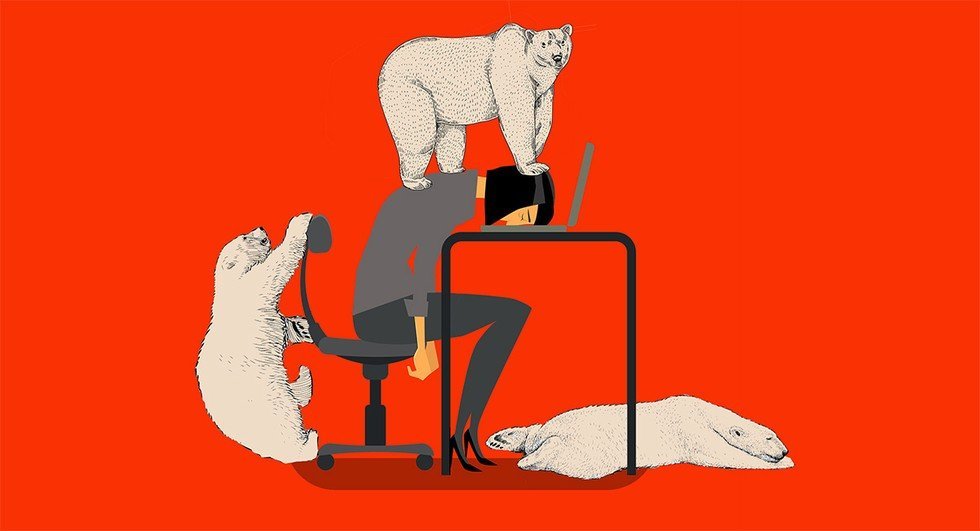
Our minds are not entirely under our control. Fyodor Dostoevsky noted as much in 1863, when he penned his famous white bear observation. "Try to pose for yourself this task: not to think of a polar bear, and you will see that the cursed thing will come to mind every minute."

Over a century later, social psychologist Daniel Wegner scientifically verified Dostoevsky's claim. Volunteers asked to suppress thoughts of a white bear utterly failed at that task. In a second step, Wegner asked the volunteers to actively think of the bear. He found that original thought suppression group was now able to spend significantly more time picturing the animal than subjects who were asked to think about it from the beginning. Thought suppression, Wegner hypothesized, seems to produce "the very obsession or preoccupation that it is directed against."

While bears on the brain may be a somewhat innocuous preoccupation, Wegner noted that the same backfiring effect often plays out when trying not to ruminate on painful or distressing topics. He explained this phenomenon through the lens of "ironic processes": when trying to suppress a thought, our mind repeatedly checks back in on the thought to make sure we are indeed suppressing it, thus making us think of it more.

Comment: Soothe your mind, body and spirit with the breath focused meditation of the Eiriu Eolas program.

Éiriú Eolas - Irish Gaelic for "Growth of Knowledge"

Éiriú Eolas Stress Control, Healing and Rejuvenation Program is the modern revival of an ancient breathing and meditation program which is being acclaimed around the world as THE TOOL that will help you to:
  • Relax from the stresses of everyday life
  • Gently work your way through past emotional and psychological trauma
  • Release repressed emotions and mental blockages
  • Rejuvenate and Detoxify your body and mind
Éiriú Eolas removes the barriers that stand between you and True Peace, Happiness, and ultimately a successful, fulfilling life.


Bulb

Want to quickly learn a new skill? Make slight changes in each repeat practice session

learning, practicing skills, music
When practicing and learning a new skill, making slight changes during repeat practice sessions may help people master the skill faster than practicing the task in precisely the same way, Johns Hopkins researchers report.

In a study of 86 healthy volunteers asked to learn a computer-based motor skill, those who quickly adjusted to a modified practice session the second time around performed better than when repeating their original task, the researchers found. The results support the idea that a process called reconsolidation, in which existing memories are recalled and modified with new knowledge, plays a key role in the strengthening of motor skills, says senior study author Pablo A. Celnik, M.D., professor of physical medicine and rehabilitation at the Johns Hopkins University School of Medicine.

"What we found is if you practice a slightly modified version of a task you want to master, you actually learn more and faster than if you just keep practicing the exact same thing multiple times in a row," says Celnik. The work, described in the Jan. 28 edition of the journal Current Biology, has implications not only for leisure skills, like learning to play a musical instrument or a sport, but also for helping patients with stroke and other neurological conditions regain lost motor function, he says.

Comment: