Science of the SpiritS


Chalkboard

Study finds a high IQ may have a mental cost

women mental health
© Unknown
How high intelligence could have a mental cost for some.

Disorders of mood could be the price some people pay for high intelligence, new research finds. Psychologists have found that higher childhood IQ is linked to features of bipolar disorder in young adulthood.The research adds fuel to the debate over the connection between intelligence, creativity and mental health issues.

For the research 1,881 people were followed from age 8 until they were 22 or 23-years-old. Their IQ was measured along with any characteristics of mood disorders. The results showed that having ten more IQ points at age 8 was linked to being in the top ten per cent for having manic personality traits in their early twenties.

Family

Do we pass on trauma through our DNA?

Genetic Code DNA
© Getty Images/3D4Medical.com
Intergenerational Trauma is the idea that serious trauma can affect the children and grandchildren of those who had the first hand experience, due to living with a person suffering from PTSD and the challenges that can bring. What's new is that, thanks to the emerging field of epigenetics, science is discovering that trauma is being passed down to future generations through more than simply learned behaviors.

One widely reported example is of holocaust survivors passing on the effects of trauma to children and grandchildren. It seems that trauma or its effects are being passed down through our genes, and it has enormous consequences for us as a species.

What are we Passing on our Children?

The single most dangerous idea I learned in school is that the genes you get from you parents are passed on to your children, and nothing you do in your life changes them. Thankfully, however, the findings of the new scientific field of epigenetics is starting to change this dangerous attitude. We do indeed pass on the exact same chromosomes from parent to child, however the quality they are in when we receive them can be improved or diminished according to what happens to us and the choices we make during our lifetime.

The reason why it's dangerous for us to believe otherwise is that it has lead to entire generations of people believing that their choices concerning their own body and the environment affecting it have no detrimental effect on the genes of future generations. In short it has the potential to see us devolve, simply out of ignorance. Fortunately, as awareness of epigenetics spreads, it's helping people understand that how we live our lives can change the quality of our own genes for the better and those we pass on to our offspring.


Comment: Éiriú Eolas is a highly effective breathing and meditation program that can help release old traumas, de-stress from the daily grind, and rejuvenate and detox the body and mind. See also:


Alarm Clock

More time or more money? Which one makes you happier?

hourglass
© Erik Fitpatrick/Flickr
Americans who want more time in their lives are happier than those who want more money, according to new research published in the journal Social Psychological and Personality Science.

Across a range of surveys and experiments involving over 4,400 people, researchers at UCLA and the Wharton School found that nearly two-thirds of respondents said they'd prefer having more money over more time. But the people who opted for more time were happier with their lives.

Researchers have long known that having more money is associated with more happiness and life satisfaction. A famous 2010 study by Daniel Kahneman and Angus Deaton found that having more money was associated with better emotional well-being up to an annual income of about $75,000. Subsequent research by Betsey Stevenson and Justin Wolfers found that, while additional money bought less happiness above $75,000 on a per-dollar basis, the relationship remained the same even into the uppermost reaches of the income spectrum.

Magic Wand

Hatha yoga boosts memory and attention

Yoga
© Jean Henrique Wichinoski
Ancient spiritual practice found to increase attention and working memory capacity.

Practicing hatha yoga three times a week over eight weeks improved the brain function and performance of older adults, according to a new randomised controlled trial.

Sixty-one adults, who were between 55- and 79-years-old, had their reaction times and accuracy at cognitive tests measured before and after an eight-week yoga course (Gothe et al., 2014).

Comment: Focused breathing exercises stimulate the vagus nerve an integral part of the healing benefits yoga:
  • The Neurobiology of Grace Under Pressure: 7 habits that stimulate your vagus nerve and keep you calm, cool, and collected
What exactly is the vagus nerve?

The word vagus means "wandering" in Latin. The words vagabond, vague, and vagrant come from the same root. The vagus nerve is known as the wandering nerve because it has multiple branches that diverge from two thick stems rooted in the cerebellum and brainstem that wander to the lowest viscera of your abdomen touching your heart and most major organs along the way.

The vagus nerve is constantly sending sensory information about the state of the body's organs "upstream" to your brain. In fact, 80-90% of the nerve fibers in the vagus nerve are dedicated to communicating the state of your viscera up to your brain. When people say "trust your gut" they are in many ways saying, "trust your vagus nerve." Visceral feelings and gut-instincts are literally emotional intuitions transferred up to your brain via the vagus nerve.

As with any mind-body feedback loop, messages also travel "downstream" from your conscious mind through the vagus nerve signaling your organs to create an inner-calm so you can "rest-and-digest" during times of safety or to prepare your body for "fight-or-flight" in dangerous situations.

Your vagus nerve is the commander-in-chief when it comes to having grace under pressure. The autonomic nervous system is comprised of two polar opposite systems that create a complementary tug-of-war which allows your body to maintain homeostasis (inner-stability).
Try out Éiriú Eolas: the amazing stress control, healing and rejuvenation program based on breathing techniques that stimulate the vagus nerve.


Christmas Tree

Humans and trees: Intimately connected through the ages

tree of life
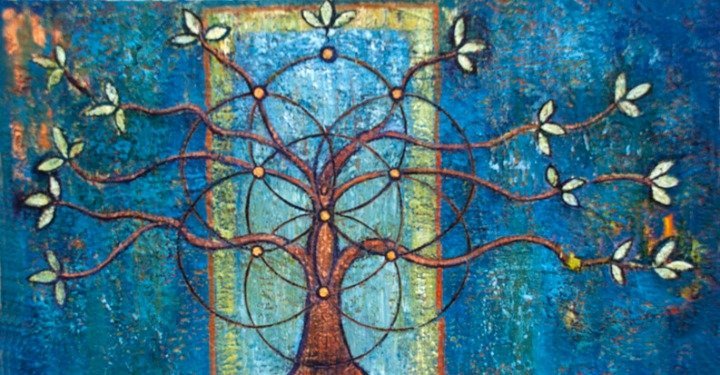
Featured Image: Tree of Life by Judith Shaw
Trees are considered sacred in many cultures. Tree worship, in one form or another, has been practiced almost universally by ancient peoples in every corner of the globe.

Comment: See also: Trees rest their branches at night as if they were sleeping


Heart - Black

Growing up with a narcissist...

narcissist mother
We have all met a true narcissist once or twice in our lives. That one person that can make you feel on top of the world one minute and like a pile of dog droppings on the bottom of their shoe the next. That one person whose approval means everything to you, and you bend over backwards to get it, but never ever receive it. Many of you have met a narcissist in the workplace, maybe in the form of a cruel boss or a cocky, know-it-all coworker. Maybe you experienced a narcissist's cruelty in school or college, or maybe you even had the unfortunate experience of dating or being married to one. You probably will never forget this person and the damage they did to you mentally and physically and you swore that you would never let a person like that into your life again.

Comment: For a deeper understanding of this topic read: The Narcissistic Family: Diagnosis and Treatment by Stephanie Donaldson-Pressman and Robert Pressman.
In this compelling book, the authors present an innovative therapeutic model for understanding and treating adults from emotionally abusive or neglectful families - families the authors call narcissistic. Narcissistic families have a parental system that is, for whatever reason (job stress, alcoholism, drug abuse, mental illness, physical disability, lack of parenting skills, self-centered immaturity), primarily involved in getting its own needs met. The children in such narcissistic family systems try to earn love, attention and approval by satisfying their parents' needs, thus never developing the ability to recognize their own needs or create strategies for getting them met. By outlining the theoretical framework of their model and using dozens of illustrative clinical examples, the authors clearly illuminate specific practice guidelines for treating these individuals. Stephanie Donaldson-Pressman is a therapist, consultant, and trainer. She is known for her work with dysfunctional families, particularly with survivors of incest. Robert M. Pressman is the editor-in-chief and president of the Joint Commission for the Development of the Treatment and Statistical Manual for Behavioral and Mental Disorders.


2 + 2 = 4

New study shows reading stories of struggles improves learning

Story telling
© lifehacker.com
According to a new study, reading about scientists' struggles can help students who aren't doing so well in science
"Growing Up, Einstein saw his father struggle to provide for the family. Looking for work, Einstein's father moved the family several times for different jobs. This meant that Einstein had to change schools more than once during his childhood. Moving between schools was very difficult. Einstein not only felt out of place, but it was also challenging for him to catch up to what his new class was working on."
This story can't be found in your regular science textbook, but maybe it should be: According to a new study published in the Journal of Educational Psychology, reading stories about the struggles of famous scientists is more beneficial for students' grades than reading about their achievements. The way we currently teach science—by focusing on great feats of knowledge by larger-than-life geniuses—may not be the best way to encourage students to pursue scientific careers.

Researchers at Columbia University and the University of Washington recruited just over 400 freshmen and sophomores at a low-income, mostly non-white high school. The students read stories about Albert Einstein, Marie Curie, or Michael Faraday, just 800 words centering on one of three themes:
  • "The Story of a Successful Scientist." Similar to what you'd find in a regular science textbook, this story talked about the great discoveries the scientist made, like winning Nobel Prizes, publishing papers, or pioneering new fields of study.
  • "Trying Over and Over Again Even When You Fail." This story focused on the scientist's intellectual struggles, as they tried different experiments—and failed.
  • "Overcoming the Challenges in Your Life." This tale focused on the scientist's personal struggles, such as dealing with poverty and discrimination.
After six weeks, the researchers checked in with teachers to see how the students were doing in science class.

As it turned out, the students who had read about scientists' struggles—whether intellectual or personal—now had higher grades than students who had read about achievements. These differences showed up among students who weren't getting good grades to begin with, suggesting that this exercise may benefit those who need help the most.

Bulb

A philosopher's argument for not loving yourself just as you are

Confucius
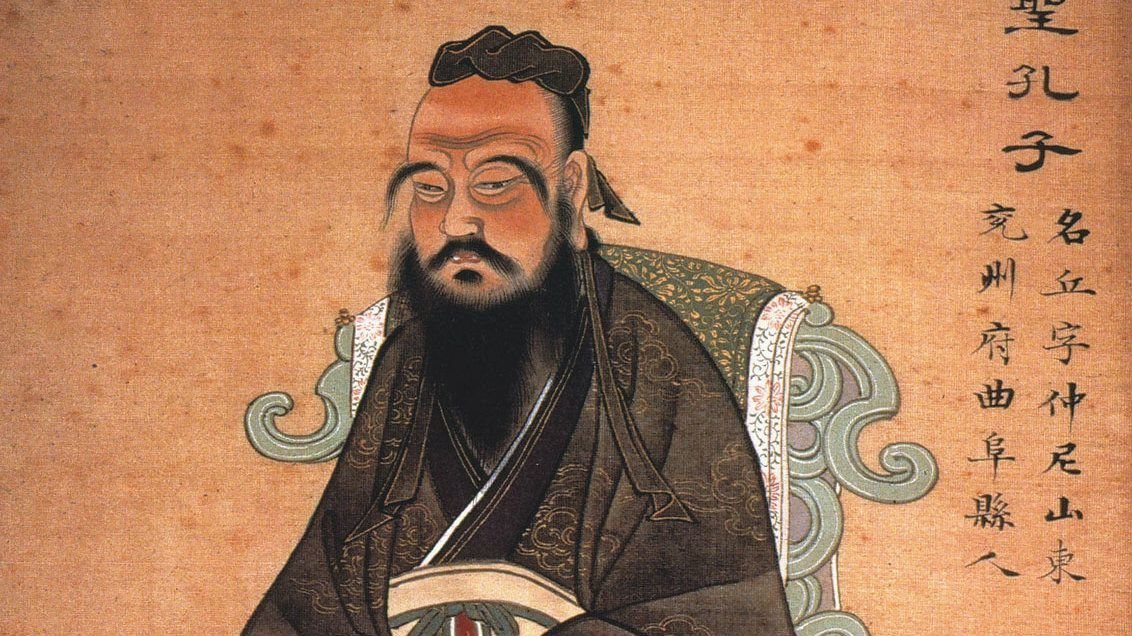
© WikimediaConfucius believed we have a strong tendency to get stuck in patterns.
The importance of loving yourself is a common catchphrase among feel-good gurus and the subject of countless self-help books.

But Harvard University's Michael Puett argues that loving yourself—and all your flaws—can actually be quite harmful. Puett, who earlier this year published a book on what Chinese philosophy can teach us about the good life, suggests that ancient Chinese philosophers would strongly disapprove of today's penchant for self-affirmation.

Comment: Read more about Daniel Kahneman's work:


People 2

The unconscious process that helps happy couples stay faithful

Couples
People in relationships automatically see tempting others as less attractive, new research finds.

The more satisfied people are with their relationship, the more they downgrade attractive others.

The unconscious process may help couples stay faithful to each other.

Comment: See also: The elite's social engineering endgame: A battle between the sexes where humanity loses


Fire

The science of smudging: A powerful antiseptic dating back to prehistoric times

burning sage
The practice of smudging dates back to prehistoric times, and is still very much in use today worldwide for cleansing everything from dwellings to human spirits. However recent research has shed light on the popularity of this activity, revealing that burning certain plant matter actually clears harmful bacteria.

All Western use of burning herbs and plants for spiritual purposes aside, the activity rests firmly in the sensibilities of ancient cultures in that, historically, smudging was believed to put forth the spirits of various 'allies' to provide ease and balance to an individual or group.

In this way, the practice was used to clear spiritual and emotional negativity that has built up in a body or a space.

Of course, there are skeptics who belittle the practice as unscientific and akin to magic. The practice has a negative association to a form of cultural imperialism, where traditions of dwindling indigenous populations are co-opted by the descendants of those who more-or-less conquered them.