Science of the SpiritS


Brain

If IQ doesn't truly reflect intelligence, what does?

Brain remapping
© Mads Abildgaard/iStockphoto.com
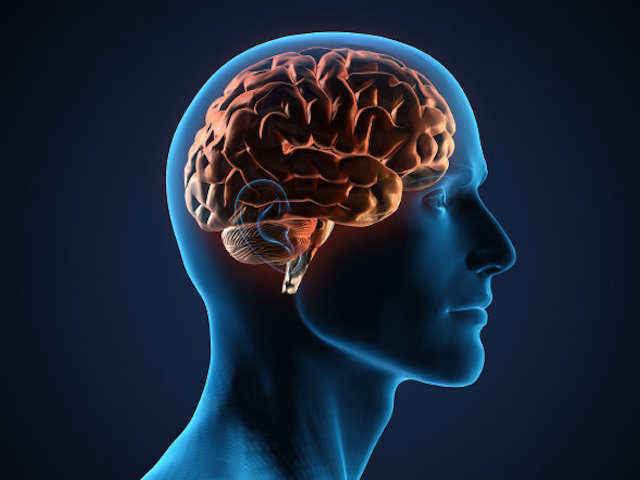
Like me, you've surely heard it at some time in your life how somebody has been regarded as intelligent with comments like: "He she must have a high IQ..." However, to describe intelligence as IQ (intelligence quotient) is like telling a troglodyte i.e. someone who's never seen a house before that a house is a kitchen! Granted, a kitchen is of course included in the makeup of a house, but as IQ is to intelligence it is only part of the whole picture.

Since IQ is an inadequate way of describing intelligence it's no wonder that the IQ test has been criticised. It is biased towards middle/upper class westernised left-brained individuals while greatly lacking consideration to creativity, assessment of well-rounded character and practical everyday handling of things. In light of this it may not come as a surprise that IQ doesn't always reflect how successful someone will be in life.

The reason for IQ and its test (American school SAT no different) getting so many acceptances has much to do with the global ruling elite controlling the planet and their education agenda for the masses. As I have explained in message #5 "The Education System Deception" the ruling elite only want you to fit into their corporate based compulsory standardised education system which serves to indoctrinate and control. This is the reason for this purposely limited intelligence paradigm, IQ, and it has served them well.


Bug

The numerous tactics that narcissists, sociopaths and psychopaths use to manipulate and silence you

wounded
Toxic people such as malignant narcissists, psychopaths and those with antisocial traits engage in maladaptive behaviors in relationships that ultimately exploit, demean and hurt their intimate partners, family members and friends. They use a plethora of diversionary tactics that distort the reality of their victims and deflect responsibility. Although those who are not narcissistic can employ these tactics as well, abusive narcissists use these to an excessive extent in an effort to escape accountability for their actions.

Here are the 20 diversionary tactics toxic people use to silence and degrade you.

1. Gaslighting.

Gaslighting is a manipulative tactic that can be described in different variations of three words: "That didn't happen," "You imagined it," and "Are you crazy?" Gaslighting is perhaps one of the most insidious manipulative tactics out there because it works to distort and erode your sense of reality; it eats away at your ability to trust yourself and inevitably disables you from feeling justified in calling out abuse and mistreatment.

Eye 1

The scientific basis for hypnosis is starting to be uncovered

hypnosis
© Everett Collection/ShutterstockOn the count of three, you will forget this ever happened.
Some argue that hypnosis is just a trick. Others, however, see it as bordering on the paranormal - mysteriously transforming people into mindless robots. Now our recent review of a number of research studies on the topic reveals it is actually neither. Hypnosis may just be an aspect of normal human behaviour.

Hypnosis refers to a set of procedures involving an induction - which could be fixating on an object, relaxing or actively imagining something - followed by one or more suggestions, such as "You will be completely unable to feel your left arm". The purpose of the induction is to induce a mental state in which participants are focused on instructions from the experimenter or therapist, and are not distracted by everyday concerns. One reason why hypnosis is of interest to scientists is that participants often report that their responses feel automatic or outside their control.

Most inductions produce equivalent effects. But inductions aren't actually that important. Surprisingly, the success of hypnosis doesn't rely on special abilities of the hypnotist either - although building rapport with them will certainly be valuable in a therapeutic context.

Comment: Scientists identify brain regions affected by hypnosis


Magic Wand

The power of your hands: Ancient Japanese healing technique for rapid stress relief

japanese stress relief
Stress is something all of us face in our daily lives. What if we told you there is an ancient Japanese technique for reducing your stress levels within 2-5 minutes? This is what we're about to share with you. And it gets better - you only need both of your hands to carry it out.

Ancient Healing Systems Have The Answer

Many ancient healing systems have shared beliefs about the energy of the body being important for curing illness. Hindu, Asian, Greek, Native American, Tibetan, Zen and Mediterranean healing wisdom all share the belief in a life energy force that we need to balance and harmonize for well-being.

This ancient Japanese technique employs a similar technique using acupressure points. This method that we will describe today is easier, shorter, and can be just as effective in only 2-5 minutes at a time.

Cassiopaea

Reunited in time: 'My son says he was Lou Gehrig in a past life'

past life experience
© Cathy ByrdChristian Byrd, Lou Gehrig in a past-life
As a Christian, I didn't believe in reincarnation. But I couldn't ignore my child.

Kids say some peculiar things and, as parents, we usually don't give it much thought. I was the same in this regard until my 2-year-old son's bizarre statements on a trip to Boston's Fenway Park clued me in on the bigger picture. This particular incident stands out in my mind because of my son's visceral, emotional reaction—it was beyond the typical toddler tantrum. On the way to our seats to watch the Red Sox take on the Yankees, Christian stopped dead in his tracks in front of a photo of Babe Ruth, yelling, "I do not like him. He was mean to me!" He was so upset we had to leave the stadium.

Back home in Los Angeles, Christian began saying things like, "when I was tall like Daddy, I was a baseball player." He told me that he used to stay in hotels every night, to which I jokingly replied, "Did you fly on airplanes?" "No, mostly trains," he said. Despite the fact that neither my husband or myself had any interest in America's favorite pastime, Christian had been obsessed with baseball since the time he could walk. He wore a baseball jersey and cleats everywhere he went and carried a little wooden bat with him at all times. He was constantly asking us to pitch balls to him so he could practice hitting, to the point where it became exhausting. In between hitting, he would rub his bat with one of our dog's chew bones.

Comment: And that may be why these 'timelocks' were placed 'in' us - to separate humans and keep them controlled. Imagine what might happen if people realized 'the other' could be them next time around; peace might break out, people might start loving one another, and you-know-who's food source would take a serious hit.


Butterfly

How to solve your nature deficit when you live in the city

parks, nature
Today's guest post is offered up by Katy Bowman, biomechanist and author of the bestselling Move Your DNA and her recent book, Movement Matters, which examines our sedentary culture, our personal relationship to movement, and some of the global effects of outsourcing movement. I'm happy to welcome a good friend back to Mark's Daily Apple to share on this topic. Just in time for Earth Day this weekend...

I recently held a couple of events in New York City. A question came up a few times: How can someone who lives and operates their daily life in a big city get the nature they both need and want when they're unable or ready to change where they live? The answer can help many people in our culture achieve a deeper relationship with nature no matter where they live.

Comment: Spending time in nature calms and re-grounds us providing a sense of renewal


Brain

Want to keep your mental edge in older age? Challenge your brain early in life

continuing education, life-long learning
Continuing education helps people stay mentally healthy in later life.
Stimulating the brain by taking on leadership roles at work or staying on in education help people stay mentally healthy in later life, according to new research.

The large-scale investigation published in the journal PLOS Medicine and led by the University of Exeter, used data from more than 2,000 mentally fit people over the age of 65, examined the theory that experiences in early or mid life which challenge the brain make people more resilient to changes resulting from age or illness -- they have higher "cognitive reserve."

The analysis, funded by the Economic and Social Research Council (ESRC) found that people with higher levels of reserve are more likely to stay mentally fit for longer, making the brain more resilient to illnesses such as dementia.

Comment: Aging is a state of mind: Ways to defy the hands of time


Bulb

Epiphany learning: Researchers discover a way to track 'aha' moments

reaching light
Sudden insight, or epiphany learning, happens when you have an "aha moment" that unexpectedly solves a tricky problem or lets you understand something that had previously perplexed you. But until now, researchers had not had a good way to study how people actually experience this phenomenon.

Now, scientists at The Ohio State University have used eye-tracking and pupil dilation technology to see what happens as people figured out how to win a strategy game on a computer. Ian Krajbich, co-author of the study and assistant professor of psychology and economics at Ohio State, said:
"We could see our study participants figuring out the solution through their eye movements as they considered their options. We could predict they were about to have an epiphany before they even knew it was coming."
EPIPHANY LEARNING

Most decision-making research has focused on reinforcement learning, where people gradually adjust their behavior in response to what they learn, said James Wei Chen, a doctoral student in economics at Ohio State who co-conducted the study.

Butterfly

Intentional mind-wandering is beneficial to our brains and our futures

mind-wandering, daydreaming
Some types of mind wandering may be highly beneficial to our brains, and our futures.

Intentional daydreaming is linked to a thicker cortex (a good thing) in certain key areas of the brain, new research finds.

Directing the mind to wander is a cognitive skill that can be beneficial in some contexts.

For example, it can allow us to mentally rehearse upcoming events, or solve problems we might encounter.

In other words, it allows the brain to work out possible futures for us.

So, mind wandering is not always a failure of self-control that is inevitably linked to mistakes. The key is whether the mind wandering is intentional or not.

Comment: Read more about the ways that intentional daydreaming can enhance creativity and problem-solving:


Brain

Your brain is not a computer

brain cells
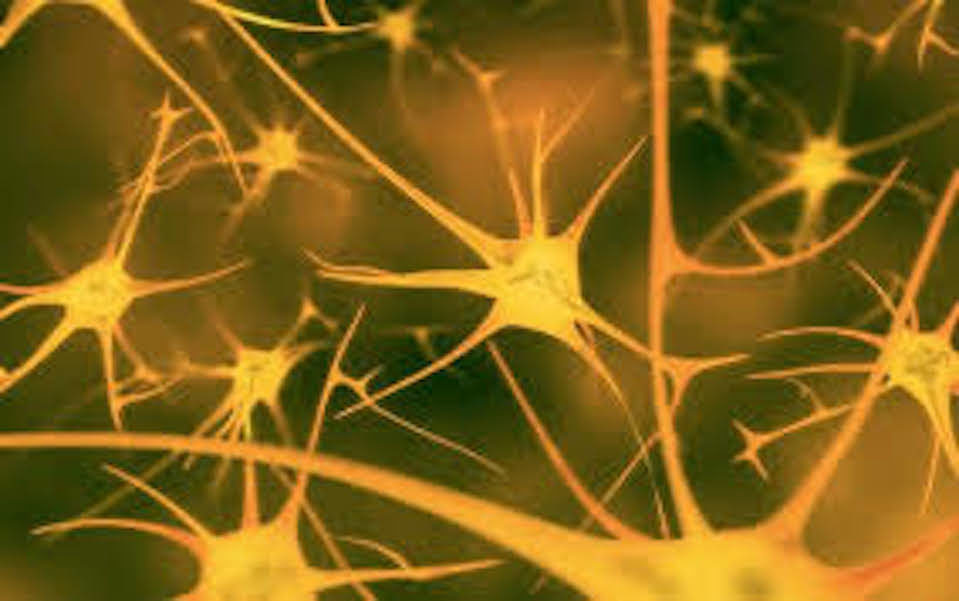
No matter how hard they try, brain scientists and cognitive psychologists will never find a copy of Beethoven's 5th Symphony in the brain - or copies of words, pictures, grammatical rules or any other kinds of environmental stimuli. The human brain isn't really empty, of course. But it does not contain most of the things people think it does - not even simple things such as 'memories'.

Our shoddy thinking about the brain has deep historical roots, but the invention of computers in the 1940s got us especially confused. For more than half a century now, psychologists, linguists, neuroscientists and other experts on human behaviour have been asserting that the human brain works like a computer.

To see how vacuous this idea is, consider the brains of babies. Thanks to evolution, human neonates, like the newborns of all other mammalian species, enter the world prepared to interact with it effectively. A baby's vision is blurry, but it pays special attention to faces, and is quickly able to identify its mother's. It prefers the sound of voices to non-speech sounds, and can distinguish one basic speech sound from another. We are, without doubt, built to make social connections.