Science of the SpiritS


2 + 2 = 4

Non-focused attention: Childrens' perceived limitations are actually a strength

schoolkids
Although adults can beat children at most cognitive tasks, new research shows that children's limitations can sometimes be their strength.

Deschoolers maintain that a child's learning should be curiosity-driven rather than dictated by teachers and textbooks, and that forcing kids to adhere to curricula quashes their natural inclination to explore and ask questions because children think differently.

In two studies, researchers found that adults were very good at remembering information they were told to focus on, and ignoring the rest. In contrast, 4- to 5-year-olds tended to pay attention to all the information that was presented to them -- even when they were told to focus on one particular item. That helped children to notice things that adults didn't catch because of the grownups' selective attention.

"We often think of children as deficient in many skills when compared to adults. But sometimes what seems like a deficiency can actually be an advantage," said Vladimir Sloutsky, co-author of the study and professor of psychology at The Ohio State University.

"That's what we found in our study. Children are extremely curious and they tend to explore everything, which means their attention is spread out, even when they're asked to focus. That can sometimes be helpful."

The results have important implications for understanding how education environments affect children's learning, he said.


Comment: Paying attention: What adults can learn from young children


Eye 1

How the eyes communicate emotion

sad woman
Why did we evolve eyes so that are expressive? It started as a universal reaction to environmental stimuli, new research suggests, and evolved to communicate emotion.

For example, people in the study consistently associated narrowed eyes — which enhance our visual discrimination by blocking light and sharpening focus — with emotions related to discrimination, such as disgust and suspicion. In contrast, people linked open eyes — which expand our field of vision — with emotions related to sensitivity, like fear and awe.

Adam Anderson, professor of human development at Cornell University's College of Human Ecology, said:
"When looking at the face, the eyes dominate emotional communication. The eyes are 'windows to the soul' likely because they are first conduits for sight. Emotional expressive changes around the eye influence how we see, and in turn, this communicates to others how we think and feel."

Life Preserver

Addressing loneliness in children can prevent a lifetime of loneliness in adults

loneliness
© shutterstock.comLoneliness in adults is often a result of loneliness in childhood.
The Republicans' controversial effort to repeal the perhaps optimistically named Affordable Care Act because of rising premiums may be fatally stalled. But there are other ways to rein in health care costs that have been almost entirely overlooked. Making a serious effort to reduce loneliness could make a real difference.

Lonely people put heavy demands on our health care system. Loneliness impairs immune response and makes people more likely to develop serious medical problems like heart disease and stroke.

According to one meta-analysis, loneliness increases the risk of early death as much as smoking or being 100 pounds overweight. The risk is highest in people younger than 65. But lonely people don't go to doctors just for medical care. They're also dying for social contact.

Although loneliness is now recognized as a major public health problem, there hasn't been much discussion about how to address it.

As a clinician who treats mental health issues caused by loneliness, I've come to believe that we can't develop effective interventions for loneliness without first understanding what causes it.

Comment: It's important to remember that these kinds of attachment disorders can be caused by any of the main caregivers in a child's life, not just the mother, although in most cases she plays the most significant role in a child's development. But it's also a symptom of a pathological culture and society that has lost the values of community, family and trust in exchange for materialism and narcissism. Many people are growing up nowadays with little awareness of what it means to meet the emotional needs of themselves, let alone one another or their children.


Brain

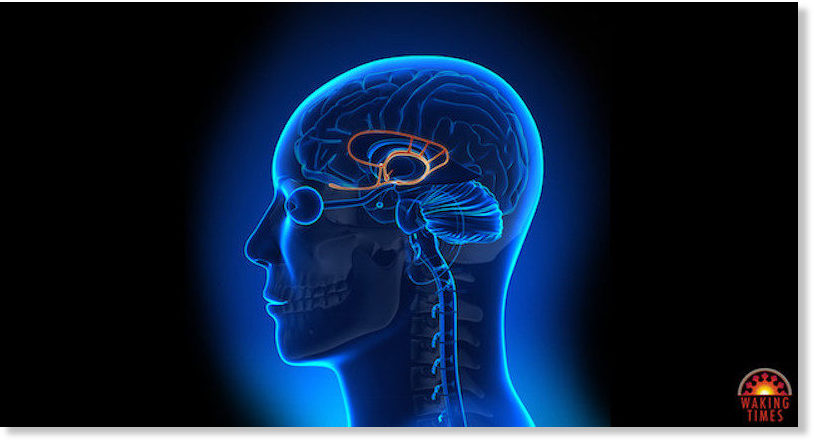
How to avoid the Amygdala hijack

Amygdala
What do these three scenarios have in common?
  1. Road rage when someone cuts you off
  2. Running away from a hungry lion
  3. Reacting to criticism about your most deeply held beliefs
Surely road rage can't have anything to do with being chased by a wild animal that weighs 2-4 times more than you. And how could either of the first two scenarios have anything to do with being criticized? Let's think about it.

Our top priority is survival. In order to ensure survival, we rely on portions of our brain, like the amygdala, to identify threats and respond to them quickly. Our response to a threat is estimated to take only 12 thousandths of a second. The response is so fast that your heart starts racing, your blood pressure rises, and you start reacting emotionally before you even can consciously realize what is happening. You may even do things that leave you asking yourself, "What was I thinking?"

People

Positive relationships: The common denominator of happiness

Happiness
How people describe both positive and negative events in their lives influences their perception of their own life. When scientists began tracking the health of 268 Harvard sophomores in 1938 during the Great Depression, they hoped the longitudinal study would reveal clues to leading healthy and happy lives. They got more than they wanted.

After following the surviving Crimson men for nearly 80 years as part of the Harvard Study of Adult Development, one of the world's longest studies of adult life, researchers have collected a cornucopia of data on their physical and mental health.

Of the original Harvard cohort recruited as part of the Grant Study, only 19 are still alive, all in their mid-90s. Among the original recruits were eventual President John F. Kennedy and longtime Washington Post editor Ben Bradlee. (Women weren't in the original study because the College was still all male.)

In addition, scientists eventually expanded their research to include the men's offspring, who now number 1,300 and are in their 50s and 60s, to find out how early-life experiences affect health and aging over time. Some participants went on to become successful businessmen, doctors, lawyers, while others ended up as schizophrenics or alcoholics, but not on inevitable tracks.

Comment: See also:


Yoda

Paying attention: What adults can learn from young children

children pay attention to everything
Thinking like a five-year-old can help you learn more in a new environment.
Young children have one cognitive talent that most adults have forgotten.

That is the ability to pay attention to everything.

As adults we learn to focus our attention and block out distractions.

But, sometimes being distracted means noticing and learning more.

Comment: Missing the gorilla: Why we don't see what's right in front of our eyes


Health

Depression now the number one cause of disability in the world

depression
Something is dreadfully wrong in the world when depression has become such a major cause of dis-ease. Even the most successful members of our society are plagued with this illness, and it has become so prevalent that it is now the number one cause of disease and disability in the world.
"According to the World Health Organization (WHO), depression is now the leading cause of ill health and disability worldwide,1,2 affecting an estimated 322 million people worldwide, including more than 16 million Americans. Globally, rates of depression increased by 18 percent between 2005 and 2015.3

According to the U.S. National Institute of Mental Health, 11 percent of Americans over the age of 12 are on antidepressant drugs. Among women in their 40 and 50s, 1 in 4 is on antidepressants.4

In addition to the human suffering, the financial impact of depression is also severe. WHO estimates the global economic loss by households, employers and governments is at least $1 trillion annually.

Depression is also strongly linked to an increased risk for substance abuse, diseases such as diabetes and heart disease, and suicide." [Source]
These numbers only reflect cases of reported depression, suggesting that in actuality, the crisis may be much worse.

Boat

Emotional sea level - the balancing point

emotional sea level
More than any other group in history, modern Americans are told to be cheerful, no matter the circumstance. In her book, Bright Sided - How the Relentless Promotion of Positive Thinking has Undermined America, Barbara Ehrenreich explores this culture of "toxic optimism" in various ways, but the most persuasive account she provides is a personal one.

Ehrenreich wrote that when she was diagnosed with breast cancer in 2000, she found the wildly optimistic books, support groups and popular media surrounding the condition nearly as daunting as the disease itself. Instead of allowing her to have perfectly normal responses to a potentially life-threatening diagnosis - fear, worry, anger - she was told over and over that cancer was her chance to grow spiritually, to embrace life, to find God. The result, from her perspective, was simply exhaustion - denied the opportunity to react instinctively, recover her emotional balance, and then move on to therapy, she felt profoundly stressed. She surmised that others in her condition felt this way too, at least privately.

Comment: Psychology study cautions: Think twice before overdoing the positive thinking


Hearts

What is the best strategy for attaining empathy?

empathy study
According to a new study, we overestimate how well we can read emotions in other people's faces.

People often assume that a person's face will betray their true emotions—even when that person is trying to hide them. As we go about our days, we watch other people's facial expressions and mannerisms, looking for signs of stress, sadness, and happiness in our coworkers and our loved ones.

But if we want to understand the mind of another person, is that the best way?

Not always, according to a recent study. It turns out people tend to overestimate their ability to read other people's emotions from their facial expressions—which means that we may be missing out on opportunities for understanding and connection.

The study, published in the journal Psychological Science, compared observing facial expressions with a second perspective-taking strategy: putting ourselves in a similar situation, or "taking a walk in someone else's shoes." It's the first study to examine how effective people think these different methods are with how effective they actually are.

Comment: Some more insights into understanding how empathy works:


Family

Racist babies? Infants prefer to learn from adults of their own skin color

babies
© Gettyimages.comWhen you quit in frustration, little eyes are watching and learning
Babies who aren't old enough to walk or talk still manage to exhibit racial bias, according to a new study. The research found that infants prefer to learn from adults who share their skin color.

As part of the study, researchers from the Ontario Institute for Studies in Education (OISE) and the University of Toronto - along with collaborators from the US, UK, France and China - gave infants a series of videos to watch.

In each video, a female adult looked at one of the four corners of the screen. In some videos, an animal image appeared in the direction she had looked. In other films, an animal image appeared at a non-looked at location.

The results showed that the infants followed the gaze of members of their own race more than they followed the gaze of members of other races.