© Wiki Commons
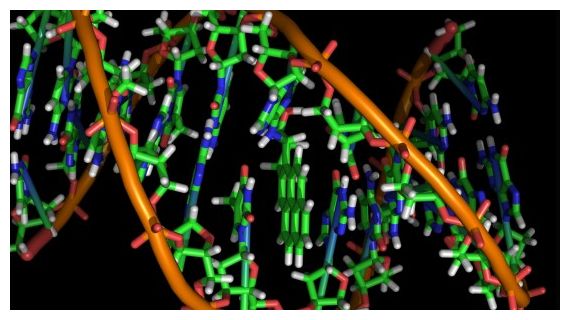
A study dating the age of more than 1 million single-letter variations in the human DNA code reveals that most of these mutations are of recent origin, evolutionarily speaking. These kinds of mutations change one nucleotide - an A, C, T or G - in the DNA sequence. Over 86 percent of the harmful protein-coding mutations of this type arose in humans just during the past 5,000 to 10,000 years.
Some of the remaining mutations of this nature may have no effect on people, and a few might be beneficial, according to the project researchers. While each specific mutation is rare, the findings suggest that the human population acquired an abundance of these single-nucleotide genetic variants in a relatively short time.
"The spectrum of human diversity that exists today is vastly different than what it was only 200 to 400 generations ago," said Dr. Joshua Akey, associate professor of genome sciences at the University of Washington in Seattle. He is one of several leaders of a multi-institutional effort among evolutionary geneticists to date the first appearance of a multitude of single nucleotide variants in the human population.