Secret HistoryS


Archaeology

Medieval priest discovered in elaborate grave 700 years after his death

medieval priest grave
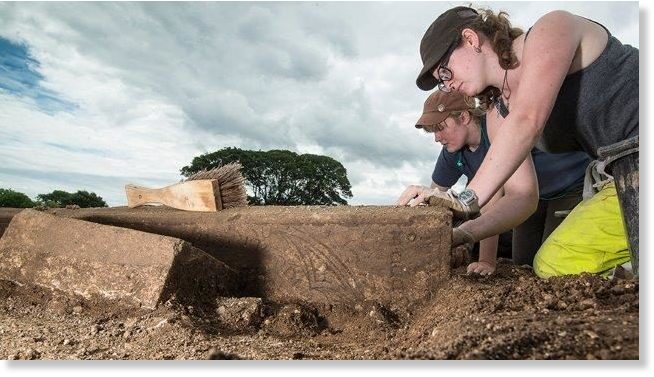
Archaeologists from the University of Sheffield uncovered the rare find at Thornton Abbey in Lincolnshire, which was founded as a monastery in 1139 and went onto become one of the richest religious houses in England.

The priest's gravestone was discovered close to the altar of a former hospital chapel. Unusually for the period, it displayed an inscription of the deceased's name, Richard de W'Peton - abbreviated from 'Wispeton', a medieval incarnation of modern Wispington in Lincolnshire - and his date of death, 17 April 1317.

The slab also contained an extract from the Bible, specifically Philippians 2:10, which reads; "that at the name of Jesus every knee should bow, of those in heaven, and of those on earth, and of those under the earth."

Sherlock

World War One Battlefield tunnels discovered under Salisbury Plain

WWi tunnels England
Archaeologists working in Wiltshire have identified a unique network of First World War tunnels under Salisbury Plain.
Work is underway across the Salisbury Plain Training Area to prepare for the Service personnel returning from Germany in 2019 under the Army Basing Programme (ABP).This work has uncovered a unique network of First World War tunnels on MOD land in Larkhill, which is earmarked for over 400 new Army family homes.

The development is part of wider plans to accommodate 4,000 additional Service personnel and their families who will be based on and around the Salisbury Plain Training Area (SPTA) by 2019 under the ABP. In addition, the MOD is investing over £1.1bn in the area boosting the local economy and providing around 2,500 bed spaces for single soldiers, just over 1,300 new homes for Service families and the construction, conversion or refurbishment of nearly 250 other buildings.

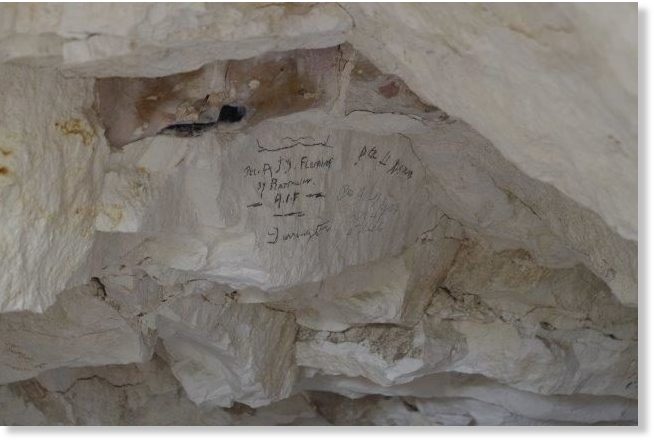
The tunnels are part of a First World War battlefield used to train men to fight in and under the trenches of France and Belgium. The soldiers have left the mine galleries deep in the chalk but they have also left over a hundred inscriptions written by soldiers training here between 1915 and 1918. Archaeologists have been working alongside specialist engineers to investigate the underground battlefield.

Ice Cube

Frozen in time: Sailors looking for Northwest Passage in 1845 may be ID'ed by DNA

HMS Erebus shipwreck
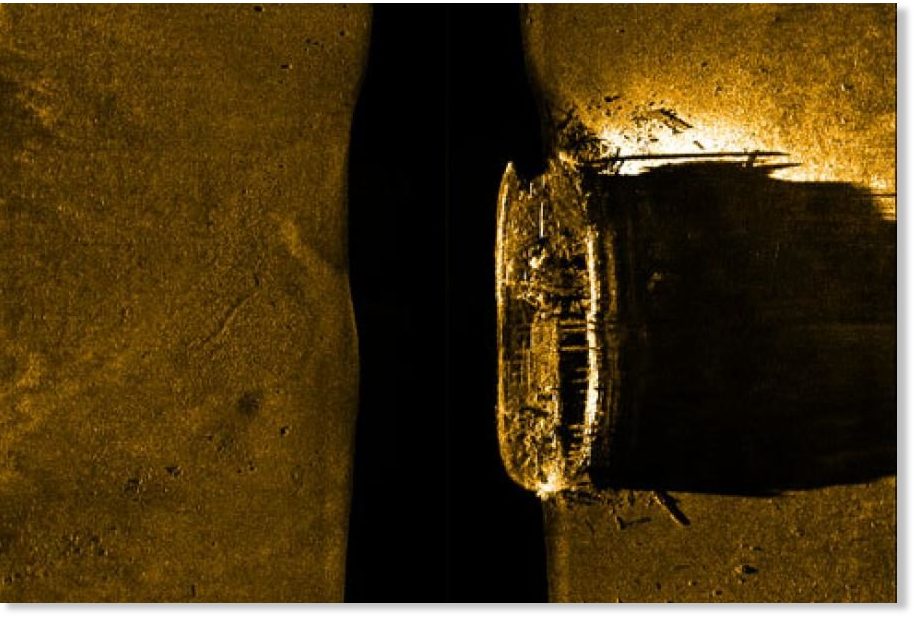
© Parks CanadaA sonar image showing the ill-fated HMS Erebus shipwreck.
Scientists have extracted DNA from the skeletal remains of several 19th-century sailors who died during the ill-fated Franklin Expedition, whose goal was to navigate the fabled Northwest Passage.

With a new genetic database of 24 expedition members, researchers hope they'll be able to identify some of the bodies scattered in the Canadian Arctic, 170 years after one of the worst disasters in the history of polar exploration.

The results were published April 20 in the Journal of Archaeological Science: Reports.

Palette

Scientists: Rare mother-of-pearl clouds may have inspired Munch's 'The Scream'

Edvard Munch's
© www.edvardmunch.orgEdvard Munch's "The Scream"
The psychedelic clouds in Edvard Munch's iconic "The Scream" have alternatively been interpreted as a metaphor for mental anguish or a literal depiction of volcanic fallout.

On Monday, scientists hypothesised that the Norwegian painter's inspiration may in fact have been rare clouds which form in cold places at high altitude.

The first version of "The Scream" was released in 1893. It depicts a dark humanlike figure clutching its head in apparent horror against the backdrop of a swirling, red-orange sky.

In 2004, American astronomers theorised that Munch had painted a sky brightly coloured by particle pollution from the 1883 Krakatoa volcanic eruption.

But the new paper, presented at a meeting of the European Geosciences Union in Vienna, said he more likely depicted a rare sighting of "mother-of-pearl" clouds over Oslo.

A volcanic outburst does not account for the "waviness" of Munch's clouds, Helene Muri, a researcher at the University of Oslo, told journalists in Vienna. Furthermore, volcano-tinted sunsets tend to be common for several years after an outburst, "whereas Munch's scary vision was seemingly a one-time experience, the way he described it in his journal," she said.


In his diary, Munch wrote of the sky turning suddenly blood red.

Document

Rare parchment of US Declaration discovered in England

rare parchment of the US Declaration of Independence
© West Sussex Record Office
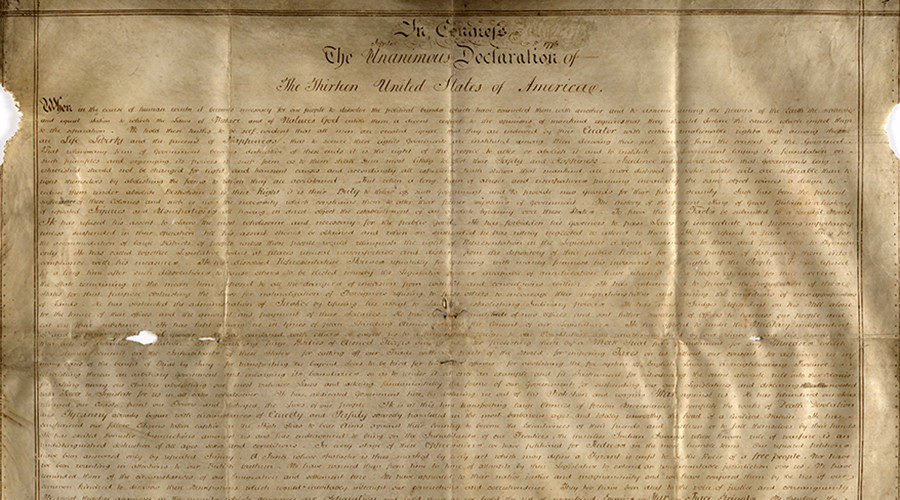
US historians have found a rare parchment of the US Declaration of Independence hidden away in a small records office in Sussex, England.

Harvard researchers discovered the 'Sussex Declaration', believed to be only the second such parchment known in existence, in the Chichester archives of the small town of West Sussex, England. The other parchment is housed in the National Archives in Washington DC.

Researchers Emily Sneff and Danielle Allen announced their discovery at a Yale conference on Friday. They published their initial research online.

The newly discovered parchment of America's formative text is believed to date back to the 1780s, which they say sheds light on the tumultuous years the US experienced after the Revolutionary War.

Fireball 3

Stone carvings at Gobekli Tepe in Turkey confirm how comet struck Earth in 10,950BC

Vulture stone
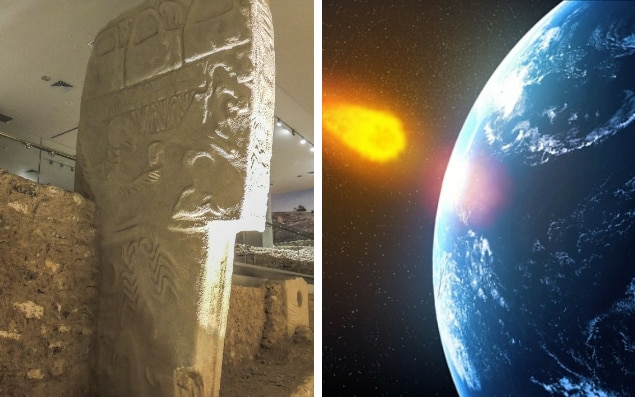
© Alistair CoombsThe Vulture Stone from Gobekli Tepe (left) which recorded a devastating comet strike (right).
Ancient stone carvings confirm that a comet struck the Earth around 11,000BC, a devastating event which wiped out woolly mammoths and sparked the rise of civilisations.

Experts at the University of Edinburgh analysed mysterious symbols carved onto stone pillars at Gobekli Tepe in southern Turkey, to find out if they could be linked to constellations.

The markings suggest that a swarm of comet fragments hit Earth at the exact same time that a mini-ice age struck, changing the entire course of human history.

Scientists have speculated for decades that a comet could be behind the sudden fall in temperature during a period known as the Younger Dryas. But recently the theory appeared to have been debunked by new dating of meteor craters in North America where the comet is thought to have struck.

However, when engineers studied animal carvings made on a pillar - known as the vulture stone - at Gobekli Tepe they discovered that the creatures were actually astronomical symbols which represented constellations and the comet.

Comment: See also: Forget About Global Warming: We're One Step From Extinction!


Magnify

Scientists confirm Flores Man 'hobbits' found in Indonesia not direct relatives of modern humans

Ancient hobbits
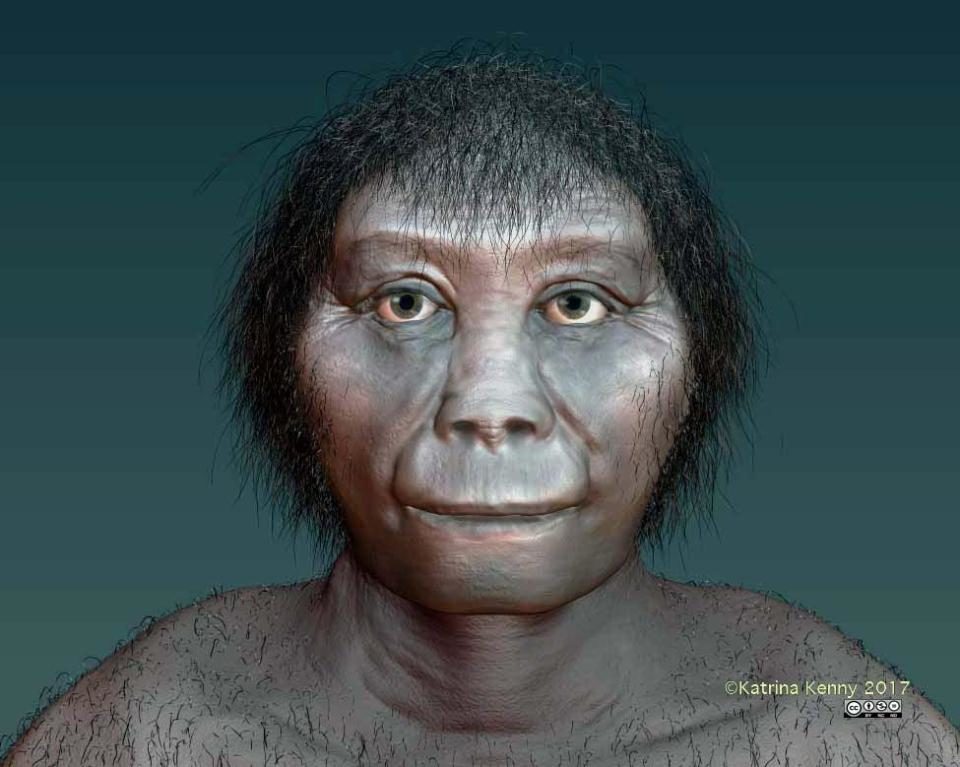
The most comprehensive study on the bones of Homo floresiensis, a species of tiny human discovered on the Indonesian island of Flores in 2003, has found that they most likely evolved from an ancestor in Africa and not from Homo erectus as has been widely believed.

The study by The Australian National University (ANU) found Homo floresiensis, dubbed "the hobbits" due to their small stature, were most likely a sister species of Homo habilis -- one of the earliest known species of human found in Africa 1.75 million years ago.

Data from the study concluded there was no evidence for the popular theory that Homo floresiensis evolved from the much larger Homo erectus, the only other early hominid known to have lived in the region with fossils discovered on the Indonesian mainland of Java.

Study leader Dr Debbie Argue of the ANU School of Archaeology & Anthropology, said the results should help put to rest a debate that has been hotly contested ever since Homo floresiensis was discovered.

"The analyses show that on the family tree, Homo floresiensis was likely a sister species of Homo habilis. It means these two shared a common ancestor," Dr Argue said.

Footprints

Ancient reptile tracks in the Pyrenees may point to a new type of footprint

Reptile tracks in the Pyrenees
© All figures and photographic images will be published under a Creative Commons Attribution LicenseA large set of tracks made by archosauromorphs in the Pyrenees mountain range may include a new type of footprint made by reptiles that lived 247 million years ago, according to a study published April 19, 2017 in the open-access journal PLOS ONE by Eudald Mujal from Universitat Autònoma de Barcelona, Spain, and colleagues.
A large set of tracks made by archosauromorphs in the Pyrenees mountain range may include a new type of footprint made by reptiles that lived 247 million years ago, according to a study published April 19, 2017 in the open-access journal PLOS ONE by Eudald Mujal from Universitat Autònoma de Barcelona, Spain, and colleagues.

The Permian mass extinction resulted in the loss of 90 percent of species. The environmental and climactic conditions hindered the recovery of vertebrate species following this devastating event.

To investigate which vertebrates lived during beginning of the Mesozoic Era, which followed the Permian extinction, Mujal and colleagues examined trace fossils of vertebrates in the Pyrenees mountains in Catalonia from approximately 247 to 248 million years ago. The researchers made 3D models and created silicone molds of these ephemeral fossils, enabling them to preserve the fossils in scientific collections.

The researchers identified that most tracks were made by archosauromorphs, the ancestors of crocodiles and dinosaurs. The majority were small, about half a meter in length, although a few specimens were longer than three meters. The researchers also identified a new footprint, Prorotodactylus mesaxonichnus, and the new fossil evidence from the Pyrenean tracks suggests that at least the Pyrenean Prorotodactylus genus is related to archosauromorphs, rather than being a dinosauromorph as previously thought from other records.

Sherlock

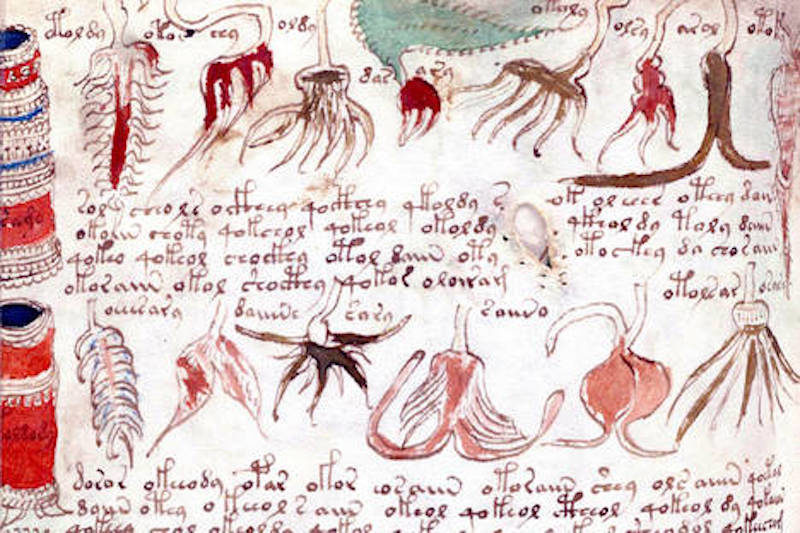
Brilliant Russian scholars unlock secret of mysterious Voynich manuscript - CIA, NSA, others tried and failed

Voynich manuscript
© Global Look PressThe manuscript is an illustrated medieval codex written by an unknown author between 1404 and 1438.
Experts previously thought it impossible to decipher the medieval text


Mathematicians at the RAS Institute of Applied Mathematics concluded that the Voynich manuscript was written in two languages, except for the vowels, reported RIA Novosti.

The manuscript, which is kept at Yale University's Beinecke Rare Book & Manuscript Library, is an illustrated medieval codex written by an unknown author possibly in northern Italy between 1404 and 1438.

Researchers have been trying to decipher its bizarre script for 600 years, but the text has beguiled even the brightest minds. The manuscript bears the name of the antiquarian book dealer and former anti-Tsarist Polish revolutionary, Wilfrid Voynich (1865-1930), who rediscovered the artifact in 1912 in Villa Mondragone outside of Rome, which was then used as a Jesuit college.

Calendar

24 years Ago Today: Chemical Weapons Used by US Government to Kill Women and Children in Waco, Texas

chemical weapons
Americans are up in arms over the alleged gas attack in Syria. Although there was no investigation, and many high-profile individuals have called it a sham, the US has pinned the blame on Syrian president Bashar Al Assad. So, we thought it would be a good idea to remind our fellow Americans of an occasion where the federal government got away with gassing its own people, an action which, consequently, led to the deaths of 86 men, women, and children. It all came to a violent end 24 years ago today, in Texas.

Our source material comes from the FBI's own vault, which contains two files on the case against Vernon Howell, also known as David Koresh. Koresh was the leader of the "Branch Davidians Seventh Day Adventists." According to the FBI case file, Koresh was believed to have been holding people against their will at his compound in Waco, Texas, potentially guilty of "involuntary servitude and slavery" charges.

In 1992, Child Protective Services (CPS) was called in to investigate the accusations. After a thorough investigation, CPS concluded no one was being held at the compound against their will, nor any child abuse, and the federal prosecutor, who reviewed the report, saw no reason to prosecute Koresh. On October 16th, 1992, the FBI closed the case against Koresh and the allegations he was abusing children and holding his followers against their will.

Comment: The high crimes, hypocrisy and rank lies of the U.S. government are stomach churning: and what about the other horrific weapons of death the US has unleashed on innocents - are they any less despicable than chemical weapons?