
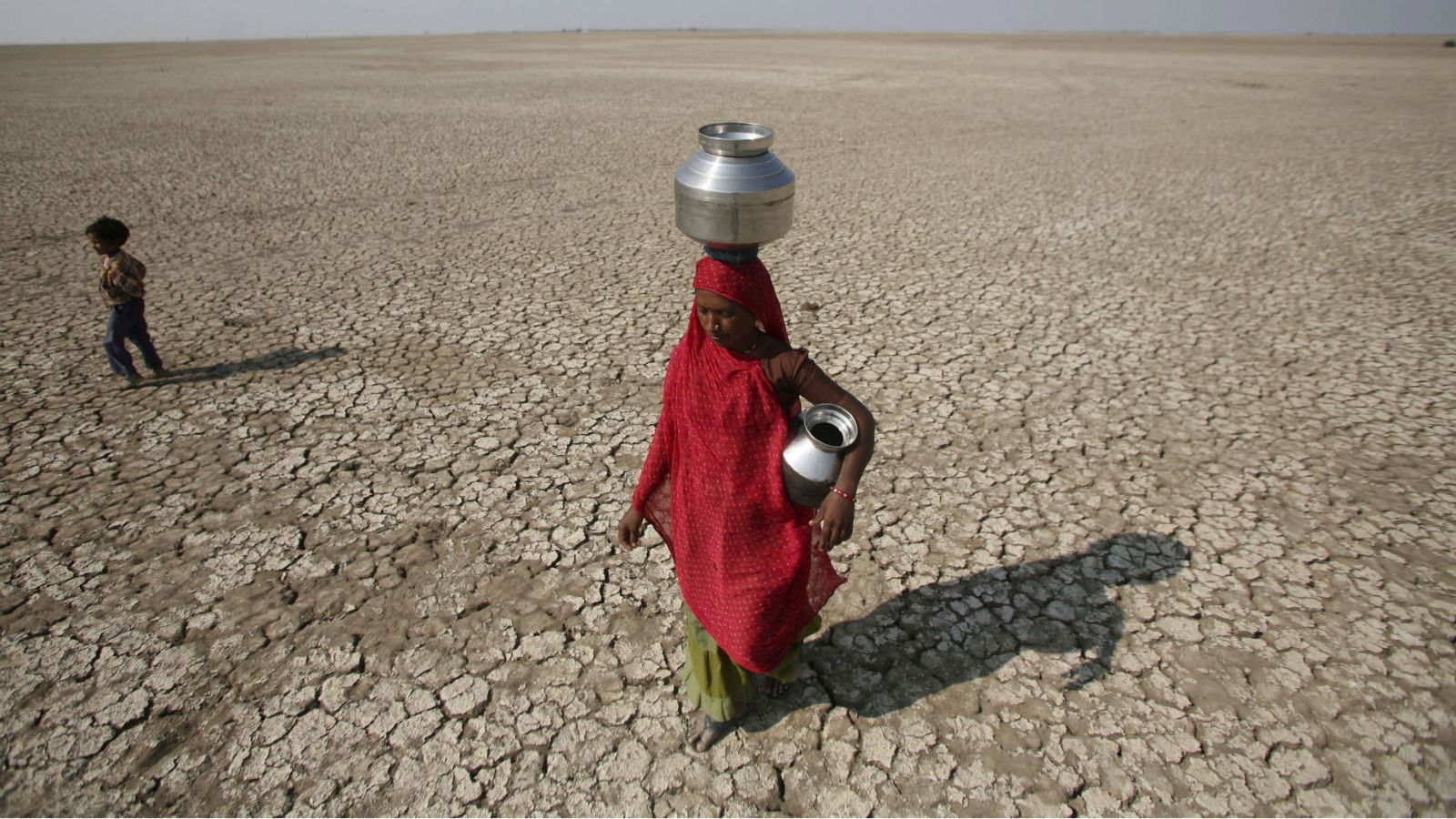
© Reuters/Amit DaveWater scarcity has begun early in India.
Rajendra Singh, along with four companions from the Tarun Bharat Sangh, a non-profit that traces its origins to the University of Rajasthan, wanted to work in the hinterland. The initial idea was to establish clinics.
"Maybe it was some social chromosomes that fired my imagination to do something useful," Singh said in an interview. "I was a government servant in Jaipur, fed up with just sending statistics to officials."
It look him a few months before finding his life's mission—and it took an ancient innovation, a fast disappearing traditional technology, to help him transform the lives of thousands of villagers in one of India's most arid regions.
On March 20, Singh was awarded the 2015 Stockholm Water Prize, sometimes described as the Nobel prize for water.


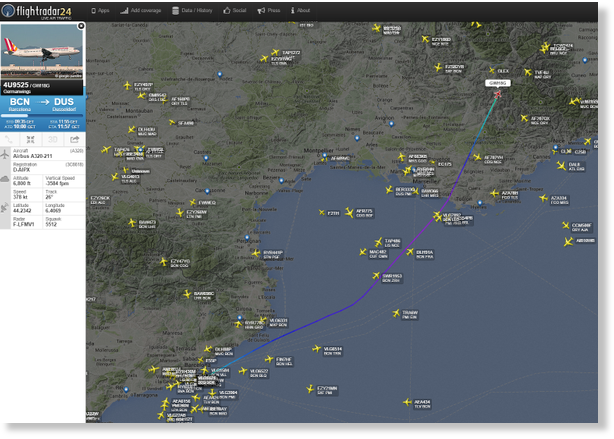














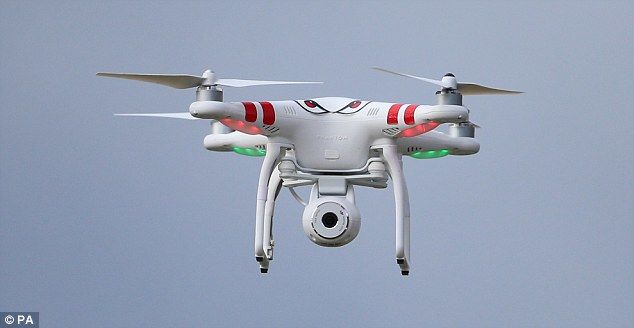


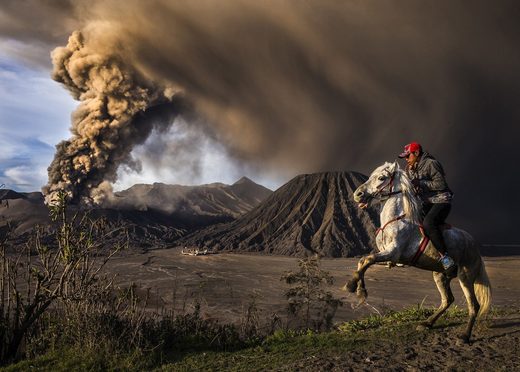
Comment: What the eyewitness is saying, essentially, is that he heard two "sonic boom" type noises, 30 seconds apart. But there were no jets in the area at the time. This data puts this tragedy squarely in the domain of an overhead meteorite explosion.