Society's ChildS


Attention

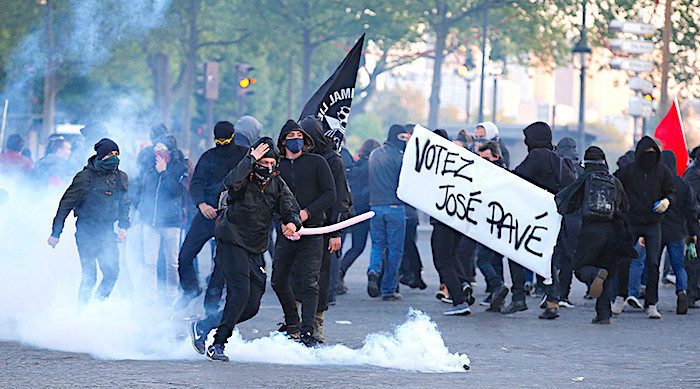
"Night of the Barricades": Protesters clash with riot police at post-vote demonstration in central Paris

Paris rioters smoke grenades
© Jean-Paul Pallisier/ReutersProtesters clash with French police after preliminary results of first round presidential election.
French riot police have deployed tear gas on protesters who gathered at the Place de la Bastille in central Paris after preliminary results of the first round of the presidential election were announced. Protests in Paris in the aftermath of the vote have turned violent with smoke grenades, flares and glass bottles thrown at police. RT's correspondent Charlotte Dubenskij was tear gassed while reporting from the scene.

The rallies, dubbed the "night of the barricades," are expected to take place in 13 cities across France. The protests erupted minutes after the polling stations closed in the first round of the presidential elections.

There is a massive riot police presence on the streets of Paris, with officers wearing full body armor, including shields and carrying batons and pepper spray bottles, as can be seen on images from a Ruptly video. At some point protesters were seen throwing chairs - apparently from nearby cafes - at police officers.


Comment: Protests are starting early with surely more to come. Don't like the results? Feeling a bit frustrated? There is always violence. Real, homegrown or imported.


Roses

Rash of suicides in Beida, Libya closes university for three days

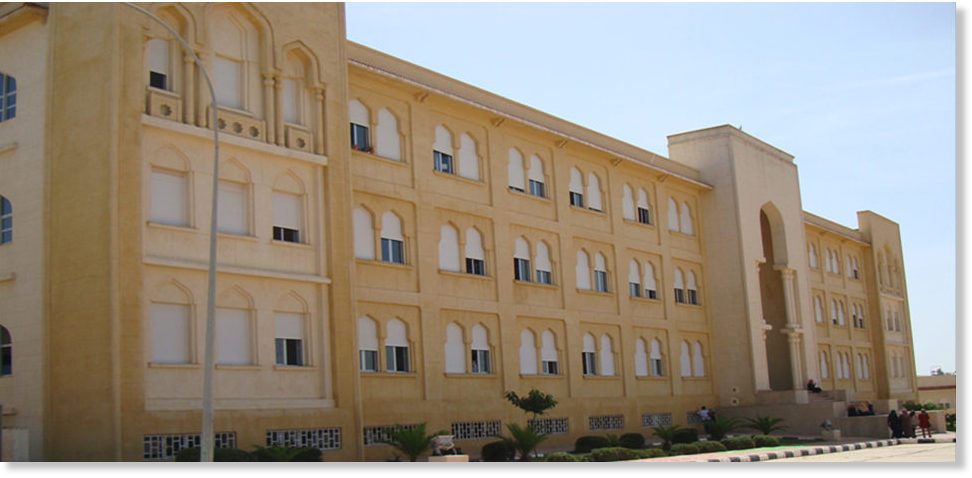
Omar Mukhtar University in Beida, Libya
The Omar Mukhtar University in Beida has closed for three days following the presumed suicide of one of its students. The body of a young women who was studying English and in her first year was found hanging in one of the faculty bathrooms today.

There appears to have been a spate of suicides in Beida - this is said to be the tenth in the town since the beginning of the month - four more than a week ago. It has caused alarm and incomprehension resulting in allegations of suicide grooming and even demonic possession as the result of playing a game known as "Charlie Charlie".

Although the university authorities have said that they are stopping classes for three days as a memorial to the suicide victim, it is believed that concern over possible panic or even hysteria among students following this latest incident is the real reason.

Heart - Black

Cops tase 18 y.o. boy to death in brutal assault

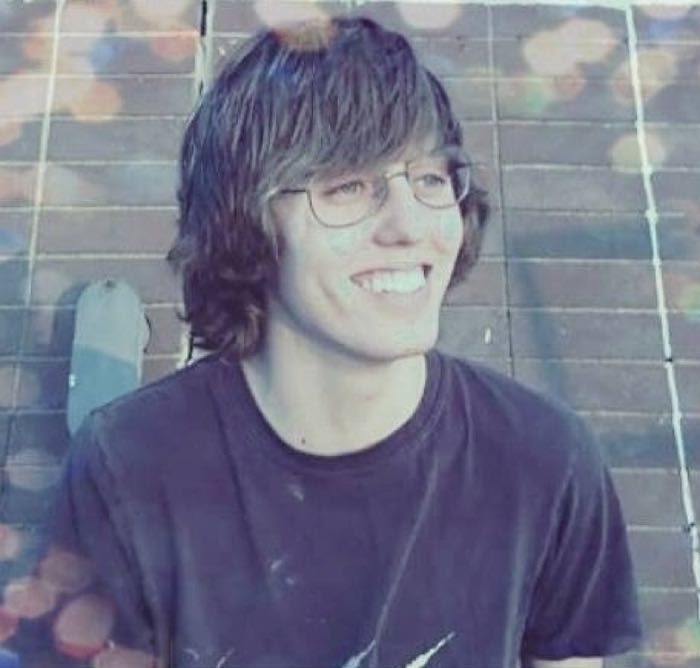
Graham Dyer
© FacebookGraham Dyer
Kathy and Robert Dyer got a phone call one night that is every parent's nightmare — their son, Graham, was in the hospital. The 18-year-old boy had been severely injured during a struggle with police and was fighting for his life — a fight he would lose.

When Kathy and Robert got to the hospital that night, police refused to let them see their son. "They said he was in serious trouble — that he had felony charges for assaulting an officer," Kathy recalled.

Graham had taken LSD that night and his friends called police after he had a bad reaction to it. Police claimed Graham injured himself as they drove him to jail. While the video does show Graham flailing back and forth, police failed to mention to the parents that they'd tortured him, repeatedly, with a taser — including deploying it on his genitalia.

This tragic incident happened on August 14, 2013, but Kathy and Robert are only now finding out what happened to their son. For more than two years, the Mesquite police department would keep the video of Graham — before he went to the hospital — a secret. Now, after watching the video, we know why.

Stock Down

100 days: Trump's presidential approval rating lowest since 1945

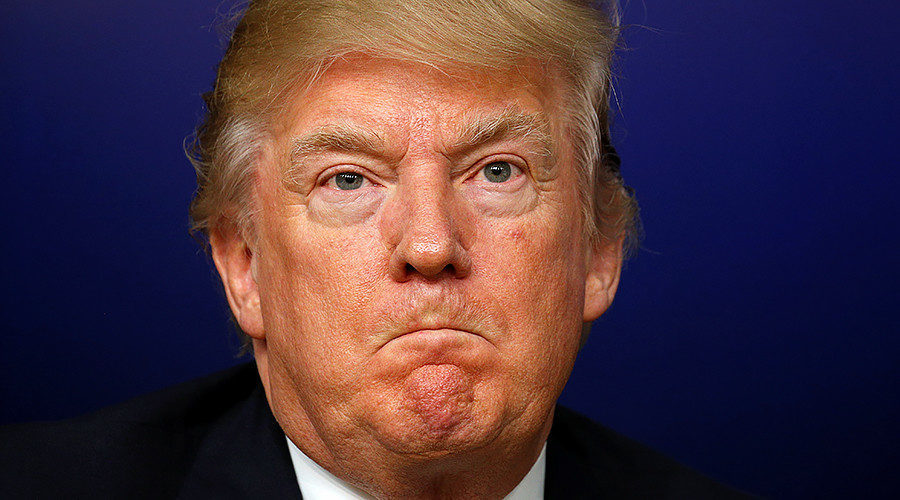
Donald Trump
© Kevin Lamarque / Reuters
As President Donald Trump is approaching the 100-day benchmark in the White House, his approval rating has hit a historical low of 42 percent. Twelve of his predecessors averaged 61-percent at this point, a new Washington Post-ABC News poll showed.

An average of 42 percent of Americans approve of Trump's performance as president, while 53 percent disapprove. Past presidents' ratings averaged 69 percent approval and 19 percent disapproval by their 100th day in office, the poll shows.

For example, Trump's closest predecessor, Barack Obama had a 69-26 percent rate.

Binoculars

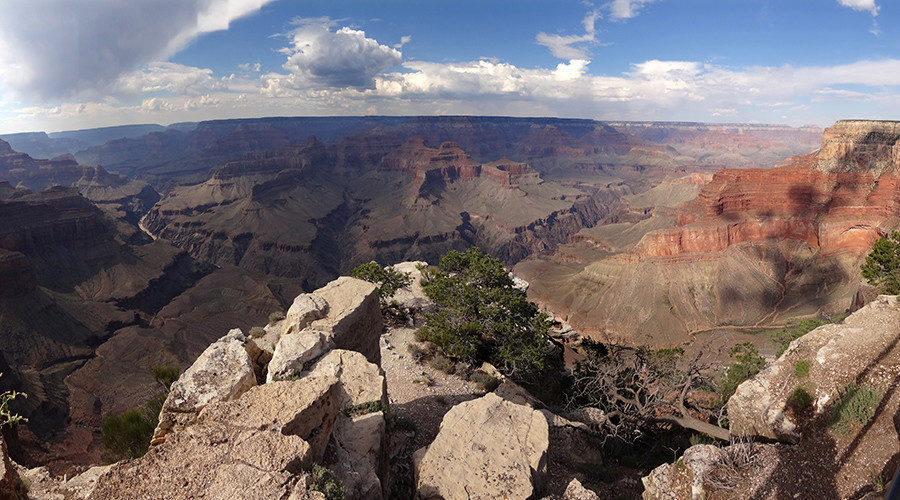
Drones used in major Grand Canyon search and rescue operation for first time for 2 hikers gone missing

Grand Canyon
© Charles Platiau / Reuters
The search for two hikers who went missing last weekend while trekking through the Grand Canyon National Park is the first such major search and rescue operation to make use of drones.

"It's a wonderful tool for the unfortunate situation we just found ourselves in at Grand Canyon," Doyle James Doyle, a spokesman for the park service's Intermountain region said, speaking about the search for LouAnn Merrell, 62, and her step grandson, Jackson Standefer, 14, between Monday and Wednesday last week.

The Grand Canyon is the only national park in the United States equipped with its own fleet of drones specifically used in search and rescue operations, with a total of five drones and four certified operators.

This helps greatly reduce the costs of search and rescue operations in the park, which measures over 2,000 square miles (5,179 square kilometers).

"Our historic model was to take the helicopter to look and see," said Grand Canyon chief ranger Matt Vandzura, as cited by ABC News. The search earlier in the week did involve three ground teams as well as a boat and a helicopter search and rescue team. So far, search efforts have failed to locate the pair ABC added.

Document

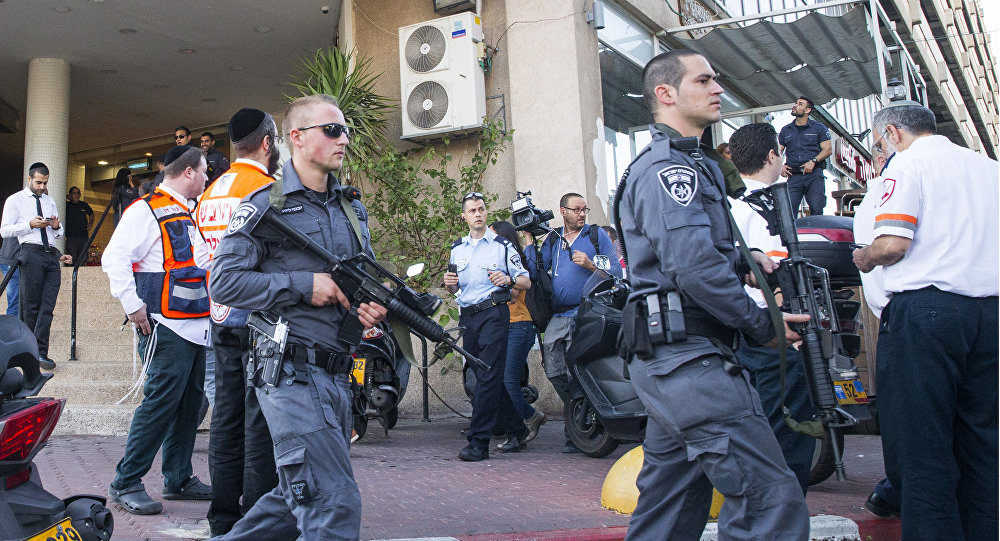
3 lightly injured by Palestinian man in Tel Aviv stabbing; Police label it a 'terror attack'

israeli police after palestinian stabbing
© AFP 2017/ JACK GUEZ
At least three people were injured after a Palestinian man attacked pedestrians in the central part of Tel Aviv, the police said Sunday.

The spokesman added later that the police confirmed that the incident was a terror attack.

"Police arrest Palestinian suspect in central Tel Aviv after he injured 3 people lightly. Police investigating background if terrorist related," Israeli police spokesman Micky Rosenfeld said on Twitter.

Comment: Chances are that Israel will use this to justify more of its genocidal war of terror against the Palestinians.


Smoking

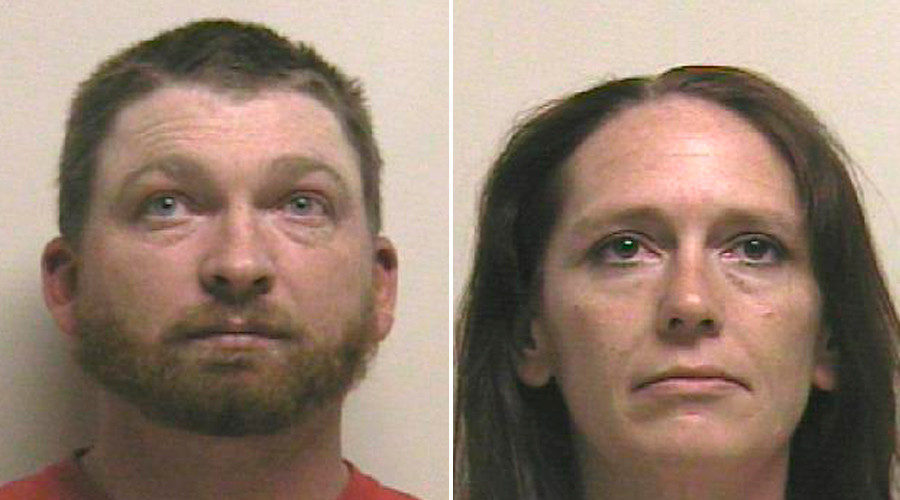
Grams for grades: Utah parents accused of giving teen son pot in exchange for good marks in school

Edwin Lee Steward and Valerie Steward
© utahcounty.govEdwin Lee Steward and Valerie Steward reportedly believed smoking marijuana would help with their sons school work.
A Utah couple were arrested on child endangerment charges after telling police they regularly allowed their 14-year-old son to smoke marijuana. The couple allegedly told police he was allowed a joint or two at night if he gets good grades in school.

The boy's parents were arrested following a police search of their home in Spanish Fork on April 18. Two ounces of marijuana, drug paraphernalia and four guns were discovered,according to a press release from the Utah County Sheriff's Office.

Comment:
Today, Iceland tops the European table for the cleanest-living teens. The percentage of 15- and 16-year-olds who had been drunk in the previous month plummeted from 42 per cent in 1998 to 5 per cent in 2016. The percentage who have ever used cannabis is down from 17 per cent to 7 per cent. Those smoking cigarettes every day fell from 23 per cent to just 3 per cent.

The way the country has achieved this turnaround has been both radical and evidence-based, but it has relied a lot on what might be termed enforced common sense. "This is the most remarkably intense and profound study of stress in the lives of teenagers that I have ever seen," says Milkman. "I'm just so impressed by how well it is working."

If it was adopted in other countries, Milkman argues, the Icelandic model could benefit the general psychological and physical wellbeing of millions of kids, not to mention the coffers of healthcare agencies and broader society. It's a big if.

"I was in the eye of the storm of the drug revolution," Milkman explains over tea in his apartment in Reykjavik. In the early 1970s, when he was doing an internship at the Bellevue Psychiatric Hospital in New York City, "LSD was already in, and a lot of people were smoking marijuana. And there was a lot of interest in why people took certain drugs."

Milkman's doctoral dissertation concluded that people would choose either heroin or amphetamines depending on how they liked to deal with stress. Heroin users wanted to numb themselves; amphetamine users wanted to actively confront it. After this work was published, he was among a group of researchers drafted by the US National Institute on Drug Abuse to answer questions such as: why do people start using drugs? Why do they continue? When do they reach a threshold to abuse? When do they stop? And when do they relapse?

"Any college kid could say: why do they start? Well, there's availability, they're risk-takers, alienation, maybe some depression," he says. "But why do they continue? So I got to the question about the threshold for abuse and the lights went on - that's when I had my version of the 'aha' experience: they could be on the threshold for abuse before they even took the drug, because it was their style of coping that they were abusing."

At Metropolitan State College of Denver, Milkman was instrumental in developing the idea that people were getting addicted to changes in brain chemistry. Kids who were "active confronters" were after a rush - they'd get it by stealing hubcaps and radios and later cars, or through stimulant drugs. Alcohol also alters brain chemistry, of course. It's a sedative but it sedates the brain's control first, which can remove inhibitions and, in limited doses, reduce anxiety.

"People can get addicted to drink, cars, money, sex, calories, cocaine - whatever," says Milkman. "The idea of behavioural addiction became our trademark."

This idea spawned another: "Why not orchestrate a social movement around natural highs: around people getting high on their own brain chemistry - because it seems obvious to me that people want to change their consciousness - without the deleterious effects of drugs?"

By 1992, his team in Denver had won a $1.2 million government grant to form Project Self-Discovery, which offered teenagers natural-high alternatives to drugs and crime. They got referrals from teachers, school nurses and counsellors, taking in kids from the age of 14 who didn't see themselves as needing treatment but who had problems with drugs or petty crime.

"We didn't say to them, you're coming in for treatment. We said, we'll teach you anything you want to learn: music, dance, hip hop, art, martial arts." The idea was that these different classes could provide a variety of alterations in the kids' brain chemistry, and give them what they needed to cope better with life: some might crave an experience that could help reduce anxiety, others may be after a rush.

At the same time, the recruits got life-skills training, which focused on improving their thoughts about themselves and their lives, and the way they interacted with other people. "The main principle was that drug education doesn't work because nobody pays attention to it. What is needed are the life skills to act on that information," Milkman says. Kids were told it was a three-month programme. Some stayed five years.

See entire article here.


Attention

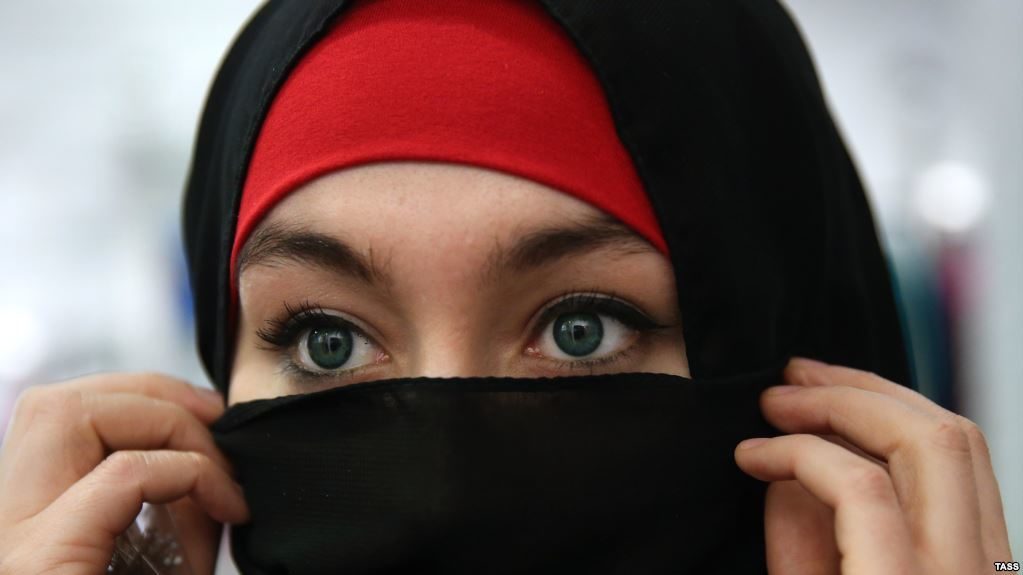
'Black is for funerals': Kazakhstan's president wants to ban Islamic clothing

burqa
Kazakh authorities are concerned that the use of Islamic religious attire, such as the hijab, is on the rise among young people in the country.
Black clothing is only for funerals, says Kazakhstan's president, who wants a legal ban on certain Islamic clothing -- such as body-covering black garments for women and so-called Salafi-style ankle-length pants for men.

In a meeting with the country's religious leaders in the capital, Astana, on April 9, Nursultan Nazarbaev expressed concern over what he described as a growing trend among young Kazakhs to opt for religious garb.

"Our young men grow beards and cut the length of their trousers [above the ankles]," he said, referring to styles of dress and appearance that are often associated with conservative Muslims who are branded as "Salafis" and portrayed by the authorities as followers of a potentially dangerous strand of Islam.

"The number of Kazakh girls who are fully covered with black clothing is on the rise," Nazarbaev said, blaming the trend on young people's "ignorance" and a lack of knowledge about true religious values.

Cult

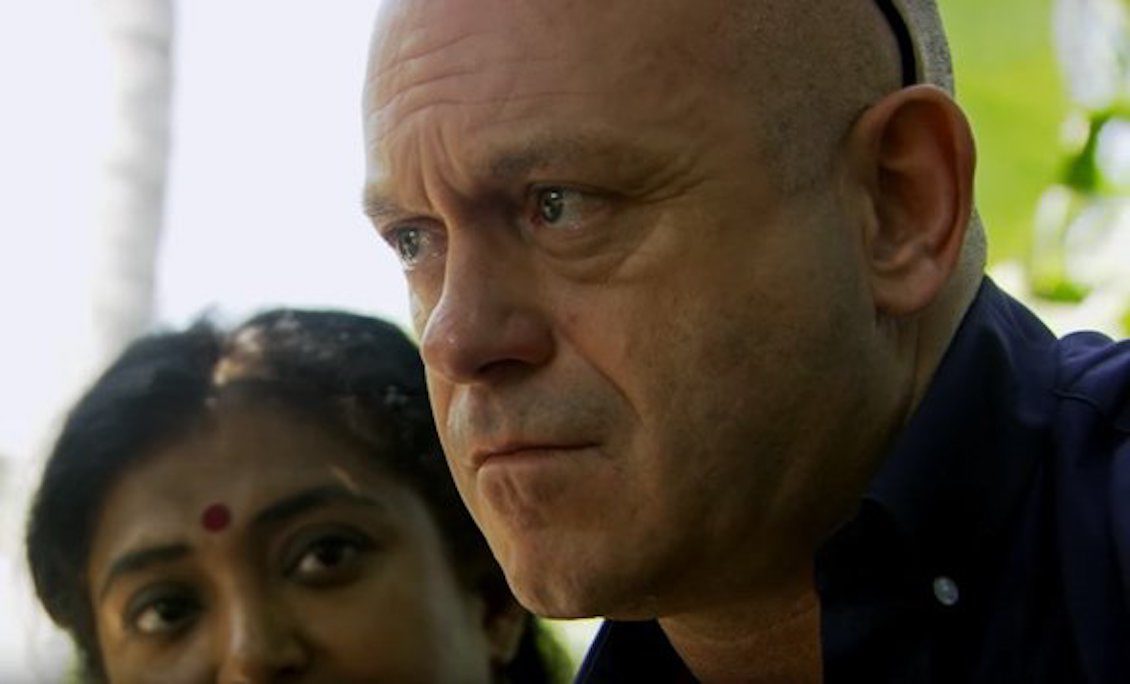
Confession of a human trafficker - admits to killing over 400 children

Ross Kemp
Ross Kemp, a British investigative journalist, was able to get a hold of the child trafficker for an interview.
Slavery may be deemed a historical term in many societies at this point, but it's certainly not a thing of the past. Human trafficking, for instance, produces hundreds of billions of dollars in profit by trapping millions of people in unfathomable situations around the world. Human traffickers resort to violence, threats, deception, debt bondage, and other forms of manipulation to force people to take part in commercial sex or other services against their consent.

According to the International Labour Organization, there are an estimated 20.9 million victims of human trafficking globally, with 68 percent of them trapped in forced labor, 26 percent being children, and 55 percent being women and girls. The organization also estimates that forced labor and human trafficking is a $150 billion industry worldwide.

It's unlikely you'll hear of a human trafficker coming forward about their crime, but recently, one has done just that, going on the record and confessing during a filmed interview that he sold thousands of children into sex slavery and killed hundreds who he wasn't able to sell off.

Eye 2

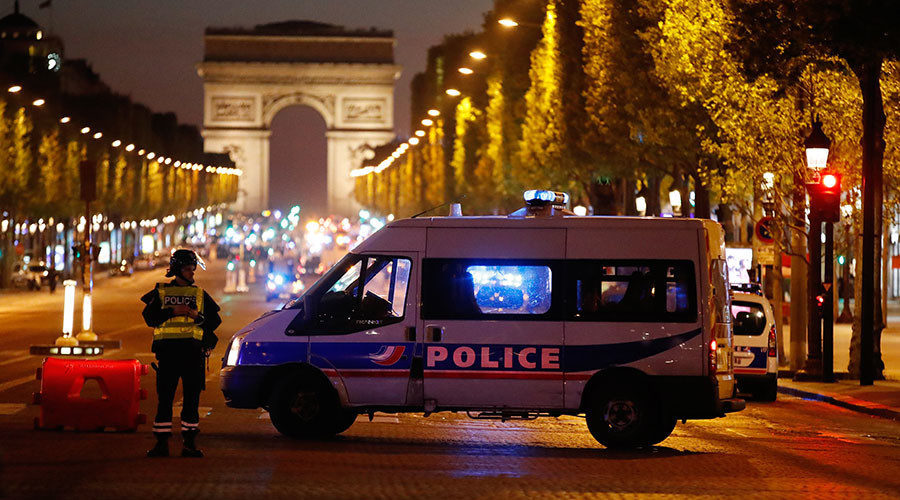
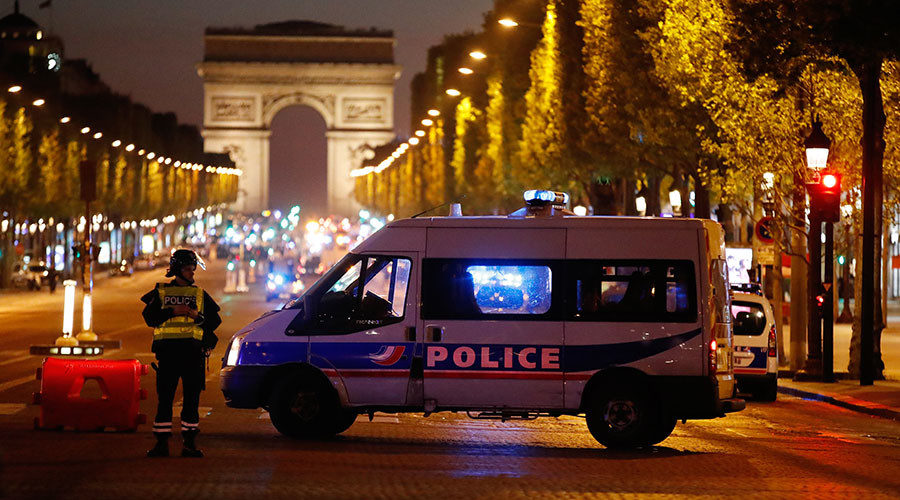
UPDATES: Police officer killed, another injured in Champs-Elysees shooting in Paris

Champs-Elysees shooting
© Christian Hartmann/Reuters
At least one police officer has been killed and another one injured in a shooting incident in central Paris, Reuters report, citing police sources. The suspected attacker was also killed, reports say.

The shooting took place on the central boulevard of Champs Elysees, local media say, citing law enforcement.

A large number of police officers have been deployed to the scene, French media report. A helicopter has been seen flying at a low altitude over central Paris. The local police department asked the people to "avoid the Champs Elysees district" and follow police instructions.

The assault was "very probably" a "terrorist act," with two attackers apparently involved, Reuters reported, citing police source. However, there is no official confirmation of that so far.


Comment:

Update: The French Interior Ministry has confirmed the attacker was targeting a police bus on the boulevard and was already known to law enforcement. The police have raided his apartment; a bomb disposal unit has been called to inspect his car.

Reuters, citing police sources, reports that shots were fired at another location near the Champs-Elysees boulevard. No further details were provided.

The second officer wounded in the attack has passed away as a result of his injuries.

Update (April 21): More updates from RT:

07:17 GMT: A Belgian federal prosecutor said there are no indications that the attacker was Belgian, adding that his identity remains unclear, Reuters reported.

07:43 GMT: Three family members of the suspected attacker who was shot dead on Thursday evening were detained late Friday night at his home in the Chelles commune in the eastern suburbs of Paris, France's 20 Minutes newspaper reported, adding that they were taken into custody.

08:23 GMT: The Champs Elysee attacker was a French citizen, Belgian Interior Minister Jan Jambon told RTBF channel. "The criminal killed yesterday was a Frenchman" Jambon said. "He was certainly not a Belgian [citizen]. Are there links with Belgians? I can't comment on this part on the investigation," he said. According to the minister, the attacker was known to Belgian security services.

10:18 GMT: French presidential hopeful Francois Fillon has called for the creation of an international coalition to fight terrorism. "My foreign policy [if elected president] would be focused on the destruction of Islamic State [IS, formerly ISIS/ISIL], I would propose an initiative to build an international coalition," Fillon said, speaking at his campaign HQ. According to Fillon, "the more the US, Europe, Russia, Iran, Turkey, and the countries of the Gulf are divided, the more the victory against Islamic totalitarianism is delayed. From Washington to Moscow, I would take diplomatic initiative to create conditions for an international coalition against terrorism," he concluded.

11:52 GMT: Police found notes in the car of the Champ Elysees attacker containing the address of the General Directorate for Internal Security (DGSI), a French counter-terrorism and counter-espionage agency located in Levallois-Perret commune in the northwestern suburbs of Paris. They also found the address of a police station in Lagny commune in the eastern suburbs of Paris, as well as the addresses of three gun shops.

Update: While authorities have not named the suspect, various news agencies have apparently released his identity:
Several media reports based solely on their sources, but with matching details, then emerged claiming to reveal the identity of the gunman himself. Le Parisien, BFM TV, and later AP, all identified the suspect as Karim C. or Karim Cheurfi, describing him as a French-born 39-year-old with a criminal record.

Le Parisien was the first to give a name for the attacker, citing a copy of a driver's license found in the car that was used in the shooting. The alleged suspect had previously been jailed for attacking law enforcement officers and had also been the subject of a terrorism investigation, the outlet reported.

Back in 2003, Karim was sentenced to 20 years in prison for the attempted murder of three people, including two policemen, during and after a police chase in 2001. However, his sentence was decreased to 15 years in 2005.

BFM TV identified the suspect as French citizen Karim Cheurfi, reporting that he had been driving a stolen vehicle in 2001 when he fired shots at police officers who were chasing him, injuring two. While in detention at a police station, the then 23-year-old allegedly managed to wrestle a gun away from a security guard and shoot him five times. Cheurfi lured the guard into his cell under a false pretext, asking for medication.

It is not clear when exactly Cheurfi was released or how he has been monitored since then. Reports said that the suspect in Thursday's shooting was on the security threat list.

Le Parisien said that the suspect was allegedly born in 1977 in Livry-Gargan, a commune in the Seine-Saint-Denis department located in the northeastern suburbs of Paris.

AP has released a photo of Cheurfi, saying it had obtained the image from a source on condition of anonymity. The same photo has appeared in several French media outlets.

The police document seen by AP allegedly matches the address raided by police in the commune of Chelles on Thursday night.
Update (April 23): Police have released more information on Cheurfi, who despite his earlier arrest was not on the security watch list, having shown 'no signs of radicalization despite his many years in prison'.
A note celebrating Islamic State and containing a list of key addresses was found near the body of Karim Cheurfi, who killed a policeman on Thursday night before being shot, according to French authorities.

During a media briefing on Friday afternoon, anti-terrorism prosecutor Francois Molins said 39-year-old Cheurfi was carrying the note when he stopped his car at the Champs Elysees in the heart of Paris, before opening fire on a police vehicle, speculating that it likely fell out of the gunman's pocket.

Citing inside sources, French channel BFMTV earlier claimed that the note had contained the address of France's anti-terrorist agency DGSI, a local police station, and three gun shops.

A Koran, several knives and a shotgun were also found in Cheurfi's car, according to AFP sources.
...
According to Le Monde, security services detained and interrogated Cheurfi in February, after he made threats online, and investigated him again last month, when he attempted to contact foreign-based jihadists, but failed to gather enough evidence to charge him with any crimes, while acknowledging that he was "excessively dangerous and violent."
...
Islamic State had earlier released a statement crediting Abu Yousif al-Belgiki (Abu Yousif the Belgian) for the terrorist attack. Speaking on Friday, Belgian Interior Minister Jan Jambon denied that Cheurfi had Belgian citizenship, and insisted that Abu Yousif al-Belgiki "is certainly not the guy who committed the crime yesterday."