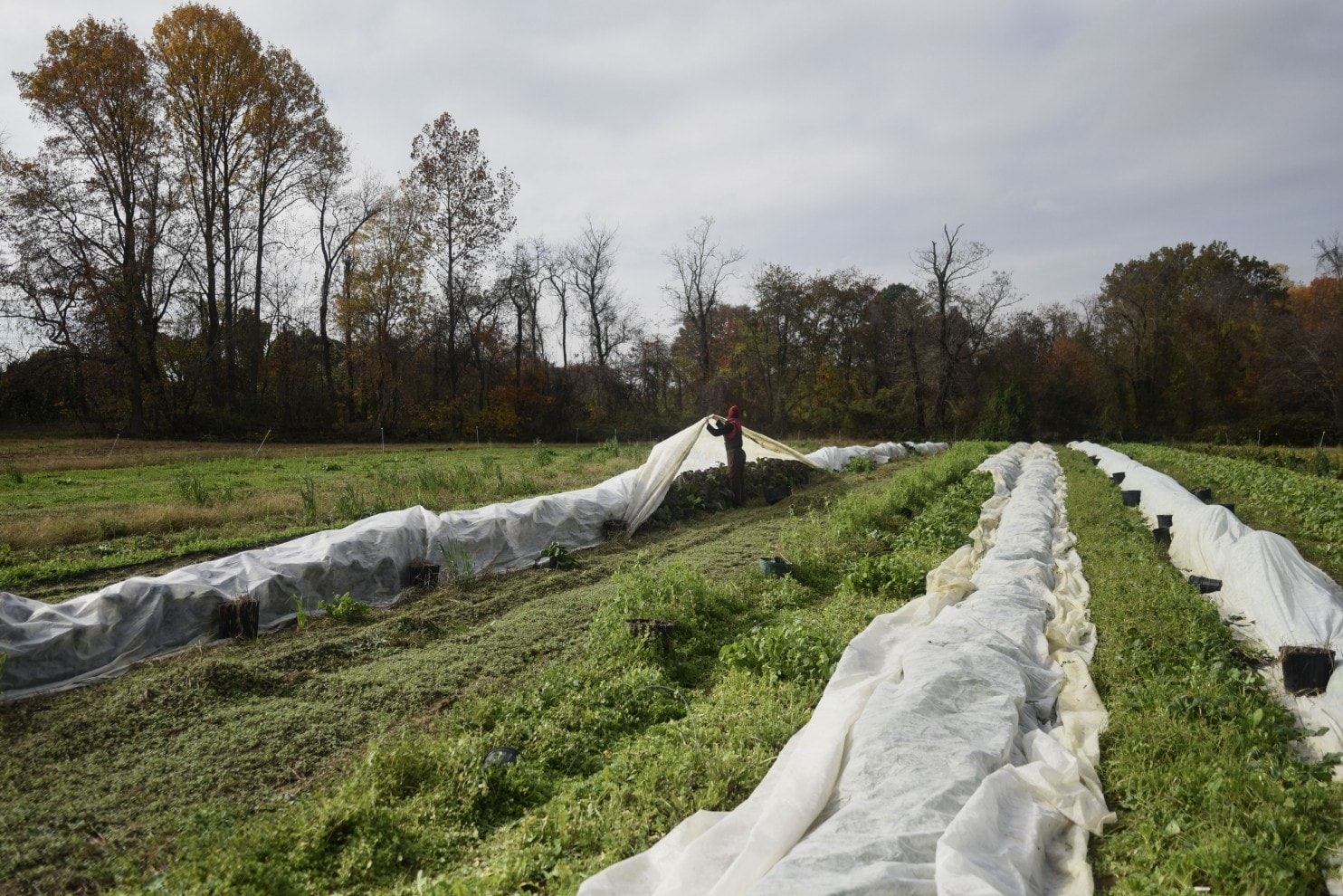
© Michael Robinson Chavez/The Washington Post
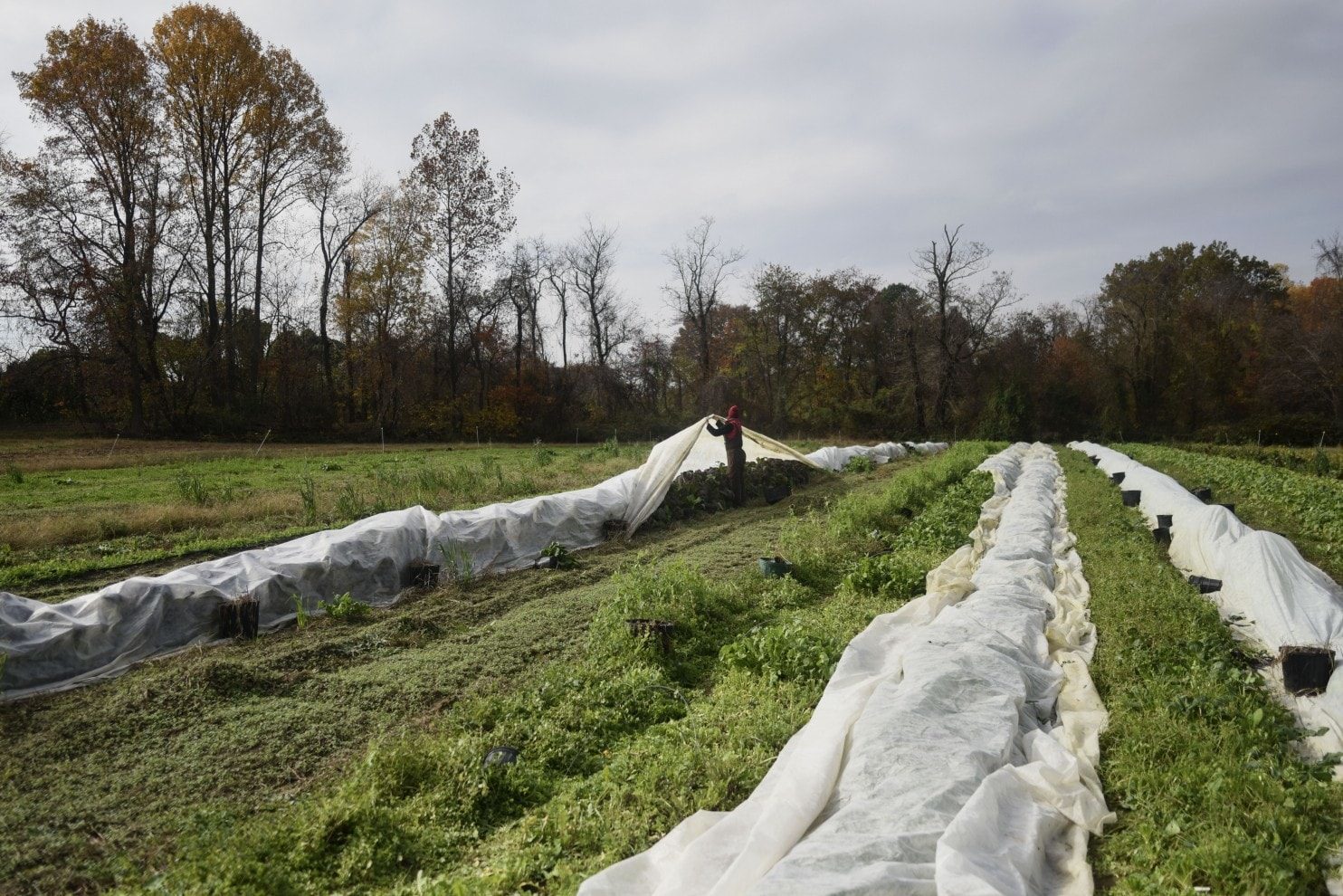
Liz Whitehurst dabbled in several careers before she ended up here, crating fistfuls of fresh-cut arugula in the early-November chill.
The hours were better at her nonprofit jobs. So were the benefits. But two years ago, the 32-year-old Whitehurst - who graduated from a liberal arts college and grew up in the Chicago suburbs - abandoned Washington for this three-acre farm in Upper Marlboro, Md.
She joined a growing movement of highly educated, ex-urban, first-time farmers who are capitalizing on
booming consumer demand for local and sustainable foods and who, experts say, could have a broad impact on the food system.For only the second time in the last century, the number of farmers under 35 years old is increasing, according to the U.S. Department of Agriculture's latest Census of Agriculture.
Sixty-nine percent of the surveyed young farmers had college degrees - significantly higher than the general population.
This new generation can't hope to replace the numbers that farming is losing to age. But it is already contributing to the growth of the local-food movement and could help preserve the place of midsize farms in the rural landscape.
"We're going to see a sea change in American agriculture as the next generation gets on the land," said Kathleen Merrigan, the head of the Food Institute at George Washington University and a deputy secretary at the Department of Agriculture under President Barack Obama. "The only question is whether they'll get on the land, given the challenges."








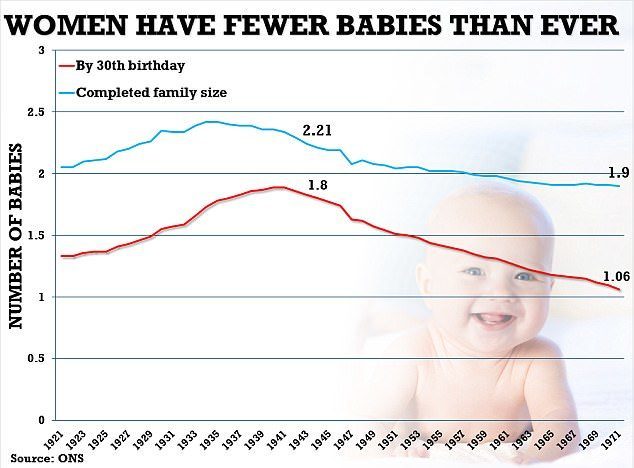









Comment: See also: Empire in decline: CDC reports US birth rates are falling while deaths from age-related diseases are rising