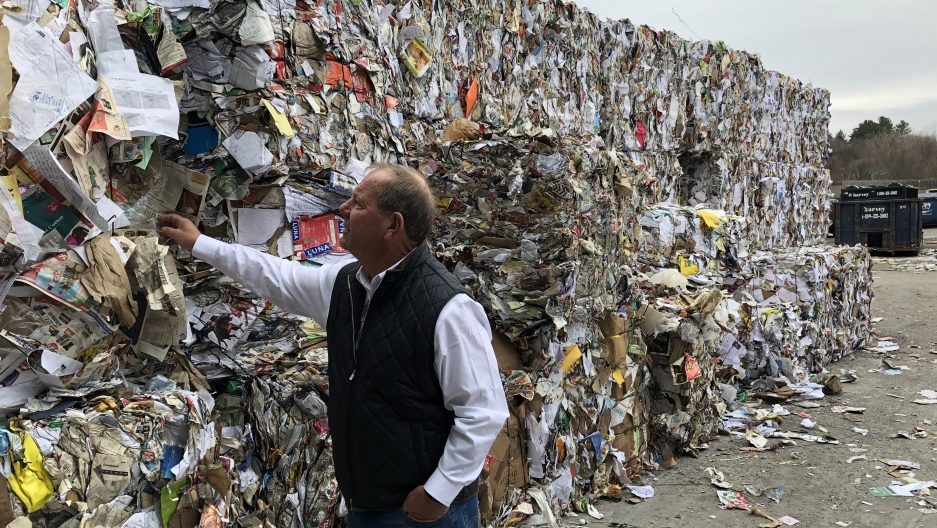
© Jason Margolis/PRIBen Harvey of E.L. Harvey & Sons has stored about 3,000 bales of paper in the past month that he’d normally be shipping to China. At $60 a bale, it equals about $180,000 of unsold product, about 10 percent of the company’s revenue.
After you collect your cans, bottles and paper, then put them out by the curb, do you ever think about where everything goes after the truck picks things up?
Largely, it goes to China.Every day, nearly 4,000 shipping containers full of recyclables leave US ports bound for China. China sends the US toys, clothes and electronics; in return, some of America's largest exports back are paper, plastic and aluminum.
But that equation is changing as of Jan. 1 - China is enforcing its new "National Sword" policy, which bans 24 types of solid waste, including various plastics and unsorted mixed papers, and sets a much tougher standard for contamination levels.
China notified the World Trade Organization about the ban in July, essentially saying the
country would no longer act as the world's trash dump. Currently, China consumes 55 percent of the world's scrap paper and is a major destination for other recyclables.The National Sword policy
follows China's "Green Fence," a
10-month policy the country enacted five years ago, which set initial standards for lower contamination levels for recycling.
The ban will undoubtedly hurt recycling operators in China that rely on the import of raw materials. But delivering a cleaner China is paramount for Communist Party politicians.








Comment: 'California better hold on tight': ICE director promises doubling of officers after sanctuary state law signed