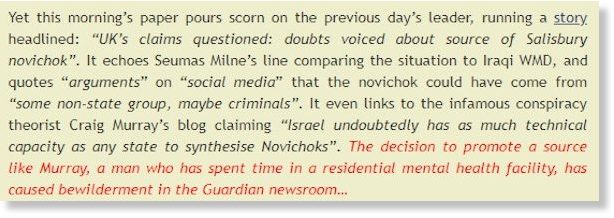
I just thought I might give you a little taste of what it means to your personal life to express dissent from the government line in the UK in 2018. Let me start with this combined effort from the UK's most
popular website, Guido Fawkes, which fanatically supports the government, and the Blairite crew at "The Guardian".
The red ink is original.
Now it is true that, when I was sacked as Ambassador by the Foreign and Commonwealth Office for blowing the whistle on extraordinary rendition and the Blair government's misuse of intelligence from torture, I went into a terrible depression and voluntarily spent ten days or so in St Thomas Hospital (not a mental illness facility) for treatment. I have never tried to keep this secret, indeed it is a major part of my memoir "Murder in Samarkand". It is also true, as I have always acknowledged, that I have had other less serious depressive episodes treated at home and been diagnosed as bipolar since I was 20.
That we stigmatise anybody who has ever had a mental illness, write them off and view their views, on anything, as invalid, is an attitude I had hoped we had moved past last century. Indeed, if this hatchet job was done on anybody writing within the Overton window, then the Guardian would be dedicating editorials to condemning it.
We have in fact moved to the old Soviet position, where disagreement with the official line equals mental illness. I quite confess this sort of thing does in fact hurt me - if you cut me, do I not bleed?


















Comment: Salicido's gripe with the military and its soldiers doesn't appear to have much do to with waging illegal wars fought for the 'dumbs**ts' in office who are blindly driven by an unhinged desire to maintain US hegemony and a need to prop up the dysfunctional welfare state. Instead he turns his ire toward kids who are manipulated into serving. There's nothing inherently wrong with military service in and of itself. But under a pathocracy everything is turned upside down serving the worst aspects of a country, and this includes the work of academics and bankers as well. That said, it is also clear that the American educational system is becoming more and more resistant to merely discussing controversial views by the day. Say something offensive, and your career is finished!