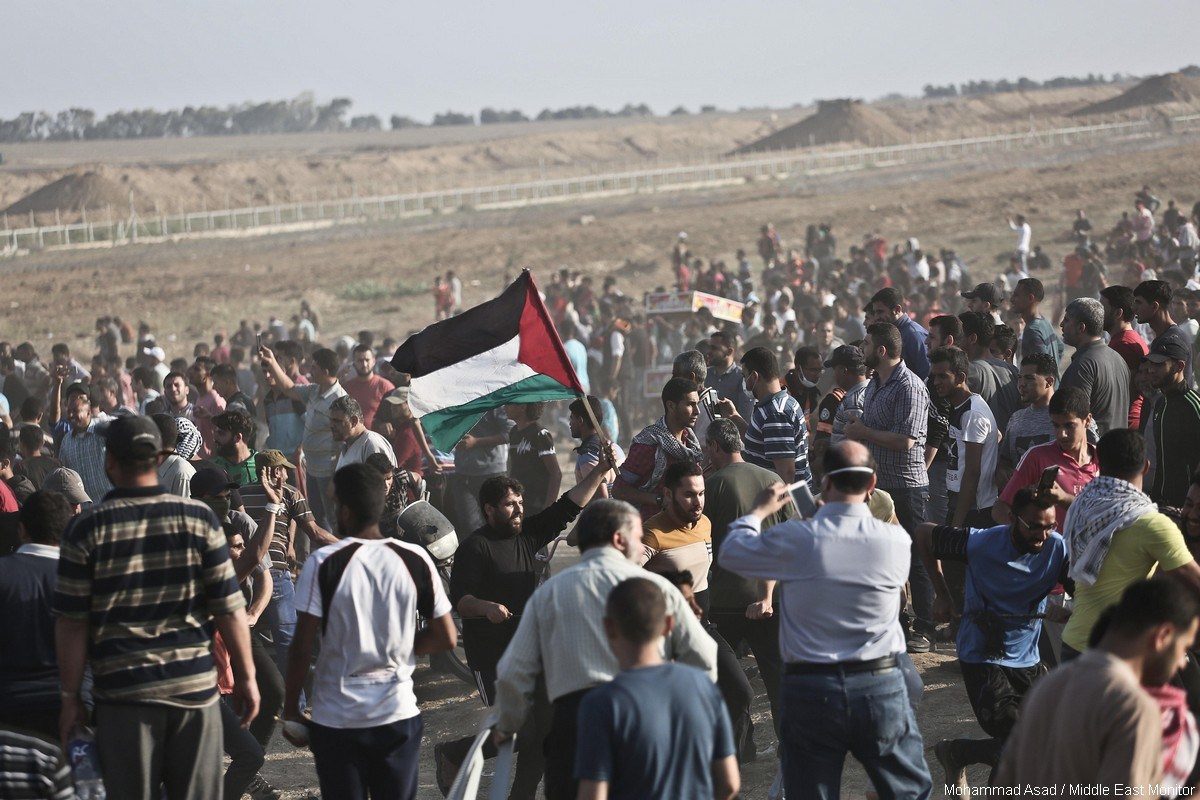
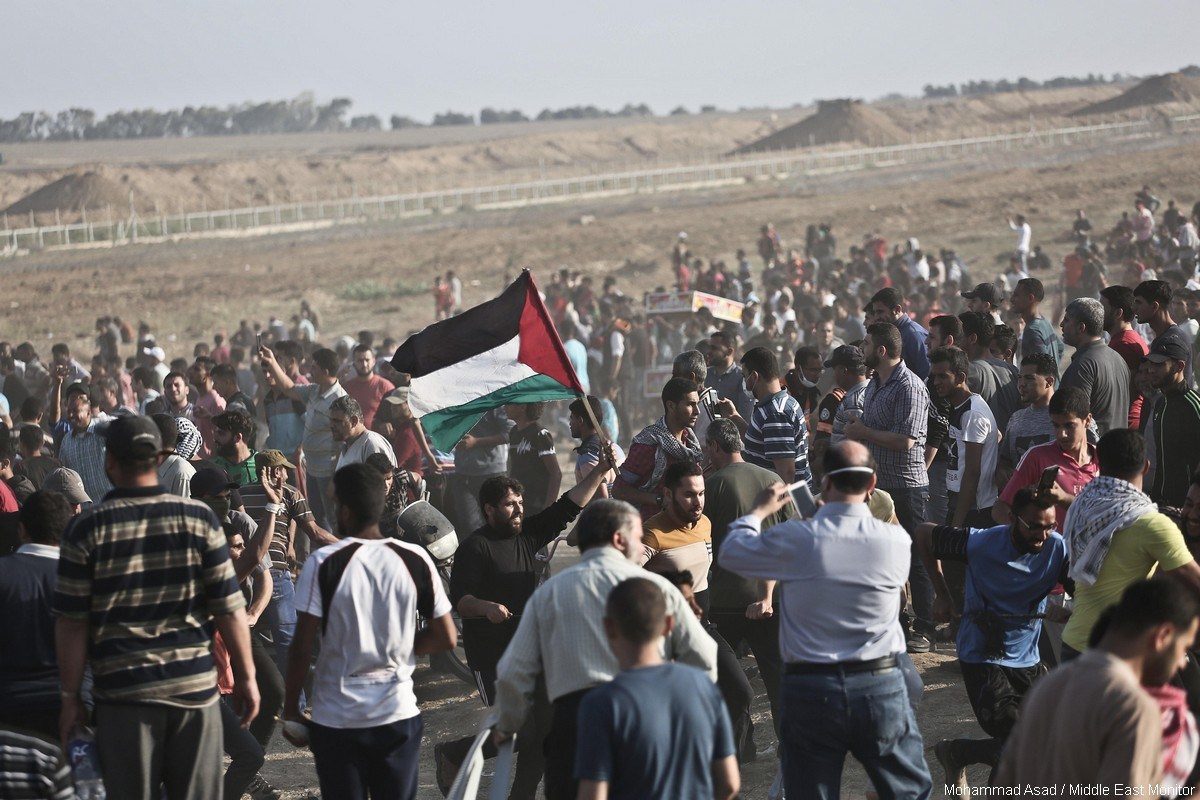
© Mohammad Asad / Middle East MonitorPalestinians come together during the Great March of Return at the Gaza and Israel border on 11 May 2018
Writing in the
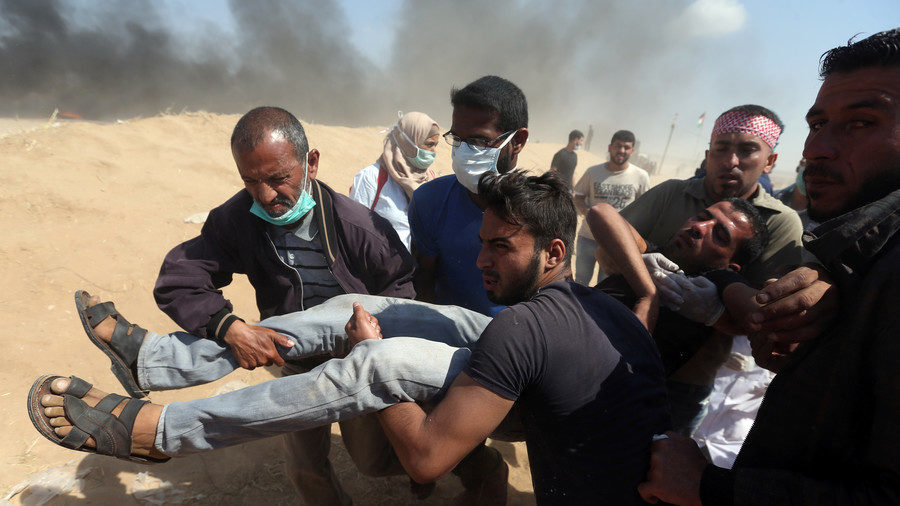
New York Times less than a week after 61 Palestinians had been shot dead by Israeli soldiers, and nearly 3,000 were wounded, the political editor of the Jewish Journal,
Shmuel Rosner, had this to say in an opinion piece entitled "Israel Needs to Protect Its Borders: By Whatever Means Necessary": "Of course, the death of humans is never a happy occasion. Still, I feel no need to engage in ingénue mourning. Guarding the border was more important than avoiding killing, and guarding the border is what Israel did successfully."
It was a hard, cold line of defence, one that was presented over and over again by the Israeli government and its supporters; the killings were justified by the need to secure the border and protect Israelis whose lives were threatened. That carefully orchestrated response, together with two stark facts, suggests emphatically that Israel
wanted the bloodshed and intended it as a frank and brutal message to the Palestinians.
The facts are simple: the Israel Defence Forces (IDF)
had alternatives to the use of live rounds: much heavier use of tear gas and the use of stun grenades, water cannon, even birdshot. Most, if not all of these, have been used to control protests in places like Bahrain, a fact to which I can attest having covered that Gulf country's unhappy history for more than a decade.















Comment: See also: Sweeping new EU privacy law aims to give users greater control over what tech companies do with their data