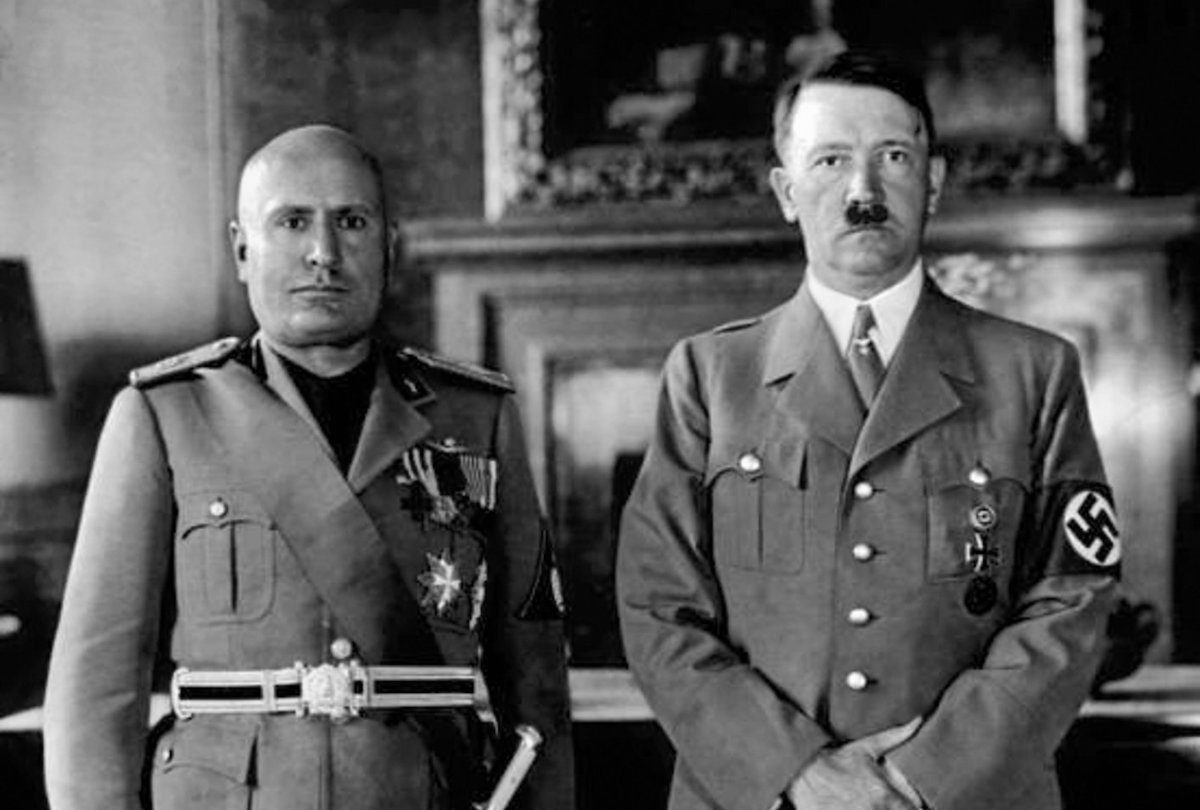
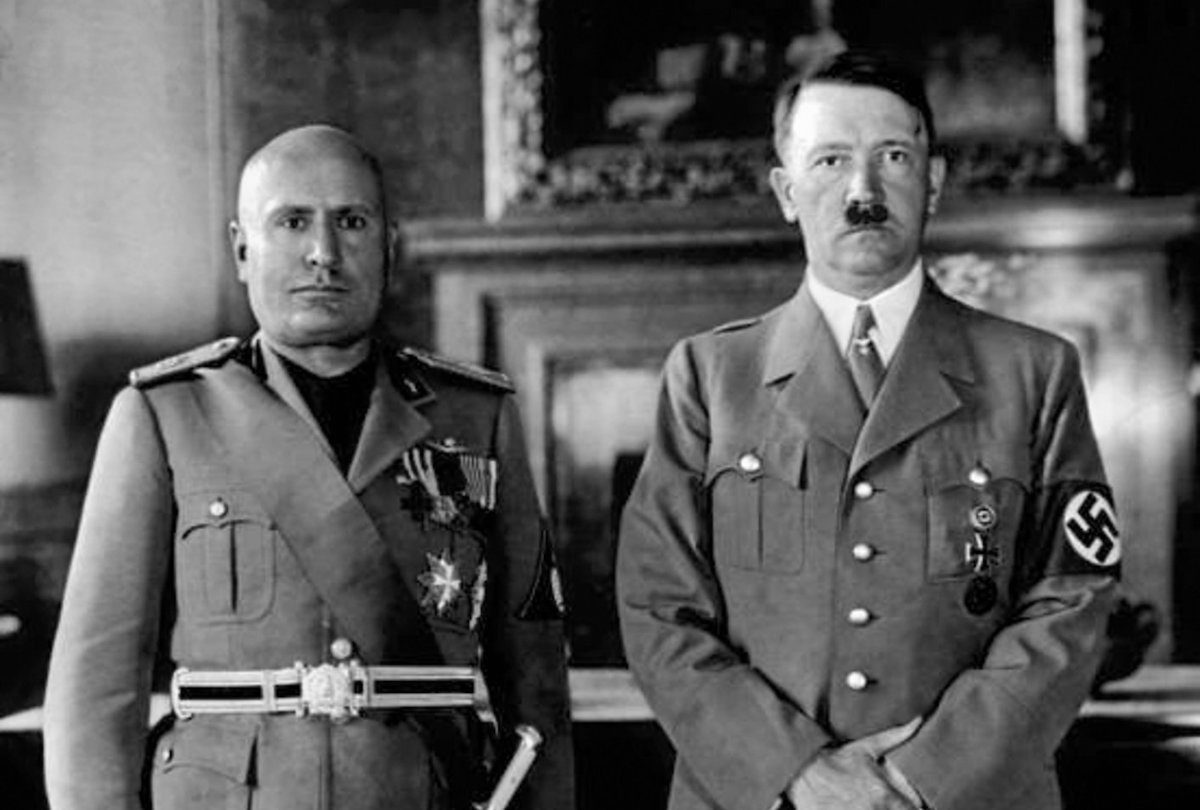
Benito Mussolini and Adolf Hitler
One of the first things to emerge from Professor Frank Dikötter's eagerly awaited new book
How to Be a Dictator is that it is a stressful vocation: there are rivals to assassinate, dissidents to silence, kickbacks to collect, and revolutions to suppress. Quite hard work. Even the most preeminent ones usually meet ignominious ends. Mussolini: summarily shot and strung upside down over a cheering crowd. Hitler: suicide and incineration. Ceausescu: executed outside a toilet block. Or consider the fate of Ethiopia's Haile Selassie: rumoured to have been murdered on orders of his successor Mengistu Haile Mariam, he was buried underneath the latter's office desk. Not the most alluring career trajectory, one might say.
Dikötter's monograph is a study of twentieth century personality cults. He examines eight such cults: those created by Mussolini, Hitler, Stalin, Mao, Kim Il-sung, Duvalier, Ceausescu, and Mengistu. For them, cultism was not mere narcissism, it was what sustained their regimes; foregoing cultism, Dikötter argues, caused swift collapse. Consider Pol Pot and the Khmer Rouge. Cambodians were unsure of Pol Pot's exact identity for years, even after he had assumed leadership of the country. The Khmer Rouge, meanwhile, was in its initial stages merely called "Angkar" — "The Organisation." There was no inspiring iconography. There was no ritualised leader worship. There was only dark terror. Dikötter quotes historian Henri Locard: "Failing to induce adulation and submissiveness, the Angkar could only generate hatred." The Khmer Rouge soon lost its grip on the country. Dikötter makes an obligatory reference: "Even Big Brother, in George Orwell's
1984, had a face that stared out at people from every street corner."
















Comment: See also: