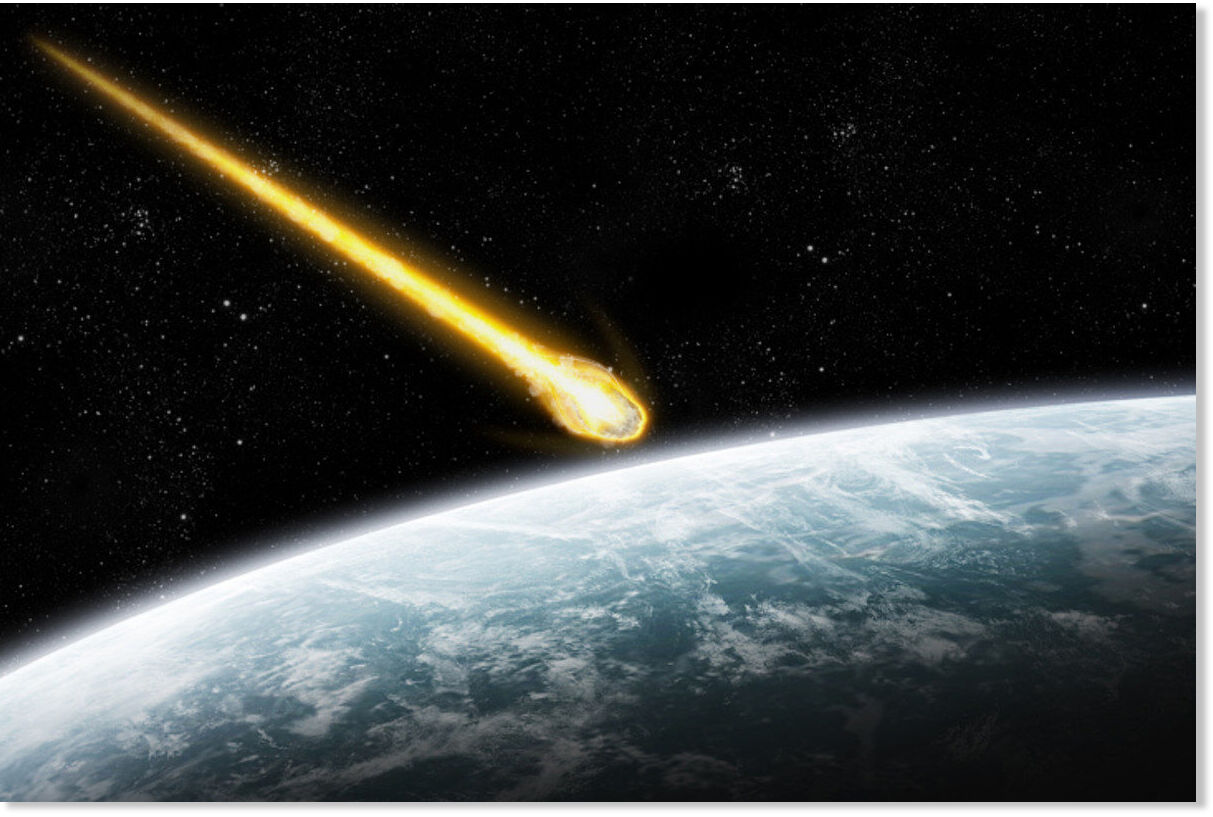
On the evening of Tuesday 25 January 2022, immediately after sunset, a clearly visible fireball was spotted and reported by many people over the skies of the Roman Sabina and the eastern areas of Rome.
This bolide was spotted from Spain on January 20, at 1:31 local time (equivalent to 0:31 universal time). The event was generated by a rock (a meteoroid) from a comet that hit the atmosphere at about 180,000 km/h. The fireball overflew the Atlantic Ocean. It began at an altitude of about 112 km over the ocean, in front of Morocco, moved southwest, and ended at a height of around 78 km over the ocean, in front of Morocco.
This bright meteor was recorded in the framework of the SMART project, operated by the Southwestern Europe Meteor Network (SWEMN) from the meteor-observing stations located at Calar Alto, Sierra Nevada, Sevilla, La Sagra (Granada), Huelva, El Aljarafe, and La Hita (Toledo). The event has been analyzed by the principal investigator of the SMART project: Dr. Jose M. Madiedo, from the Institute of Astrophysics of Andalusia (IAA-CSIC).
This bolide was spotted over Spain on January 15, at 4:13 local time (equivalent to 3:13 universal time). It was almost as bright as the full Moon. The event was generated by a rock (a meteoroid) from a comet that hit the atmosphere at about 163,000 km/h. The fireball overflew east of Spain. It began at an altitude of about 111 km over the northeast of the province of Albacete (region of Castilla-La Mancha), moved northeast, and ended at a height of around 76 km over the south of the province of Teruel (region of Aragón).
This bright meteor was recorded in the framework of the SMART project, operated by the Southwestern Europe Meteor Network (SWEMN) from the meteor-observing stations located at Calar Alto, Sierra Nevada, Sevilla, La Sagra (Granada), Huelva, El Aljarafe, and La Hita (Toledo). The event has been analyzed by the principal investigator of the SMART project: Dr. Jose M. Madiedo, from the Institute of Astrophysics of Andalusia (IAA-CSIC).
This bright bolide was spotted over Spain on January 19, at 5:11 local time (equivalent to 4:11 universal time). It was as almost bright as the full Moon. The event was generated by a rock (a meteoroid) from a comet that hit the atmosphere at about 233,000 km/h. The fireball overflew the north of Spain. It began at an altitude of about 127 km over the southwest of the province of Teruel (region of Aragón), moved northwest, and ended at a height of around 69 km over the southeast of the province of Guadalajara (region of Castilla-La Mancha).
This bright meteor was recorded in the framework of the SMART project, operated by the Southwestern Europe Meteor Network (SWEMN) from the meteor-observing stations located at Calar Alto, Sierra Nevada, Sevilla, La Sagra (Granada), Huelva, El Aljarafe, El Guijo, and La Hita (Toledo). The event has been analyzed by the principal investigator of the SMART project: Dr. Jose M. Madiedo, from the Institute of Astrophysics of Andalusia (IAA-CSIC).