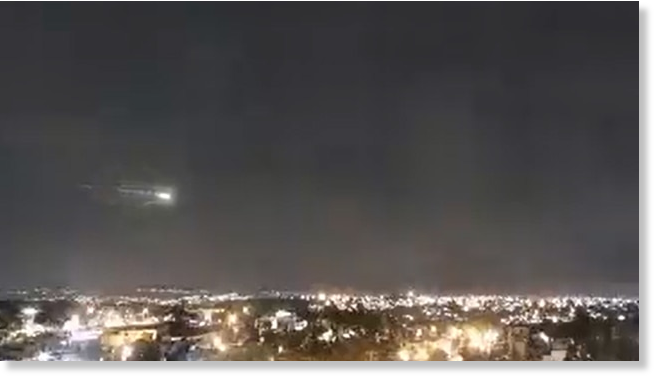
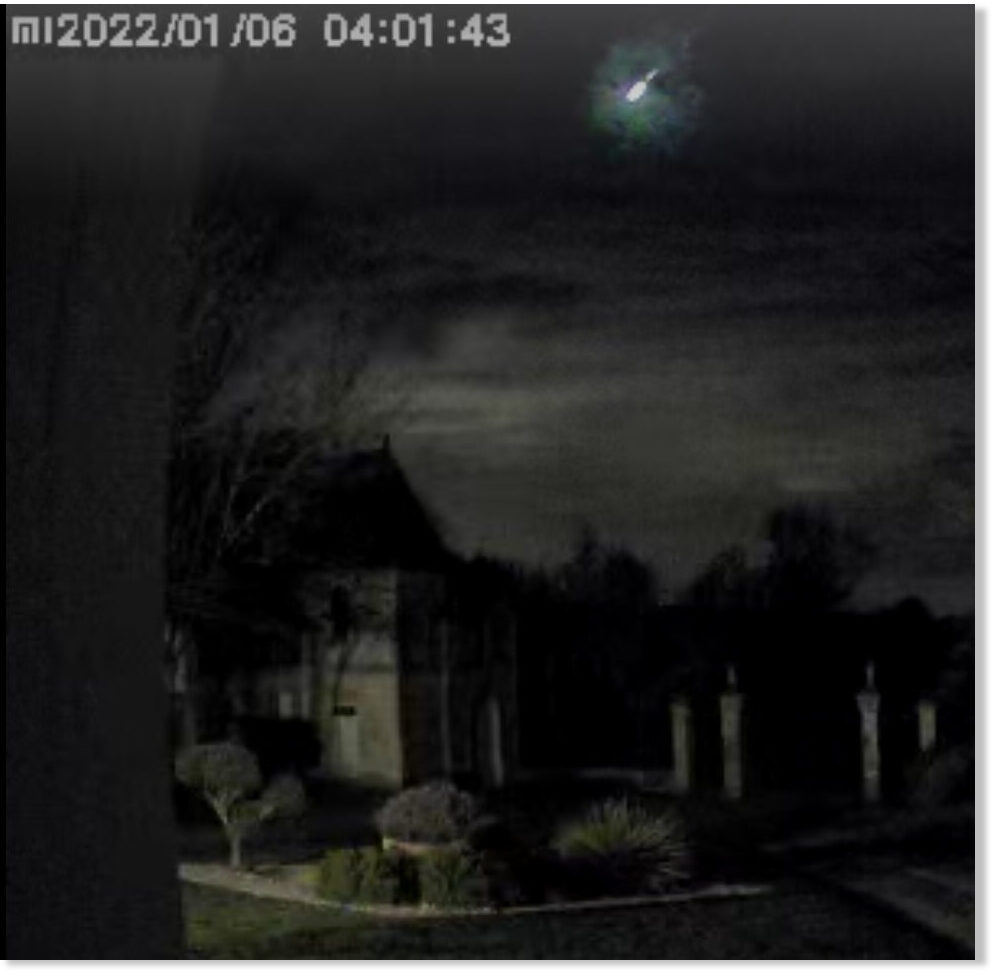
This footage by Luis Rodriguez captured the spectacle from the Mexico City borough of Azcapotzalco and Cuautitlán Izcalli, a city just north of the Mexican capital. Credit: Luis Rodriguez via Storyful
This bolide was spotted over Spain on January 7, at 2:12 local time (equivalent to 1:12 universal time). The event was generated by a rock (a meteoroid) from a comet that hit the atmosphere at about 66,000 km/h. The fireball overflew the Mediterranean Sea. It began at an altitude of about 80 km over the sea, between Spain and Morocco, moved east, and ended at a height of around 44 km over the sea.
This bright meteor was recorded in the framework of the SMART project, operated by the Southwestern Europe Meteor Network (SWEMN) from the meteor-observing stations located at Calar Alto, Sierra Nevada, Sevilla, La Sagra (Granada), Huelva, and La Hita (Toledo). The event has been analyzed by the principal investigator of the SMART project: Dr. Jose M. Madiedo, from the Institute of Astrophysics of Andalusia (IAA-CSIC).
This bolide was spotted over Spain on January 7, at 6:31 local time (equivalent to 5:31 universal time). The event was generated by a rock (a meteoroid) from a comet that hit the atmosphere at about 141,000 km/h. The fireball overflew the south of Spain. It began at an altitude of about 89 km over the southwest of the region of Murcia, moved southeast, and ended at a height of around 27 km over the south of the same region.
This bright meteor was recorded in the framework of the SMART project, operated by the Southwestern Europe Meteor Network (SWEMN) from the meteor-observing stations located at Calar Alto, Sierra Nevada, Sevilla, La Sagra (Granada), Huelva, and La Hita (Toledo). The event has been analyzed by the principal investigator of the SMART project: Dr. Jose M. Madiedo, from the Institute of Astrophysics of Andalusia (IAA-CSIC).
This impressive bolide was spotted over Spain on January 9, at 1:18 local time (equivalent to 0:18 universal time). It was brighter than the full Moon. The fireball was observed by some casual eyewitnesses, who reported it on social networks.
The event was generated by a rock (a meteoroid) from a comet that hit the atmosphere at about 150,000 km/h. The fireball overflew the south of Spain. It began at an altitude of about 104 km over the north of the province of Málaga Málaga, moved northwest, and ended at a height of around 31 km over the province of Sevilla.
This bright meteor was recorded in the framework of the SMART project, operated by the Southwestern Europe Meteor Network (SWEMN) from the meteor-observing stations located at Calar Alto, Sierra Nevada, Sevilla, La Sagra (Granada), Huelva, El Aljarafe, and La Hita (Toledo). The event has been analyzed by the principal investigator of the SMART project: Dr. Jose M. Madiedo, from the Institute of Astrophysics of Andalusia (IAA-CSIC).