© UnknownWhat, me worry?
Here is an interesting comment
from Bloomberg yesterday by prominent Russian liberal journalist, Leonid Bershidsky.
We usually disagree with him, but we can't take issue with most of what he writes here. He points out something we have been saying all along:
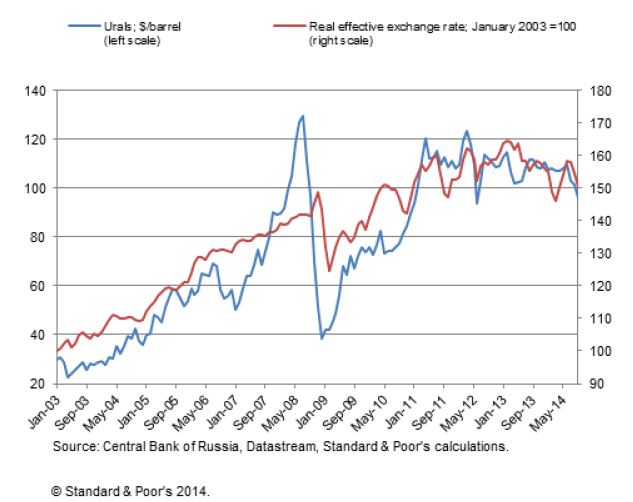
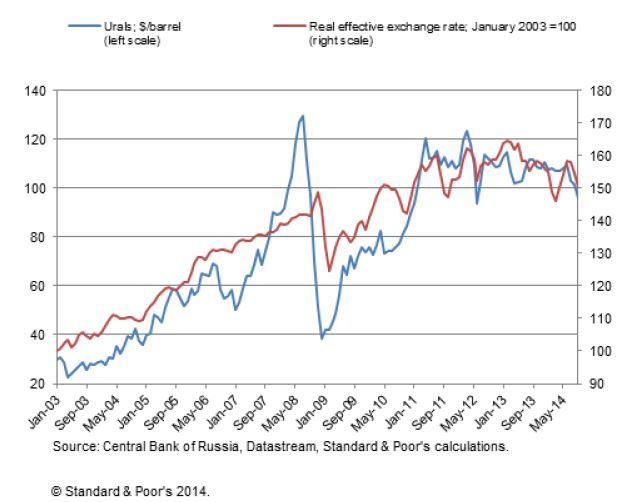
in many ways a cheaper ruble is good for Russia. The hysterical headlines in the western media about this being a cataclysm for Russia are, quite frankly ,ridiculous.The Russian government has been wishing for years that they could talk the over-valued ruble down. Now Obama and EU have done it for them. Yet another sanctions back-fire. ---------------------From a technical point of view, the Russian ruble's drop to more than 40 per U.S. dollar, a full 17 percent weaker than at the start of the year, is an expected result of Russian companies being cut off from Western financial markets and a drop in the price of oil.
© Standard & Poor's 2014
On a different level, however, the ruble's downward journey reflects the economic structure that makes it possible for President Vladimir Putin to remain popular.
© Spencer Platt/Getty ImagesOil Markets
As the United States expands its proxy
war against
Russia and the BRICS nations through a newly discovered
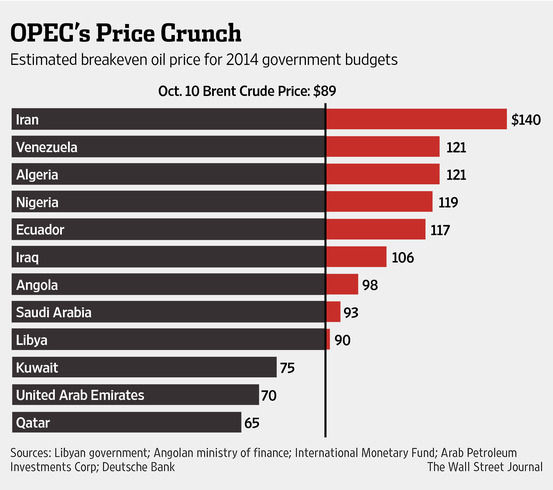
secret deal with Saudi Arabia to force down global
oil prices,
Russia is firing back to this monetary attack against their currency and economy. On Oct. 10, a new report on Russian currency outflows shows that during the third quarter ending in September, the Eurasian state paid off a near record $53 billion in foreign debt, and
sold off dollars to use as capital to stabilize their declining currency, and to protect their primary resource industry from the deflation America has caused through the dumping of excess oil into the market supply.Some of this money was used earlier this week to support the declining Rouble as President Putin
authorized the transfer of over $2 billion to be used directly to support the Russian currency. Additionally, the Russian central bank has already authorized funds to be set aside to supplement Russian corporations and oil industries should the need arise for liquidity and capital.
Despite the reassuring narrative from The West that Russia faces "costs" and is increasingly "isolated" due to sanctions for its actions in Ukraine, the most recent data suggests reality is quite different. First, capital outflows slowed dramatically in Q3 (from $23.7 billion in Q2 to $13 billion in Q3) with September seeing capital inflows for the first time since Sept 2013. Second, Russia's current account surplus was significantly stronger than expected ($11.4 billion vs $8.8 billion expected) driven by increased trade. Third, and perhaps most crucially, Russia paid down a massive $52.8 billion in foreign debt as Putin "de-dollarizes" at near record pace, reducing external debt to the lowest since 2012. -Zerohedge
Two weeks ago,
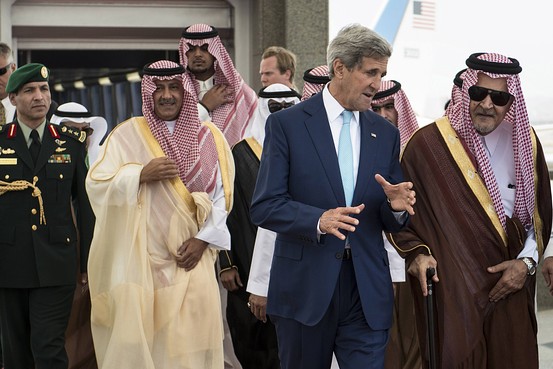
we revealed one part of the "Secret Deal" between the US and Saudi Arabia: namely what the US 'brought to the table' as part of its grand alliance strategy in the middle east, which proudly revealed Saudi Arabia to be "aligned" with the US against ISIS, when in reality John Kerry was merely doing Saudi Arabia's will when the
WSJ reported that "the process gave the Saudis leverage to extract a fresh U.S. commitment to beef up training for rebels fighting Mr. Assad, whose demise the Saudis still see as a top priority."
© Unknown
What was not clear is what was the
other part: what did the Saudis bring to the table, or said otherwise, how exactly it was that Saudi Arabia would compensate the US for bombing the Assad infrastructure until the hated Syrian leader was toppled, creating a power vacuum in his wake that would allow Syria, Qatar, Jordan and/or Turkey to divide the spoils of war as they saw fit.
A glimpse of the answer was provided earlier in the article "
The Oil Weapon: A New Way To Wage War", because at the end of the day it is always about oil, and leverage.
The full answer comes courtesy of
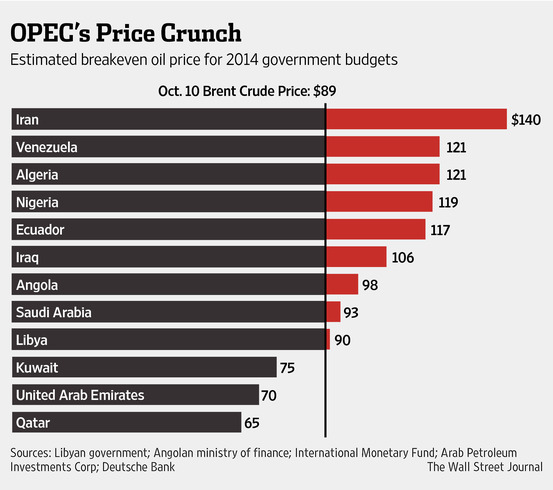
Anadolu Agency, which explains not only the big picture involving Saudi Arabia and its biggest asset, oil, but also the latest
fracturing of OPEC at the behest of Saudi Arabia...
© Unknown
... which however is merely using "
the oil weapon" to target the
old slash new Cold War foe #1: Vladimir Putin.

© UnknownMarble contest on Boston Common 1920
The world stock markets' big see saw zig zags over the last few days seems to be a harbinger of more to come. Christine Lagarde has warned of a fresh pan-European recession and just this once she may actually have a point.
Not that the old continent ever left the 'old' crisis, but since so much time and money was inserted into the recovery hologram, and we're in a generous mood, let's pretend and play along: it's a new recession! That or a triple dip. The terminology is not the main point here; it's going to be
too nasty to occupy ourselves with semantics.
As I was writing about the shame of putting millions of young Europeans into the dark hole of long-term unemployment yesterday in
The Disgrace of Sacrificing a Generation, Europe's leaders met to discuss that very theme. Only, they didn't.
They went on and on again about wanting the freedom to spend more, either through support from Mario Draghi bond purchases or by simply violating EU budget limits. EU PM Renzi called those limits outdated: it's new world out there!
What they did say about the jobs issue was that more money was not needed, since there's an existing $82 billion fund for youth jobs, of which only 12% has been used ... That crazy detail tells us two things: Brussels and the European capitals don't care about their children, as the entire situation also makes clear enough.
It also tells us that they have no idea what to do. But that should never be an excuse. Go figure it out. Want to be a leader? That comes with responsibilities. Having 50% youth unemployment in Spain and Greece should have gotten you guys fired. Some things are simply not acceptable.
Keiser Report
RTSat, 11 Oct 2014 19:31 UTC
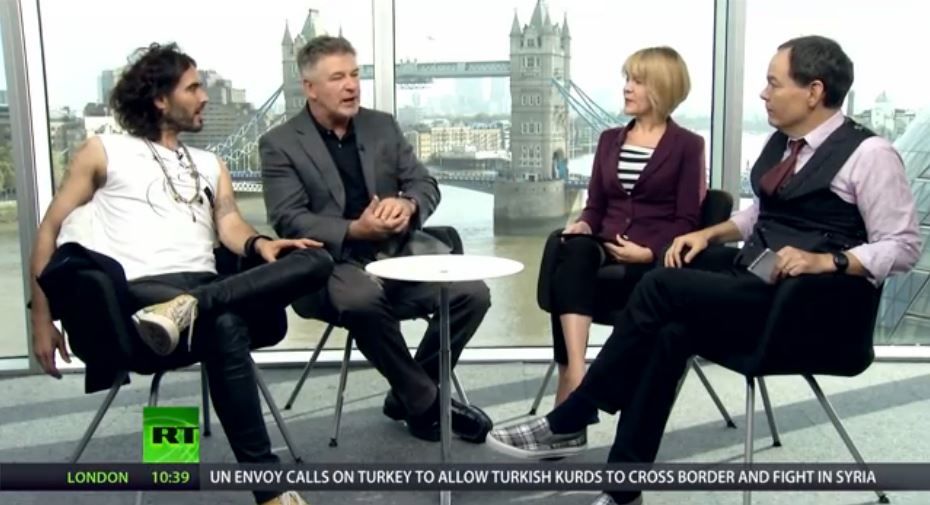
In this episode of the Keiser Report, Max Keiser and Stacy Herbert host a two part interview with award-winning film and television actor, Alec Baldwin, and comedian, actor, author and host of the Trews, Russell Brand, about revolution, the media, ultra low interest rates, cobblers and their little helpers. They also discuss whether or not Sean Hannity has the talent to be a 'terrorist' and Russell Brand gives his opinion on the role of Fox News.
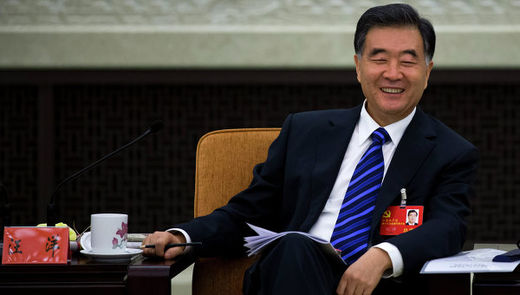
© AP Photo/ Alexander F. YuanChina is ready to export agricultural products and oil and gas equipment to Russia.
China is ready to export agricultural products and oil and gas equipment to Russia, China's Vice Premier Wang Yang stated Saturday.
"
China is willing to export to Russia such competitive products as agricultural goods, oil and gas equipment, and is ready to import Russian engineering products," Wang Yang said during the 18th session of the Russian-Chinese Commission for the Preparation of Regular Meetings of the Heads of Governments.
Comment: Despite NATO's attempts to
contain China and
Russia through subversion and terrorism, it is clear that they are up against far superior minds than their own:
Pepe Escobar
RTThu, 09 Oct 2014 15:27 UTC
© www.lobelog.com
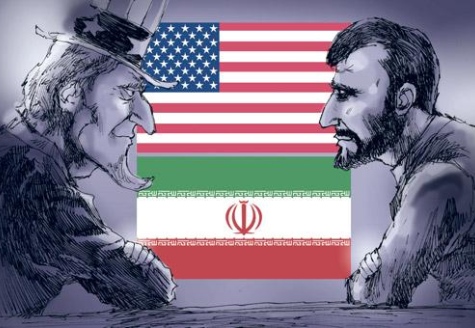
Everything in Tehran revolves around three major discussions: the nuclear deal arguably to be clinched on November 24, Iran back to selling energy to the West, and the fight against ISIS/ISIL.
I've just spent a frantic
week in Tehran as a guest of the New Horizon conference of Independent Thinkers. Here is some of what I've witnessed.
Three overarching themes monopolize all important discussions in Tehran at this critical historical juncture:
1) the real possibility of a nuclear deal with the P5+1 on November 24;
2) the end of sanctions and the possibility of Iran soon starting to supply the EU with loads of natural gas;
3) the fight against ISIS/ISIL, which Iranians, as much as the Arab street, refer to as Daesh.Everything about the nuclear deal is entangled in a dense web of information war. In Tehran I had the pleasure to spend a lot of time and go to meetings with my friend Gareth Porter, the author of the definitive
book on the subject:
Manufactured Crisis: The Untold Story of the Iranian Nuclear Scare. The book was meticulously translated into Farsi by the Fars News Agency, in only two months, and launched in a simple ceremony at the agency's main office. It conclusively proves, for instance, how the Iranian "plot" to equip ballistic missiles with (non-existent) nuclear warheads was entirely fabricated by the terrorist outfit Mujahedin-e Khalq (MEK) and then handed over to the IAEA by the Mossad.
I was quite moved by the profound respect shown to Gareth's investigative work in Tehran, in contrast to the thunderous wall of silence that greeted his book in the US. Call it yet another reflection of the 35-year old "wilderness of mirrors" - or Wall of Mistrust - opposing Washington to Tehran.
Comment: Recently, regarding Iran, the US appears to require more carrot and less "schtick." It may be Iran is oddly in a key position, being sought by both the U.S. and Russia...3-way dance partners in a Gordian Knot minuet. But don't forget the Chinese "dragon dance" with drums and gong performing behind the screen. As in the legend of Alexander, "the one who unties the Knot becomes King of Asia, conferring legitimacy to dynasty change by cheating or thinking outside the box." The role of "King of Asia" is definitely up for grabs.
In the past, the US has had a long-standing agreement to support Saudi Arabia as friends, diplomatic partners and allies, with a mutually-beneficial arrangement regarding oil and military cooperation. Albeit a sometimes bumpy relationship, including falsely blaming S.A. for 9/11, the advantages outweighed the negatives. This seems to be waning (betrayal?) as US greed, interest and agenda "auditions" Iran for a supporting role as their new puppet child. (Or has Iran, unwittingly, been this all along forming a controversial covert triad with US and Israel? ...an interesting thought.)
Notes: "Daesh" is another name for IS, lead by Abu Bakr al-Baghdadi, formerly known as Elliot Shimon, an Israeli and Mossad agent. The term "Daesh" is accurate in that it spells out the acronym of the group's full Arabic name, al-Dawla al-Islamiya fi al-Iraq wa al-Sham. "Daesh" can also be understood as a play on words and an insult. Depending on how it is conjugated in Arabic, it can mean anything from "to trample down and crush" to "a bigot who imposes his view on others."
"P5+1" is a group of six world powers which, in 2006, joined the diplomatic efforts with Iran in regard to its nuclear program. The term refers to the P5 or five permanent members of the UN Security Council, (namely the US, Russia, China, UK and France) plus Germany.
Last week, my colleague Jeff Opdyke
reminded us that like all power-hungry states, the U.S. requires enemies like ISIS to keep the population distracted and mobilized against the wrong threats. As he rightly put it:
"War ... gives government the cover it needs to curtail liberties and freedoms here at home. It gives government reason to rally the citizenry as the long-term health of the nation deteriorates."Of course, war does more than just that. War generates massive flows of taxpayer money to the defense industrial sector, which passes some of it on to money-hungry politicians, who vote for more war and thus more money for defense. And so on.
After decades of nonstop warfare in the Middle East, against enemies largely imagined, many Americans react to such matters with a cynical shrug and sigh. "Whaddya gonna do? That's the way things always are," they say.
No, things are not always that way. Things are that way because we have made choices ... choices we can change.
On 7 October 2014, Hezbollah attacked Israeli forces illegally stationed in the Shebaa Farms region on Lebanese territory. This is the first attack by the Lebanese resistance against the Israeli occupying forces since the 2006 war.
The incident has been widely interpreted as a message from Hezbollah to the Jewish state to dissuade it from extending to the Lebanese-Israeli border the scheme it set up along the Syrian-Israeli border. Indeed, on 15 September hundreds of UNDOF peacekeepers withdrew from the Golan Heights after 43 of their soldiers were detained for two weeks by the Al-Nusra Front (Syrian branch of Al-Qaeda). Since that date, the buffer zone established by the United Nations after the 1973 war is
de facto no longer controlled by UNDOF, but by Al-Qaeda.
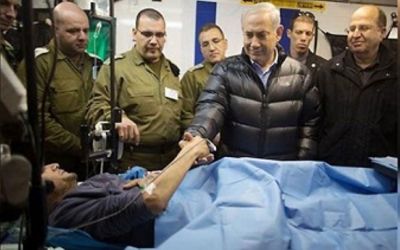
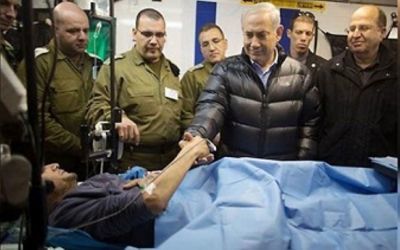
© Kobi Gideon/GPOThe Jewish state ensures regular supplies to the Al Qaeda jihadists and treats the wounded in its military hospitals. Israeli television showed Prime Minister Benjamin Netanyahu at their bedside, comforting and congratulating the wounded jihadists.
The Jewish state ensures regular supplies to the Al Qaeda jihadists and treats the wounded in its military hospitals. Israeli television showed Prime Minister Benjamin Netanyahu at their bedside, comforting and congratulating the wounded jihadists.
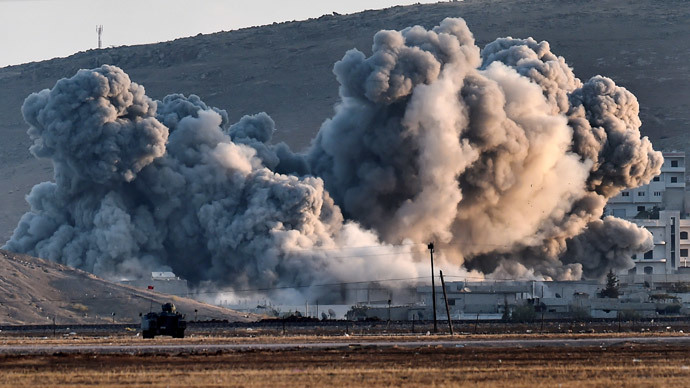
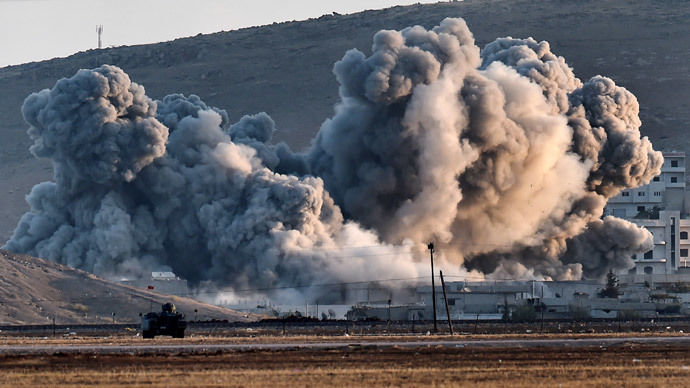
© AFP Photo / Aris MessinisSmoke rises during airstrikes on the Syrian town of Ain al-Arab, known as Kobane by the Kurds, seen from the Turkish-Syrian border in the southeastern village of Mursitpinar, Sanliurfa province, on October 8, 2014.
The U.S. is conducting a curious humanitarian war against ISIS in Syria.While Kobani, the largely Kurdish district that straddles the border with Turkey is being attacked by ISIS forces and facing the very real possibility of mass civilian killings if it falls,
U.S. military spokespersons claimed that they are watching the situation in Kobani and have conducted occasional bombing missions but that they are concentrating their anti-ISIS efforts in other parts of Syria.
Those other efforts appear to consist of bombing empty buildings, schools, small oil pumping facilities, an occasional vehicle and grain silos where food is stored to feed the Syrian people. Turkey also seems to be watching as the Kurds of Kobani fight to the death against ISIS.
The humanitarian concerns of officials in the U.S. with the plight of Kurds in Kobani could not be more different than what occurred in Iraq when ISIS forces made a push into Kurdish territory. When the Kurdish city of Erbil was under attack by ISIS, U.S. forces unleashed the full power of its air force in tactical coordination with Kurdish forces to push ISIS back.
So what is the difference in the two situations?
The difference and
the reason why the Kurds of Kobani are to be sacrificed stems from the fact that they are the wrong kind of Kurds. Masoud Barzani and the bourgeois Kurds of the Kurdish Democratic Party (KDP) are the "good Kurds" and the predominant force among the Kurds of Iraq. Their control of almost 45% of Iraqi oil reserves and the booming business that they have been involved in with U.S. oil companies and Israel since their "liberation" with the U.S. invasion makes them a valued asset for the U.S. The same goes for Turkey where despite the historic oppression of Kurds in Turkey, the government does a robust business with the Kurds of Iraq.
The situation is completely different in the Kurdish self-governing zones in Syria. In Kobani, it is the Kurdish People's Protection Units, or Y.P.G., that is linked to the Kurdistan Workers Party (P.K.K), a Turkey-based Kurdish independence organization that both the U.S. and Turkey have labeled a "terrorist" organization, that provides the main forces resisting the ISIS attack. Also, the ISIS attack in Kurdish territory neatly converges with the strategic interests of Turkey. Both the U.S. and Turkey saw the control of territory by militant Kurds as a threat. Turkey in particular wanted to undermine the self-governing process among Kurds, Christians and Sunni Arabs in those self-governing zones and turn the territory into a battlefield in order to steal Syrian territory and isolate and attack the "bad" Kurds of the PKK.










Comment: Despite NATO's attempts to contain China and Russia through subversion and terrorism, it is clear that they are up against far superior minds than their own: