In Ukraine, however, these efforts seem to have failed. Here's why that's a good thing
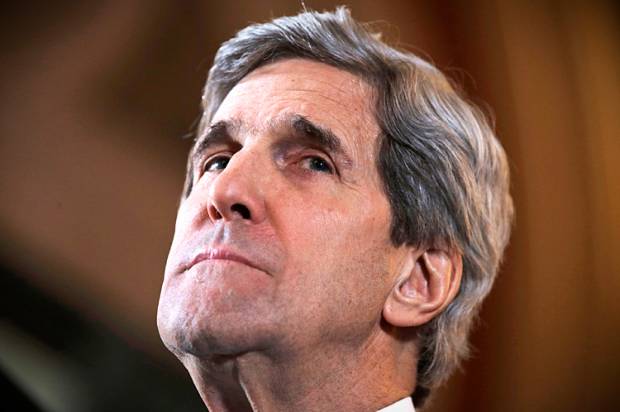
© Reuters/Lefteris PitarakisSecretary of State John Kerry
We do not read much about Ukraine lately, do we? With unseemly speed, among the most important developments of the last few years has fallen out of the paper. There is a reason for this:
Washington has sustained another, in this case very major, defeat. The policy failed. And we Americans cannot talk about defeat and failure if they are our own.The moment of truth was the cease-fire accord the Kiev government, Moscow and the two republics declared in eastern Ukraine signed in Minsk on September 5. With that document, Vladimir Putin succeeded in putting a stop to the preposterous charade wherein Ukraine was supposed to swerve smoothly into the Euro-American camp, so rolling out the neoliberal agenda like linoleum straight up to Russia's borders.
Nice try, Victoria Nuland and all other "new world order" idolators. Actually,
it was a very horrific try, costing several thousand lives and wrecking cities and vast parts of eastern Ukraine's productive infrastructure. All this for the sake of deregulated capital and "free markets." Is there a widow in Donetsk who will one day explain, "Son, your father died because the Americans put people in charge who wanted corporations such as Chevron to profit from our resources while pushing our family into poverty?"
The Minsk protocol provides for a sanitized corridor nearly 20 miles wide between Kiev-controlled territory and the eastern sections of the country, where Russian is the first language and the seductions of free-market capitalism have not gone over so well. This is near-term common sense.
Further out, the eastern Donbass is to get some degree of autonomy greater than the insincere offer Kiev has made to date. And the eastern region will hold its own elections, these now brought forward over Kiev's objections to November 2.
We witness the federalization of Ukraine, in a word - the sensible way forward from the first, a perfectly good expression of the nation's divisions, except that Russian leader Vladimir Putin advocated a federal Ukraine, so it could not be right.
From all one can make out, Putin shaped this deal in back-channel collaboration with Angela Merkel, the German chancellor.
This is significant, in my view, and I will return to the point further on.It is difficult to call this outcome, assuming it stays on track, a success for the neoconservatives at the State Department, or the phony foundations State sponsors to advance the corporatization of the planet in the name of democracy.
Too many casualties, too much wreckage, the new government in Kiev is already revealed as another crew of corrupt incompetents, and all that got done was the stimulation of animosities that ought to have been discouraged.













Comment: See also: