OF THE
TIMES


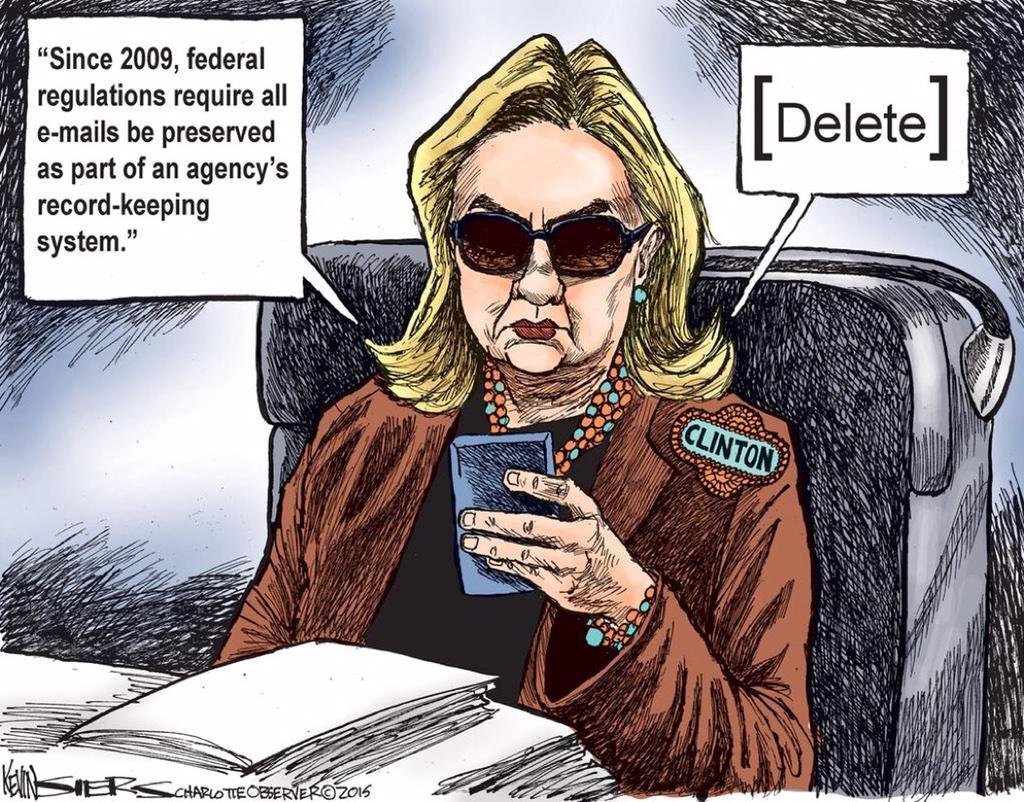
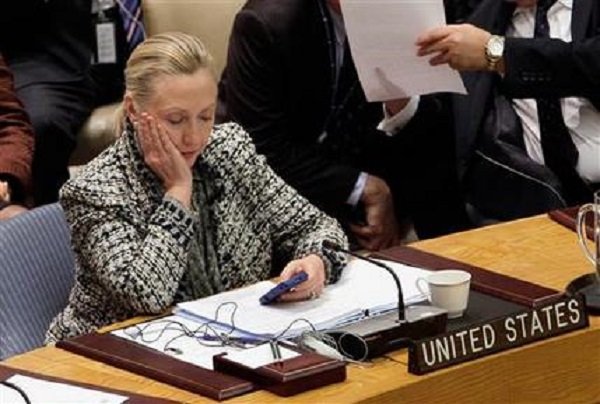
While trial-and-error is generally useful when solving connection problems, the implication is undeniable: to make Clinton's private, insecure email server connect with the State Department's, it had to -- at least temporarily -- lower itself to Clinton's security level. The other workaround -- USE A DAMN STATE DEPARTMENT EMAIL ADDRESS -- was seriously discussed.The emails, reviewed by The Associated Press, show that State Department technical staff disabled software on their systems intended to block phishing emails that could deliver dangerous viruses. They were trying urgently to resolve delivery problems with emails sent from Clinton's private server.
"This should trump all other activities," a senior technical official, Ken LaVolpe, told IT employees in a Dec. 17, 2010, email. Another senior State Department official, Thomas W. Lawrence, wrote days later in an email that deputy chief of staff Huma Abedin personally was asking for an update about the repairs. Abedin and Clinton, who both used Clinton's private server, had complained that emails each sent to State Department employees were not being reliably received.
After technical staffers turned off some security features, Lawrence cautioned in an email, "We view this as a Band-Aid and fear it's not 100 percent fully effective."
Saudi Arabia Declares Cease-Fire in Oil War
The new Saudi oil minister, Khalid Al-Falih, says the oil glut is over. That means the kingdom's war against U.S. shale producers is coming to an end, too. Who won it is a tough question to answer; on balance, it's probably the Saudis, but they have paid a huge price, and the surviving U.S. frackers have also benefited.
In September 2014, Saudi Aramco, the kingdom's state oil company, simultaneously increased output and discounts to Asian customers, making it difficult for producers with higher costs to compete. The U.S. shale industry responded with desperate bravado, cutting costs, perfecting technologies and pumping like crazy to avoid defaulting on its debts. Yet, according to Haynes and Boone's Oil Patch Bankruptcy Monitor, 81 North American oil and gas companies have filed for bankruptcy since the beginning of 2015. In Texas alone, there have been 41 bankruptcies, representing $24.3 billion in debt.
As a result, U.S. oil production has declined to late 2014 levels, while Saudi Arabia has defended and indeed increased its market share. Last year, it maintained its export volume to the U.S., while sales to China grew by 4.5 percent and to India by 18 percent.
The North American shale industry knows now that it's at the mercy of Saudi Arabia. The kingdom has more than two million barrels a day -- perhaps even three million if necessary -- of spare production capacity that it can use to flood the market again, drive down prices and render any ambitious American plans useless.
Comment: See also: